

In July 2022, the UK hit 40.3°C, and the entire country literally went into panic mode. Train tracks buckled, runway tarmac melted, and vet surgeries were filled with dogs suffering from heatstroke. It was a wake-up call that British summers are no longer what they used to be. The Met Office now says such heatwaves may become a regular part of UK weather, not a freak event. But your dog doesn’t care about weather statistics. All he knows is that he’s feeling too hot and needs help.
After that, the popularity of dog cooling products increased significantly, and the reason is clear. The right cooling mat, vest, or bandana can prevent your dog from overheating during walks, keep them comfortable indoors when the conservatory feels like an oven, and even help prevent emergency vet visits. At Dogfoodsuk, we research and test these products for UK conditions, as what works in Arizona may not necessarily work the same in Hampshire.

This guide covers everything you’re genuinely worth knowing about dog cooling products: how they work, which products are worth your money, and how to choose the right option for your dog. And what should you do if things go wrong and your dog starts showing signs of heatstroke? Because just knowing which cooling mat to buy isn’t enough if you don’t understand the emergency signs.

Why Heat is Dangerous for Dogs
Dogs and humans handle heat completely differently. We sweat through millions of pores in our skin. Dogs have sweat glands only on their paw pads and nose. Their main cooling mechanism is panting, which evaporates moisture from the mouth, tongue, and upper airways and releases body heat.
This works quite well in normal temperatures, but it has a limit. When the air around the dog is already hot, panting becomes less effective because there is less temperature difference for evaporation.
Normal dog body temperature ranges from 38.3°C to 39.2°C. At 40°C, you are entering the danger zone. At 41°C, organs begin to shut down. Brain damage, kidney failure, and blood clotting disorders can follow within minutes.
The British Veterinary Association has been warning about this for years, saying that heat-related emergencies are among the most common calls UK practices receive in the summer.
Some dogs are more vulnerable than others. Brachycephalic breeds, i.e., dogs with pushed-in faces, such as French Bulldogs, Pugs, and English Bulldogs, top the risk list. Their compressed airways make panting difficult even on mild days.
Then there are thick-coated breeds, such as Huskies, Newfoundlands, and German Shepherds, whose double coats trap heat like a winter jacket in July. Old dogs, puppies, and overweight dogs also struggle more.
But let’s be clear: any dog can suffer a heatstroke. Even a fit, young Labrador is at absolute risk if taken on a midday walk on hot tarmac.
Speaking of tarmac, ground temperature is something most owners don’t think about, but it matters a lot. Asphalt surfaces can reach 52°C on a 25°C day.
At this temperature, paw pads can blister and burn within seconds. The Kennel Club recommends the seven-second test. Press the back of your hand on the pavement. If you can’t hold it there for seven seconds, it’s too hot for your dog’s paws. No exceptions.
PDSA recommends walking dogs before 8 AM or after 8 PM during the summer, and completely skipping vigorous exercise when the temperature goes above 20°C.
This may seem cautious, unless you talk to a vet who has treated a golden retriever for heatstroke because the owner insisted on “just a quick walk” at lunchtime. There is no quick walk in 33°C heat.
Signs of heatstroke you need to recognise
Heatstroke doesn’t come on quietly. It escalates very fast. Every dog owner should know how to spot early warning signs, because catching them in time can mean the difference between a scary afternoon and a dead dog. Both the RSPCA and Blue Cross publish detailed symptom lists that are worth remembering.
Heavy and frantic panting is the first sign. All dogs pant when they’re warm, but panting with heatstroke looks different. It’s louder, faster, and more desperate than the lazy panting after a normal walk. Your dog may also drool excessively, and the drool may be thick or stringy. Gums can turn bright red, pale pink, or even slightly blue, which means oxygen isn’t circulating properly. This last one is a clear red alert.
Also watch for behavioral changes. A dog struggling with heat may become lethargic and unsteady. They may stagger, appear confused, stop responding to their name, or simply lie down and refuse to move. Vomiting and diarrhea are common as the body’s systems begin to fail. In worst cases, dogs may have seizures or lose consciousness.
Early signs are easy to miss if you’re not paying attention. I’ve seen people at country shows point and laugh at a dog that was sprawled flat on its side, tongue out, and chest moving heavily.
That dog wasn’t lazy. It was probably in the early stages of heatstroke. If you ever suspect heatstroke, stop what you’re doing, get the dog into the shade, offer water, and call the vet. If nothing is wrong, calling the vet only costs a phone call. If something is wrong and you don’t call, it could cost your dog’s life.
How cooling products actually work
Not all dog cooling products use the same approach, and understanding the difference helps you buy the right product. Products found in UK shops and online typically use one of four main types of cooling technology.
Evaporative cooling is the most common. You soak the product in water, wring out excess water, and then apply it to or under the dog. As water evaporates from the surface, it draws heat away. Most cooling vests, cooling bandanas, and some cooling mats work this way.
It’s cheap, simple, and doesn’t require batteries or a freezer. Limitation is humidity. Sticky and humid British afternoons slow evaporation, reducing the cooling effect. You’ll need to re-wet the product as it dries, usually every 30 to 60 minutes, depending on conditions.
Gel cooling uses a pressure-activated gel layer. When your dog lies down on the gel mat, their body weight compresses the gel, and the gel absorbs and dissipates heat from the body. Some gel mats can even be chilled in the fridge first for extra cooling. Gel products work despite humidity, which is a real advantage during muggy UK heatwaves. The downside is that the gel gradually warms as it absorbs heat, and once it warms, you have to wait for it to cool down again, or put it in the refrigerator.
Phase-change cooling is a heavy-duty option. These products have special packs or inserts that need to be frozen first. After freezing, they maintain a consistent cool temperature for hours. This technology is found in premium cooling vests and some cooling collars. It provides the strongest and most consistent cooling of any approach, but it requires a freezer, and the cooling packs only last for one cycle before they need to be refrigerated. For short walks in brutal heat, nothing beats this.
Passive cooling covers products that don’t use any active technology. Elevated beds lift your dog off the ground, allowing air to circulate underneath. Pet pools allow dogs to cool off in water through direct water contact. Both rely on basic physics rather than gels, polymers, or freezable inserts. They’re simple, reliable, and work as long as airflow or water is available.
Cooling mats for dogs
A cooling mat is the most useful dog cooling product you can own. Your dog doesn’t need to wear anything, learn anything, or cooperate. They simply lie down on it, and the mat does the rest. If your dog can’t tolerate a vest or bandana, and some dogs refuse altogether, a cooling mat is your best bet.
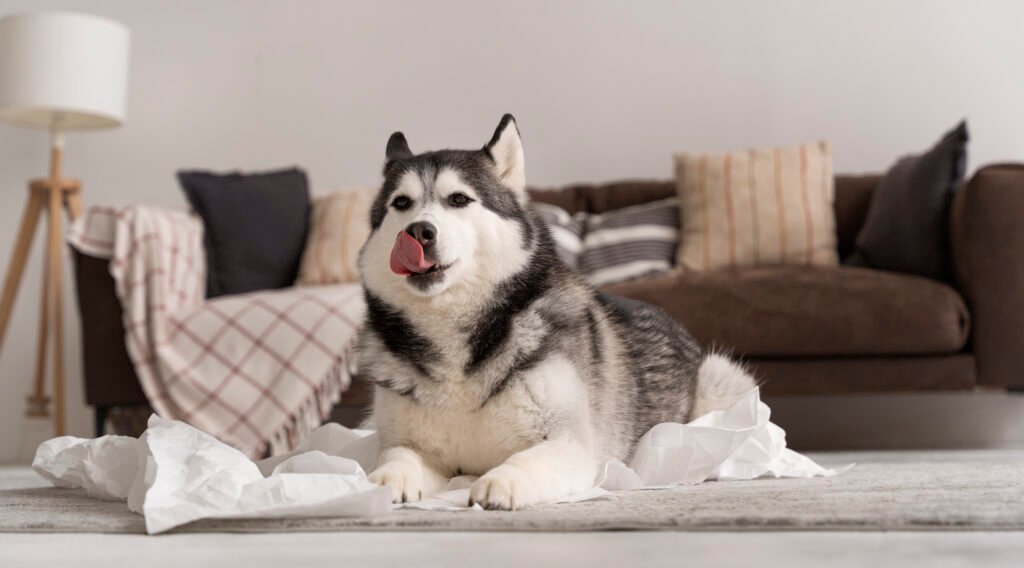
Gel cooling mats perform strongest for UK heatwaves. Brands like Pet Cooling Mat, available on Amazon UK, use pressure-activated gel that continuously absorbs body heat while the dog rests. Heavier dogs have better contact with the gel, so the mat works more effectively for a Labrador than a Yorkshire Terrier. Prices start at around £15 for a small mat and can go up to £40 for an extra-large mat. Most mats are durable, wipe-clean, and designed to withstand some chewing.
Self-cooling fabric mats are lighter and cheaper, usually starting at around £10. These use special fabrics that feel cool to the touch and dissipate body heat through conduction. These are more portable than gel mats, so they’re decent for car journeys and days out, but the cooling effect is gentler. They’re better suited for warm days, not full heatwave conditions where more robust cooling is needed.

Size is critical. A mat that covers only half your dog’s body is only doing half the job. Measure your dog from nose to tail in a lying-down position, then add a decent margin on each side so all four paws are on the surface. A cramped Mastiff on a spaniel-sized mat is a waste of money.
Where you place the mat matters as much as which mat you buy. In direct sunlight or in a stuffy room with the windows closed, a cooling mat is already fighting a losing battle. The mat needs airflow around it to dissipate the heat absorbed from the dog. Tiled kitchen floors, shady spots in the garden, and rooms with open windows on opposite sides to allow a through-draft are ideal. Carpet is the worst surface because it insulates the mat from beneath and traps heat.
Cooling vests for dogs
A cooling vest is a product you use when it’s essential to take your dog outside in hot weather. Mats only work when the dog is lying down. The vest works during walking, which is precisely when the dog is generating the most body heat and needs the most help.
Most cooling vests sold in the UK use evaporative technology. You soak the vest in cold water, squeeze out the excess water, and then put it on the dog. The wet fabric covers the chest and belly, areas where major blood vessels are close to the skin surface. The blood in these areas cools, and then the entire body begins to cool through circulation. The Ruffwear Swamp Cooler and Hurtta Cooling Vest are both solid choices available on Amazon UK, usually priced between £40 and £60.

Evaporative vests work well in typical UK summer conditions. Our heatwaves are getting worse, but the humidity isn’t usually at tropical levels. The evaporation process is efficient in these conditions. On a really muggy day, the vest may dry quickly, and you’ll need to re-soak it more often. Carry a water bottle with you so you can re-wet it on the go.
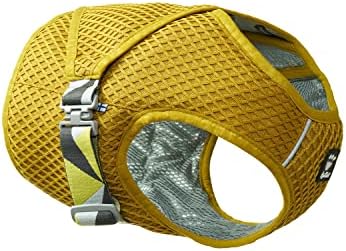
Getting the right fit is non-negotiable. A loose vest will not make proper contact with the dog’s skin, so the cooling effect will be lost. A too-tight vest can restrict movement and breathing. Measure your dog’s chest girth, just behind the front legs, and check each brand’s sizing chart before ordering. Sizing varies greatly between brands. A medium in one range may be a large in another.
Some dogs do not tolerate wearing a vest. The sensation of cold, wet fabric against the chest can feel strange. Some dogs do not like anything strapped around the body. If your dog falls into this category, introduce the vest slowly.
First, wear it for 2 minutes with treats, then remove it. Gradually increase the time over several sessions. If he still hates it after 1 week of gradual introduction, don’t force it. Stressed dogs heat up quickly, not slowly, so forcing a vest on an unhappy dog completely defeats the purpose.
Cooling bandanas for dogs
A cooling bandana is the cheapest and simplest cooling product you can buy. It’s basically a strip of fabric, often with cooling polymer beads or gel, that you soak in water and tie around your dog’s neck. The damp fabric cools the neck area, where major blood vessels are close to the surface. It won’t cool your dog as effectively as a full vest, but it costs a fraction of the price and works well for shorter walks.

A big advantage of bandanas is their durability. Most dogs don’t notice any noticeable difference from wearing a bandana. It’s lightweight, doesn’t restrict movement, and feels like a normal collar. Even dogs who fuss over vests usually accept a bandana without complaint. It’s also incredibly portable. You can keep a pre-soaked bandana in your pocket or bag and use it whenever your dog starts to feel warm.
Prices are low. Most cooling bandanas for dogs on Amazon UK cost between £5 and £15. The Hurtta Cooling Bandana is a reliable pick that uses the same evaporative technology as their vests, just in a simpler format. Some brands sell multipacks of 3 or 4, which is handy because you can keep one at home, one in the car, and one in your walking bag.
There are 2 main types to choose from. Polymer bead bandanas have small beads that swell when soaked and slowly release water over time. These stay cool longer, often 1 hour or more, but when fully saturated the beads make the fabric bulky. Plain fabric bandanas are lighter and less intrusive, but dry faster, usually within 30 to 45 minutes. A plain fabric bandana is perfectly adequate for a quick 20-minute walk around the block.
Make it fit snug enough that the damp fabric sits against the skin, not just on top of the fur. You should be able to slip 2 fingers between the bandana and the dog’s neck. If your dog has a thick double coat, part the fur at the bottom so the fabric makes direct contact with the skin. The whole point is to cool the blood vessels in the neck, and if there’s a layer of insulating fur between the bandana and the skin, it won’t work properly.
Cooling coats for dogs
A cooling coat is essentially a bigger and more substantial version of a cooling vest. It extends from the chest to the hindquarters, covering a much larger surface area of the dog’s body. More surface area means more evaporative cooling, and therefore a stronger overall effect. The trade-off is that a wet cooling coat is heavier than a vest, bulkier, and takes longer to dry.
Cooling coats are especially useful for large breeds and thick-coated dogs. A dog like a German Shepherd or Newfoundland, with a dense double coat, generates and traps a lot of body heat. A vest that only covers the chest doesn’t provide enough surface area to make a real difference. Full-body cooling coats soak down to the skin, bypassing the insulating layer of fur, and provide cooling over a much wider area. These dogs genuinely benefit from the extra coverage.
The weight issue is real. A large cooling coat, when fully soaked, can weigh up to a couple of kilos. This is manageable for a 35kg Labrador, but it may be too much for a 6kg Cavalier King Charles Spaniel. A vest or bandana would be better for smaller breeds. Cooling coats are designed for larger bodies.

Some better cooling coats use dual-layer construction. The inner layer holds water against the dog’s body, while the outer layer slows evaporation. This can stretch the cooling effect from 30 minutes to 1 hour or more. The Hurtta Cooler Coat uses a similar approach and is available in sizes from XXS to XXL. For dogs who also swim, the EzyDog Doggy Flotation and Cooling Coat doubles as a buoyancy aid, a smart dual-purpose design.
Look for buckle and clip fastenings instead of Velcro. Velcro clogs very fast with dog hair and can lose grip after a few weeks. Proper buckles are more secure and longer-lasting. Reflective strips are also worth having if you walk early morning or late evening, and during a heatwave the dog should be walked at this time anyway.
Elevated dog beds
There’s no cooling technology built into an elevated dog bed. No gel, no polymers, no need to soak or freeze anything. It works on pure physics. When the dog is above ground, air circulates freely beneath its body, and the moving air carries heat away. Compare this to a regular dog bed with a thick foam base on a carpeted floor, where heat has nowhere to go but back into the dog’s body. The difference is quite noticeable.
These beds are especially useful at night. During a heatwave, temperatures inside the house can remain uncomfortably high even after the sun goes down. Your dog can’t cool down by sweating while sleeping, so a standard bed can leave him feeling hot and restless all night. An elevated bed in a ventilated room provides a sleeping surface that actually dissipates heat rather than trapping it. It’s the same principle as sleeping on a camping cot instead of a foam mattress on the ground.
Build quality is something to watch out for. Cheap elevated beds, with thin fabric and flimsy frames, can sag under the weight of a dog larger than a terrier. Look for heavy-duty ripstop nylon or similar tough fabric, with a steel or aluminum frame. The K&H Pet Products Elevated Cot and Petsfit Elevated Dog Bed are both well-reviewed on Amazon UK and are usually priced between £25 and £50, which is reasonable for a product that should last for several summers.


Some elevated beds come with clip-on canopies. If the bed will be used outdoors, these are worth considering. A shaded elevated bed in the garden gives your dog a ventilated resting spot that’s protected from direct sun and is a robust setup for passive cooling. The canopy also provides some shelter from light rain, which is useful in the British summer as the scene can change from heatwave to thunderstorm in the same afternoon.
Keep the fabric clean. Dog hair, dirt, and debris can clog the mesh and block airflow. Regularly brush off hair and hose down the bed every few weeks. Most beds have removable, machine-washable fabric tops. Clean bedding with a clear mesh performs noticeably better than bedding that hasn’t been cleaned in months.
Pet pools for dogs
Direct water contact is the fastest way to lower a dog’s body temperature. If you have space in your garden, a dog paddling pool gives your dog the opportunity to regulate his own temperature when he feels too warm. He enters the pool, stands or lies down in the water, and heat begins to drain from his body. It’s simple, effective, and dogs who enjoy water love their own pool.


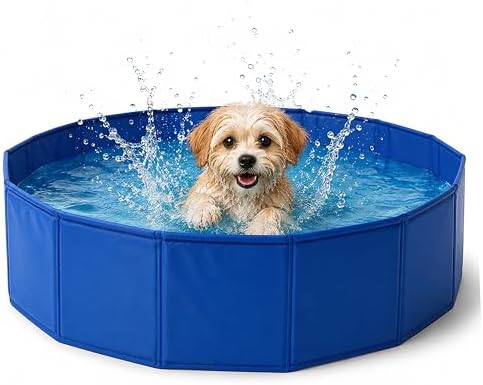
Don’t use cheap children’s inflatable pools. Dogs have claws and stand in the pool with their full body weight. Inflatable pools designed for toddlers can puncture within a few hours of use by a medium-sized dog. Purpose-built dog pools are made from thickened PVC or heavy-duty rubber, with reinforced bottoms. These cost between £20 and £50, which is more than a children’s pool, but they can survive a whole summer, not just a single afternoon. The Pecute Foldable Dog Pool is one of the top sellers on Amazon UK, available in several sizes and made from puncture-resistant PVC.
Size does matter. The pool should be deep enough to allow your dog’s belly to get wet, as that is where cooling is most effective. A shallow puddle that only covers the paws is better than nothing, but won’t help much in a proper heatwave. A medium pool works for most dogs up to spaniel size. For Labradors, Retrievers, and larger dogs, choose a larger size.
Change the water daily. During a heatwave, change it twice a day. Stagnant water heats up quickly and can harbor bacteria. If possible, place the pool in a shaded spot. In direct sun, the water can warm to bath temperature within a couple of hours, after which the cooling benefit is virtually lost. Under a tree or near a shaded wall is an ideal position.
Not every dog likes water, and you shouldn’t force it. Let your dog approach the pool at its own pace. Place treats around the edge and in the shallow end. Some dogs, once they sense the cool water, will happily jump in. Other dogs are never interested. Respect their preference. A pool that the dog doesn’t use just becomes a big puddle taking up space in the garden.
Safety first. Never leave a dog unattended in a pool, especially puppies or very small dogs. Shallow water can be a drowning risk for even toy breeds. Empty the pool when it’s not in use. This prevents accidents and prevents the pool from becoming a mosquito breeding ground, which is becoming a real concern as temperatures rise in some parts of the UK.
Cooling collars for dogs
A cooling collar occupies the space between a bandana and a vest. It wraps around the dog’s neck like a normal collar but contains cooling gel or phase-change material that delivers more cooling power than a simple soaked fabric bandana. The cooling element presses against the skin on the neck, where the carotid arteries carry blood to the brain. Cooling the blood here has a fast effect on your dog’s overall body temperature.

The All for Paws Chill Out Collar is a popular option on Amazon UK. You soak it in water and the cooling gel inside stays active for up to three days without needing to be resoaked. That is a serious step up from a bandana that dries out in 45 minutes. The gel core presses gently against the skin, and the collar fastens with either Velcro or a buckle depending on the design.
Some collars use freezable inserts instead of water-activated gel. You keep the insert in your freezer, clip it into the collar when you are ready to go out, and it provides solid cooling for one to two hours. This is the strongest option for very hot days. The catch is planning. You need to remember to freeze the insert ahead of time, and once it warms up, it needs to go back in the freezer before it will work again.


Cooling collars pair well with other products. A collar and a cooling mat gives you both active outdoor cooling and passive indoor cooling. A collar and an elevated bed is a solid overnight setup during a heatwave. They are cheap enough, usually £10 to £25, that building a layered approach with multiple products does not require a massive budget.
Check the sizing carefully. A collar that is too large will spin around your dog’s neck and the cooling element will not stay in contact with the skin. A collar that is too small will be uncomfortable. Measure your dog’s neck circumference and buy based on that, not just their weight. Most brands list the neck size range for each product size.
How to choose the right products for your dog
There’s no single perfect combination of dog cooling products. The right setup depends on your dog’s breed, size, age, home environment, and how you spend your day. A Chihuahua living in a London flat and a Working Cocker living on a Devon farm won’t need the same gear.
Think of it this way.
Start with your dog’s breed and risk level. Brachycephalic breeds, i.e., flat-faced dogs like Pugs, French Bulldogs, and Shih Tzus, need the most help. They overheat the fastest and cool down the slowest.
For these dogs, I would recommend a cooling vest for outdoor walks, a gel cooling mat for indoors, and a cooling collar as an extra layer. The BVA specifically advises brachycephalic owners to take extra precautions in warm weather, and I would consider this a minimum rather than a suggestion.
Large breeds with thick double coats benefit more from products that cover a larger area of the body. A cooling coat, which extends from the chest to the hindquarters, bypasses the insulating effect of their fur much better than a small vest. Elevated beds keep them above warm surfaces, where the thick undercoat can trap heat against the body. Paddling pools are often a hit for water-loving breeds like Labradors and Spaniels, as they can release heat quickly after exercise.
Small dogs and toy breeds lose heat quickly due to their high surface-area-to-volume ratio, but they also heat up quickly in direct sunlight. A small cooling mat and bandana are usually sufficient. For most small dogs, vests and coats feel bulky on their frame, and the extra weight of a wet coat feels disproportionate on a 5kg dog. Keep it simple for little dogs.
Also consider your daily routine.
- If you work from home and can manage your dog’s environment throughout the day, a cooling mat and elevated bed can cover most needs.
- If you take your dog for walks mid-day, vests and bandanas matter more because you can’t control the temperature on the sidewalk.
- If your dog is home alone during the day, focus on products that work without supervision.
Mats and elevated beds are passive. Vests and bandanas dry out when no one is home to wet them again.
Your home also matters.
Ground-floor flats with tiled floors, north-facing windows, and good ventilation are easier to keep cool than south-facing top-floor flats, especially if they have carpet and single-glazed windows.
If your home becomes a greenhouse in the summer, invest more in indoor cooling products. If your home stays relatively cool, it’s better to spend money on outdoor walking gear.
Don’t buy the cheapest option. A £5 bandana that tears on the second walk, or a gel mat that cracks within a week, is worse than no product because it gives a false sense of security. If I had to pick just two products for any dog, I’d choose a quality gel cooling mat and a reliable evaporative vest. These 2 items can handle most situations. Everything else is supplementary.
Keeping your dog cool without buying anything
Dog cooling products help, but they’re an option, but not a requirement. Some of the most effective ways to keep your dog safe in hot weather are completely free.
Water access is the most important thing. Your dog should have access to fresh water at all times, and during a heatwave, increase the number of water stations in the house. Have a bowl in the kitchen, one in the garden, one near the dog’s bed, and one on each floor if your house is multi-level. Some dogs drink a lot of water while moving, so a pet water fountain can make a real difference in their overall hydration. If you’re outside, carry a travel bowl and offer water every 15 to 20 minutes.
Ice cubes in water bowls are fine for most dogs and keep the water cool longer. Some dogs enjoy them as a crunchy treat. Plain ice is safe. Flavored ice cubes made from diluted chicken broth may encourage picky drinkers, but broth should absolutely avoid onion or garlic. Both are toxic to dogs, even in small amounts.
During a heatwave, completely change your walking schedule. Walk your dog before 8 AM or after 8 PM. At this time, the air is cooler, pavements are cooler, and the sun is either not up or not strong enough to cause problems. If daytime walks are unavoidable, stick to shaded paths and grass, keep walks short, and stop immediately if the dog shows signs of struggling. 5 minutes on grass is infinitely better than 20 minutes on hot tarmac.
Create cool zones in your home. Close curtains and blinds on south- or west-facing windows during the day to block direct sun. Open windows on opposite sides of the house to create a through-draft. Lay a damp towel on the hard floor where the dog can lie down. Set a fan to circulate air, but don’t point it directly at the dog. Most dogs find direct air blasts unpleasant.
Wet your dog’s feet and belly. The fur in these areas is thinner and the blood vessels are closer to the surface, so cooling them has a rapid impact on overall body temperature. Have the dog stand in a shallow tray of cool water or wipe them with a wet towel. Use cool water, around 15°C to 20°C, not freezing water. Icy water surfaces constrict blood vessels, which can trap heat inside the body and worsen the problem.
Adjust mealtimes. Digestion generates body heat, and a large meal in the middle of a hot day forces the dog’s internal cooling system to work harder. Move feedings to early morning and late evening. If your dog eats dry food, make sure the food is stored in a cool, dry place, as heat can rancidify the food’s fats. Our best dry dog food guide covers proper storage in more detail. Wet food has more moisture and can help with hydration in the summer, so consider mixing it in a little.
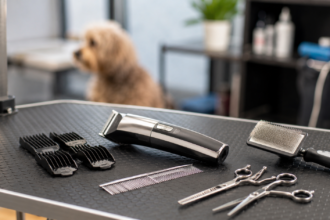
Groom your dog properly. Regular brushing removes dead undercoat that traps heat against the skin. For double-coated breeds, a professional groomer can thin the coat without shaving it, which improves airflow. Never shave double-coated breeds. The undercoat actually provides insulation against both heat and sun. Shaving removes that protection and can expose the skin to sunburn. Brushing is the answer, not shaving.
If you want to learn more about dog grooming, be sure to check out our article Best Dog Grooming Tools.
Heatstroke emergency: what to do right now
If you think your dog has heatstroke, there is no time to research, no time to Google, and no time to wait and see if they improve. This is an emergency and you need to act immediately. The PDSA, Blue Cross, and RSPCA all give the same core advice for heatstroke response.
Move your dog to a cool place right away. Inside a building, into deep shade, into an air-conditioned car. Get them out of direct sun and away from any heat source. Every second they stay in a hot environment, their core temperature keeps climbing.
Cool them with water. Pour cool, not cold, not freezing, water over their body. Focus on the head, neck, belly, and the inside of the back legs where the blood vessels are closest to the surface. A hose, a shower, or a bucket of water all work. You can place wet towels over their body but remove and replace them every few minutes. Wet towels absorb heat and then start acting like a blanket, trapping the heat against your dog. Running water is better than static towels.
Offer small amounts of cool water. Let them drink at their own pace. Do not force water into their mouth because a disoriented dog can choke or inhale it. If they will not drink, wet their tongue and gums gently with water from your fingers or a cloth.
Call your vet immediately. Ring ahead so they know you are coming in with a suspected heatstroke case. This gives the practice time to prepare emergency treatment. Do not wait to see if your dog improves on their own. Heatstroke causes internal damage that is not always visible. A dog that seems to have recovered can still have organ damage, blood clotting problems, or brain swelling that needs professional assessment and treatment. Internal temperatures above 41°C cause catastrophic damage.
Get your dog to the vet with the windows down or the air conditioning running. Keep cooling them with water on the way if possible. Have someone else drive if you can, so you can focus on your dog. If you are alone, drive carefully but do not delay. The BVA is clear that the sooner a dog with heatstroke receives veterinary treatment, the better their chances of survival.
Do not use ice or freezing water. This is one of the most common mistakes. It feels logical that colder is better, but ice-cold water causes blood vessels near the surface of the skin to constrict. That traps heat inside the body and makes the core temperature harder to bring down. Cool tap water, roughly 15°C, is the right temperature.
Never, under any circumstances, leave a dog in a car on a warm day. Not with the windows cracked. Not for five minutes. Not in the shade. The temperature inside a car can double within minutes. The RSPCA has documented cases of dogs dying in cars in as little as 15 minutes. If you see a dog in a car on a warm day and you are worried about its welfare, call 999. This is a genuine emergency.
Where to Buy Dog Cooling Products in the UK
The range of dog cooling products in the UK market has expanded significantly in recent years, and there are now solid options available at every price point.
Amazon UK
Amazon UK stocks the widest range. You’ll find Ruffwear, Hurtta, K&H, All for Paws, and dozens of other brands. Amazon’s advantage is customer reviews and fast Prime delivery. Read reviews carefully, especially 1-star and 2-star reviews. These reviews often flag real issues with sizing, durability, or quality that product descriptions overlook. If a cooling mat has 500 five-star reviews, but 50 one-star reviews say it “fell apart after 2 weeks,” it may not be as bargain-basement as it first appears.
Pets at Home
Pets at Home is the UK’s largest pet retailer, and their larger stores offer a decent selection of cooling mats, bandanas, elevated beds, and paddling pools. The range is narrower than Amazon, but you can see and feel the product before purchasing. This is useful for checking the fabric quality and frame sturdiness of elevated beds. Their own-brand range is reasonably priced, and they also run frequent summer sales. If you want to check sizing in person before ordering premium products online, Pets at Home is a good first stop.
Jollyes and Pets Corner
Jollyes and Pets Corner are also worth checking out. Both stock seasonal cooling ranges, and their staff often have practical experience with the products. Independent pet shops sometimes carry brands that aren’t readily available on the high street. To avoid a wasted trip, it’s best to call ahead and check stock.
Buy from the manufacturer
For premium gear, it can make sense to buy direct from the manufacturer. Both Hurtta and Ruffwear sell through their websites, along with third-party retailers. Buying direct sometimes offers a full range of sizes and colors, better warranty terms, and the assurance that the product is genuine, not a knockoff. For a £60 cooling coat, I’d prefer to buy from the brand’s own site rather than a random Amazon listing.
Some vet practices stock cooling products, especially gel mats, that they recommend for post-operative recovery. These are usually higher quality but also more expensive. If your vet recommends a specific product and you trust their judgment, this is a safe option.
For general dog care supplies beyond cooling gear, browse the full range at dogfoodsuk.com. We cover dog water fountains, travel bowls, and the best dry dog food for every breed, age, and budget.
Frequently asked questions about dog cooling products
Do dog cooling mats actually work?
Yes. Gel cooling mats absorb body heat through pressure when your dog lies on them. Self-cooling fabric mats dissipate heat through conduction. They cannot cool your dog below the ambient temperature, and they are not a substitute for common sense on a 35°C day, but they make a meaningful difference to your dog’s comfort. The key is using them correctly. Place the mat in a shaded spot on a hard, cool floor. Make sure your dog is lying fully on it, not half on and half off. And keep it clean so the surface can make proper contact with your dog’s coat and skin.
Can I use a cooling vest on a brachycephalic breed?
You can, but you need to be extra careful. Flat-faced breeds are the dogs most at risk from heatstroke and they are also the dogs most likely to struggle with anything around their chest or throat. A vest must not restrict their breathing in any way, because their airways are already compromised. Look for vests with an open chest design that does not wrap tightly around the neck. Monitor your dog closely the first few times they wear it. If their breathing seems more laboured with the vest on, take it off immediately. For brachycephalic dogs, cooling mats, elevated beds, and avoiding heat altogether are usually the safest strategies.
How long do evaporative cooling products stay cool?
It depends on the product, the temperature, and the humidity. A soaked fabric bandana stays cool for roughly 30 to 45 minutes on a warm, dry day. A quality evaporative vest typically lasts 45 minutes to 1.5 hours. Dual-layer cooling coats can push that to 2 hours or more. On a humid day, all evaporative products lose effectiveness faster because the air is already saturated with moisture and evaporation slows down. In high humidity, carry extra water so you can re-soak the product during your walk. Polymer bead products tend to hold water longer than plain fabric.
Are cooling products safe for puppies?
Most are, but puppies regulate their body temperature less effectively than adult dogs and they are more sensitive to both heat and cold. Use gentle cooling rather than aggressive cooling. A cooling mat at room temperature is fine. Do not put a vest straight from the fridge onto a puppy, and avoid ice-cold water on their skin. Supervise puppies around pools and water features at all times because they are less coordinated and more prone to accidents than adult dogs. Puppies should also be kept out of direct sun during the hottest parts of the day, cooling products or not.
Can I put a cooling mat in the fridge?
Some gel mats are designed to be chilled in the fridge, and it does increase their cooling power. Check the manufacturer’s instructions first because not all mats are fridge-safe. Freezing is generally a bad idea because the gel can become hard and uncomfortable for your dog to lie on. Fridge temperature, around 4°C, is usually the right balance. A chilled gel mat will feel pleasantly cool when your dog first lies on it, though the effect will wear off faster than a non-chilled mat because the temperature difference between the mat and your dog’s body is larger, so heat transfer happens faster.
What temperature is too hot to walk my dog?
The general guidance from UK veterinary charities is to avoid walking dogs when the temperature exceeds 20°C. Some breeds struggle even below that. Greyhounds, Huskies, and brachycephalic breeds may show signs of heat stress at 18°C. Other breeds might be comfortable at 20°C but struggle at 25°C. Humidity makes a huge difference. A humid 22°C day is harder on a dog than a dry 26°C day because panting is less effective when the air is already saturated. Do the seven-second pavement test, keep walks short, stay on grass where possible, and watch your dog. If they are lagging behind, panting hard, or seeking shade, the walk is over. Turn around and go home.
Do I need a cooling vest if I already have a cooling mat?
They serve different purposes. A cooling mat only works when your dog is lying on it, usually indoors or in the garden. A cooling vest works while your dog is moving, which is when they generate the most heat and need the most help. If your dog spends most of their time indoors during a heatwave, a mat is sufficient. If you need to walk them during the day or take them out and about, a vest is a worthwhile addition. They complement each other well. Vest for walks, mat for home.
Can cooling products replace common sense in hot weather?
No. Cooling products are a tool, not a solution on their own. No amount of cooling gear makes it safe to leave a dog in a hot car, walk them at midday on tarmac, or exercise them vigorously in 30°C heat. Products reduce risk. They do not eliminate it. Use them alongside proper heat management: early or late walks, shade, water access, and knowing when to just stay indoors.
How do I clean a gel cooling mat?
Most gel cooling mats can be wiped clean with a damp cloth and mild soap. Avoid submerging them in water or putting them in the washing machine because this can damage the gel core. Check the manufacturer’s care instructions because some mats have removable, washable fabric covers. For day-to-day maintenance, wiping the surface down is usually enough. If your dog is a heavy shedder, a quick vacuum or lint roller will keep the surface clear of hair, which helps the mat make better contact with your dog’s coat.
Will my dog actually use an elevated bed?
Most dogs take to elevated beds quickly because the mesh fabric is comfortable and the airflow makes the surface noticeably cooler than a solid bed. Some dogs, particularly older ones used to a specific bed, might be hesitant at first. Put their favourite blanket on the elevated bed for the first few days so it smells familiar. Place treats on it. Put it in their preferred resting spot. If your dog has joint problems or arthritis, make sure the bed is low enough to the ground for them to get on and off easily. Some elevated beds have legs that can be shortened to reduce the height.
For more advice on keeping your dog healthy, well fed, and comfortable through every season, head over to dogfoodsuk.com. We test the products that matter for UK dog owners and write about what actually works, so you can spend less time researching online and more time enjoying your dog.