
Dog food costs have risen steadily over the past few years. Vets, social media, and that one friend who feeds their Labrador raw organic venison all urge you to spend more.
But the point is: spending more doesn’t automatically mean better food. Some of the most expensive dog foods on UK shelves are packed with fillers and clever marketing. And some of the cheapest options are genuinely decent.
The UK has proper pet food regulations. Unlike some countries, where almost anything goes, the dog food sold here meets minimum nutritional standards. This baseline matters. This means that even the cheapest kibble bag at your local Tesco should contain enough protein, fat, vitamins, and minerals for a dog to survive and stay reasonably healthy.
I spent weeks checking ingredient lists, comparing prices per kilogram, and looking at the nutritional profiles of dozens of budget dog food brands. This guide covers options that are actually worth your money. No filler recommendations. There is no brand I wouldn’t feed my dog.
What “cheap” actually means in dog food
Let’s get specific about numbers, because “cheap” means different things depending on who you ask.
- For dry dog food, anything under £1 per kilogram is genuinely cheap. Between £1 and £2 per kg is budget-friendly but respectable. Above £2 per kg, you’re edging into mid-range territory.
- For wet dog food, under £1 per tin (400g) or per tray of similar size is cheap. Most supermarket own-brand wet foods sit around 50-80p per tin. Branded options like Butcher’s and Forthglade typically cost 80p to £1.20 each.
These prices matter because they translate into real monthly costs. A medium dog (roughly 15-25kg) eating 200g of dry food per day will get through about 6kg per month. At £0.80/kg, that’s roughly £4.80 a month. At £2/kg, it’s £12. The difference feels small on paper but adds up over a year, especially if you’ve got two or three dogs.
For a more detailed breakdown of what you can get at specific price points, I’ve covered the best dry dog food under £10 and the best wet dog food under £10 in separate guides. This article is about the absolute cheapest options that still do the job properly.
UK pet food regulations: the safety net you might not know about
The UK has one of the best regulatory frameworks in the world for pet food. This is important to understand on a practical level, as it has a direct impact on what goes into your dog’s bowl, even when you’re buying a budget range of food.
FEDIAF nutritional guidelines
FEDIAF (European Pet Food Industry Federation) sets nutritional standards that most European countries, including the UK, follow. These guidelines specify minimum and maximum levels of protein, fat, fiber, vitamins, and minerals. They also cover amino acid profiles and essential fatty acids.
All commercially produced dog food sold in the UK must meet these standards. It’s the law. So when you pick up a bag of Wagg or a tin of Chappie, you know it’s formulated to provide complete and balanced nutrition for your dog. This doesn’t mean it’s the best food on the market, but it definitely means it won’t cause deficiencies.
UK Pet Food Manufacturing Association
The Pet Food Manufacturers’ Association (PFMA) is the UK’s main industry body. Most reputable dog food brands operating in the UK are PFMA members, and membership requires adherence to strict labeling rules and manufacturing standards.
PFMA members must list ingredients in descending order by weight. They must clearly state whether the food is “complete,” meaning it is nutritionally adequate on its own, or “complementary,” meaning it is meant to be fed with other foods. Ingredient listings must honestly state what the food actually contains.
This is genuinely useful for bargain hunters. This means you can pick the cheapest bag on the shelf, read the back label, and understand that the manufacturer isn’t hiding anything dangerous behind vague wording.
What the regulations don’t cover
Here, the floor matters more than the ceiling. Regulations set minimum standards. They don’t differentiate between “good” protein and “okay” protein. Chicken meal is legal. Poultry meal is also legal. “Meat and animal derivatives” is also legal, which is a broad category and can include almost any part of almost any animal.
The British Veterinary Association (BVA) and PDSA both point out that legal dog food meets basic requirements, but quality can vary greatly. A food with 20% chicken as its first ingredient is different from a food with 20% “meat and animal derivatives” as its first ingredient, even if both pass the same regulatory tests.
Red flags to watch for in cheap dog food
Meeting minimum standards doesn’t make a food good. There are specific ingredients and practices that should make you put the bag back on the shelf, even if the price seems right.
Added sugar
Sugar has no use in dog food. Absolutely not. Dogs don’t need it, it provides no benefit, and it can contribute to tooth decay, weight gain, and metabolic problems.
Yet some budget brands, especially bakers, use added sugar or sugar derivatives like caramel. If sugar, glucose syrup, or caramel appear on the ingredient list, it’s best to avoid that food. There are many cheaper alternatives available on the market that don’t have added sugar.
Artificial colours
Dogs don’t care what color their food is. Artificial colors like Sunset Yellow, Tartrazine, and Brilliant Blue are sometimes added to make the food more appealing to the person purchasing it.
These additives have been linked to behavioral issues and allergic reactions in some dogs. They are unnecessary and can even be potentially harmful.
Unnamed meat derivatives
“Meat and animal derivatives” is a legal ingredient description in the UK, and it covers a wide range of animal tissues. This isn’t always a bad thing. The issue is transparency. When a brand uses this phrase instead of naming specific proteins, like chicken, beef, or lamb, you don’t know what your dog is actually eating, or whether the protein source is changing between batches.
Some budget brands use this because it allows them to source the cheapest meat that week. This flexibility keeps costs down, but consistency isn’t possible. If your dog has a sensitivity to a specific protein, these foods are a bad idea.
To understand the difference between decent budget food and genuinely poor quality food in detail, check out my cheap vs premium dog food comparison.
Excessive grain content
Grain isn’t inherently bad for dogs. Marketing may lead you to believe otherwise, but most dogs digest grains perfectly well. The issue is proportion. When cereals, like wheat, maize, or rice, are listed in the first two or three ingredients, and meat is lower down the list, you’re essentially paying for cereal with a little dog food mixed in.
A reasonable dry dog food should have a meat protein as its first ingredient. Having cereals in the top three is fine, as long as the meat content is decent. But if cereals are the first, second, and third ingredients, and meat is fourth, that’s a red flag at any price point.
Top cheap dry dog food brands
These are the budget dry foods I would actually recommend. All of these foods meet FEDIAF standards, have reasonable ingredient quality for their price, and are widely available in the UK.
Harringtons: best overall budget dry food
Harringtons is currently probably the single best value dry dog food brand in the UK. Its standard adult complete food usually costs around £0.85 to £1.00 per kilogram in larger bags, placing it clearly in the budget category.
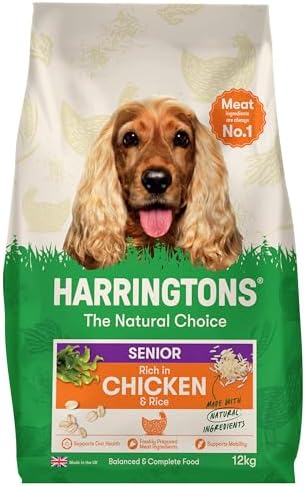
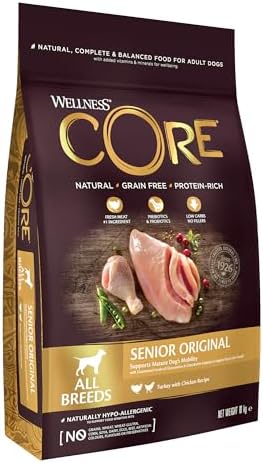
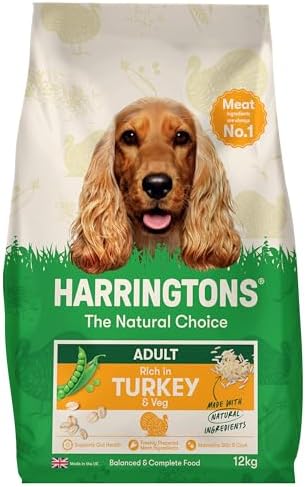
What sets Harringtons apart from similarly priced competitors is ingredient transparency. In the adult chicken recipe, chicken is listed as the first ingredient (minimum 26%), followed by whole grains, such as maize, wheat, and rice, then specific named additions such as peas and lucerne. No generic “meat derivatives.” No added sugar. No artificial colors.
Harringtons is a family-owned British company based in Yorkshire. They have been making dog food since the 1920s and are also a PFMA member. The food is produced in the UK, which matters to those who care about supply chain transparency.
Available from: most supermarkets, pet shops, Amazon, and directly from the Harringtons website. For a detailed head-to-head, I’ve compared Harringtons with its closest budget rival in my Harringtons vs Wagg comparison.
Typical price: £18-22 for a 12kg bag (£1.50-1.83/kg) or £28-32 for a 15kg bag (£1.87-2.13/kg) from supermarkets. Online prices frequently drop below £1/kg on subscription.
Best for: most adult dogs. Good all-rounder for households watching their budget.
Skinners Field & Trial: best for active dogs


Skinners occupies an interesting position. Price-wise, it’s close to mainstream budget brands, but ingredient quality appears noticeably better. Their Field & Trial range starts at around £1.00-£1.20 per kilogram, and the protein content is consistently higher than Harringtons or Wagg.
Field & Trial Chicken & Rice formula, for example, contains a minimum of 25% protein. Meat meal (chicken) is the first ingredient. Rice is used as the main carbohydrate source in the recipe, which is usually easier to digest than wheat or maize. It also contains added linseed for omega-3 fatty acids, which support coat and skin health.
Skinners has been manufacturing dog food in Suffolk since the 1970s. They originally started with working dog food, and that background is reflected in the formulation. These foods are designed to keep energetic dogs active, so they tend to be slightly higher in protein and fat than typical domestic dog food.
They also offer hypoallergenic options, such as duck and rice, and salmon and rice, which can be genuinely useful if your dog has mild sensitivities. I’ve covered this in more detail in my guide to the best budget dog food for sensitive stomachs.
Typical price: £25-30 for a 15kg bag (£1.67-2.00/kg).
Best for: active dogs, working breeds, and dogs that need higher protein without the premium price tag.
Wagg: the cheapest decent option
Wagg comes as close to cheap as dry dog food can get, and still remains genuinely acceptable. Their Complete Dry Dog Food regularly retails for around £0.60-£0.80 per kilogram, which is hard to beat. A 12kg bag is often found on Amazon UK for less than £10.

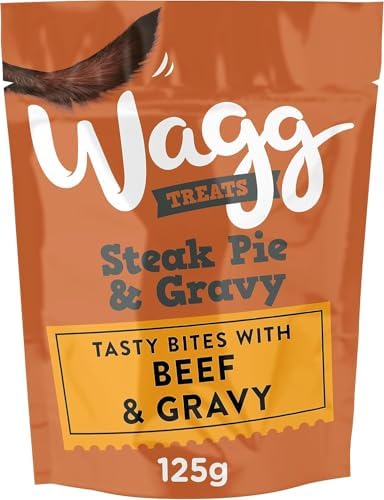

The ingredient list isn’t as impressive as Harringtons or Skinners. Meat and animal derivatives come first, which means you don’t know exactly what the protein source is. Cereals, such as wheat and maize, are also a significant portion. However, there’s no added sugar, no artificial colours, and the food meets FEDIAF complete nutrition standards.
Wagg is a PFMA member and manufactures in the UK. Their food is widely available in supermarkets, pet shops, and online. If you’re on a tight budget and your dog doesn’t have any specific health issues or sensitivities, Wagg will do the trick. It won’t win any awards for ingredient quality, but it will be your dog’s go-to feed.
In terms of quality, I would rank it after Harringtons and Skinners. But if you’re choosing between Wagg and the cheaper supermarket own-brand, Wagg is always the better choice.
Typical price: £8-12 for a 12kg bag (£0.67-1.00/kg).
Best for: owners on the tightest budgets whose dogs are healthy with no dietary sensitivities.
Purina BETA: good for puppies on a budget
BETA’s price point is slightly higher than Wagg’s, around £1.00-£1.30/kg, but this does offer some advantages. Their puppy formula is widely available and reasonably well-regarded among vets as a budget option. It contains 28% protein, with chicken as the first ingredient, making it suitable for growing puppies.


The BETA range offers tailored recipes for different life stages: puppy, adult, and senior. This matters because puppies require genuinely different nutrient profiles than adult dogs, particularly higher protein and specific calcium levels. It’s useful to find a life-stage-specific food at this price point.
BETA’s dual-shaped kibble is also worth mentioning. The larger and smaller kibble pieces are designed for the dog to chew, which can aid digestion. It’s a small detail, but thoughtful.
Typical price: £18-£22 for a 14kg bag (£1.29-£1.57/kg).
Best for: Puppies and owners who want life-stage-specific food without paying premium prices.
Gusto (Aldi’s own brand): surprisingly decent supermarket food
To be honest, I didn’t have high expectations for Aldi’s dog food. Supermarket own-brands are usually a mixed bag. But Gusto, Aldi’s in-house dog food range, is genuinely decent for the price.
Gusto Adult Complete Dog Food usually costs around £0.55-£0.70 per kilogram, making it one of the cheapest options on the UK market. Chicken (14%) comes first in the ingredient list after cereals, peas and beet pulp are included for fiber, and it contains no added sugar or artificial colors. It’s also free from soy and dairy, which can be common allergens for some dogs.

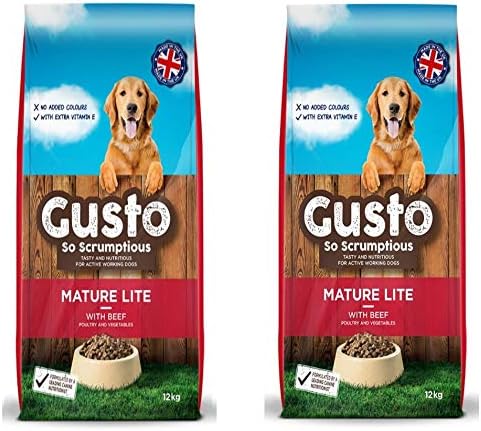
Will it compete with Skinners or Harringtons in ingredient quality? No. But it’s better than some branded options that cost twice as much. If you already shop at Aldi, picking up a bag of Gusto is a sensible move.
I reviewed supermarket dog foods in my best supermarket dog food UK guide. Aldi and Lidl both offer good results, and Gusto seems to be a particularly standout option.
Typical price: £5.29-£7.99 for a 12kg bag, depending on current promotions (£0.44-£0.67/kg).
Best for: Aldi shoppers who want convenience but don’t want to compromise too much on quality.
Chappie: best for sensitive stomachs on a budget


Chappie is a slightly unusual option in the budget market. It’s been around for decades and has built a loyal following among dog owners with sensitive pets. Purina, the manufacturer of Chappie, positions it as a “sensitive” food, and vets often recommend it as an affordable option for dogs with upset stomachs.
The ingredient list is deliberately kept simple. Chicken (4%) and fish (4%) provide protein, while rice and maize serve as carbohydrates. The low fat content, around 6%, makes it easy to digest, and it doesn’t contain wheat, beef, or dairy, which can be common triggers of food sensitivities.
The protein percentage is lower than most budget foods, around 19%. This is within the FEDIAF minimum requirements for adult dogs, but it means Chappie is not ideal for highly active dogs, puppies, or underweight dogs that require a higher calorie intake.
Chappie also contains added fiber from wholegrain cereals, which helps regulate digestion. Many owners report that dogs with chronic loose stools noticeably improve within 1 or 2 weeks of switching to Chappie.
Typical price: £12-£16 for a 12.2kg bag (£0.98-£1.31/kg). Wet food tins (380g) around 60p-80p each.
Best for: dogs with sensitive stomachs or chronic digestive issues. Check my full guide on budget-sensitive stomach options for alternatives.
Top cheap wet dog food brands
Wet food is naturally more expensive per calorie than dry food, because you’re also paying for the water content. However, there are some budget options that provide decent nutrition without the premium price tag. These are the options I would choose.
Butcher’s: the budget wet food champion


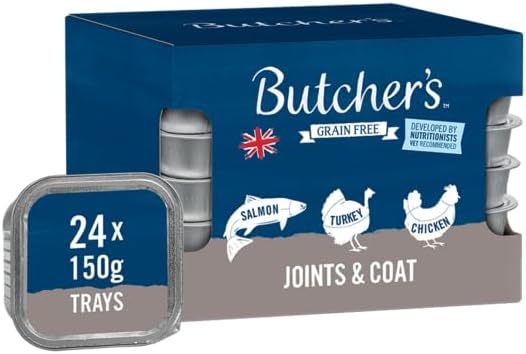
Butcher’s is probably the best-known budget wet dog food brand in the UK, and for good reason. Their tins and trays typically cost 50-80p each, and the ingredient quality is reasonable for the money.
The Butcher’s “Just 6” range is worth seeking out. As the name suggests, each recipe contains only six ingredients, all of which are clearly named on the front of the pack. The chicken recipe, for example, contains chicken, chicken broth, vegetables (peas and carrots), vitamins, and minerals. No derivatives, no filler, no mystery ingredients.
Standard Butcher’s recipes contain a minimum of 45% meat, which is solid for the price point. The tripe recipe is particularly popular with dog owners because dogs seem to love the taste and it’s relatively easy to digest.
Butcher’s is made in the UK, PFMA registered, and available in virtually every supermarket and pet shop in the country. For wet food on a budget, it’s hard to argue against.
Typical price: 50-80p per 400g tin or tray.
Forthglade: best quality budget wet food

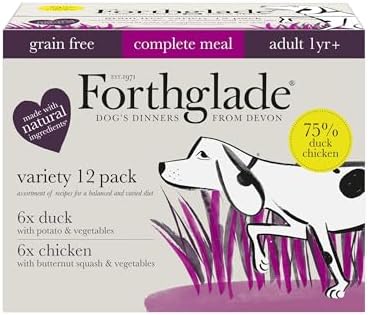
Forthglade falls at the upper end of the “budget” wet food category, but the quality justifies that slight premium. Trays typically cost 80p to £1.10 each, depending on where you buy.
What sets Forthglade apart is their ingredient philosophy. All recipes are grain-free, use single-source proteins, so you know clearly what meat your dog is eating, and contain no artificial additives, colors, or preservatives. Most recipes have a minimum meat content of 65%, which is higher than most competitors, even at higher price points.
Forthglade is made in Devon and has been producing dog food since 1971. These are PFMA members and their food is widely available. The natural soft texture also makes them a good choice for older dogs or those who have trouble eating harder foods due to dental issues.
If your dog has skin issues, salmon recipes are worth trying. Salmon contains omega-3 fatty acids, which can help with coat condition and inflammation. I’ve covered this in more detail in my guide to the best cheap dog food for itchy skin.
Typical price: 80p-£1.10 per 395g tray. Multipacks often bring the per-tray cost down to around 70-80p.
Winalot: traditional budget option


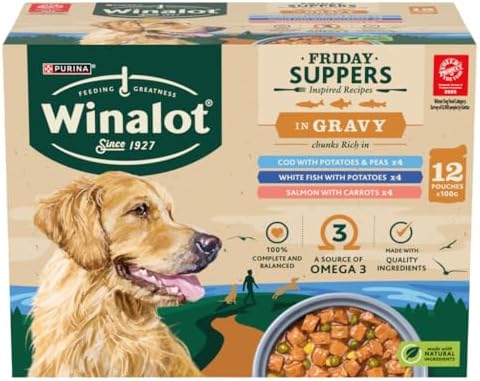
Winalot is one of the UK’s oldest dog food brands. Like Butcher’s, it’s available almost everywhere and the price per tin is roughly the same. The chunk-style food in gravy is what most people imagine as traditional dog food.
Ingredient quality is adequate, but nothing particularly impressive. Standard recipes contain a minimum of 4% named meat, while the remaining protein comes from meat and animal derivatives. It also contains cereals and various additives. It meets FEDIAF standards and is a complete food.
In terms of overall value, I would rank Winalot after Butcher’s. Lower meat content and the use of generic derivatives result in less transparency at roughly the same price. However, dogs generally enjoy the taste, and it’s readily available in almost every supermarket and corner shop in the country.
Typical price: 50p-70p per 400g tin.
Chappie wet food: sensitive stomach option in a tin


Chappie’s wet food deserves a separate mention, as it serves a specific purpose. If your dog has a sensitive stomach and you prefer wet food, Chappie tins are one of the few genuinely affordable options designed for digestive sensitivity.
The recipe is similar to the dry version: low fat, rice-based, and chicken and fish as protein sources. It’s gentle on the digestive system and free of common allergens. Priced at 60p-80p per tin, it’s competitive with other budget wet foods, but its formula is actually designed for dogs with tummy troubles.
How to feed your dog well on a tight budget
Picking the right brand is just one part of the equation. How you buy, store, and feed dog food makes a real difference to both your dog’s health and your wallet. These are practical strategies that actually work.
Buy bigger bags
This is the single most effective way to cut your dog food bill. A 2kg bag of Harringtons might cost £4.00 per kilogram. The same recipe in a 15kg bag might cost £1.50 per kilogram. Same food, less than half the price per kilo.
If storage space is an issue, invest in an airtight container. A decent plastic or metal bin with a tight-fitting lid will keep dry food fresh for 6-8 weeks after opening. That’s more than enough time to get through even a large bag with a single dog.
Use subscriptions
Most online retailers (Amazon, Zooplus, PetPlanet, direct from brand websites) offer subscription discounts. These typically save you 5-15% compared to one-off purchases. If you know your dog eats the same food consistently, setting up a recurring order is basically free money.
Amazon’s “Subscribe and Save” on brands like Harringtons and Wagg often brings prices below what you’d pay at the supermarket, even with supermarket promotions factored in.
Don’t overfeed
This sounds obvious but it’s worth stating. Overfeeding costs you money twice: once when you buy the food, and again when your vet bills are higher because your dog is overweight. The PDSA estimates that roughly 40% of UK dogs are overweight. That’s a lot of wasted food money and a lot of avoidable health problems.
Follow the feeding guidelines on the bag, adjusted for your dog’s actual activity level. If your dog spends most of the day asleep on the sofa, they need less than the “active dog” guideline suggests. Weigh your dog regularly and adjust portions accordingly.
Mix dry and wet
Wet food is more expensive per calorie than dry food. But dogs love it, and it adds moisture to their diet. A practical compromise is to feed mostly dry food with a smaller amount of wet food mixed in. The wet food makes the dry food more palatable (useful for picky eaters) and adds some variety, while the dry food keeps the overall cost down.
A ratio of 75% dry to 25% wet is a good starting point. This cuts your wet food bill by three-quarters while still giving your dog the taste and texture benefits of wet food.
Supplement wisely
If you’re feeding a budget food, there are a few cheap supplements that can fill in nutritional gaps. A tin of sardines in spring water (not oil, not brine) added to your dog’s meal once or twice a week provides omega-3 fatty acids, which support skin, coat, and joint health. At around 40p a tin, it’s one of the cheapest supplements available.
A plain boiled egg a few times a week is another cheap protein boost. Cooked sweet potato, plain pumpkin puree, and grated carrot are all inexpensive additions that provide fibre and vitamins.
Compare prices before you buy
All About Dog Food is an independent UK website that rates dog foods based on their ingredients and nutritional content. It’s free to use and incredibly useful for comparing budget options side by side. You can search by price per kilogram and see at a glance how different brands stack up on ingredient quality.
Don’t assume the supermarket is always cheapest. Online prices, especially with subscription discounts, frequently beat in-store prices by a significant margin. I’ve seen Harringtons 15kg bags at £32 in Tesco and £22 on Amazon in the same week.
Comparison table: cheap dog food at a glance
| Brand | Type | Price per kg | Protein % | Best for |
|---|---|---|---|---|
| Harringtons | Dry | £0.85-1.50 | 24% | Best overall budget |
| Skinners Field & Trial | Dry | £1.00-1.70 | 25% | Active/working dogs |
| Wagg | Dry | £0.60-1.00 | 20% | Tightest budgets |
| BETA | Dry | £1.00-1.50 | 25-28% | Puppies |
| Gusto (Aldi) | Dry | £0.44-0.70 | 20% | Convenience shoppers |
| Chappie | Dry/Wet | £0.98-1.31 | 19% | Sensitive stomachs |
| Butcher’s | Wet | £1.25-2.00 | 45%+ meat | Best budget wet |
| Forthglade | Wet | £2.00-2.80 | 65%+ meat | Quality wet on budget |
| Winalot | Wet | £1.25-1.75 | 4%+ named meat | Traditional option |
Prices are approximate and vary by retailer, bag size, and current promotions. Check multiple retailers before buying.
Frequently asked questions
Is cheap dog food bad for my dog?
No, not necessarily. All commercially sold dog food in the UK has to meet FEDIAF nutritional standards, which means even the cheapest options provide adequate protein, fat, vitamins, and minerals. The difference between cheap and expensive dog food is usually ingredient quality and transparency, not basic nutritional adequacy. A dog fed on Harringtons or Skinners will be perfectly healthy. The main things to avoid at any price point are added sugar, artificial colours, and foods where unnamed derivatives dominate the ingredient list.
What’s the cheapest dog food that’s actually good?
In my opinion, Harringtons represents the best combination of low price and decent quality. At under £1 per kilogram on larger bags (especially on subscription), it’s genuinely cheap and uses named meat as the first ingredient with no added sugar or artificial colours. If your budget is even tighter, Gusto from Aldi at under 70p per kilogram is a reasonable alternative, though the ingredient quality isn’t quite as strong.
Can I mix cheap dry food with cheap wet food?
Yes, mixing dry and wet food is fine and actually quite common. The key is to adjust the total amount you feed so your dog isn’t overeating. If you normally feed 200g of dry food per day and you add half a tin of wet food (roughly 100g), reduce the dry food by about 50-60g. Most dog food packaging includes mixing guidelines. Mixed feeding can actually be beneficial because wet food adds moisture and palatability while dry food helps with dental health through the mechanical action of chewing kibble. If you want to explore this further, I’ve got a full breakdown of the best dog food options in the UK for 2026.
Should I buy supermarket own-brand dog food?
Some supermarket own-brands are fine and some aren’t. Aldi’s Gusto and Lidl’s Milbona are both reasonable options for the price. Tesco and Sainsbury’s own-brands are acceptable but nothing special. The main risk with supermarket own-brands is inconsistent quality and the tendency to use generic “meat and animal derivatives” as the primary protein source. If you do go for a supermarket brand, read the ingredient list and check for added sugar and artificial colours. My supermarket dog food comparison goes through each major retailer’s options in detail.
My dog has a sensitive stomach. What’s the cheapest food that won’t upset it?
Chappie is the most affordable widely-available food specifically designed for dogs with sensitive digestion. Its low-fat, rice-based formula is gentle on the stomach and free from common allergens like wheat and beef. Skinners also offer hypoallergenic options (duck and rice, or salmon and rice) that work well for mild sensitivities. If the sensitivity is more severe, Forthglade’s grain-free wet food trays with single-source proteins are worth a try. For a full breakdown, see my guide to the best budget dog food for sensitive stomachs.
The bottom line
You don’t need to spend a fortune to feed your dog well. The UK’s regulatory framework ensures that even the cheapest commercially available dog food meets basic nutritional standards. But within that framework, some brands clearly do a better job than others.
Harringtons and Skinners are my top picks for dry food. They offer named meat ingredients, no added sugar, no artificial colours, and reasonable prices. For wet food, Butcher’s is the clear budget winner, with Forthglade as the quality option if you can stretch a little further.
Wagg and Gusto cover the ultra-budget end of the market. They’re not perfect, but they’re honest foods that meet minimum standards. And Chappie fills an important niche as the cheapest sensitive-stomach option that actually works.
Whatever you choose, buy bigger bags, use subscriptions, and don’t overfeed. Those three habits alone will save you more money than agonising over which brand to pick.