
British weather throws everything at dog owners. Scorching pavements in July, gritted roads in January, muddy trails in October, and stony beaches all summer long. Your dog’s paws take a beating year round, and most owners don’t think about protection until something goes wrong.
I’ve seen enough limping spaniels on the Lake District fells to know that paw injuries are one of the most common reasons dogs end up at the vet on a weekend walk. And if you take your dog near water, whether that’s a canal, a loch, or the coast, a life jacket is a piece of kit worth serious consideration.
This guide covers the dog boots and life jackets actually worth buying in the UK, when your dog genuinely needs them, and how to get your dog comfortable wearing gear that probably feels weird at first.
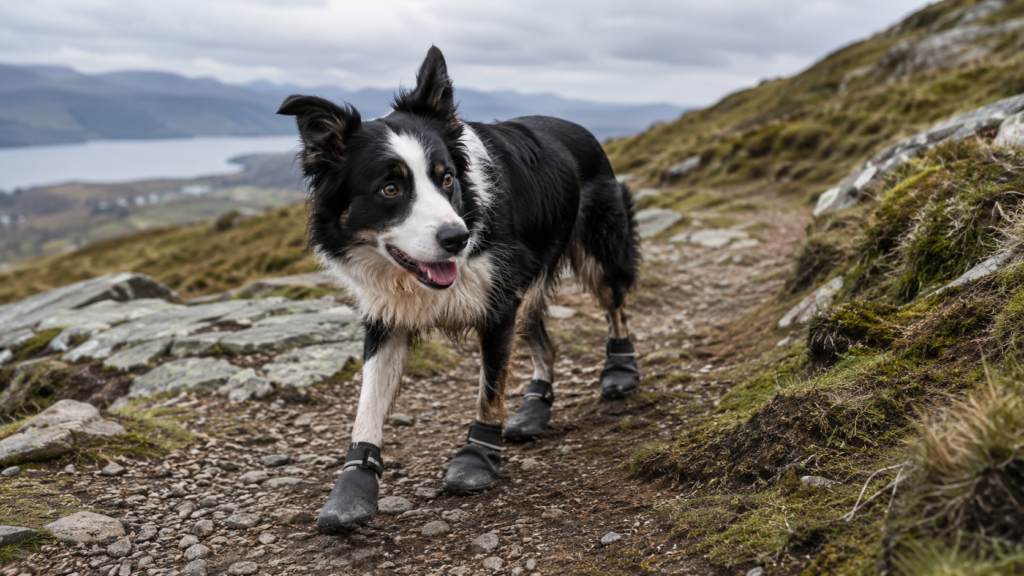
Why your dog might need boots
Dog boots aren’t just a fashion accessory. There are real, practical situations where they make a genuine difference to your dog’s comfort and safety.
Hot tarmac and concrete are the big ones. Pavement temperatures in London and other UK cities regularly hit 50°C during summer heatwaves. That’s hot enough to blister skin. If you can’t hold the back of your hand to the pavement for seven seconds, it’s too hot for your dog’s paws. Simple as that.
Winter brings its own problems. Rock salt and grit on roads and pavements irritate the skin between a dog’s toes. The grit gets lodged in the pads, and the chemicals in de-icing products cause cracking and soreness. Snow and ice can ball up in the fur between toes, which is painful and hard to remove. Boots solve all of these problems in one go.
Then there’s rough terrain. If you walk your dog on coastal paths in Cornwall, rocky trails in Snowdonia, or flinty tracks in the Peak District, the ground underfoot is abrasive. Dogs build up calluses over time, but a soft-footed pet dog fresh from a town walk isn’t ready for a 10-mile hike across sharp stone. Boots give them a layer of protection while their pads toughen up naturally.
Common paw injuries on UK walks
Most paw injuries I hear about from UK dog owners fall into a handful of categories. Knowing what to watch for helps you decide whether boots are a good idea for your particular dog and your usual walking routes.
Cuts and abrasions
Broken glass on pavements, sharp stones on trails, and jagged shells on beaches are the main culprits. A dog’s paw pad is thick, but it can still get sliced. These cuts bleed a lot because paw pads have a rich blood supply, and they take a long time to heal because the pad is under constant pressure when the dog walks.
Minor abrasions heal on their own with rest and a bit of antiseptic. Deeper cuts need vet attention, and your dog might need antibiotics if infection sets in. Prevention with boots is cheaper and less stressful than a Sunday afternoon trip to the out-of-hours vet.
Burns from hot surfaces
British summers might not match Australia’s, but the heat can still cause problems. Dark tarmac absorbs heat and holds onto it. Artificial grass on sports pitches gets dangerously hot. Even sand on a south coast beach at midday in August can burn paw pads.
Symptoms of burnt pads include limping, reluctance to walk, discoloured or darkened pads, and blisters. If you spot any of these signs, get your dog onto cool grass immediately and rinse the paws with cool (not freezing) water. The PDSA has a good guide on treating paw pad burns at home, but severe cases need a vet.
Grit and chemical irritation
Rock salt spread on UK roads in winter contains chemicals that dry out and crack paw pads. Dogs lick their paws after walking on treated surfaces, which means they’re ingesting the chemicals too. That can cause vomiting and diarrhoea in sensitive dogs.
Boots keep the grit and chemicals off the paws entirely. If you don’t use boots, at least wash your dog’s paws with warm water after every winter walk. A paw wash takes ten seconds and saves a lot of grief.
Thorns, seeds, and splinters
Grass seeds (specifically foxtails) are a nightmare for UK dog owners in late summer. They wedge between toes, burrow into the skin, and can travel under the surface to cause abscesses. Thorns from brambles and gorse bushes do the same thing on country walks.
If your dog starts suddenly licking one paw obsessively or holding a foot up, check carefully between the toes. A pair of tweezers and a good light source usually sorts out surface seeds. Anything embedded needs a vet. Boots stop seeds and thorns from getting in there in the first place.
Types of dog boots explained
Not all dog boots are built the same. The type you need depends on what you’re protecting against and what kind of walking you do. Here are the main categories.
All-terrain boots
These are the most adaptable option. Rugged soles, reasonable grip, and materials that handle wet and dry conditions. They’re designed for hiking, trail walking, and general outdoor use. If you only buy one pair of boots, this is the category to look at. The Ruffwear Grip Trex and Hurtta boots sit in this group.
Weather protection boots
Lighter weight, focused on keeping paws dry and protected from cold and chemicals. These work well for winter walks on pavements and parks where the main hazards are grit, salt, and wet ground. They’re usually cheaper than all-terrain boots but won’t last as long on rough trails.
Disposable or bootie-style boots
Thin rubber or latex boots that you pull on like a sock. They’re cheap and they work for specific short-term situations like protecting a healing wound or keeping bandages dry. They tear easily and aren’t suitable for regular long walks. Think of them as a temporary fix, not a long-term investment.
Paw wax and balms
Not boots at all, but worth mentioning. Products like Musher’s Secret form a barrier on the paw pad that protects against ice, salt, and rough surfaces. They’re better than nothing for dogs who won’t tolerate boots, but they wear off quickly and need frequent reapplication. They won’t stop a sharp stone cutting the pad.

Dog life jackets and water safety
Life jackets for dogs are a more recent addition to the pet gear market, and a lot of owners dismiss them as unnecessary. After all, dogs can swim, right?
Most dogs can swim to some degree. But “can paddle in a garden pond” is very different from “can safely swim in open water with currents, waves, and steep banks.” Even strong swimming breeds like Labradors and spaniels can get into trouble in the wrong conditions.
Cold water is the big risk in the UK. Sea temperatures around the British coast rarely exceed 18°C even in midsummer, and inland water like lakes and canals can be shockingly cold. Cold water saps a dog’s energy fast. A fit dog might manage five minutes of swimming in warm water but struggle to keep going for two minutes in cold water with a bit of chop.
Other factors that increase risk include older dogs, overweight dogs, dogs with health conditions, flat-faced breeds (brachycephalic dogs like pugs and bulldogs struggle to keep their airway clear in water), and puppies who haven’t learned to swim confidently yet.
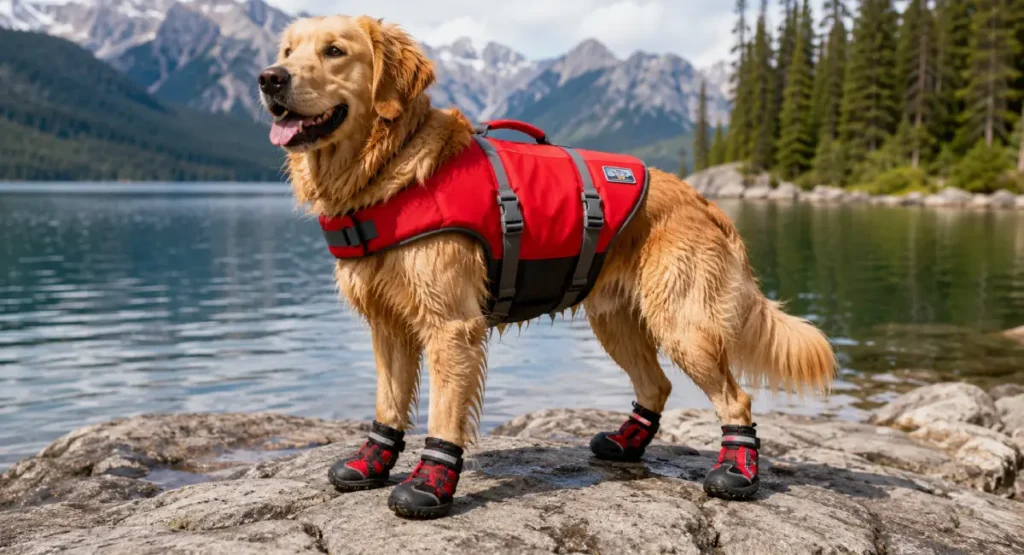
A good dog life jacket adds buoyancy, keeps the dog’s head above water, provides a handle so you can lift them out, and usually has reflective strips for visibility. The Blue Cross recommends life jackets for any dog going into unfamiliar water, and the RNLI advises keeping dogs on a lead near cliffs and tidal water regardless of their swimming ability.
UK water activities with your dog
Britain has no shortage of places to take a dog near water. Here are some of the most popular activities and what to watch out for.
Beach walks and sea swimming
Dog-friendly beaches are brilliant for exercise, but the sea has rip currents, undertow, and waves that can overwhelm a small or tired dog. Check tide times before you go. A rising tide cuts off beach access surprisingly fast on some stretches of coast. Keep your dog close when the surf is rough, and consider a life jacket if they’re keen to swim out after a ball or stick.
Canal and river walks
UK canals have steep, slippery banks that are difficult for a dog (and a person) to climb out of if they fall in. Many canals have deep, cold water with limited visibility. Rivers bring their own hazards: fast currents after rainfall, submerged branches, and steep drops where the bank erodes.
A life jacket is a sensible choice if your dog is prone to jumping in or has poor recall near water. The handle on the back of most jackets gives you something to grab if you need to haul them out of a canal.
Lake swimming
The Lake District, Loch Lomond, and various reservoirs around the UK offer fantastic dog swimming opportunities. Lakes are generally calmer than the sea, but they can still be deep and cold. Blue-green algae is a risk in stagnant or slow-moving water during warm weather. It’s toxic to dogs, so check local warnings before letting your dog swim. The BVA publishes alerts about algae blooms during summer months.
Stand-up paddleboarding and kayaking
More and more dog owners take their pets out on paddleboards and kayaks. If your dog is on a board with you, they should absolutely wear a life jacket. A dog falling off a paddleboard into open water is a genuine emergency if they’re not buoyant and visible. Most dogs settle well on boards once they’re used to the movement, but a life jacket is cheap insurance against the worst case.

Top dog boots for UK walks
I’ve narrowed this down to boots that are genuinely available to UK buyers, have decent reviews from real owners, and actually do the job they claim to do.
Ruffwear Grip Trex boots
These are probably the most well-known dog boots on the market, and for good reason. The Grip Trex has a rubber sole with decent grip, a synthetic upper that’s fairly tough, and a velcro closure system that keeps them reasonably secure.
They come in eight sizes, which covers most dogs from small terriers up to large breeds. The soles are designed for rocky terrain and give good protection against sharp stones. They’re not waterproof, but the materials dry reasonably quickly.
The main complaint from owners is that they can spin on the paw if the fit isn’t perfect, and some dogs take a while to get used to the feel of the rubber sole. They’re also not cheap. You’re paying for quality materials and a well-thought-out design, and most owners who persevere with them are happy with the results.
Ultra Paws durable boots
Ultra Paws boots are a solid mid-range option. They have a tough sole, foam padding inside for comfort, and a wide velcro strap that wraps around the ankle for a more secure fit than some competitors.
They’re popular with UK owners who walk their dogs on a mix of pavements and trails. The sizing runs slightly generous, so measure your dog’s paws carefully and check the size chart before ordering. They come in sets of four, which is what you want. Some cheap boots are sold in pairs, and dogs really need all four protected.
Durability is reasonable for the price. Heavy use on abrasive surfaces will wear them down over a season or two. They’re not as rugged as the Ruffwear option, but they cost considerably less and work well for most everyday walking situations.
Hurtta Outback boots
Hurtta is a Finnish brand that makes seriously good cold-weather dog gear, and their boots are designed with Nordic winters in mind. That translates well to UK conditions. The Outback boots have a rubber sole, a soft fleece lining, and a velcro closure with a reflective strip for visibility in dark winter conditions.
The fleece lining makes these a particularly good choice for winter use. It keeps the paw warm and adds a bit of extra padding against sharp objects. The downside is that the fleece holds water if the dog walks through deep puddles or snow, so they take longer to dry than unlined boots.
Hurtta sizing is based on paw width rather than length, which is actually more reliable for getting a good fit. Measure across the widest part of your dog’s paw when they’re standing on it, and use that measurement to pick the right size.
Top dog life jackets for UK waters
Like boots, there are plenty of cheap life jackets on the market that look the part but don’t perform well in practice. These three are the ones worth your money.
Outward Hound Granby ripstop life jacket
The Granby is a popular choice and one of the easier jackets to find in the UK. It has adjustable straps, a grab handle on top, reflective accents, and floats made from closed-cell foam that won’t absorb water.
The ripstop fabric is tough enough to handle scrambling over rocks and rough ground, which matters if your dog is clambering in and out of water along a rocky shore. It comes in a range of sizes from extra-small up to extra-large, and the price point sits in the middle of the market.
One thing to watch: the Granby runs slightly small in the chest area for deep-chested breeds like greyhounds and boxers. If your dog has a broad or deep chest, consider going up a size and adjusting the straps to compensate.
Ruffwear Float Coat
Ruffwear’s Float Coat is the premium option, and the build quality shows. It has a sleek design that allows good shoulder movement for swimming, strong buoyancy panels, and a well-positioned grab handle that actually works when you need to lift a wet, heavy dog.
The reflective strips are placed for maximum visibility from multiple angles. The buckles are sturdy and easy to clip even with cold, wet hands. The shell fabric is durable and resists snags on branches and rocks.
The price reflects the quality. This is the most expensive option in this roundup, but it’s also the one most likely to last for years of regular use. If you’re taking your dog on or near water frequently, the Float Coat is a strong long-term investment.
Kurgo Surf N Turf life jacket
The Surf N Turf is designed to be a dual-purpose jacket. It works as a life jacket for water and converts into a regular walking harness on land. That’s a clever idea if you want to avoid changing gear when you move between a waterside walk and a pub garden.
Buoyancy is adequate for calm water and supervised swimming. It’s probably not the best choice for rough sea conditions or strong currents, where you’d want something with more float. But for canal walks, lake swimming, and beach play, it does the job.
The harness conversion works by removing the buoyancy panels. The base layer stays on the dog as a standard harness, which is convenient. Sizing is fairly standard, and the adjustment range is generous enough to fit most body shapes.
How to size dog boots properly
Getting the right size is the single most important factor in whether your dog’s boots actually work. Boots that are too big slip off or cause tripping. Boots that are too small restrict movement and rub.
Here’s how to measure your dog’s paws properly.
Stand your dog on a flat, hard surface. Place a piece of paper under one front paw. Mark the paper at the back of the heel pad and at the front of the longest toe. Do the same for the width across the widest part of the paw. Measure both distances in millimetres.
Measure all four paws. Yes, really. Many dogs have slightly different-sized paws on the front and back. Size for the larger measurement. It’s better to have a boot that’s slightly loose than one that’s too tight.
Check the brand’s size chart carefully. Different brands use different sizing systems, and a medium in one brand might be a large in another. Ruffwear sizes by paw length and width. Hurtta sizes primarily by width. Ultra Paws uses a combination of both. Don’t assume your dog is a “medium” across all brands.
When the boots arrive, try them on indoors first. Your dog should be able to walk normally without the boot twisting or slipping off. You should be able to fit one finger between the boot and the dog’s leg at the top. If the boot rotates 90 degrees while your dog walks, it’s either too big or the velcro isn’t tight enough.
For more guidance on dog health and safety equipment, the RSPCA website has useful resources on outdoor safety for pets.
Getting your dog used to boots and life jackets
Most dogs hate boots the first time they wear them. They walk like they’re wearing clown shoes, lifting each paw dramatically and refusing to move. This is normal. It doesn’t mean the boots don’t fit. It means your dog’s brain is telling them something is attached to their foot and it feels weird.
The trick is gradual introduction. Don’t strap all four boots on and head out for a walk. That overwhelms most dogs. Start with one boot on one front paw, indoors, for about two minutes. Give your dog a high-value treat straight afterwards. Repeat this a few times over a day or two until your dog stops fussing about the single boot. Then add a second boot on the other front paw. Then the back paws.
Once your dog is walking normally with all four boots indoors, move to the garden or a quiet outdoor space. Distractions help. Many dogs forget about the boots entirely once they’re sniffing interesting smells or chasing a toy. Keep the first outdoor sessions short. Five to ten minutes is plenty.
Life jackets are generally easier because dogs wear harnesses and coats already, so the sensation of something on their body is familiar. Still, introduce it gradually. Put the jacket on indoors, let your dog wear it for a few minutes with lots of treats, and take it off before they get frustrated. Build up the duration over a few sessions before you take them near water.
Never throw a dog into water wearing a life jacket for the first time. Let them wade in from the shore at their own pace. The jacket changes how their body floats, and they need to work out how to swim with it on. Most dogs adjust within a few minutes, but forcing the issue creates anxiety that lasts much longer.
If your dog is food motivated (and let’s be honest, most dogs are), use treats liberally during the training phase. A bit of cheese or chicken goes a long way towards convincing a suspicious spaniel that strange footwear is actually fine.
Where to buy dog boots and life jackets in the UK
You’ve got several options for buying this gear in the UK, each with pros and cons.
Amazon UK stocks all the products mentioned in this guide, often with next-day delivery if you have Prime. The selection is wide and prices are competitive. The downside is that some listings are from third-party sellers with inconsistent quality, so check the seller’s rating and reviews before buying. Look for “Ships from and sold by Amazon” for the smoothest experience.
Specialist outdoor dog retailers like Snowpaw, Dogs and Horses, and Clip and Tack carry a curated selection of boots and life jackets. These shops tend to stock brands that actually perform well rather than cheap imports, and the staff often have first-hand experience with the products. Prices can be slightly higher than Amazon, but you’re paying for expert knowledge and better post-purchase support.
High street pet shops like Pets at Home and Jollyes stock a limited range of boots and life jackets. The selection is narrower than online, but being able to see and feel the product before buying is useful, especially for sizing. If you’re unsure which size to get, visiting a physical shop to try boots on your dog is a good approach.
Direct from the manufacturer is sometimes the best option for less common brands. Ruffwear has a UK website, and Hurtta products are available from their network of authorised UK retailers. Buying direct ensures you’re getting genuine products rather than counterfeits, which is worth considering given the number of fake pet products on marketplace sites.
For other dog gear to complement your outdoor adventures, check out our guides on cooling products for summer walks, car travel essentials for getting to the trailhead, and the best dog food to keep your dog fuelled for long days out.
Frequently asked questions
Can my dog wear boots all day?
Not recommended. Boots restrict natural paw movement to some degree, and prolonged use can cause rubbing and discomfort. Use them for the specific part of the walk where they’re needed. If you’re walking on tarmac to reach a grassy field, you might only need boots for the tarmac section. Let your dog’s paws breathe whenever it’s safe to do so.
Do dogs actually need life jackets if they can swim?
Situation dependent. A healthy adult Labrador in a calm, shallow lake probably doesn’t need one. A small dog, an older dog, a flat-faced breed, or any dog in cold, deep, or tidal water benefits from the extra buoyancy and visibility. Think of a life jacket as a safety net, not a sign that your dog can’t swim.
How do I clean dog boots?
Most fabric and synthetic boots can be hand washed in warm water with mild soap. Remove any grit or stones from the sole first. Let them air dry completely before the next use. Don’t put them in a tumble dryer because the heat can damage the rubber soles and shrink the fabric. For rubber boots, a rinse under the tap and a wipe with a cloth is usually enough.
My dog keeps kicking the boots off. What am I doing wrong?
First, check the size. Boots that are too loose are the most common reason dogs kick them off. Make sure the velcro straps are tight enough to stay up without cutting off circulation. If the size is right and the boots are properly fastened, your dog might need more gradual training to accept them. Go back to the single-boot, indoors, short-duration method and build up slowly.
Can puppies wear boots?
Yes, but choose lightweight boots and keep sessions short. Puppies are still developing their coordination, and bulky boots can make them stumble. Use boots for specific hazards like hot pavement or gritted roads, and take them off as soon as the hazard is behind you. Don’t use boots as an excuse to take a puppy on walks that are too long for their developing joints.
How should a dog life jacket fit?
The jacket should sit snugly around the chest and neck without restricting breathing or shoulder movement. You should be able to fit two fingers between the jacket and your dog’s body. The jacket shouldn’t slide around when your dog moves. If it rides up towards the neck, it’s too loose at the bottom. If your dog seems reluctant to lower their head, the neck opening might be too tight.
Are cheap life jackets safe?
Some are, many aren’t. Cheap jackets sometimes use open-cell foam that absorbs water and becomes heavy, or have flimsy buckles that break under strain. Look for closed-cell foam buoyancy, sturdy clips, and a grab handle that feels firmly attached. Check reviews from verified buyers specifically mentioning water performance, not just how the jacket looks on the dog.
Can I use dog boots on a dog with an injured paw?
Yes, a boot can protect a healing paw from dirt and further injury, but check with your vet first. Some injuries need air to heal, and a boot traps moisture and warmth that can promote infection. If your vet approves, a lightweight boot over a clean bandage works well for short outdoor toilet trips while the paw recovers.
Do I need all four boots or just the front two?
All four is best. Dogs bear weight on all four paws, and an unprotected rear paw can still get cut or burnt. Some owners use just the front two for lightweight protection on short walks, but for proper safety you want full coverage. Buy sets of four, not pairs.
What’s the best way to dry a dog life jacket after use?
Rinse it with fresh water after every use, especially after swimming in the sea. Salt and sand degrade the materials over time. Hang it up to air dry in a well-ventilated area. Don’t leave it in direct sunlight for extended periods, as UV weakens the fabric and fades the reflective strips. Store it loosely folded or hung up, not stuffed in a bag where it can stay damp and develop mould.