


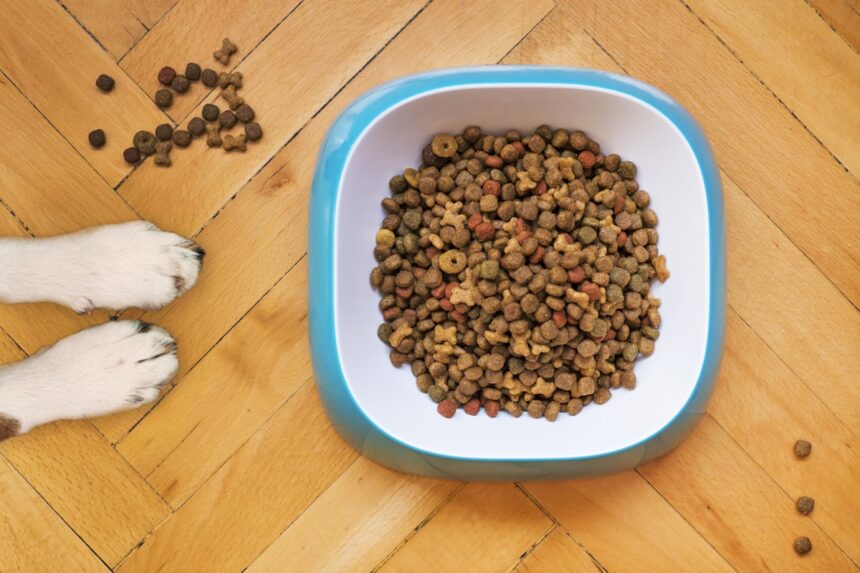
If you live in a house with more than one dog, or a dog and a cat, you already know the problem. One pet finishes their food, then helps themselves to the other’s bowl. Sometimes a greedy eater wolfs everything down before a slower dog even gets close. And if one of your dogs needs a prescription diet or weight-control food, accidental eating by another pet is a genuine health risk.
Microchip pet feeders solve this. They read your dog’s existing microchip (or an RFID collar tag) and open the lid only for the right animal. Everyone else gets locked out. No more food stealing. No more stress at mealtimes.
I’ve spent hours researching and comparing the microchip pet feeders actually available to buy in the UK. This guide covers how they work, which models are worth your money, and which dogs benefit most from using one. I also cover the limitations, because these feeders are brilliant but they’re not magic.
dogfoodsuk.com is created by an individual to help UK dog owners find the best dog foods, feeding equipment, and nutrition advice. Every recommendation here comes from honest research, not sponsorships.

How microchip pet feeders actually work
A microchip pet feeder contains a small RFID (radio frequency identification) scanner built into the base or rim of the feeding bowl. When your dog approaches, the scanner reads the unique number stored in their implanted microchip, which is the same chip your vet uses for identification.
If the scanned number matches one of the stored profiles, the lid opens. When your dog walks away, a sensor detects the absence and the lid closes after a short delay. The whole process takes about a second.
According to Sure Petcare’s product documentation, their feeders can store up to 32 microchip numbers and are compatible with most microchips implanted in the UK, including those conforming to ISO 11784/11785 standards. That covers the vast majority of chips used by UK vets.
If your dog isn’t microchipped (which is a legal requirement in the UK anyway), or if their chip doesn’t register reliably, most feeders come with a collar tag that works the same way. You clip it to their collar and the feeder reads that instead.
The sealed lid design also keeps food fresh for longer. Flies, insects, and other pets can’t get in. That’s useful if your dog is a slow grazer rather than a single-sitting eater.
Why UK dog owners are buying microchip feeders

There are a few specific situations where a microchip feeder makes a real difference.
Multi-dog households. If you have two dogs and one is on a prescription diet, a microchip feeder prevents the other dog from eating food that wasn’t prescribed for them. The BVA recommends keeping prescription foods strictly separated to avoid gastrointestinal problems.
Dogs on weight management. Portion control is one of the simplest ways to manage your dog’s weight, and a microchip feeder ensures the portion you set out is the portion the right dog eats. The PDSA notes that over 40% of UK dogs are overweight, and controlled feeding plays a big role in addressing that.
Dog and cat households. Some dogs eat cat food, and cat food is higher in protein and fat than most dog foods. Over time, that causes digestive upset and weight gain. A microchip feeder keeps cat food where it belongs.
Picky eaters. A sealed lid means food stays fresher and smells more appealing when it finally opens. Some picky dogs eat better when their food hasn’t been sitting out attracting dust or being sniffed at by other animals.
Homes with young children. Toddlers who grab fistfuls of dog food are less of a concern when the bowl is sealed shut between meals.
Top microchip pet feeders available in the UK
I’ve focused on models that are genuinely available to UK buyers through Amazon UK, pet retailers, or direct from the manufacturer. Prices fluctuate, so always check the current Amazon UK listings before buying.
SureFeed Microchip Pet Feeder
This is the original and still the most widely recommended microchip feeder in the UK. Made by Sure Petcare (a UK company based near Cambridge), it’s designed for both cats and small-to-medium dogs.
Best for: Multi-pet households where reliability matters most.
How it works: The SureFeed reads your pet’s microchip or the included RFID collar tag. The lid opens when the recognised pet approaches and closes when they move away. It has a training mode that starts with the lid fully open, then gradually closes it over a period of meals so your dog gets used to the mechanism.
Key features:
- Stores up to 32 microchip IDs
- Works with most UK-implanted microchips (ISO 11784/11785)
- Sealed lid keeps food fresh and keeps insects out
- Battery powered (4 x C batteries, not included)
- Training mode for nervous dogs
- Single bowl capacity suitable for one meal portion
What I like: The build quality is solid. Sure Petcare has been making pet technology since 2009 and their products are widely used and trusted in UK vet practices. The training mode is genuinely helpful if your dog is easily spooked by new gadgets. Customer reviews on Amazon UK consistently mention reliability over several years of daily use.
What to consider: This is a single-portion feeder. It doesn’t hold multiple meals or dispense food automatically at set times. You still need to fill it yourself. The bowl size works well for cats and small dogs, but larger breeds may need to eat in two sessions. The C batteries need replacing every 6 to 12 months depending on use.
Which dogs it suits: Small to medium dogs, multi-dog households, dogs on prescription diets, homes with both dogs and cats.
Which dogs may need another option: Very large breeds that eat large portions in one sitting (the bowl is relatively small), dogs that have been microchipped with non-standard chips (rare but worth checking).
Where to verify: You can check the SureFeed product page on Sure Petcare’s website for full specifications. Amazon UK usually has competitive pricing and customer reviews.
SureFeed Microchip Pet Feeder Connect
This is the WiFi-enabled version of the SureFeed. It does everything the standard model does, but adds smartphone connectivity through the Sure Petcare app.
Best for: Owners who want to track feeding data and control settings remotely.
Key features:
- All features of the standard SureFeed
- WiFi connection for smartphone control
- Sure Petcare app shows which pet ate, when, and how much
- Battery life indicator in the app
- Push notifications if a pet hasn’t eaten
- You can program the lid to stay open or closed at certain times
What I like: The app tracking is useful if you’re monitoring a dog’s appetite for health reasons. If your dog hasn’t eaten by a certain time and you’re at work, you get a notification. That’s genuinely helpful for monitoring senior dogs or dogs recovering from illness.
What to consider: It costs more than the standard model. The WiFi setup requires a 2.4GHz network (it doesn’t work on 5GHz-only networks, which catches some people out). If you just want to stop food stealing and don’t care about tracking data, the standard SureFeed does the job for less money.
Which dogs it suits: Dogs with health conditions where appetite monitoring matters, owners who are out during the day and want peace of mind.
PETLIBRO Granary Camera Feed (RFID version)

PETLIBRO makes a range of smart pet feeders. Their Granary Camera Feed with RFID recognition combines microchip-style feeding with a camera and automatic dispensing. It’s designed primarily for cats but works for small dogs too.
Best for: Owners who want both microchip recognition AND automatic timed feeding with a camera.
Key features:
- RFID collar tag recognition (does not read implanted microchips directly)
- Built-in camera with night vision
- Automatic dispensing at set times via app
- Portion control via smartphone
- 1080p HD video quality
- Supports 2.4GHz WiFi
What I like: This is a proper automatic feeder that also has selective access. You set the schedule, it dispenses the food, and the camera lets you see if the right pet ate it. The app is well-reviewed and the build quality feels premium.
What to consider: It uses RFID collar tags, not direct microchip reading. That means your dog must wear the tag at all times. If your dog isn’t microchipped or you’re fine with collar tags, this isn’t a dealbreaker. But if you specifically want microchip-reading capability, the SureFeed models are better. Also, the food capacity is best suited to cats and small dogs.
Which dogs it suits: Small dogs, households wanting automated scheduling plus monitoring, owners who work long hours.
Which dogs may need another option: Medium to large dogs that need bigger portions, dogs that don’t consistently wear collars.
Where to verify: Check Amazon UK listings for PETLIBRO feeders for current pricing and reviews.
Wopet Automatic Pet Feeder with RFID (various models)
Wopet offers several automatic feeder models, some with RFID collar tag functionality. They’re generally more affordable than SureFeed or PETLIBRO options.
Best for: Budget-conscious owners who want basic selective feeding.
Key features:
- RFID collar tag access control (on supported models)
- Timer-programmable dispensing
- Voice recorder so you can call your dog at mealtime
- Multiple portion settings
- Usually mains powered with battery backup
What I like: The price point is appealing. Wopet feeders are among the most affordable on Amazon UK, and customer reviews often mention good value for money. The voice recorder is a nice touch if your dog responds to your voice.
What to consider: Build quality is not at the same level as SureFeed. The RFID uses collar tags, not direct microchip reading. Some Amazon reviews mention occasional connectivity issues with the app on certain models. If reliability for a prescription diet is your top priority, I’d lean toward SureFeed instead.
Which dogs it suits: Dogs on a budget, owners comfortable with technology troubleshooting, multi-pet homes where the stakes aren’t medically serious.
Which dogs may need another option: Dogs where food access control is critical (prescription diets, severe allergies), tech-averse owners.
Voluas Automatic Pet Feeder with Collar Sensor
Voluas is another budget-friendly brand with RFID-enabled models. Similar to Wopet in positioning, it offers automatic dispensing with selective collar tag access.
Best for: Simple, affordable automated feeding for multiple pets.
Key features:
- Collar RFID tag sensor
- Programmable meal times (up to 4 meals per day)
- Portion size adjustment
- Built-in voice recorder
- Easy-clean removable food tray
What I like: Straightforward setup and a clear LCD display. The portion control is genuinely useful if you’re managing weight.
What to consider: Like Wopet, this relies on collar tags rather than implanted microchips. The build is functional rather than premium. Best suited to households where basic food separation is the goal, not medical-grade access control.
How to choose the right microchip feeder for your dog

Here’s what actually matters when you’re deciding.
Microchip versus collar tag. If your dog always wears a collar, collar-tag feeders work fine. If your dog loses collars frequently, or you want the simplicity of using their existing microchip, choose SureFeed. Most UK vets implant chips that SureFeed reads without issue.
Bowl size. Match the bowl to your dog. A small bowl designed for a 5kg terrier won’t hold enough for a 30kg Labrador’s dinner. Check the stated capacity in grams or millilitres before buying.
Power source. Battery-only feeders mean you need to keep spare batteries. Mains-powered feeders need to be near a plug socket. Some offer both. Think about where the feeder will live in your home.
Number of pets. If you have four dogs, you need four feeders, or at least one per pet that needs food protection. The SureFeed can recognise up to 32 chips, but only one lid opens at a time. Each dog needs their own unit.
Manual versus automatic. Manual feeders (like the standard SureFeed) require you to put food in the bowl each time. Automatic feeders (like PETLIBRO and Wopet) store food and dispense it on a schedule. If you’re home for most meals and just want to stop stealing, manual is fine. If you’re out during the day, automatic is worth the extra cost.
Your dog’s temperament. Some dogs are startled by motorised lids. Both SureFeed models have a training mode for this reason. If your dog is particularly anxious about new things, expect a gradual introduction over a week or more.
Setting up a microchip feeder: practical tips
Getting your dog used to a microchip feeder takes patience. Here’s what works.
Start with the lid locked open. Let your dog eat from the bowl without the lid moving at all for the first couple of days. This builds positive association. Your dog needs to think of the feeder as “their bowl,” not “that scary thing that moved.”
Next, switch to training mode if your feeder has one. On the SureFeed, this means the lid opens slowly and stays open longer. Your dog learns that the motor sound means food is coming, not that something bad is happening.
Place the feeder away from your other pets’ bowls initially. Once your dog is confident eating from it, you can move it closer. The goal is to prevent competition or intimidation while your dog learns the new system.
If you’re using a collar tag, attach it to the collar your dog already wears. Don’t add a heavy or noisy tag that might bother them. Most RFID tags are small and lightweight.
Clean the bowl regularly. Food residue around the lid seal can cause the mechanism to stick over time. Most models have removable bowls that are dishwasher safe, which makes this straightforward.
Check the batteries every few months. A dead battery at mealtime means your dog can’t access their food. Some WiFi models send low-battery alerts to your phone.
Can microchip feeders help with dog weight management?
Weight management in dogs is a significant concern in the UK. The PDSA’s annual PAW Report found that a large percentage of UK dogs are above their ideal body weight, and controlled feeding is one of the most effective ways to address this.
Microchip feeders contribute to weight management in two ways.
First, they prevent one dog from eating another dog’s food. In multi-dog homes, it’s common for one dog to be the “hoover” who finishes everyone else’s meals. That dog gains weight while the others may not eat enough. Separate feeding with microchip control means each dog gets exactly the calories intended for them.
Second, some automatic models (like the PETLIBRO and Wopet) allow precise portion control. You set the portion size in the app, and the feeder dispenses exactly that amount. No guessing, no overfilling.
That said, a microchip feeder alone won’t make your dog lose weight. It’s a tool. You still need to feed the right amount of food, choose appropriate food for your dog’s life stage and activity level, and provide regular exercise. If you’re unsure about your dog’s ideal weight or daily calorie intake, ask your vet rather than relying on general guidelines.
For more detailed guidance on choosing the right food for your dog, our guide to the best dry dog food UK covers options for different life stages and dietary needs.
Microchip feeders and prescription diets
If your vet has prescribed a specific diet for one of your dogs, a microchip feeder is one of the most reliable ways to prevent other pets from eating it. Prescription diets are formulated for specific health conditions. A dog with kidney disease eating food meant for a dog with food allergies could cause real harm.
According to Blue Cross veterinary guidance, keeping prescription foods strictly separated is important for treatment effectiveness. A microchip feeder provides a physical barrier that doesn’t depend on you being in the room.
If you’re using a microchip feeder for this purpose, I’d recommend the SureFeed over budget alternatives. The microchip reading is more reliable than collar-tag systems (collars can fall off, tags can break), and for medically necessary food separation, reliability matters more than saving a few pounds.
Common problems and how to fix them
“My dog is scared of the lid.” Use training mode. Go slowly. Prop the lid open for the first few days. Hand-feed your dog next to the feeder so they associate it with positive experiences. Never force a scared dog toward the bowl.
“The feeder doesn’t recognise my dog’s chip.” This is uncommon but possible. Some older microchips or non-standard chips may not register. First, check that the chip is working by having your vet scan it. If the chip is fine, contact the feeder manufacturer. SureFeed has a compatibility checker on their website. If the chip genuinely can’t be read, use the collar tag option instead.
“The lid opens for the wrong pet.” Make sure you’ve only programmed in the correct microchip numbers. On the SureFeed, you can add and remove pets through the programming button. Double-check that you haven’t accidentally added a cat’s chip to a dog’s feeder or vice versa.
“The batteries run out quickly.” Make sure you’re using good-quality alkaline batteries. Rechargeable batteries often have lower voltage and may cause intermittent operation. Check the battery compartment for corrosion. Some users report longer battery life with lithium batteries.
“My dog pushes the lid open with their nose.” This is more common with larger, more determined dogs. The SureFeed lid has a motorised latch that resists moderate pushing, but a large determined dog can sometimes force it. If this happens, you may need a feeder with a stronger latch mechanism or place the feeder against a wall so the lid can’t be pushed from behind.
Are microchip feeders worth the money?
For a single-dog household with no food access issues, probably not. You’re adding complexity to something that works fine with a normal bowl.
For multi-dog households, they’re genuinely useful. If you’ve ever had to stand guard between two bowls at dinner time, or if you’ve come home to find one dog bloated and the other hungry, a microchip feeder removes that stress. The initial cost of around £80 to £160 is reasonable for something that lasts years and solves a daily problem.
For households managing prescription diets, they’re close to essential. The cost of a SureFeed is small compared to the cost of prescription food that’s been eaten by the wrong pet, or the vet bills that result.
For anxious dog owners who worry about whether their dog has eaten while they’re at work, the WiFi-connected SureFeed Connect provides real peace of mind. The ability to check feeding activity on your phone and get notifications if a meal is missed is worth the premium for the right person.
Where to buy microchip pet feeders in the UK
SureFeed products are available direct from Sure Petcare, from Amazon UK, and from most large pet retailers including Pets at Home and Jollyes. Buying direct sometimes gets you the best warranty support, while Amazon UK often has the most competitive pricing and a wider selection of customer reviews.
PETLIBRO, Wopet, and Voluas products are widely available on Amazon UK. Check customer reviews carefully before choosing a specific model, as these brands have multiple variations and quality can vary between them.
If you’re buying from Amazon UK, you can compare prices and read customer reviews here. Always check the delivery estimate and make sure the product is shipped from or sold by Amazon UK to avoid long delivery times from overseas sellers.
Final thoughts
Microchip pet feeders are one of those products that sound gimmicky until you actually need one. In a multi-dog home where one pet is on a special diet, or where one dog hoovers up everyone’s meals, they solve a real problem with minimal fuss.
The SureFeed remains the benchmark for reliability and microchip compatibility. It’s the one I’d recommend first to any UK dog owner. The Connect version is worth the upgrade if you want monitoring features. Budget options from PETLIBRO and Wopet are fine for less critical situations where collar tags are acceptable and you want automated scheduling too.
If you’re researching dog food to pair with your new feeder, check out our guides on grain-free dog food, wet dog food for dogs, and senior dog food for specific recommendations.
Frequently asked questions
How do microchip pet feeders work?
A microchip pet feeder has a built-in RFID scanner that reads your dog’s implanted microchip (or a collar tag). When the scanner recognises your dog’s unique chip number, the lid opens. When your dog walks away, the lid closes automatically. This prevents other pets from accessing the food.
Do microchip pet feeders work for dogs?
Yes. Most microchip pet feeders are designed for both cats and dogs. The SureFeed Microchip Pet Feeder, for example, is widely used by UK dog owners. The main consideration is bowl size. Small to medium dogs use standard bowls comfortably. Very large breeds may need to eat larger portions across two sessions or look for a larger model.
Will any microchip work with these feeders?
Most microchips implanted by UK vets conform to ISO 11784/11785 standards and are compatible with SureFeed feeders. Very old chips or non-standard chips may not register. Sure Petcare offers a compatibility checker on their website. If your dog’s chip doesn’t work, all microchip feeders come with RFID collar tags as a backup.
Can a dog force the lid open?
Small to medium dogs generally can’t force a motorised lid open. Very large, strong dogs have been known to push the lid open on some models, particularly if they’re determined. If this is a concern, look for a feeder with a strong latch mechanism and position it against a wall to prevent access from behind.
Do microchip feeders keep food fresh?
Yes. The sealed lid design prevents flies, insects, and other pets from reaching the food. This keeps it fresher for longer compared to an open bowl, particularly in warm weather or if your dog is a slow grazer.
How long do the batteries last?
Battery life varies by model and usage. The standard SureFeed uses 4 x C batteries, which typically last 6 to 12 months with normal daily use. WiFi-enabled models may drain batteries faster due to the wireless connection. The SureFeed Connect app provides a battery level indicator.
Can I use one feeder for multiple dogs?
No. Each feeder recognises one pet at a time. If two recognised pets approach simultaneously, the feeder opens for whichever pet it detects first. In a multi-dog household where each dog needs protected feeding, you need one feeder per dog.
Are microchip feeders worth it for a single dog?
For a single dog with no feeding issues, a microchip feeder is probably unnecessary. A standard bowl works fine. They’re most valuable in multi-pet households, homes with dogs on prescription diets, or situations where you need to monitor feeding remotely.