
Best Dry Puppy Food UK 2025: Top Kibble Options for Healthy Growth
When it comes to feeding your new puppy, dry puppy food (kibble) remains the most popular choice among UK dog owners — and for good reason. It’s convenient, cost-effective, easy to store, and when you choose a high-quality brand, it delivers exceptional nutrition that supports every stage of your puppy’s development. According to the Pet Food Manufacturers’ Association (PFMA), dry food accounts for over 60% of all dog food sold in the UK, reflecting its widespread acceptance and proven nutritional adequacy.
But with literally hundreds of dry puppy food options lining the shelves of Pets at Home, Zooplus, and independent pet shops across the country, how do you separate the genuinely excellent products from the clever marketing? That’s exactly what this guide is designed to do.
We’ve analysed the ingredients, nutritional profiles, price points, and real-owner reviews of the leading dry puppy food brands available in the UK. We’ve consulted FEDIAF nutritional guidelines, referenced PDSA veterinary advice, and studied independent reviews on trusted platforms like All About Dog Food to create this definitive guide to the best dry puppy food in the UK.

What Makes a Great Dry Puppy Food?
Not all kibble is created equal. Understanding what separates a premium dry puppy food from a budget option is the first step to making an informed choice. Here are the key factors that distinguish the best products:
1. Named Animal Protein as the First Ingredient
The ingredient list on any quality dry puppy food should start with a named meat source — such as “chicken,” “lamb,” “salmon,” or “turkey” — rather than vague terms like “meat meal” or “animal derivatives.” The UK Animal Feed Regulations require ingredients to be listed in descending order by weight, so the first ingredient is always the most abundant in the recipe.
2. High-Quality Protein Content (25-32%)
According to FEDIAF guidelines, growing puppies require significantly more protein than adult dogs to support muscle development, organ growth, and immune function. The best dry puppy foods typically contain between 25% and 32% protein from high-quality animal sources. If you want to understand more about the role of meat protein in your dog’s overall diet, our dedicated guide explains the science in detail.
3. Controlled Calcium Levels for Bone Development
This is especially critical for large breed puppies. Excess calcium during growth can cause developmental orthopaedic diseases. The best brands offer separate formulas for small, medium, and large breed puppies with appropriately calibrated mineral content.
4. Natural Preservation
Premium dry puppy foods use natural preservatives like vitamin E (tocopherols) and rosemary extract instead of synthetic preservatives such as BHA, BHT, and ethoxyquin. Natural preservation is gentler on your puppy’s developing system.
5. No Unnecessary Fillers
Avoid products that use excessive amounts of cheap fillers like maize gluten feed, soya hulls, or generic “cereals.” While some carbohydrate is necessary to form the kibble structure, the best brands use digestible, nutritious sources like rice, oats, or sweet potato.
Quick Comparison: Our Top 10 Dry Puppy Food Picks
| Rank | Product | Protein | Best For | Price/12kg | Rating |
|---|---|---|---|---|---|
| 1 | Royal Canin Puppy | 28-32% | Breed-specific nutrition | £35-55 | ⭐⭐⭐⭐⭐ |
| 2 | Arden Grange Puppy Junior | 30% | All-round excellence | £35-42 | ⭐⭐⭐⭐⭐ |
| 3 | Lily’s Kitchen Puppy | 29% | Organic & natural | £38-45 | ⭐⭐⭐⭐½ |
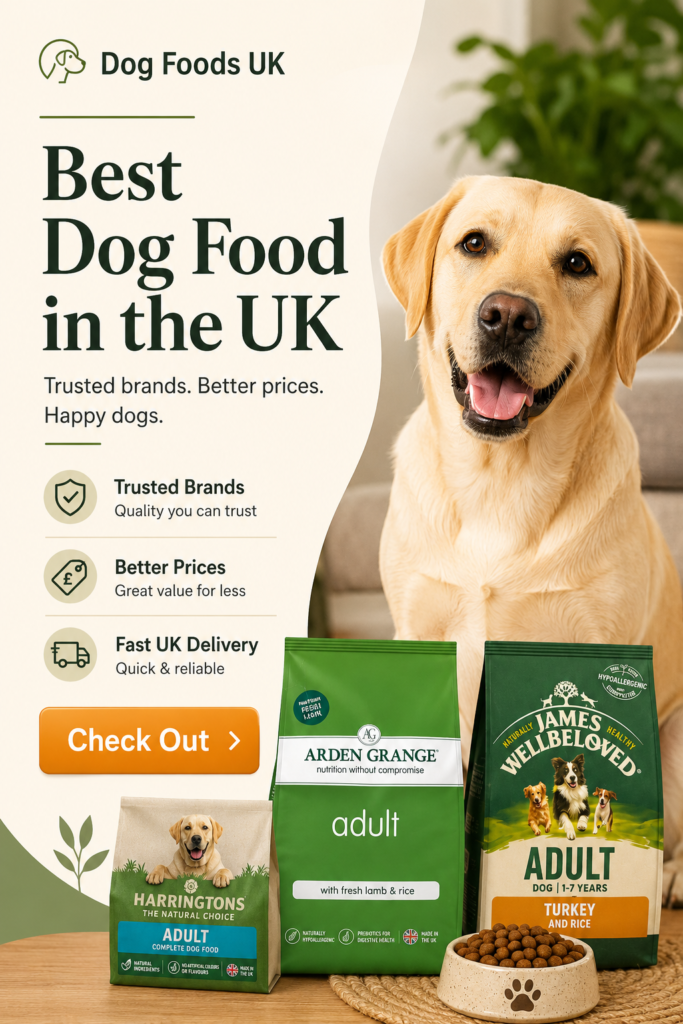
| 4 | James Wellbeloved Puppy | 27% | Sensitive digestion | £30-40 | ⭐⭐⭐⭐½ |
| 5 | Harringtons Puppy | 26% | Budget quality | £22-28 | ⭐⭐⭐⭐ |
| 6 | Eden Puppy | 38% | High-protein natural | £45-55 | ⭐⭐⭐⭐⭐ |
| 7 | Burns Puppy | 22% | Hypoallergenic | £32-38 | ⭐⭐⭐⭐ |
| 8 | Millie’s Wolfheart Puppy | 34% | Grain-free natural | £38-48 | ⭐⭐⭐⭐ |
| 9 | Skinner’s Puppy | 28% | Working breed pups | £25-32 | ⭐⭐⭐⭐ |
| 10 | Pooch & Mutt Puppy | 26% | Health-focused | £28-35 | ⭐⭐⭐⭐ |
In-Depth Reviews: Our Top 10 Dry Puppy Foods
1. Royal Canin Puppy — The Science-Backed Favourite
Key Features:
- Breed-specific and size-specific formulas available
- Developed with veterinary nutritionists and breeders
- Patented kibble shape adapted to each breed’s jaw structure
- Includes DHA for brain development and prebiotics for gut health
Royal Canin is perhaps the most widely recommended dry puppy food brand among UK veterinary professionals, and their approach is fundamentally different from most competitors. Rather than offering a single “one size fits all” puppy formula, Royal Canin develops tailored recipes for specific breeds and sizes.
For example, their Labrador Retriever Puppy formula includes specific nutrients to support healthy weight management (Labs are notoriously food-motivated), while their German Shepherd Puppy formula contains added prebiotics and a specific kibble shape that encourages thorough chewing. Their Mini Puppy formula for small breeds features an energy-dense kibble suited to faster metabolisms.
What sets Royal Canin apart in our analysis is the scientific rigour behind every recipe. Each formula is backed by peer-reviewed research and developed in collaboration with veterinarians, universities, and breed specialists worldwide. This isn’t just marketing — it’s genuinely evidence-based nutrition.
Nutritional highlights: Protein 28-32% | Fat 14-18% | Fibre 2.5-4% | Added DHA, EPA, prebiotics, and antioxidants
Available at: Pets at Home, Zooplus, Amazon UK, and most UK vet practices
2. Arden Grange Puppy Junior — Premium Quality at a Fair Price
Key Features:
- Fresh chicken as primary protein source (not dried meal)
- No wheat, beef, soya, or dairy products
- Contains prebiotic MOS and added nucleotides
- Suitable from weaning through to adulthood
Arden Grange is a British company that consistently impresses independent reviewers on All About Dog Food, often achieving ratings above 90%. Their Puppy Junior formula is designed as a “one food for the whole journey” — it supports puppies from weaning right through to adulthood, eliminating the need to transition between puppy and junior formulas.
The standout feature is their use of fresh chicken rather than dried chicken meal. Fresh meat retains more of its natural amino acid profile and nutrients compared to the dehydrated alternatives used by many competitors. Combined with prebiotic MOS (Mannan-oligosaccharides) to support gut flora and added nucleotides for immune function, this is an exceptionally well-formulated product.
Nutritional highlights: Protein 30% | Fat 13% | Fibre 2.5% | Prebiotic MOS, nucleotides, glucosamine, chondroitin, and MSM
Available at: Zooplus, PetPlanet, and independent pet retailers
3. Lily’s Kitchen Puppy — Organic Excellence
Key Features:
- Free-range chicken as primary protein
- Organic ingredients used throughout
- Added probiotics for digestive and immune health
- RSPCA “Big Tick” award for animal welfare commitment
Lily’s Kitchen has built a devoted following among UK dog owners who value natural, ethically sourced ingredients. Their Puppy Recipe Dry Food features free-range chicken alongside a blend of organic sweet potato, organic peas, and a selection of botanical herbs including marigold, burdock root, and nettle.
What makes Lily’s Kitchen particularly appealing is their complete commitment to transparency. Every ingredient is clearly named and sourced, with no hidden “meat and animal derivatives.” The addition of both prebiotics and probiotics supports optimal gut health during this critical developmental period, and the inclusion of omega-3 and omega-6 fatty acids promotes a healthy skin and coat.
Nutritional highlights: Protein 29% | Fat 14% | Fibre 4% | Added probiotics, prebiotics, omega-3 and omega-6 fatty acids
Available at: Pets at Home, Waitrose, Ocado, and directly from lilyskitchen.co.uk
4. James Wellbeloved Puppy — The Hypoallergenic Champion
Key Features:
- Single-source animal protein in each recipe
- Hypoallergenic formula free from wheat, soya, and beef
- Natural herbs including rosemary and alfalfa
- Available in Turkey & Rice, Duck & Rice, and Fish & Rice
James Wellbeloved has been a staple of UK pet nutrition for over 25 years, and their puppy food remains one of the most trusted options for puppies with sensitive digestion. The hypoallergenic approach means each recipe uses a single animal protein source, making it easier to identify and avoid potential allergens.
We particularly recommend the Turkey and Rice Puppy variety, which is their most popular option. Turkey is a lean, easily digestible protein that’s gentle on developing digestive systems, while rice provides complex carbohydrates for sustained energy. The addition of natural prebiotics and cranberry extract supports urinary tract health — a thoughtful touch that many competitors overlook. If your puppy struggles with food-related inflammation or sensitivities, this is one of the safest starting points.
Nutritional highlights: Protein 27% | Fat 12.5% | Fibre 3.5% | Added prebiotics, cranberry extract, and natural antioxidants
Available at: Pets at Home, Zooplus, Amazon UK, and most supermarkets
5. Harringtons Puppy — Best Value British Kibble
Key Features:
- Affordably priced without compromising on quality
- British-made in Yorkshire with locally sourced ingredients
- No artificial colours or flavours
- Family-run company with strong ethical values
Harringtons proves that excellent puppy nutrition doesn’t have to cost a fortune. This family-run Yorkshire company has been producing quality pet food since 2005, and their puppy formula delivers solid nutritional value at a price point that makes quality feeding accessible to all UK dog owners.
The recipe centres on chicken as the primary protein, supported by brown rice, oats, and peas for digestible carbohydrates and fibre. While it may not include the exotic superfood ingredients found in premium brands, Harringtons focuses on getting the fundamentals right: quality protein, digestible carbohydrates, and a complete vitamin and mineral profile that meets FEDIAF standards.
Nutritional highlights: Protein 26% | Fat 12% | Fibre 3% | Complete vitamin and mineral profile
Available at: Pets at Home, Amazon UK, Wilko, and B&M Stores
6. Eden Puppy — High-Protein Natural Powerhouse
Key Features:
- Exceptionally high 38% protein content from animal sources
- 80% meat content including fresh and dried meats
- Grain-free with sweet potato
- Naturally preserved with vitamin E and rosemary extract
Eden is one of the UK’s highest-rated dog foods on All About Dog Food, and their puppy formula is truly exceptional. With an extraordinary 80% total meat content and 38% protein, Eden approaches the nutritional profile of raw feeding while maintaining the convenience of kibble.
The recipe features a blend of fresh chicken, dehydrated chicken, chicken meal, and salmon, providing a diverse amino acid profile. Sweet potato serves as the primary carbohydrate, offering excellent digestibility and a lower glycaemic index than grains. The addition of joint-supporting ingredients like glucosamine, chondroitin, and MSM makes this particularly good for breeds prone to joint issues.
Important note: Due to the grain-free formulation, please be aware of the UK Government’s guidance regarding a potential link between grain-free diets and DCM (Dilated Cardiomyopathy). If you choose Eden, discuss this with your vet.
Nutritional highlights: Protein 38% | Fat 16% | Fibre 3.5% | Glucosamine, chondroitin, MSM, omega-3, and omega-6
Available at: Direct from edenpetfoods.com and selected online retailers
7. Burns Puppy — Vet-Developed Simplicity
Key Features:
- Created by veterinary surgeon John Burns
- Deliberately moderate protein and fat for controlled growth
- Simple, hypoallergenic ingredient list
- Produced in Wales with British ingredients
Burns Puppy food takes a fundamentally different philosophy to most competitors. Rather than maximising protein and fat, Burns deliberately keeps these levels moderate, based on the belief that a steady, controlled growth rate produces healthier long-term outcomes. This approach is backed by veterinary science and particularly recommended for puppies prone to rapid growth or weight gain.
The chicken and brown rice recipe is naturally hypoallergenic, making it an excellent choice for puppies with sensitive skin or digestive systems. The simple ingredient list — chicken, brown rice, peas, chicken fat, and essential vitamins/minerals — minimises the risk of triggering allergic reactions. Many UK owners report that Burns produces smaller, firmer stools and helps resolve coat and skin issues.
Nutritional highlights: Protein 22% | Fat 10.5% | Fibre 4% | Simple hypoallergenic formula
Available at: burnspet.co.uk, Pets at Home, and independent pet shops

8. Millie’s Wolfheart Puppy — British-Made Grain-Free
Key Features:
- 34% protein with 65% British meat content
- All meat sourced from British farms
- Multiple grain-free recipes including chicken, fish, and lamb
- No peas in some varieties (reducing legume concerns)
Millie’s Wolfheart has earned a passionate following among UK raw feeders and natural feeding enthusiasts. Their puppy formula delivers impressive protein levels from 100% British meat sources, with no chicken, no grain, and no artificial additives. Several recipes are also free from peas, addressing the legume-related concerns associated with some grain-free diets.
The recipes are naturally preserved with vitamin E and rosemary extract, and include prebiotics and probiotics for digestive support. Available in varieties including Chicken, Salmon & Trout, and Lamb, there’s an option for most taste preferences. Millie’s Wolfheart also offers excellent value compared to other premium natural brands.
Nutritional highlights: Protein 34% | Fat 15% | Fibre 3.5% | Prebiotics, probiotics, natural preservation
Available at: millieswolfheart.co.uk and Zooplus
9. Skinner’s Puppy — The Working Dog Specialist
Key Features:
- Specifically formulated for active and working breed puppies
- Higher energy density for vigorous puppies
- Made in Suffolk since 1976
- Field & Trial range is particularly popular
Skinner’s is a well-established British company that specialises in nutrition for active and working dogs. Their puppy food is ideal if you’re raising a working breed puppy — such as a Labrador, Springer Spaniel, Cocker Spaniel, or Border Collie — that will have higher energy requirements than a typical companion breed.
The Field & Trial Puppy formula provides 28% protein and higher fat content to fuel active growth and development. The recipe includes chicken as the primary protein, rice for digestibility, and a complete vitamin and mineral supplement. At its price point, Skinner’s offers exceptional value for working breed owners.
Nutritional highlights: Protein 28% | Fat 15% | Fibre 2.5% | Higher energy density for active puppies
Available at: Direct from skinners.co.uk, Zooplus, and country stores
10. Pooch & Mutt Puppy — Health-Conscious Choice
Key Features:
- Included joint-support supplements (glucosamine and chondroitin)
- Added omega-3 and omega-6 for skin and coat health
- Prebiotics for digestive support
- No artificial colours, flavours, or preservatives
Pooch & Mutt approaches puppy nutrition from a holistic health perspective. Their puppy food isn’t just about meeting basic nutritional requirements — it’s about proactively supporting long-term health through functional ingredients. The inclusion of glucosamine and chondroitin for joint support, combined with omega fatty acids for skin and coat health, makes this a particularly thoughtful formula.
The recipe uses chicken as the primary protein with rice as the carbohydrate source, keeping things gentle on sensitive stomachs. Added prebiotics support gut flora development, and the kibble size is appropriate for all puppy breeds. Pooch & Mutt also has a strong ethical focus, supporting dog rescue charities through sales.
Nutritional highlights: Protein 26% | Fat 12% | Fibre 3% | Glucosamine, chondroitin, omega-3, omega-6, and prebiotics
Available at: poochandmutt.com, Pets at Home, and Amazon UK

How to Choose the Right Dry Puppy Food for Your Dog
With ten excellent options reviewed above, how do you narrow it down to the perfect choice for your puppy? Consider these key factors:
Breed Size Matters
Small breed puppies (under 10kg expected adult weight) need smaller kibble pieces and higher calorie density due to their faster metabolisms. Large breed puppies (over 25kg expected adult weight) need controlled calcium and calorie levels to prevent too-rapid growth. Always choose a formula appropriate for your puppy’s expected adult size — this isn’t just marketing, it’s genuinely important veterinary science.
Sensitivity Considerations
If your puppy experiences loose stools, itchy skin, or excessive wind after eating, they may have a food sensitivity. Hypoallergenic options like James Wellbeloved or Burns are excellent starting points. Our guide to switching dog food safely provides detailed instructions on transitioning your puppy to a new formula.
Your Budget
Quality puppy food is an investment in your dog’s long-term health, but it needs to be sustainable for your finances. Harringtons and Skinner’s offer excellent nutrition at lower price points, while Royal Canin and Arden Grange sit in the mid-range. Eden and Millie’s Wolfheart represent the premium tier with prices to match.
Your Puppy’s Preferences
Ultimately, the best food is one your puppy actually enjoys eating. Most puppies will happily eat any quality kibble, but some can be fussy. If your puppy is a reluctant eater, slightly wetting the kibble with warm water can enhance the aroma and make it more appealing.
Understanding Kibble Quality: The Guaranteed Analysis
Every bag of dry puppy food sold in the UK must display a “Guaranteed Analysis” or “Analytical Constituents” panel showing the minimum percentages of key nutrients. Understanding these numbers helps you make meaningful comparisons between brands:
Protein Percentage — Not All Protein Is Equal
While the protein percentage is important, the source and quality of that protein matters even more. A food with 30% protein from fresh chicken and whole fish is nutritionally superior to one with 30% protein from chicken meal mixed with soya protein isolate. Look for named animal proteins at the top of the ingredient list and be wary of products that boost their protein percentage with plant-based sources like soya or maize gluten.
Fat Percentage — Energy and Essential Fatty Acids
Fat provides more than twice the energy of protein or carbohydrates, making it crucial for your growing puppy’s energy needs. But fat also delivers essential fatty acids. Look for foods that specifically mention omega-3 (DHA and EPA) sources such as salmon oil, fish meal, or flaxseed. DHA is particularly important for brain and eye development during the rapid growth phase.
Ash Content — Quality Indicator
Ash represents the mineral content of the food after it’s been incinerated. Lower ash content (typically under 8-10%) generally indicates higher quality meat ingredients and fewer bone fragments or mineral additives. Foods with very high ash content may contain lower-quality animal by-products.
Grain-Free vs Grain-Inclusive: Making an Informed Decision
The grain-free debate has become one of the most discussed topics in UK dog nutrition in recent years. Let’s examine the evidence objectively.
The Case for Grain-Inclusive Kibble
Grains like rice, oats, and barley provide excellent sources of digestible carbohydrates, B vitamins, iron, and dietary fibre. They also serve as the binding ingredient that allows kibble to be formed during the extrusion process. The PFMA states that grains are perfectly well-tolerated by the vast majority of dogs, and true grain allergies are rare — affecting less than 1% of dogs according to veterinary dermatologists.
The Concerns About Grain-Free Diets
The UK Government’s Veterinary Medicines Directorate (VMD) has been investigating a potential link between grain-free diets — particularly those high in legumes like peas, lentils, and potatoes — and a serious heart condition called Dilated Cardiomyopathy (DCM). The British Veterinary Association (BVA) has also raised concerns. While the research is ongoing, the current evidence suggests that grain-free diets should only be fed under veterinary supervision.
Our Recommendation
Unless your vet has diagnosed a specific grain allergy, we recommend choosing a grain-inclusive dry puppy food. The brands in our list that use rice, oats, or barley — such as James Wellbeloved, Royal Canin, Arden Grange, and Harringtons — provide excellent, safe nutrition for the vast majority of puppies.
Storing Dry Puppy Food Correctly
Proper storage is essential to maintain the nutritional quality and freshness of dry puppy food. Here are our top storage tips for UK dog owners:
- Keep the bag sealed: After opening, roll the top of the bag down tightly and secure with a clip, or transfer the food to an airtight container. Exposure to air causes oxidation, which degrades nutrients and creates staleness.
- Store in a cool, dry place: Avoid storing near radiators, in direct sunlight, or in damp areas like garages. A kitchen cupboard or pantry is ideal.
- Don’t mix old and new food: Always finish one bag before opening the next to prevent cross-contamination and ensure freshness.
- Use within 6-8 weeks of opening: Even when properly stored, dry food begins to lose nutritional quality after about two months once exposed to air.
- Check expiry dates: Never feed food that’s past its best-before date, as the vitamin content may have degraded below adequate levels.
Frequently Asked Questions About Dry Puppy Food
Is dry puppy food better than wet puppy food?
Neither is inherently “better” — both have advantages. Dry food is more cost-effective, better for dental health, and more convenient. Wet food provides higher moisture content and is often more palatable. Many UK puppy owners feed a combination. For a comprehensive comparison, see our complete puppy food guide.
How do I transition my puppy to a new dry food?
Always transition gradually over 7-10 days. Start with 75% old food and 25% new food for days 1-2, then 50/50 for days 3-4, then 25% old and 75% new for days 5-6, before fully switching to the new food on day 7. Our detailed food transition guide explains this process in full.
Can puppies eat adult dry dog food?
No. Adult dog food doesn’t contain the elevated levels of protein, calories, calcium, and DHA that puppies need for proper growth and development. Feeding adult food to a growing puppy can lead to developmental problems. Always choose a puppy-specific formula. For more on this topic, read our article on whether homemade dog food alternatives are better.
Should I add water or gravy to dry puppy kibble?
For very young puppies (8-12 weeks), soaking kibble in warm water for 10-15 minutes makes it easier to chew and digest. As your puppy’s teeth develop (usually by 12-16 weeks), gradually reduce the added water. Always ensure fresh water is available alongside dry food.
How much dry puppy food should I feed per day?
Follow the feeding guidelines on your specific food’s packaging as a starting point. Puppies aged 8-12 weeks need 4 meals daily, 3-4 months need 3 meals, and 5-6+ months can transition to 2 meals daily. Adjust portions based on your puppy’s body condition — you should be able to feel (but not see) their ribs.
Is grain-free dry puppy food safe?
The British Veterinary Association and the UK Government have issued warnings about a potential link between grain-free diets (particularly those high in legumes like peas and lentils) and DCM (Dilated Cardiomyopathy). Unless your vet has specifically recommended grain-free food, grain-inclusive options are generally the safer choice.
Where is the cheapest place to buy dry puppy food in the UK?
Amazon UK and Zooplus often offer the best prices, especially if you subscribe for regular deliveries. Pets at Home runs regular promotions, and buying in bulk (15kg bags) is typically more economical than smaller sizes.
How long does a 12kg bag of dry puppy food last?
This depends entirely on your puppy’s breed and age. A small breed puppy (under 10kg) might consume just 50-80g per day, meaning a 12kg bag could last 4-6 months. A large breed puppy (25-45kg) could need 300-500g daily, meaning the same bag might last only 3-4 weeks. Always check the feeding guidelines for your specific brand and adjust based on your puppy’s individual needs.
Can I mix different brands of dry puppy food?
While technically possible, mixing different brands is generally not recommended as each formula is designed to provide a complete nutritional balance on its own. Mixing can lead to over-supplementation of certain vitamins and minerals, or create an unbalanced calcium-to-phosphorus ratio. If you want variety, rotate between brands gradually using the transition method, rather than mixing them in the same bowl.
Our Final Verdict
After thorough analysis, here are our top recommendations by category:
- Overall Best Dry Puppy Food: Royal Canin Puppy — unmatched breed-specific science and veterinary backing
- Best Natural Choice: Eden Puppy — extraordinary 80% meat content and 38% protein
- Best Premium All-Rounder: Arden Grange Puppy Junior — fresh chicken, prebiotics, and exceptional value
- Best for Sensitive Puppies: James Wellbeloved Puppy — gentle hypoallergenic formula trusted for decades
- Best Budget Option: Harringtons Puppy — honest British quality at an accessible price
- Best for Working Breeds: Skinner’s Puppy — higher energy density designed for active pups
- Best Health-Focused: Pooch & Mutt Puppy — proactive joint, skin, and digestive support
Whatever you choose, remember that consistency is key. Once you find a dry puppy food that suits your puppy’s digestion and that they enjoy eating, stick with it unless there’s a compelling reason to change. Frequent food changes can upset a puppy’s developing digestive system. If you do need to switch, always follow the gradual transition process outlined in our dog food transition guide.
At DogFoodsUK, we’re committed to helping UK dog owners navigate the complex world of pet nutrition. If you found this guide helpful, explore our other resources including our complete guide to the best puppy food in the UK and our guide to anti-inflammatory foods for dogs.
Disclaimer: This article is for informational purposes only and does not constitute veterinary advice. Always consult your veterinarian for personalised guidance on feeding your puppy. Prices mentioned are approximate and may vary by retailer. Last updated: 2025.