
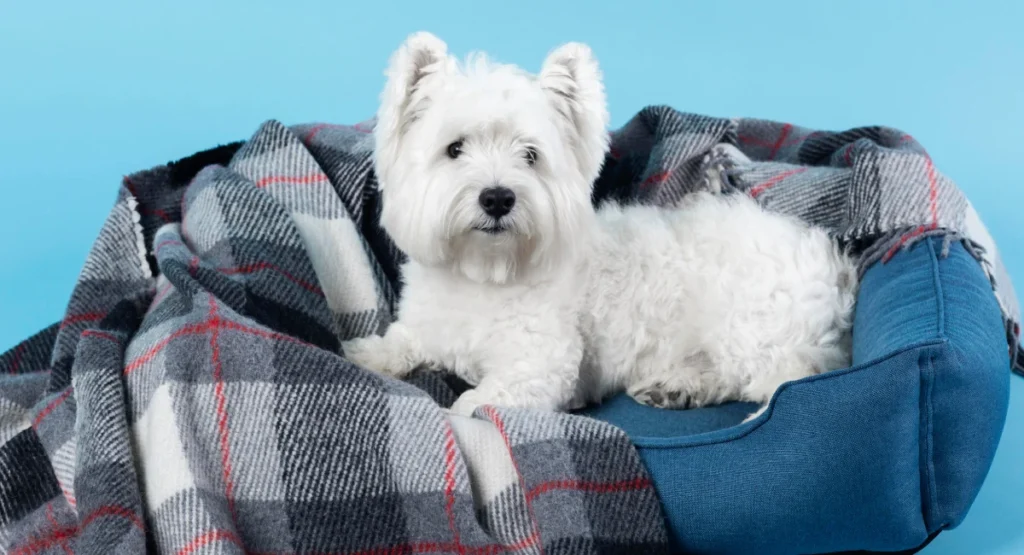
If your dog struggles to get up after resting, circles repeatedly before lying down, or whimpers when shifting positions on a hard floor, this behavior should be addressed. Joint pain is one of the most common health problems in dogs, especially as they get older, and the surface they sleep on has a direct impact on their comfort during the hours they are off their feet.
An orthopedic dog bed is a practical tool for managing arthritis, hip dysplasia, post-surgery recovery, and general joint stiffness. The right bed distributes your dog’s body weight evenly, reducing pressure on the hips, elbows, and spine, and allowing them to wake up feeling more mobile and less stiff.
The PDSA estimates that around 80% of dogs over the age of 8 have some signs of joint disease. Both the Blue Cross and RSPCA recommend supportive bedding as part of a broader care plan for senior dogs. The British Veterinary Association (BVA) stresses that early intervention, including proper bedding, weight management, and joint supplements, can slow the progression of arthritis and meaningfully improve quality of life.
Diet also plays a supportive role. If your dog is already on a good senior dog food and you give him quality joint supplements for dogs, an orthopedic bed is the next logical step. These three elements work together to protect your dog’s joints over time.
Why Orthopedic Beds Matter for Your Dog’s Joints
How much time dogs actually spend sleeping
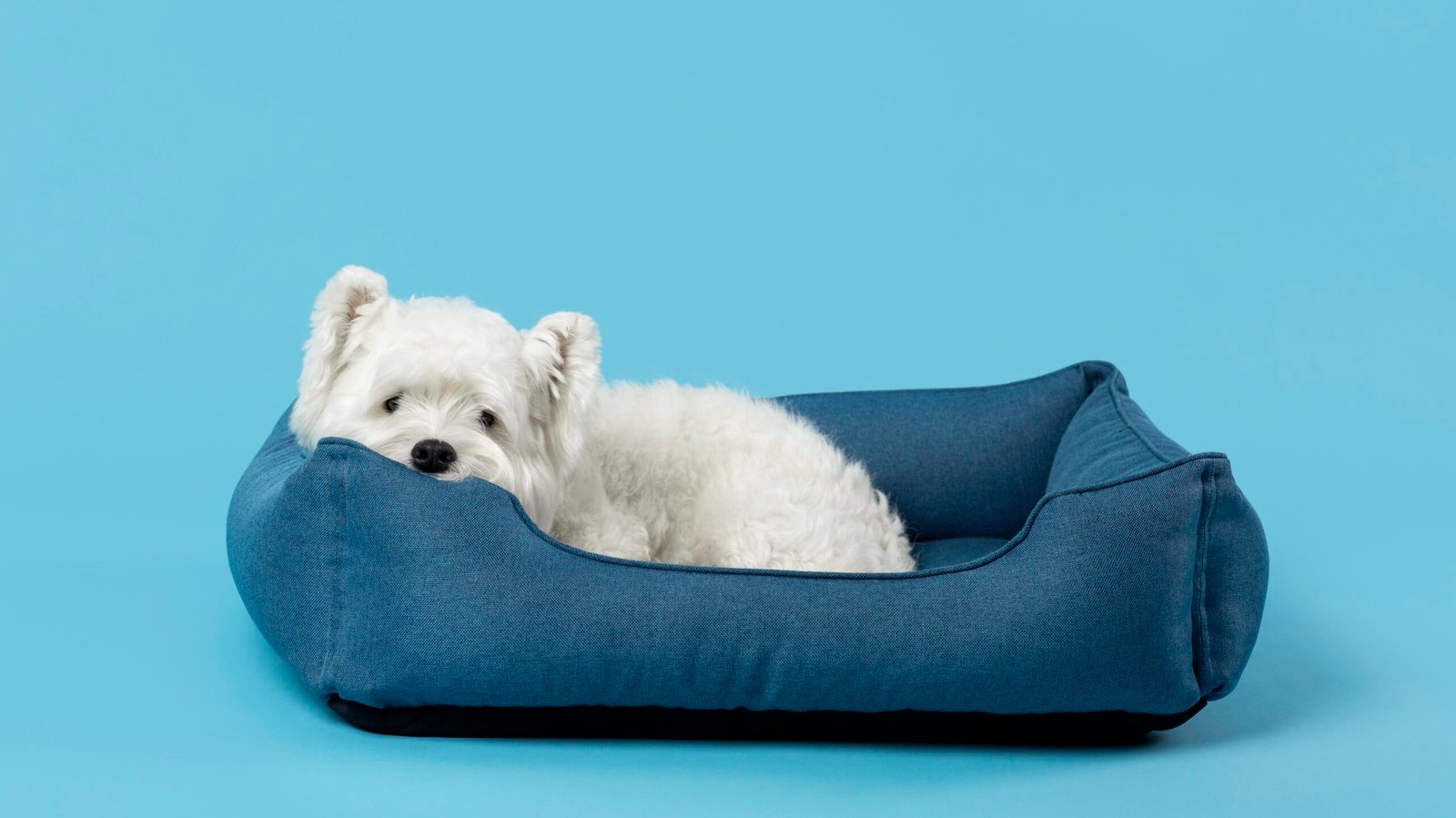
The average adult dog sleeps 12 to 14 hours a day. Puppies and senior dogs can sleep up to 18 hours. This means your dog spends a major part of its life on the surface you provide. If that surface is a thin blanket on a tiled floor, its joints are bearing the full pressure of its body weight against a hard surface for half its life.
Orthopedic beds address this problem by distributing weight over larger areas and contouring to the dog’s body shape. The effect is most noticeable on the hips, elbows, and spine, the joints most commonly affected by arthritis and degenerative joint disease.
The difference between regular and orthopedic beds
The difference is due to internal construction. Standard dog beds use polyester fiber fill, which compresses quickly and provides minimal support after a few weeks. Your dog is essentially sleeping on the floor, with just a thin fabric layer in between.
Orthopedic beds use denser materials, typically memory foam or medical-grade orthopedic foam, which hold their shape even after months and years of daily use. The foam doesn’t flatten out and become useless, but continues to provide cushion and support.
What vets say about switching beds
Veterinary surgeons who treat canine arthritis consistently report that owners notice improvements within the first couple of weeks of switching to an orthopedic bed. Dogs usually wake up more easily, show less stiffness after rest, and settle into deeper sleep because they don’t have to shift repeatedly to find a comfortable position.
One vet described the single easiest lifestyle change an owner can make for a dog with joint issues: No medication, training, or ongoing costs after the initial purchase.
Signs Your Dog Might Need an Orthopedic Bed
Difficulty getting up after rest
This is the clearest indicator. If your dog hesitates before standing, takes a few stiff steps to warm up, or pushes with his front legs to upright, his joints are likely causing discomfort during and after sleep.
A supportive bed won’t fix the underlying condition, but it can reduce the extra stiffness added by an inadequate sleeping surface.
Reluctance to lie down or abandoning their bed
Some dogs with joint pain may pace and circle for a long time before settling down. Some dogs may abandon their bed altogether and start sleeping on the sofa, your bed, or any soft surface.
When a dog actively avoids its bed, the bed itself may be part of the problem.
Limping after rest and vocalising discomfort
Limping that appears after a period of rest and then eases after a few minutes of movement is a classic symptom of osteoarthritis. Joints stiffen during rest, and pain is most acute during the first few steps. An orthopedic bed reduces pressure on affected joints during long periods of lying still, which may reduce the severity of post-rest limp.
Vocalizing, such as whimpering, yelping, or heavy sighing when lying down or changing positions, is another signal. Not every dog makes sounds when uncomfortable, but dogs that do should be taken seriously.
Changes in sleeping position
Dogs with hip or back pain sometimes sleep flat on their stomachs, with their rear legs splayed out behind them. This position is sometimes called “sphinx.” Dogs with neck pain may prop their heads on the edge of the cushion.
These adaptations are your dog’s way of relieving pressure on specific joints. If you notice your dog consistently sleeping in an unusual posture, joint discomfort may be the cause.
Dogs already diagnosed with joint conditions
If your dog has a confirmed diagnosis of hip dysplasia, elbow dysplasia, osteoarthritis, or intervertebral disc disease, an orthopedic bed should be part of his management plan from the start. Waiting for symptoms to worsen can add months of unnecessary discomfort where a supportive bed could have helped earlier.
How Memory Foam Works for Dogs
What memory foam actually is
Memory foam is a viscoelastic polyurethane foam originally developed by NASA in the 1960s for aircraft seating. It softens in response to body heat and pressure, molds to the shape of whatever it’s resting on, and slowly returns to its original form when the weight is removed.
This is important for dogs with sore joints because the foam softens under warmer and heavier parts of their bodies, such as the chest, hips, and belly, and contours around them. Weight is spread over a wide surface area rather than concentrated on bony points. The result is that pressure on the joints is reduced and blood circulation in the surrounding tissue improves.
Foam density and why it matters
Density is measured in pounds per cubic foot (lb/ft³). Low-density foam, found in cheap mattress toppers, compresses too easily and bottoms out under a heavy dog. This means your dog sinks into the foam, effectively ending up on the floor.
High-density foam, rated at 3 to 5 lb/ft³, holds its shape and provides consistent support regardless of the dog’s weight.
Be sure to check the manufacturer’s stated density when shopping. A density below 2.5 lb/ft³ will likely be too soft for a medium or large breed dog.
Dual-layer construction and temperature sensitivity
Some better orthopedic beds combine two foam layers: a firm base for structural support and a softer memory foam top layer for comfort. This dual-layer design resists sagging much better than a single foam slab. The PetFusion Ultimate Dog Bed, reviewed below, uses this construction.
Temperature is also a practical consideration. Traditional memory foam firms up in cold rooms and softens in warmth. If the bed is in a conservatory or unheated space, the foam can feel quite rigid until your dog’s body heat warms it up. Gel-infused foam, used in the Casaluna bed reviewed below, addresses this issue by dissipating heat. It is also helpful for dogs that overheat easily.
Types of Orthopedic Dog Beds
Memory Foam Mattresses
This is the most common type. It consists of a solid slab of memory foam inside a removable cover, usually 7cm to 15cm thick. Thicker foam is generally better for heavier dogs and more advanced joint problems, as there is more material to compress before the bottom gives out.
These flat designs work best on hard floors and fit inside most standard crates.
Bolster-Style Beds
These beds have raised sides, usually at the back and head, and a flat foam mattress in the center. Bolsters provide support for dogs to lean on or use as a head rest.
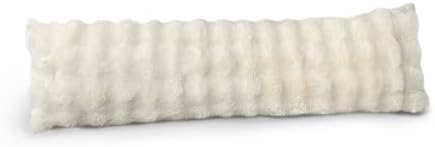
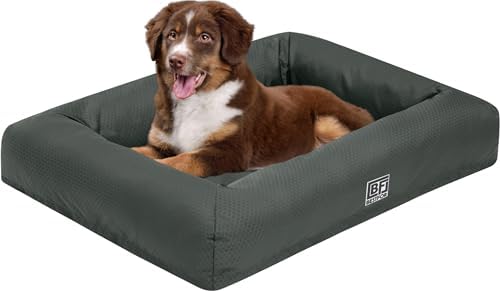
If your dog likes to curl up against the back of a sofa, a bolstered bed will probably suit him. The trade-off is that bolsters take up floor space, so you may have to purchase a slightly larger size than expected.
Donut or Nesting Beds
Round beds have high sides all around and a sunken center. These are designed for dogs that like to sleep curled up like a ball.
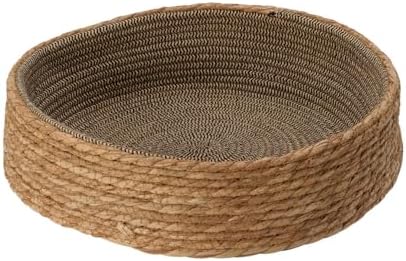
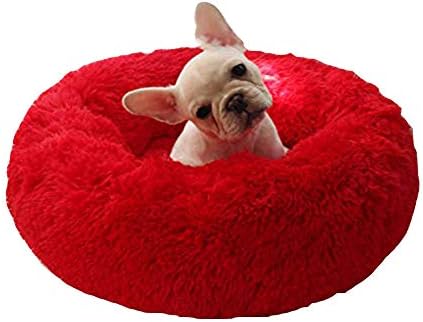
Raised edges create an enclosure feel, which is especially calming for smaller breeds and anxious dogs. Orthopedic versions have memory foam in the base instead of standard stuffing.
Elevated Beds
This is a completely different approach: a taut fabric surface is stretched over a raised PVC, steel, or aluminum frame. It doesn’t involve foam.
The fabric gives slightly under the dog’s weight, creating a gentle hammock effect, and air circulation below keeps the sleeping surface cool. These are ideal for dogs that overheat or swim regularly.
The limitation is that they don’t contour to the body like foam, so they’re better suited for dogs with mild stiffness rather than advanced arthritis.
Waterproof Orthopedic Beds
These beds have a waterproof liner between the foam and cover, which prevents urine, drool, and spills from soaking into the core. When liquid memory gets inside the foam, it’s nearly impossible to remove, and the odor can be permanent.
If your senior dog has occasional accidents, a built-in waterproof liner is a worthwhile investment. Some beds include this as standard, while others sell waterproof covers as optional extras.
Heated Orthopedic Beds
These beds have a low-level heating element beneath the foam. Gentle warmth helps soothe stiff joints and improve circulation, which is why dogs with arthritis often seek out warm spots in the home.
They need a nearby plug socket. Look for models with chew-resistant cords and automatic shut-off. If your dog has a habit of chewing on cables, avoid heated beds.
The Best Orthopedic Dog Beds Available in the UK
The 6 beds below have been selected based on genuine orthopedic foam, availability to UK buyers on Amazon UK, and a range of different budgets and design styles.
Bedsure Orthopedic Dog Bed
Best for: Budget-conscious owners who want real memory foam without the premium price tag.

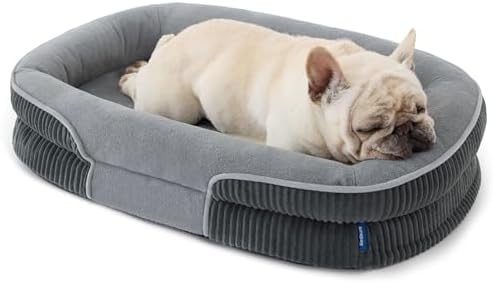

The Bedsure features a 7cm memory foam base, encased in a quilted polyester-cotton cover. It’s available in small sizes, for dogs up to roughly 10kg, and goes up to XXL, for dogs up to around 50kg. The cover is removable, machine washable, and comes with an anti-slip base that keeps the bed in place on hard floors. This small detail matters if your dog spins before lying down.
Pros: Genuine memory foam at a budget price. Wide size range. Anti-slip bottom. Simple, no-fuss design.
Cons: The 7cm foam may be thin for dogs over 25kg and can compress over time. The cover fabric isn’t particularly hardwearing. It’s not gel-infused, so it may retain heat in the summer.
Best suited to: Small to medium breeds and younger senior dogs with mild stiffness. The flat profile also makes it a good crate bed.
PetFusion Ultimate Dog Bed
Best for: Medium to large breeds that need durable and long-lasting joint support.
The PetFusion features a 10cm solid memory foam top layer, over a 5cm denser support base. This dual-layer construction prevents sagging over time. The foam is human-grade, roughly 3.5 lb/ft³. The cover has a water-resistant inner liner; it’s not fully waterproof, but handles everyday moisture. The cover zips off for washing, and replacement covers are available separately.
Bolsters on three sides are filled with recycled polyester fiber, providing support for leaning dogs without adding structural weight.
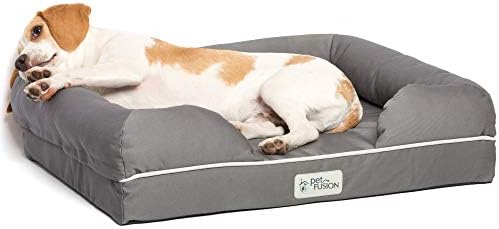

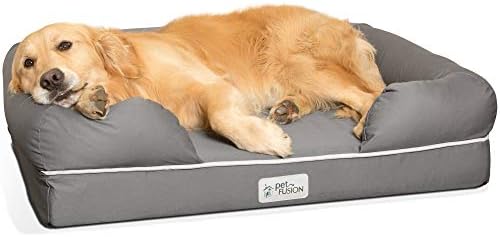
Pros: Excellent dual-layer foam that holds up for years. Water-resistant liner. Bolsters on 3 sides. Replacement covers available.
Cons: Upfront expensive. Bolsters consume floor space. So popular that stock sometimes runs low.
Best suited to: Labradors, Golden Retrievers, German Shepherds, and similar breeds with arthritis or hip dysplasia.
Kuranda Elevated Dog Bed
Best for: For dogs who overheat, swim regularly, or want an easy-clean option.
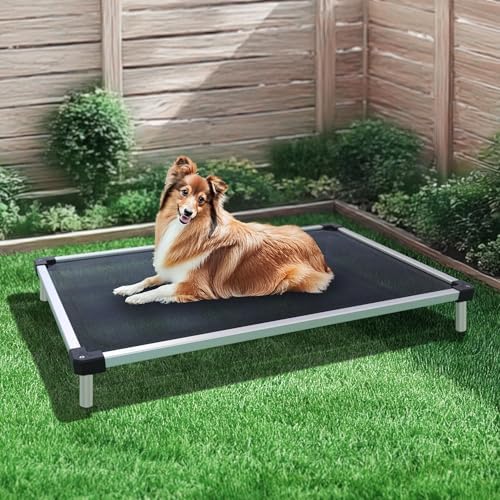

Kuranda beds contain no foam at all. A tough PVC or aluminum frame, with the aluminum version supporting up to 110 kg, holds a taut fabric surface that creates a gentle hammock effect. Air circulates freely underneath, keeping the sleeping surface cool. Hair doesn’t cling to the fabric like fleece or plush, and the material resists mold and mildew because it doesn’t absorb moisture. The fabric attaches with a bolt system instead of slotting, so even a determined dog can’t loosen it.
Pros: Extremely easy to clean. Stays cool in warm weather. Provides consistent support that never compresses. Frame construction is very durable.
Cons: No body-contouring cushioning, so better for mild stiffness rather than severe arthritis. Some dogs may take time to adjust to the suspended feel.
Best suited to: Dogs who warm up quickly, swim frequently, or have mild age-related stiffness. Also works well as an outdoor or kennel bed.
Best Friends by Sheri Orthopedic Bed
Best for: Small to medium dogs who like to curl up and prefer an enclosed sleeping space.
This donut-style bed has high, soft bolsters all around and a sunken center. The base uses chunks of memory foam instead of a solid slab, allowing the surface to shift and conform to the dog’s shape. The faux fur cover is machine washable and holds up well, but attracts hair and dust. All-around bolsters provide a feeling of security that flat beds can’t replicate, making this a good pick for anxious dogs.


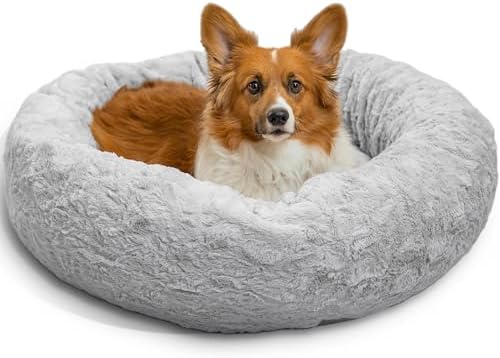
Pros: Dogs are naturally attracted to the soft faux fur texture. The enclosed design suits dogs that like to curl up. Washable cover.
Cons: Chunked foam provides less firm support than a solid slab. The inner sleeping area feels smaller than the listed dimensions because the bolsters take up space. Not ideal for dogs that sleep stretched out.
Best suited to: Cavalier King Charles Spaniels, Shih Tzus, Pugs, French Bulldogs, and similar small to medium breeds.
AmazonBasics Memory Foam Pet Bed
Best for: Owners who want practical memory foam support at the lowest price.

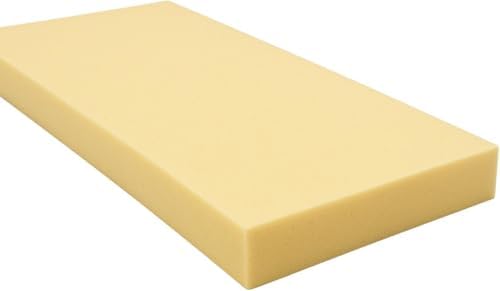

This is a simple memory foam mattress that comes inside a removable polyester cover and has a non-slip base at the bottom. Foam thickness is 10cm or 15cm, depending on the size you choose, and the medium and large sizes support dogs up to around 35kg. The bed arrives vacuum-sealed and requires 24 to 48 hours to fully expand. Some owners notice a temporary chemical smell when first opening it, but it fades quickly.
Pros: Hard to beat for the price. Non-slip base. No unnecessary cost-adding extras.
Cons: Foam density is lower than premium options, roughly 2.5 lb/ft³, so it compresses more under heavier dogs and may need to be replaced sooner. Cover fabric is basic. No waterproof liner.
Best suited to: If you’re unsure whether your dog will accept an orthopedic bed, this could be a good first orthopedic bed. Works well for small to large breeds, especially dogs with mild to moderate joint issues.
How to Choose the Right Orthopedic Bed
Getting the size right
The most common sizing mistake is that owners buy a bed that fits when the dog is curled up, but is too small when the dog stretches out. Measure your dog lying down in its preferred sleeping position, and add 15 to 20 cm on each side. This extra room allows the dog to shift position during the night without having to limp off the edge.
For bolster and donut styles, pay attention to the inner sleeping dimensions rather than the overall footprint. Bolsters surprisingly consume a lot of space.
Foam density and thickness
As a general rule, dogs under 15 kg can get adequate support from 7 cm of foam, if the density is 2.5 to 3 lb/ft³. Medium dogs, 15 to 30 kg, should have at least 10 cm of foam, with a density of 3 to 4 lb/ft³. Large and giant breeds benefit from 12 cm or more of foam, with a density of 4 lb/ft³ or higher.
If the manufacturer doesn’t disclose the density, it’s usually a sign that the foam is on the lower-end side.
Cover material and waterproofing
The cover should handle regular washing and rough use from the dog. Canvas and heavy polyester are more durable than thin cotton blends. If your senior dog has any issues with incontinence, a waterproof liner between the foam and cover is essential, as when urine gets inside the memory foam, the odor can become permanent. Removable, machine-washable covers are non-negotiable for hygiene.
When to See a Vet About Your Dog’s Joint Pain
An orthopedic bed is a supportive measure, not a treatment. If your dog is consistently limping, reluctant to walk, or signs of pain are worsening, book a vet appointment. Joint pain can have many causes, some are managed with medication and lifestyle changes, and some cases may require surgery. Early diagnosis gives you more options.
The BVA recommends that any dog showing persistent lameness or difficulty with normal activities should be examined by a vet, even if symptoms appear mild. What appears to be ordinary stiffness could be early-stage osteoarthritis, and its progression can be significantly slowed if treatment is started early.
Cleaning and Maintaining Your Orthopedic Dog Bed
Daily maintenance tips
Using a quick brush or lint roller every day removes loose hair before it settles into the cover fibers. If your dog’s paws are muddy, using a damp cloth on the cover surface prevents dirt from accumulating.
For elevated beds, a wipe-down with a damp cloth is usually sufficient, and this is a practical advantage.
Washing the cover
Most orthopedic bed covers are machine washable. Wash on a cool or warm cycle, as hot water can shrink some fabrics and degrade waterproof liners. Avoid fabric softener, as it leaves a residue that can reduce the fabric’s ability to wick moisture.
Tumble dry on low heat or let air dry. Be sure to check the care label before the first wash, as some canvas covers require line drying.
Dealing with odours and stains
For lingering smells on the cover, an enzyme-based cleaner works better than standard detergent because it breaks down odor-causing bacteria, not just masks the smell.
Spot-treat stains as soon as possible. The longer they sit, the harder they become to remove.
Foam should never be machine washed or submerged in water. If the foam becomes wet, press out excess water with towels and let it air dry completely before putting the cover back on.
Frequently Asked Questions
Can puppies use orthopedic dog beds?
Yes, you can, although healthy puppies don’t strictly need an orthopedic bed. Orthopedic beds can be beneficial for puppy breeds that are at higher risk of joint problems later in life, such as Labrador Retrievers and German Shepherds.
The main concern is chewing. Puppies are more likely to destroy foam beds, so a durable cover or elevated design may be a safer choice until they outgrow the chewing phase.
How long do orthopedic dog beds last?
A quality orthopedic bed with high-density foam typically lasts 3 to 5 years with regular use. Budget beds with lower-density foam may need to be replaced after 1 to 2 years.
The cover usually wears out before the foam, and some manufacturers, including PetFusion, sell replacement covers. This significantly extends the life of the bed.
Are orthopedic beds worth the extra money?
For dogs with joint problems, the answer is generally yes. The difference in daily comfort is noticeable, and if a higher-priced bed lasts up to 4 years, the per-year cost is often less than replacing a cheap bed every 18 months.
For young, healthy dogs without signs of stiffness, a standard bed is perfectly adequate.
Can I put an orthopedic bed inside a crate?
Flat memory foam mattresses fit without issue inside most standard crates. Bolster and donut styles are a little more difficult, as the raised sides take up space and can make the sleeping area feel cramped.
Before purchasing, measure the interior floor dimensions of the crate and compare them with the bed’s base size.
Do orthopedic beds help with hip dysplasia?
These help manage symptoms. An orthopedic bed cannot reverse hip dysplasia, but it reduces pressure on the hip joints during the dog’s long hours lying down. This can reduce pain and stiffness.
Vets routinely recommend supportive bedding as part of a hip dysplasia management plan. This plan also includes weight control, exercise modification, and, in some cases, medication.
My dog chews their beds. Will an orthopedic bed survive?
Most foam beds don’t hold up against a determined chewer. Canvas covers are more resistant than polyester, but no fabric is completely chew-proof.
Elevated beds are the safest option for destructive dogs, as there’s no foam to destroy and the frame materials are tough. If your dog chews only out of boredom, providing chew toys and increasing exercise may reduce the behavior enough to make using a foam bed viable.
What if my dog won’t use the new bed?
Place the new bed where the old one used to be, and place a blanket or an item of your clothing with a familiar smell on it. Don’t force it; some dogs may take days or weeks to accept a new bed.
If your dog continues to avoid the bed after a couple of weeks, the problem may be the design rather than the bed itself. A dog that likes to sprawl will likely reject a donut-style bed, and a dog that curls up may not like a flat mattress. Match the style of the bed to your dog’s established sleeping habits.