
Is Banana Pudding Safe for Dogs?
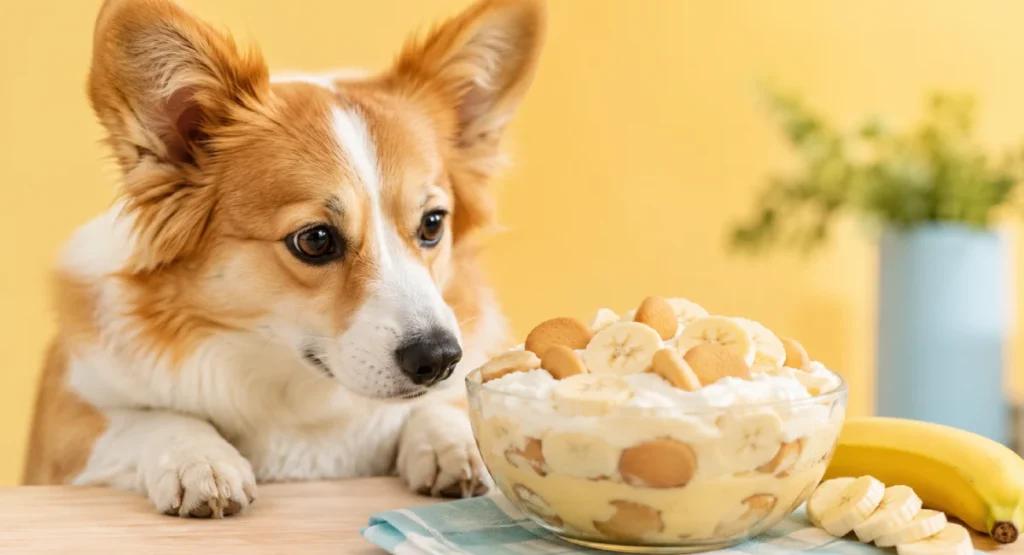
No, dogs should not eat banana pudding. Plain bananas can be perfectly safe and even healthy for dogs in moderation, but banana pudding is a completely different food. It contains high amounts of sugar, dairy, and fat, and may also contain potentially toxic ingredients, such as xylitol, nutmeg, and artificial sweeteners. These can cause anything from mild stomach upset to life-threatening poisoning.
Here’s a quick at-a-glance breakdown:
| Ingredient | Safe for Dogs? | Risk Level |
|---|---|---|
| Plain banana | Yes (in moderation) | Low |
| Sugar | No | Medium |
| Whole milk / cream | No (lactose) | Medium-High |
| Vanilla extract | No (contains alcohol) | Medium |
| Nutmeg | No (toxic) | High |
| Xylitol / E967 | No (lethal) | Emergency |
| Artificial sweeteners | No | High |
If your dog has already eaten banana pudding, skip to our emergency guide below.
My Dog Ate Banana Pudding – What Should I Do Right Now?
If your dog has just eaten banana pudding, don’t panic, but act quickly. Follow this step-by-step guide:
Step 1: Assess what was eaten
- Was it just a small lick, or did the dog eat the entire bowl?
- Was the banana pudding shop-bought? If yes, check the label immediately. Or was it homemade?
- Does the label list xylitol, E967, birch sugar, or any sugar alcohols?
Step 2: Check for xylitol immediately (this is critical)
- Check the ingredients list. Xylitol is sometimes also listed as E967, birch sugar, wood sugar, or birch bark extract.
- If xylitol is present, call your vet or Animal PoisonLine straight away. Don’t wait for symptoms. Xylitol can cause blood sugar to drop rapidly to dangerous levels in dogs and can even cause liver failure within hours.
- UK Animal PoisonLine: 01202 509 000 (charges apply) or animalpoisonline.co.uk
Step 3: Call your vet for guidance
- Even if xylitol is not present, your vet will still want to know the quantity and type of pudding your dog ate.
- They may advise whether it is necessary to take your dog to the vet, or whether home monitoring is sufficient.
- Have the pudding packaging or recipe ready.
Step 4: Closely monitor your dog for the next 24–48 hours
- Watch for signs such as vomiting, diarrhea, excessive drooling, bloating, lethargy, restlessness, or loss of appetite.
- See our symptom guide below for a full symptom timeline.
Step 5: Do NOT induce vomiting unless your vet tells you to
- Inducing vomiting without vet advice can be dangerous, especially if the pudding contained fat, as it may be aspirated into the lungs.
Need more guidance on what to feed a dog recovering from an upset stomach? See our complete UK guide to feeding a dog with an upset stomach.
Why Banana Pudding Is Unsafe for Dogs: Ingredient by Ingredient
Banana pudding may seem harmless because bananas are safe for dogs, but the truth is that the danger lies in the pudding part. Let’s break down the typical ingredients:
Sugar
Most banana pudding recipes and shop-bought versions contain too much sugar. A single serving can contain 20–40g of sugar. Dogs should absolutely avoid added sugar.
Regular sugar intake can contribute to obesity, dental disease, diabetes, and inflammation. It also feeds harmful gut bacteria and can worsen existing yeast infections in dogs.
Whole milk, cream, and condensed milk
Dairy is a significant problem for most dogs. After weaning, many dogs produce less lactase, the enzyme needed to digest lactose.
Feeding rich dairy products like cream or condensed milk can often cause diarrhea, gas, bloating, and abdominal discomfort. In dogs with food allergies or sensitivities, dairy proteins like casein and whey can also trigger allergic reactions. These may show up as skin rashes on the belly or chronic ear infections.
Vanilla extract
This is an ingredient many owners overlook. Pure vanilla extract contains approximately 35% alcohol by volume. Alcohol in large quantities is toxic to dogs, causing central nervous system depression, vomiting, and even coma in severe cases.
The small amount in a slice of pudding is likely not lethal, but it is still an unnecessary risk and can contribute to an upset stomach.
Nutmeg
Nutmeg contains a compound called myristicin, which is toxic to dogs. Symptoms of nutmeg poisoning can include hallucinations, increased heart rate, high blood pressure, abdominal pain, dry mouth, and in extreme cases, seizures.
Nutmeg is often used for flavoring in homemade banana puddings and banana breads, making them particularly dangerous. Even small amounts can cause distress in smaller dogs.
Eggs
Eggs themselves can be safe and even beneficial for dogs when cooked. However, raw eggs carry a small risk of salmonella, and eggs in pudding are usually not a major concern compared to other ingredients.
Cornflour or custard powder
These thickening agents are generally not toxic in small amounts, but they add no nutritional value and may contribute to digestive upset in sensitive dogs.
Whipped cream toppings
These are basically full of fat and sugar, which can increase the risk of pancreatitis and weight gain.
Store-Bought vs Homemade vs Sugar-Free: Which Is Most Dangerous?
Not all banana puddings carry the same level of risk. Here is how they compare:
Shop-bought banana pudding (standard)
Supermarket banana puddings (from brands like Ambrosia, Bird’s, or supermarket own-label) typically contain sugar, milk, cream, modified starch, flavourings, and preservatives. These pose a moderate risk — mainly gastrointestinal upset from sugar and dairy. The biggest concern is the sheer quantity of sugar and fat, which can trigger pancreatitis in susceptible dogs.
Homemade banana pudding
Homemade versions can actually be more dangerous in some cases because they often include real vanilla extract (with alcohol content) and nutmeg. However, you have full control over the ingredients. If you are making it yourself, you can omit the dangerous ingredients entirely — and we will show you how with our dog-friendly recipe below.
Sugar-free or “diet” banana pudding
This is the most dangerous type. Sugar-free puddings almost always contain artificial sweeteners, and many contain xylitol (E967), which is lethal to dogs. Even puddings that use other sugar alcohols like sorbitol, maltitol, or erythritol can cause significant digestive upset. If you have a sugar-free pudding in your home, keep it well away from your dog.
How to Check a Pudding Label for Dangerous Ingredients
When checking any pudding label, look out for these red-flag ingredients:
- Xylitol — also listed as E967, birch sugar, wood sugar, birch bark extract
- Other sugar alcohols — sorbitol (E420), mannitol (E421), maltitol (E965), isomalt (E953), erythritol (E968)
- Nutmeg — listed as nutmeg or myristica fragrans
- Vanilla extract — contains alcohol
- Macadamia nuts — sometimes used in banana dessert toppings and highly toxic to dogs
- Chocolate or cocoa — occasionally found in banana-chocolate pudding variants (theobromine is toxic)
- Raisins or sultanas — sometimes included in garnishes and highly toxic to dogs (kidney failure)
- Coffee flavouring — caffeine is dangerous for dogs
Always read the full ingredients list, not just the front-of-pack claims. Products labelled “no added sugar” may still contain dangerous sugar substitutes.
What Symptoms to Watch For After Your Dog Eats Banana Pudding
Symptoms vary depending on the amount eaten, the ingredients, and your dog’s size and health. Here is a general timeline of what to watch for:
Within 30 minutes to 2 hours:
- Drooling excessively
- Vomiting
- Restlessness or pacing
- Diarrhoea (sometimes within the first hour)
- Abdominal discomfort (whimpering, hunched posture)
- If xylitol was consumed: weakness, staggering, collapse, seizures
Within 2 to 12 hours:
- Continued vomiting or diarrhoea
- Bloating or gas
- Loss of appetite
- Lethargy or unusual tiredness
- Dehydration (check by gently pulling the skin on the back of the neck — it should spring back quickly)
- If xylitol was consumed: jaundice (yellowing of gums or eyes), bleeding
Within 12 to 48 hours:
- Persistent diarrhoea (which can lead to dehydration)
- Signs of pancreatitis: repeated vomiting, abdominal pain, hunched posture, refusal to eat
- For xylitol ingestion: liver failure symptoms — jaundice, dark urine, pale gums, bleeding disorders
If your dog shows any of these symptoms — particularly after eating a sugar-free pudding — contact your vet or the UK Animal PoisonLine immediately. Do not wait.
For guidance on managing ongoing digestive issues, our guide to probiotics for dog gut health may help during recovery.
Xylitol Toxicity: The Most Dangerous Ingredient in Sugar-Free Pudding
Xylitol deserves its own section because it is one of the most lethal substances your dog can ingest from a household food product. Found in sugar-free puddings, chewing gums, mints, peanut butters, and some dental products, xylitol is safe for humans but devastatingly toxic to dogs.
How xylitol affects dogs:
- Rapid insulin release: In dogs, xylitol triggers a massive release of insulin from the pancreas, causing a sharp drop in blood sugar (hypoglycaemia). This can occur within 15–30 minutes of ingestion.
- Hypoglycaemia symptoms: Weakness, staggering, disorientation, collapse, and seizures. In severe cases, this can be fatal without treatment.
- Liver failure: Even if the initial hypoglycaemia is treated, xylitol can cause acute liver failure within 24–72 hours. Symptoms include jaundice, bleeding, dark urine, and lethargy.
- Lethal dose: As little as 50–100mg per kg of body weight can cause hypoglycaemia. Liver damage can occur at higher doses. For a 10kg dog, this could mean just a few grams of xylitol-containing pudding.
According to the Merck Veterinary Manual, xylitol poisoning is a veterinary emergency requiring immediate treatment including intravenous dextrose, liver protectants, and close monitoring.
The bottom line: If there is any chance your dog consumed xylitol, get veterinary help immediately. Do not wait for symptoms.
Pancreatitis in Dogs: A Serious Risk from High-Fat Desserts
Even if your pudding does not contain xylitol, the high fat content in banana pudding — particularly from cream, condensed milk, and whipped toppings — poses a very real risk of pancreatitis.
What is pancreatitis?
Pancreatitis is inflammation of the pancreas, the organ responsible for producing digestive enzymes and insulin. When a dog eats a large amount of fatty food, the pancreas can become overstimulated, causing digestive enzymes to activate prematurely and essentially digest the pancreas itself.
Symptoms of pancreatitis:
- Repeated vomiting (often the most prominent sign)
- Severe abdominal pain (dog may adopt a “prayer position” — front end down, rear end up)
- Diarrhoea, often with a greasy appearance
- Lethargy and depression
- Loss of appetite
- Fever
- Dehydration
Which dogs are most at risk?
- Smaller breeds (Miniature Schnauzers, Yorkshire Terriers, Cocker Spaniels, Dachshunds)
- Overweight or obese dogs
- Dogs with a history of pancreatitis
- Dogs fed a consistently high-fat diet
- Older dogs
Treatment and recovery:
Pancreatitis requires veterinary treatment, often including intravenous fluids, pain management, anti-nausea medication, and a period of fasting followed by a low-fat diet. Severe cases can be fatal. Recovery may involve a long-term low-fat diet, and probiotic supplements can support digestive health during recovery. For dogs prone to pancreatitis, consider grain-free or sensitive stomach food options.
For more on supporting your dog’s digestive recovery, see our UK guide to feeding a dog with an upset stomach.
Lactose Intolerance in Dogs: Why Dairy in Pudding Causes Problems
Many dog owners are surprised to learn that most adult dogs are lactose intolerant to some degree. Puppies produce plenty of lactase — the enzyme that breaks down lactose — because they need it for their mother’s milk. However, after weaning, lactase production drops significantly in many dogs.
What happens when a lactose-intolerant dog eats dairy?
- Undigested lactose passes into the large intestine, where it ferments
- This fermentation produces gas, causing bloating, flatulence, and abdominal discomfort
- It also draws water into the intestines, resulting in loose stools or diarrhoea
- Some dogs may also vomit, particularly if the dairy product is rich or high in fat
How much dairy causes problems?
It varies. Some dogs can tolerate a small amount of plain yoghurt (which has less lactose due to fermentation), whilst others will react to even a small lick of cream. Banana pudding typically contains large quantities of milk, cream, and condensed milk, making it a potent trigger for lactose intolerance symptoms.
Not all dogs are the same:
Some dogs — particularly certain breeds and individual dogs can tolerate small amounts of dairy without issues. However, it is never worth the risk, especially when the pudding also contains sugar, fat, and potentially toxic ingredients.
Banana Pudding vs Plain Banana: What Is the Real Difference?
The difference between banana pudding and a plain banana is enormous. Let us compare them:
| Nutrient (per 100g) | Plain Banana | Banana Pudding |
|---|---|---|
| Calories | 89 kcal | 140–200 kcal |
| Sugar | 12g (natural) | 20–30g (added) |
| Fat | 0.3g | 5–10g |
| Fibre | 2.6g | 0.3–0.5g |
| Potassium | 358mg | 130–200mg |
| Vitamin B6 | 0.4mg | Trace amounts |
| Vitamin C | 8.7mg | Minimal |
| Dairy | None | High (milk, cream) |
| Artificial ingredients | None | Possibly present |
| Xylitol risk | None | Possible (sugar-free) |
As you can see, the pudding process transforms a healthy fruit into a sugar-laden, high-fat dessert that offers very little nutritional benefit for your dog. The natural fibre and vitamins in the banana are diluted, and dangerous ingredients are introduced.
The American Kennel Club (AKC) confirms that plain bananas are a safe and healthy treat for dogs in moderation, providing potassium, vitamin B6, vitamin C, and fibre. PetMD also supports this, noting that bananas can aid digestion and be beneficial for dogs with sensitive stomachs when given in appropriate portions.
How Much Plain Banana Can Dogs Safely Eat?
Plain bananas are safe for dogs, but they should be given as an occasional treat — not a meal replacement. Bananas are high in natural sugars, so portion control matters.
Feeding guide by dog size:
- Extra-small dogs (under 5kg, e.g. Chihuahua, Pomeranian): 1–2 small slices per treat, 2–3 times per week
- Small dogs (5–10kg, e.g. Jack Russell, French Bulldog): 2–3 slices per treat, 3–4 times per week
- Medium dogs (10–25kg, e.g. Cocker Spaniel, Border Collie): Half a banana per treat, 3–4 times per week
- Large dogs (25–45kg, e.g. Labrador, German Shepherd): Half to one banana per treat, 4–5 times per week
- Giant breeds (45kg+, e.g. Great Dane, Mastiff): Up to one whole banana per treat, 4–5 times per week
Important tips for feeding banana safely:
- Always peel the banana — the peel is difficult to digest and can cause a blockage
- Cut into bite-sized pieces to prevent choking
- Introduce gradually to check for any digestive sensitivity
- Do not feed dried banana chips frequently — they are concentrated in sugar and some commercial versions contain added sugar or oil
- Frozen banana slices make an excellent summer treat
- Mashed banana can be stuffed into a Kong toy for enrichment
Bananas can be part of a balanced approach to your dog’s diet. For more on nutrition and food safety, visit the DogFoodsUK homepage for a full range of dog food guides.
Can Puppies Eat Banana Pudding?
Absolutely not. Puppies are even more vulnerable to the dangers in banana pudding than adult dogs. Here is why:
- Smaller body size: A smaller body means a smaller toxic dose. What might cause mild stomach upset in a Labrador could be dangerous for a puppy.
- Developing digestive system: Puppies have sensitive, still-developing digestive systems. High sugar and fat can cause severe diarrhoea and vomiting, which can quickly lead to dangerous dehydration in a small body.
- Lactose sensitivity: Many puppies have reduced lactase production after weaning, making the dairy content especially problematic.
- Xylitol vulnerability: The lethal dose of xylitol for a puppy is extremely small due to their body weight.
- Pancreatitis risk: Puppies are not immune to pancreatitis, and their smaller systems are less able to cope with a sudden influx of fat.
If you want to treat your puppy with banana, stick to a tiny piece of plain, ripe banana — no more than a thin slice for a very young puppy. Always introduce any new food gradually and consult your vet if you have concerns about your puppy’s diet. For puppy-specific nutrition advice, our guides to the best foods for dogs include puppy-specific recommendations.
What About Banana Bread, Banana Chips and Other Banana Foods?
Dog owners often wonder about other banana-flavoured foods. Here is a quick safety guide:
Banana bread:
Generally not safe. Banana bread typically contains sugar, butter, eggs, and sometimes nutmeg, chocolate chips, raisins, or walnuts (all toxic to dogs). If you bake a simple, plain version at home with no added sugar, no nutmeg, and dog-safe ingredients only, a very small piece could be given as an occasional treat — but it is much safer to simply give your dog a piece of plain banana instead.
Banana chips:
Commercial banana chips are usually not recommended. They are often fried in oil and may contain added sugar or honey. Even plain, dehydrated banana chips are very concentrated in natural sugar and should only be given in very small quantities (one or two chips as an occasional treat). They can also be a choking hazard for small dogs.
Banana-flavoured yoghurt:
Not recommended. Flavoured yoghurts contain high amounts of added sugar and artificial flavourings. A small amount of plain, unsweetened yoghurt can be beneficial due to its probiotic content, but banana-flavoured versions are best avoided entirely.
Banana baby food:
Some are safe, but check carefully. Plain banana baby food (with no added sugar or xylitol) can be used as a treat or to hide medication. However, always check the label — some baby foods contain onion powder or garlic powder, which are toxic to dogs.
Banana ice cream:
No. Banana ice cream (whether shop-bought or from a dessert shop) contains dairy, sugar, and potentially other additives. Instead, try freezing mashed banana in an ice cube tray for a safe, dog-friendly frozen treat.
Banana smoothies:
Only if you make it yourself with dog-safe ingredients. A simple blend of banana, plain yoghurt, and a little water can be poured over your dog’s food as a topper. Avoid any smoothie containing added sugar, honey, xylitol, or other fruits that may be unsafe.
Safe Banana Treat Alternatives for Your Dog
Instead of sharing your banana pudding with your dog, try these safe and simple banana treat ideas:
- Frozen banana slices: Simply slice a ripe banana and freeze the pieces. They make an excellent cooling summer treat and most dogs love the texture.
- Mashed banana Kong stuffing: Mash a banana and stuff it into a Kong toy, then freeze it for a long-lasting enrichment activity.
- Banana and oat biscuits: Mash one banana with 150g of rolled oats, form into small biscuits, and bake at 180°C for 15–20 minutes until golden. A simple, three-ingredient treat your dog will love.
- Banana and yoghurt bites: Mix a little mashed banana with plain, unsweetened yoghurt, spoon into silicone moulds, and freeze. The probiotics in plain yoghurt can support gut health.
- Banana and peanut butter (xylitol-free!): Spread a thin layer of dog-safe peanut butter (check the label — must not contain xylitol/E967) on a banana slice for a special treat.
- Banana fruit puree topper: Blend plain banana with a little water and drizzle over your dog’s regular food as a tasty topper. This can be particularly useful if your dog is a fussy eater or recovering from an upset stomach.
Homemade Dog-Friendly Banana Pudding Recipe
This is the recipe that sets this guide apart from every other article on this topic. You can make a banana pudding that your dog will absolutely love — and it is 100% safe. No sugar, no dairy, no xylitol, no nutmeg.
Dog-Friendly Banana & Coconut Pudding
Preparation time: 10 minutes | Chilling time: 2 hours | Servings: 4–6 dog portions
Ingredients:
- 2 ripe bananas (very ripe/speckled bananas are sweeter and easier to blend)
- 400ml can of full-fat coconut milk (coconut milk is lactose-free and safe for most dogs)
- 1 tablespoon of chia seeds (for thickening and added omega-3)
- 1 teaspoon of coconut oil (optional — supports skin and coat health)
- A pinch of cinnamon (safe for dogs in small amounts and adds a lovely flavour)
Instructions:
- Peel the bananas and break them into chunks.
- Place the banana chunks, coconut milk, chia seeds, coconut oil, and cinnamon into a blender.
- Blend on high until completely smooth and creamy.
- Pour the mixture into small ramekins or silicone moulds.
- Refrigerate for at least 2 hours, or until the chia seeds have thickened the mixture to a pudding-like consistency.
- Serve in small portions appropriate to your dog’s size (see feeding guide below).
- Store leftovers in the fridge for up to 3 days, or freeze individual portions for up to 1 month.
Feeding guide:
- Extra-small dogs: 1–2 teaspoons
- Small dogs: 1 tablespoon
- Medium dogs: 2 tablespoons
- Large dogs: 3–4 tablespoons
- Giant breeds: Up to ¼ of a ramekin
Why this recipe works:
- Bananas provide natural sweetness, potassium, vitamin B6, and fibre
- Coconut milk is lactose-free and contains medium-chain triglycerides (MCTs) that can support energy levels
- Chia seeds provide omega-3 fatty acids (similar benefits to salmon oil), plus they act as a natural thickening agent
- Cinnamon is safe in small quantities and has anti-inflammatory properties
- No added sugar, no dairy, no toxic ingredients
For more dog-friendly recipes and nutrition advice, explore our full range of guides at DogFoodsUK.
Dog-Safe Banana Treats Available in the UK
If you would prefer to buy ready-made banana treats rather than making your own, there are several options available on Amazon UK and other UK pet retailers:
- Pooch and Mutt Banana Biscuits: A well-known UK brand that makes natural, wholesome dog biscuits with real banana. Available on Amazon UK and in pet shops across the country.
- Barkers Banana & Peanut Butter Treats: A popular choice for dogs who love fruity flavours. Always check the label to confirm no xylitol in peanut butter-based products.
- Naturediet Banana Treats: A UK brand focused on natural ingredients, often available on Amazon UK with free delivery for Prime members.
- Woofles Banana and Oat Cookies: A bakery-style dog treat made with banana and oats — simple, natural ingredients.
- Forthglade Banana Dental Sticks: Combines the flavour dogs love with dental health benefits. Forthglade is a widely respected UK brand and their products are available on Amazon UK.
When purchasing any dog treats on Amazon UK, always read the full ingredients list and customer reviews. Look for products made in the UK, with natural ingredients, and no added sugar, artificial colours, or preservatives.
For a wider range of UK dog food recommendations, see our guides including the best grain-free dog foods in the UK and the best foods for sensitive stomachs.
UK Emergency Contacts and Poison Control
If your dog has eaten banana pudding — particularly sugar-free pudding — and you are concerned, here are the key UK contacts:
Veterinary emergency:
- Contact your own vet first — most UK veterinary practices have an out-of-hours emergency service or can direct you to the nearest emergency clinic.
- Vets Now: 0370 40 40 999 (out-of-hours emergency vet service across the UK)
Poison helplines:
- Animal PoisonLine: 01202 509 000 — run by the Veterinary Poisons Information Service (VPIS). Available 24/7. Charges apply (£30 consultation fee as of 2025). Website: animalpoisonline.co.uk
- VPIS (Veterinary Poisons Information Service): Your vet can contact this directly for professional toxicology advice.
Trusted UK animal welfare organisations for food safety information:
- PDSA (People’s Dispensary for Sick Animals): Provides reliable guidance on toxic and safe foods for dogs. The UK’s leading veterinary charity.
- RSPCA: Offers advice on safe feeding practices for dog owners.
- FEDIAF (European Pet Food Industry Federation): Sets nutritional guidelines for pet food across Europe, including the UK.
- All About Dog Food: Independent UK resource for reviewing and comparing dog food products.
Always keep your vet’s number and the nearest emergency vet number saved in your phone. In an emergency, every minute counts.
Frequently Asked Questions
Can a small amount of banana pudding hurt my dog?
Even a small amount can cause stomach upset due to the sugar and dairy content. If it was a tiny lick and the pudding was standard (not sugar-free), your dog will likely be fine, but monitor them closely for 24 hours. If the pudding contained xylitol, any amount warrants an immediate vet visit.
My dog ate sugar-free banana pudding. What do I do?
Contact your vet or the Animal PoisonLine (01202 509 000) immediately. Do not wait for symptoms. Xylitol poisoning can be fatal. Bring the pudding packaging with you so the vet can see exactly what your dog consumed.
Can I give my dog banana-flavoured dog treats from the shop?
Yes, provided they are specifically made for dogs and you have checked the ingredients list. Look for natural, UK-made products with no added sugar, xylitol, or artificial additives. The All About Dog Food website is an excellent resource for checking treat ratings in the UK.
Is the banana in banana pudding harmful?
No — the banana itself is perfectly safe and healthy for dogs. It is everything else in the pudding (sugar, dairy, fat, and potentially toxic flavourings) that makes it unsafe. A plain piece of banana is a much better treat.
My dog seems fine after eating banana pudding. Do I still need to worry?
Monitor your dog for at least 24–48 hours. Some symptoms, particularly pancreatitis, can develop gradually. If your dog ate sugar-free pudding containing xylitol, do not be reassured by the absence of immediate symptoms — liver damage can develop over 24–72 hours.
Are there any health benefits of banana pudding for dogs?
No. Any minimal nutritional benefit from the banana content is far outweighed by the high sugar, high fat, dairy, and potential toxic ingredients. You can get all the benefits of banana by simply feeding your dog plain, peeled banana in moderation.
Can dogs eat banana yoghurt instead of banana pudding?
Banana-flavoured yoghurt from the supermarket is not recommended — it typically contains added sugar and artificial flavourings. A small amount of plain, unsweetened yoghurt with a little mashed banana mixed in is a safer alternative and can provide probiotic benefits.
What if my dog has a dairy allergy? Is any banana pudding ever safe?
No banana pudding is safe for a dog with a dairy allergy, as all versions contain dairy. If your dog has been diagnosed with food allergies, stick to our dog-friendly banana pudding recipe above which uses coconut milk instead of dairy, or simply feed plain banana as a treat.
How long after eating banana pudding would my dog show symptoms?
Symptoms of gastrointestinal upset (vomiting, diarrhoea) typically appear within 30 minutes to 4 hours. Xylitol symptoms can appear within 15–30 minutes. Pancreatitis symptoms may develop over 12–48 hours. If you have any concerns at any point, contact your vet.
Final Thoughts
Banana pudding is a classic dessert that many of us love — but it has no place in your dog’s diet. The combination of sugar, dairy, fat, and potentially toxic ingredients like xylitol and nutmeg makes it a food that is firmly off-limits for dogs of all breeds and sizes.
The good news is that your dog can still enjoy the goodness of bananas. A simple slice of plain, peeled banana is a healthy, safe treat that provides potassium, vitamins, and fibre. Even better, our homemade dog-friendly banana pudding recipe lets you give your dog a pudding-like experience without any of the danger.
If your dog has already eaten banana pudding, follow our emergency guide, check for xylitol, and contact your vet if you have any concerns. When it comes to your dog’s health, it is always better to be safe than sorry.
For more expert dog nutrition and food safety advice, explore our full range of guides at DogFoodsUK — your trusted source for UK dog food information.