
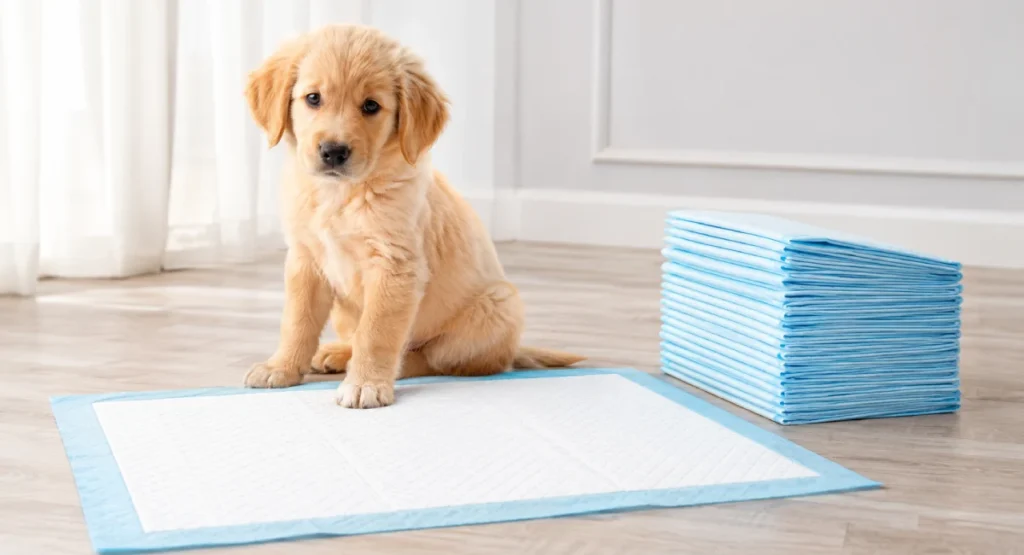
Puppy training pads seem like a simple product, but they’re quite practical for new puppy owners. When a puppy is newly born, it’s often difficult to figure out where to potty. This can lead to accidents on the floor, carpet, and sometimes at night, and the owner may not even notice. Training pads help give the puppy a fixed indoor potty spot, making housetraining a little easier and keeping the house clean more manageable.
These pads aren’t just for puppies. Training pads can also be useful for older dogs who have bladder control issues, dogs in recovery, or dogs who can’t go outside frequently due to weather, flat living, or a busy routine. There are a wide choice of disposable pads, washable pads, and pad holders available on the UK market. In this guide, we’ll compare all three to help you choose the best option for your dog, home setup, and budget.
Disposable vs washable: which is better?
This is the first decision you need to make, and it comes down to convenience versus cost over time.
Should you use disposable pads for a dog?
Disposable pads are the easier option in the short term. You unfold one, put it down, let your puppy use it, and throw it away. No washing, no drying, no fuss. The downside is ongoing cost (you’ll get through 3 to 5 pads per day with a young puppy) and the environmental impact of sending hundreds of used pads to landfill over a few months.
Are washable pads good for dogs?
Washable pads cost more upfront but work out significantly cheaper over time. A set of 5 to 7 washable pads can last through your entire house training period and beyond. They’re better for the environment, more absorbent than most disposable pads, and some puppies actually prefer the feel of fabric under their paws. The trade-off is that you need to wash them regularly, which means dealing with soiled pads in your washing machine.
A lot of puppy owners use both. Washable pads during the day when they’re home to swap them quickly, and disposable pads at night or when they’re out. That’s a practical approach that combines the best of both.
Best disposable puppy training pads UK
The puppy training pads UK recommended in this guide were not added based on any personal bias or simply personal preference.
When selecting products, the options available on Amazon UK, customer reviews, ratings, price, quality, and real user feedback were considered. Some links are affiliate, which may earn us a small commission, but this does not mean that the products are recommended randomly or for commission. Our goal is to show you puppy training pads that are practical, useful, and genuinely worth considering for UK dog owners.
1. Simple Solution Puppy Training Pads
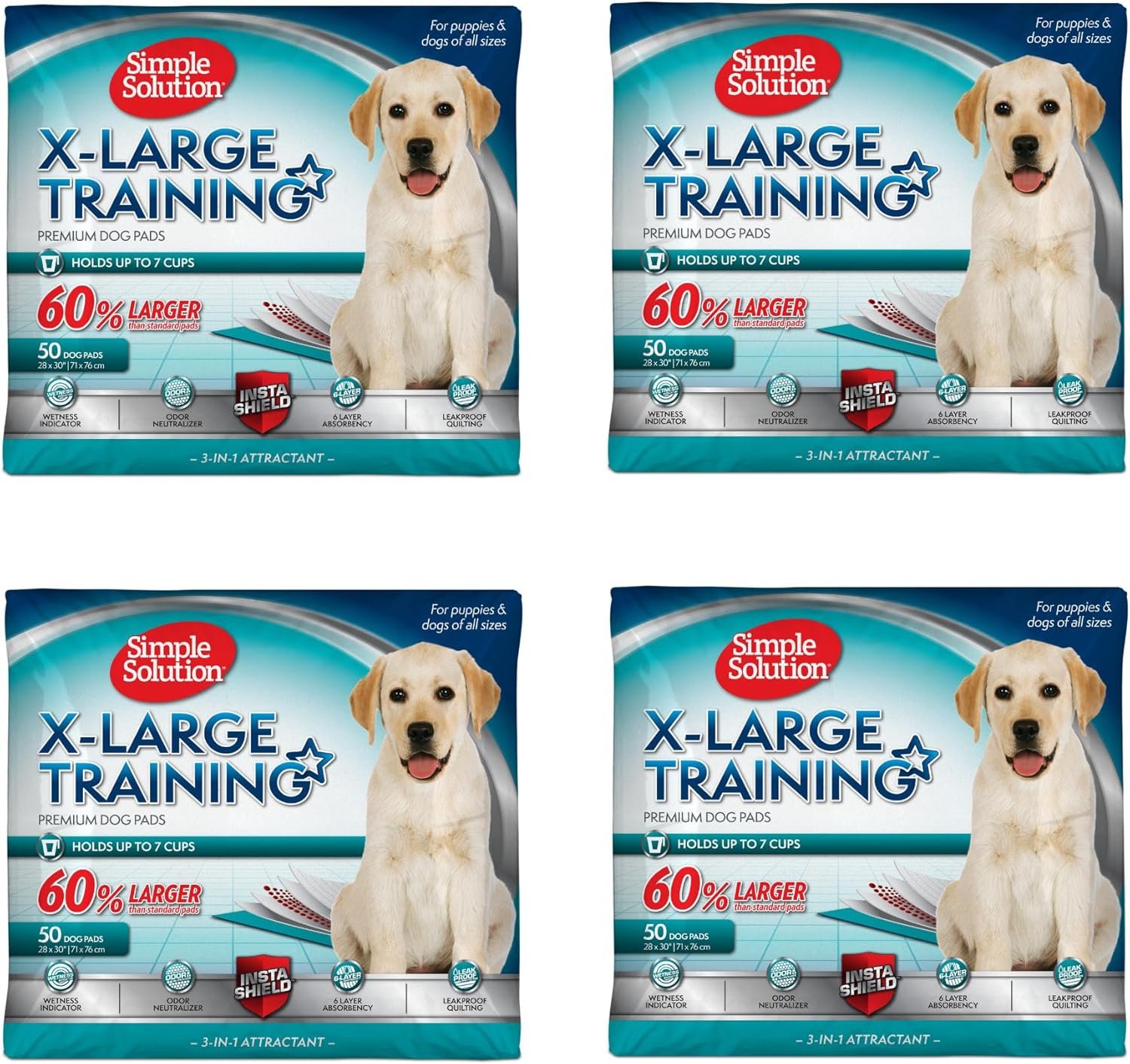
Simple Solution Puppy Training Pads
Simple Solution Extra Large Puppy Training Pads – Leak-Proof Disposable Pee Pads for Dogs with Incontinence – Absorbent with Odor Control – 28 x 30 Inches – 200 Count
Simple Solution is probably the best-known training pad brand in the UK, and for good reason. Their standard puppy training pads come in multipacks of 30, 50, 100, and 200, with prices working out to roughly 10p to 15p per pad when bought in bulk on Amazon UK.
The pads have 5 layers of protection, including a quilted top sheet, an absorbent core, and a waterproof plastic backing. They lock in moisture reasonably well and don’t leak through to the floor in normal use. Each pad measures 56 x 56cm, which is a good size for most toy and small breeds. Larger breed puppies might need two pads side by side.
They also contain a built-in attractant, which is a mild scent that encourages puppies to toilet on the pad rather than the carpet. Whether this actually works is debatable. Some owners swear by it, others see no difference. The pads work fine either way because puppies will naturally use an absorbent surface if it’s in the right place.
2. Amazon Basics Puppy Training Pads
Amazon’s own-brand pads are the budget pick. They come in packs of 50 or 100 and cost roughly 5p to 8p per pad, which is about half the price of branded options. You can find them on Amazon UK.
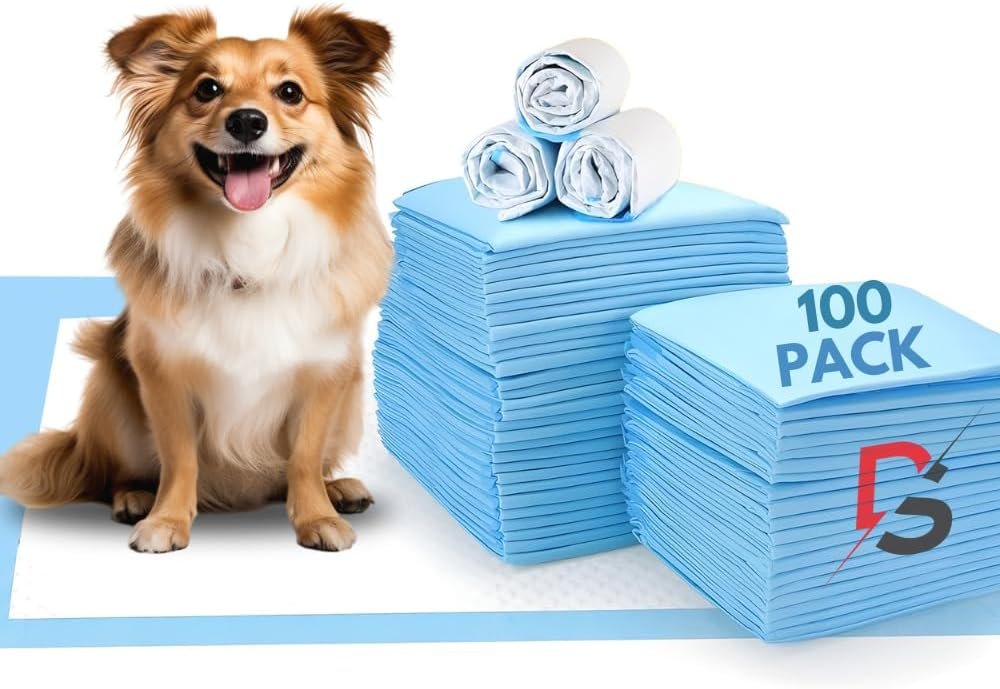
Discount Seller Leakproof Puppy Training Pads
Discount Seller Puppy Pads 100 Packs (60x60cm) Large Size Multi-Layered Leakproof Puppy Training Pads, Super Absorbent and Odour Locking Puppy Pads – Anti-Slip and Disposable Pee Pads for Dogs
The quality reflects the price. They’re thinner than Simple Solution pads, which means they soak through faster if your puppy produces a large amount of urine. For toy breeds and small puppies with small bladders, they work fine. For larger puppies, you’ll need to change them more frequently or double them up.
These are the pads to buy if you’re going through a lot of them and want to keep costs down. They do the job, just with less margin for error than the premium options.
3. PetSafe Training Pads
PetSafe is a well-regarded name in the pet industry, and their training pads sit in the mid-range price bracket at around 12p to 18p per pad. Available in packs of 30, 50, and 100 from Amazon UK.
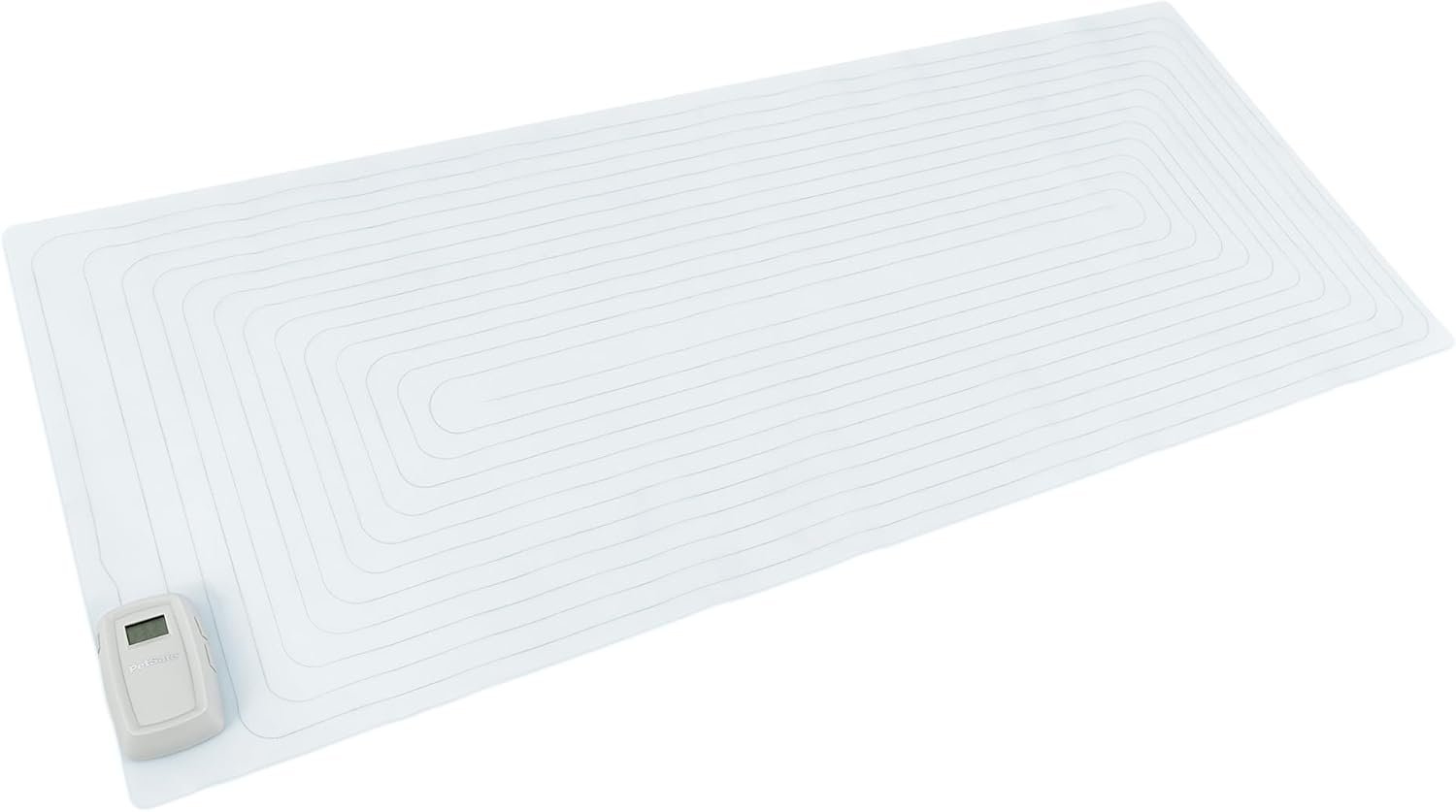
PetSafe ScatMat Indoor Training Mat
PetSafe ScatMat Indoor Training Mat, 7 Correction Modes, Protect Your Furniture, Training Tool for Dogs and Cats, Large Size Mat (48 in X 20 in) – Pet Proof Your Home – Battery-Operated Mat
These pads are slightly larger than standard at 60 x 60cm, which gives more surface area for your puppy to aim at. The absorbent core holds more liquid than Amazon Basics, and the plastic backing is more robust. They also have adhesive strips on the bottom to keep the pad in place on hard floors, which is a nice touch. Puppies sometimes kick or push training pads around, and the adhesive strips reduce this problem.
PetSafe also sells a “Wee-Wee” pad attractant spray separately, which you can spray onto any training pad to make it more appealing to your puppy. It costs around £7 to £10 and lasts for several weeks of regular use.
Best washable puppy training pads UK
1. Gorilla Grip Washable Dog Pee Pads
The Gorilla Grip range from Amazon UK is the most popular washable option in the UK. They come in several sizes (small 60 x 45cm up to extra-large 90 x 70cm) and are sold in packs of 2, 3, 4, or 7. Prices range from roughly £15 to £35 depending on the pack size and dimensions.
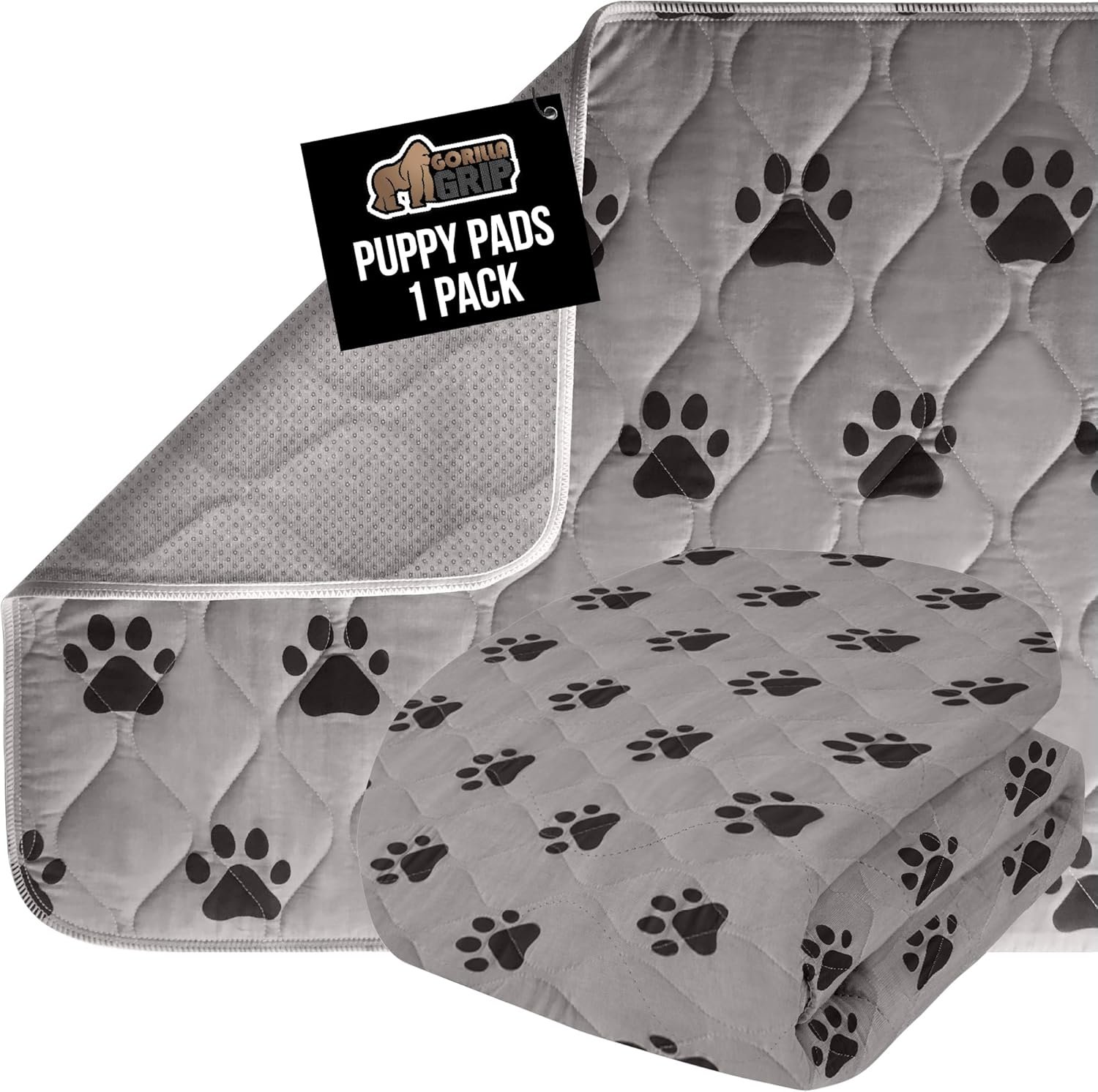
Gorilla Grip Washable Dog Pee Pads Amazon UK
Gorilla Grip Reusable Puppy Pads, 46×28, Slip Resistant Pet Crate Mat, Absorbs Urine, Waterproof, Cloth Pee Pad for Training Puppies, Washable Incontinence Underpads, Chucks, Protects Sofa, Furniture
Each pad has 4 layers: a soft quilted top, two layers of absorbent microfibre, and a waterproof polyurethane backing. They absorb significantly more liquid than disposable pads and don’t leak through to the floor. The stitching is robust, and they survive repeated washing without falling apart. Gorilla Grip claims up to 300 washes, which is probably optimistic, but they definitely last for months of regular use.
The larger sizes are excellent for bigger breed puppies. A single 90 x 70cm pad covers more area than 3 standard disposable pads and stays put better because of its weight.
2. Petmate Washable Puppy Pads
Petmate’s washable pads are similar in construction to Gorilla Grip but come in a wider range of colours and patterns. They’re slightly more expensive at around £18 to £22 for a pack of 2, but the quality is comparable. Available on Amazon UK.
These have a nice non-slip silicone backing that grips hard floors better than some alternatives. If your puppy’s training area is on tile or laminate flooring, this is a useful feature. The absorbent core handles 2 to 3 visits from a small breed puppy before needing a wash, which is reasonable.
3. AliExpress washable pee pads
For the cheapest washable option, AliExpress sells washable training pads in bulk packs. You can get a pack of 5 or 10 for around £10 to £20 including delivery. The quality is decent but not quite as good as Gorilla Grip or Petmate. The stitching can be less precise, and the waterproof backing might degrade faster after repeated washing.
For the price, they’re hard to beat if you need a lot of pads on a tight budget. Just be aware that delivery from AliExpress typically takes 2 to 4 weeks, so they’re not an option if you need pads immediately.
Training pad holders
Puppies sometimes shred training pads, drag them around the house, or chew the edges. A pad holder stops this by securing the pad in a rigid frame. It also prevents the edges from curling up, which makes the pad more comfortable for the puppy to stand on and reduces the chance of urine running off the edge.
The PetSafe Training Pad Holder is a simple plastic tray that holds standard-sized training pads flat. It has raised edges that contain any overflow and grippy feet that stop it sliding on hard floors. It costs around £10 to £15 and fits most 56 x 56cm pads.
The IRIS Training Pad Holder is a similar product at a slightly lower price point (around £8 to £12). It’s more basic but does the same job. Both are worth considering if your puppy treats training pads as toys.
How to use training pads effectively
Training pads work best when used as part of a structured house training plan, not as a permanent indoor toilet solution. Here’s how to use them properly.
Step 1: Create a dedicated toilet area
Choose one spot in your house for the training pads and stick with it. Puppies learn to associate specific locations with toileting. If you move the pads around every day, your puppy gets confused and has more accidents. A corner of the kitchen, utility room, or a tiled bathroom floor works well. Avoid carpeted areas, obviously.
Step 2: Watch for toilet signals
Puppies give clear signals when they need to go: sniffing the ground, circling, wandering into corners, suddenly stopping play, or walking away from the group. When you see these signs, gently pick your puppy up and place them on the training pad. Don’t carry them from across the house; they might not make it. If they toilet on the pad, reward immediately with praise and a treat.
Step 3: Move pads towards the door
Once your puppy is reliably using the pads in their dedicated spot, gradually move the pads closer to the door you use for outside toilet trips. Move them a foot or two every few days. Eventually, the pads should be right next to the door. This creates a clear connection in your puppy’s mind between the toilet area and going outside.
Step 4: Transition to outside toileting
When your puppy is fully vaccinated and can go outside, start taking them to their outdoor toilet area at the times they would normally use the pad (after meals, after waking up, after play). Keep a pad inside as backup, but encourage outside toileting by rewarding generously when it happens outside and gradually reducing the number of pads inside.
Most puppies transition from pads to outdoor toileting between 12 and 20 weeks of age. Some take longer. Don’t rush the transition. If you remove all pads too quickly, your puppy might start soiling the carpet instead of asking to go outside.
How many pads will you need?
A typical puppy uses 3 to 5 disposable pads per day during the peak house training period (8 to 16 weeks). That’s roughly 100 to 150 pads per month. If you’re using disposables at 10p to 15p per pad, that’s £10 to £23 per month on training pads alone.
With washable pads, you’d need a minimum of 5 to 7 pads to rotate through (one in use, others in the wash or drying). A set of 7 Gorilla Grip pads costs roughly £25 to £35. Over the 3 to 4 months of active house training, washable pads work out significantly cheaper and generate no waste.
If you use both (washable during the day, disposable at night), you’ll need 3 to 4 washable pads and maybe 30 to 60 disposables per month for night time use. This is a good compromise that reduces waste and cost while keeping overnight management simple.
Common mistakes with training pads
Leaving pads down too long
A soiled training pad should be replaced as soon as possible. Puppies don’t like standing on a dirty pad and will toilet next to it instead of on it. If the pad is full, your puppy will find a clean spot on your floor. Check the pad every hour or two and change it when it’s been used. At night, put a fresh pad down before bed.
Using pads as a permanent toilet solution
Training pads are a stepping stone to outdoor toileting, not a permanent fixture. Some owners leave pads down for months or even years because it’s convenient. Long-term pad use can confuse house training and makes it harder for the dog to understand that toileting outside is what you want. Unless your dog has a medical condition that prevents outdoor access, phase out the pads once your puppy is reliably going outside.
Punishing accidents
If your puppy toilets on the carpet rather than the pad, don’t shout at them or rub their nose in it. They won’t connect the punishment to the action (even if it happened 5 seconds ago). Clean the area with an enzymatic cleaner to remove scent markers, and try to supervise more closely so you can catch the signals next time and redirect to the pad.
Not cleaning accidents properly
Standard household cleaners (bleach, ammonia-based products, surface sprays) don’t fully remove the scent of urine from your puppy’s perspective. They mask it to human noses but dogs can still smell it, which attracts them back to the same spot. Use an enzymatic cleaner like Simple Solution Stain and Odour Remover (around £10 to £15 on Amazon UK). Enzymatic cleaners break down the uric acid crystals that cause the lingering smell.
Are training pads safe for puppies?
Generally yes, but there are a few things to be aware of. Disposable pads are made from synthetic materials (polyester, polypropylene, superabsorbent polymer). If your puppy chews and swallows pieces of a disposable pad, it could cause an intestinal blockage. Supervise your puppy around disposable pads and replace any that have been chewed.
The absorbent gel inside disposable pads (sodium polyacrylate) is non-toxic but expands significantly when wet. If ingested, it can cause vomiting or intestinal issues. Again, supervision and prompt replacement of damaged pads minimises this risk.
Washable pads made from cotton or microfibre are safer from a chewing perspective because there’s no gel or plastic inside. They’re still not meant to be eaten, but the consequences of a puppy chewing a fabric pad are generally less severe than shredding a disposable one.
Frequently asked questions
Should I use training pads or go straight to outdoor toileting?
It depends on your situation. If you’re home during the day and can take your puppy outside every 30 to 60 minutes, you can skip training pads entirely and go straight to outdoor toileting. If you work, have mobility issues, or live in a flat without easy outdoor access, training pads are a practical intermediate step. Many UK puppy owners use both approaches simultaneously.
My puppy keeps chewing the training pads. What should I do?
Try a pad holder, which makes it harder for the puppy to grab the edges. If chewing persists, switch to washable pads (fabric is less appealing to chew than crinkly plastic-backed disposables) and spray the pad edges with a bitter-tasting dog deterrent. You can also try taping the edges of the pad to the floor with masking tape. If your puppy is chewing pads out of boredom, increase their exercise and mental stimulation.
How long does house training with pads take?
Most puppies start reliably using training pads within 1 to 2 weeks. The full transition from pads to outdoor toileting typically takes another 4 to 8 weeks. By 16 to 20 weeks, most puppies are mostly house trained. Some breeds (smaller breeds in particular) take longer and may have occasional accidents up to 6 months. If your puppy is still having frequent accidents past 6 months, consult your vet to rule out medical issues like urinary tract infections.
Can adult dogs use training pads?
Yes. Adult dogs may need training pads if they’re recovering from surgery, have mobility issues, develop incontinence, or if their owner works long hours and can’t get home for toilet breaks. Washable pads are generally the better choice for long-term adult dog use because they’re more economical and more environmentally friendly. Senior dogs with incontinence may benefit from a dedicated indoor toilet area with washable pads that’s always available.
How do I stop my puppy from playing with soiled pads?
Some puppies find used pads fascinating and will drag them around the house. A pad holder is the most effective solution. Alternatively, change the pad immediately after use so there’s nothing to play with. If you can’t change it straight away, place something over it (a box or a piece of cardboard) so the puppy can’t access it. Reward your puppy for leaving the pad alone when they do.
Final Thoughts
Training pads are a practical tool for house training, not a substitute for proper toilet training. Use them as a stepping stone between indoor accidents and reliable outdoor toilething. Start with pads in a fixed location, gradually move them towards the door, and transition to outside toileting once your puppy is vaccinated and ready for walks.
For disposable pads, Simple Solution offers the best balance of quality and price. For washable pads, Gorilla Grip is the clear UK market leader. Using a pad holder prevents shredding and keeps things tidy.
Be patient. House training takes weeks, not days. Celebrate every success, clean up accidents without fuss, and keep at it. Every puppy gets there eventually.