
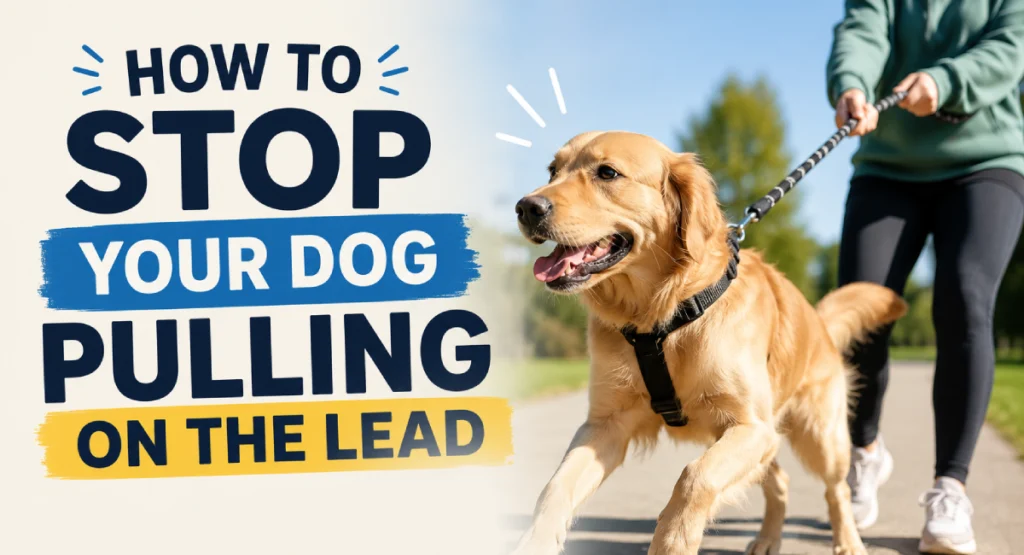
Your arms are aching. Your shoulder is hurting too. And your dog, whom you lovingly raised from a tiny puppy, is currently dragging you down the sidewalk like he’s training for the Iditarod.
Lead pulling is one of the most common behavior problems for UK dog owners. According to the PDSA’s 2024 PAW Report, 1 in 4 dog owners experience a problem with their dog pulling on the lead. It can be tiring, frustrating, and sometimes even dangerous, especially when your dog suddenly lunges towards traffic or other animals.
The good news is that lead pulling can be done right. It requires consistency, patience, and the right approach. In this guide, we’ll cover the training techniques that really work, the equipment that helps (and the one that doesn’t), and the common mistakes that keep owners stuck with a pulling dog for years.
Why dogs pull on the lead
Before fixing the problem, it’s important to understand why this happens. Dogs don’t pull to tease you. They pull because walking on a lead isn’t natural for them, and oftentimes, the owners’ reaction inadvertently reinforces this habit.
Dogs walk much faster than humans. A medium-sized dog’s comfortable walking speed is about 4 to 4.5 miles per hour, while the average human walks about 3 miles per hour. Your dog is constantly being held back from its natural pace, and the tension on the lead becomes normal for it. Gradually, they stop feeling that tension and simply start walking, leaning against it.
There’s also a reinforcement loop. Dogs pull because they want to reach something, like an interesting smell, another dog, or a patch of grass. When they pull and you walk with them, even if forced to, they learn that pulling gets them what they want. Every walk becomes proof to them that dragging you along works.
The habit of pulling is more common in certain breeds. Terriers, Huskies, Labradors, and Spaniels often pull more because they have been bred to be active and forward-moving dogs. However, if proper training is not given from the beginning, any breed can develop the habit of lead pulling.
What Equipment Helps Stop Lead Pulling?
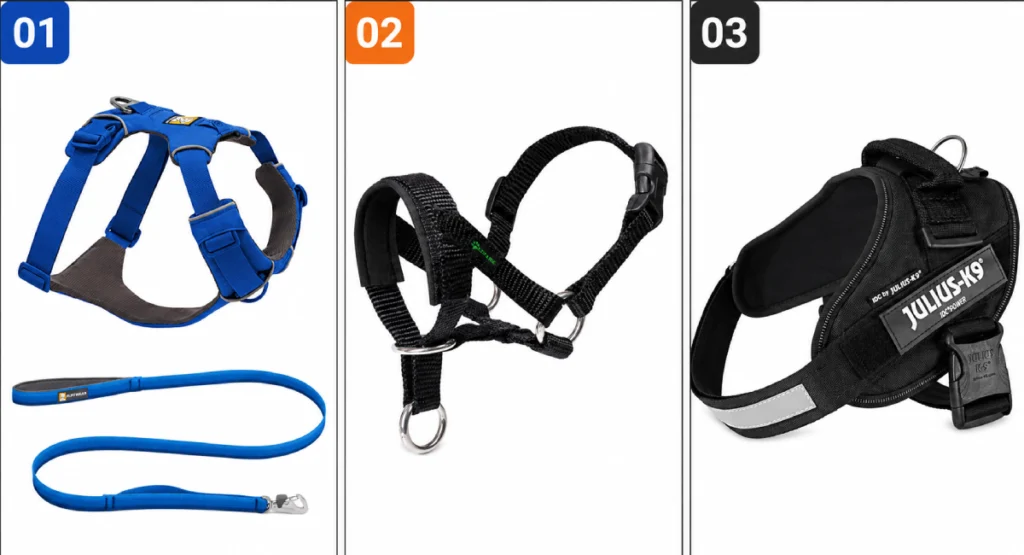
The right equipment can make a real difference, but it’s not a replacement for training. Think of it as a tool that gives you some breathing space while you teach your dog better habits.
No-pull harnesses
A good no-pull harness is one of the most useful tools for a pulling dog. Standard harnesses have hooks that clip to the back and give dogs more leverage to pull, while no-pull harnesses generally have a front clip attachment point. When the dog pulls forward, the harness gently redirects it towards you.
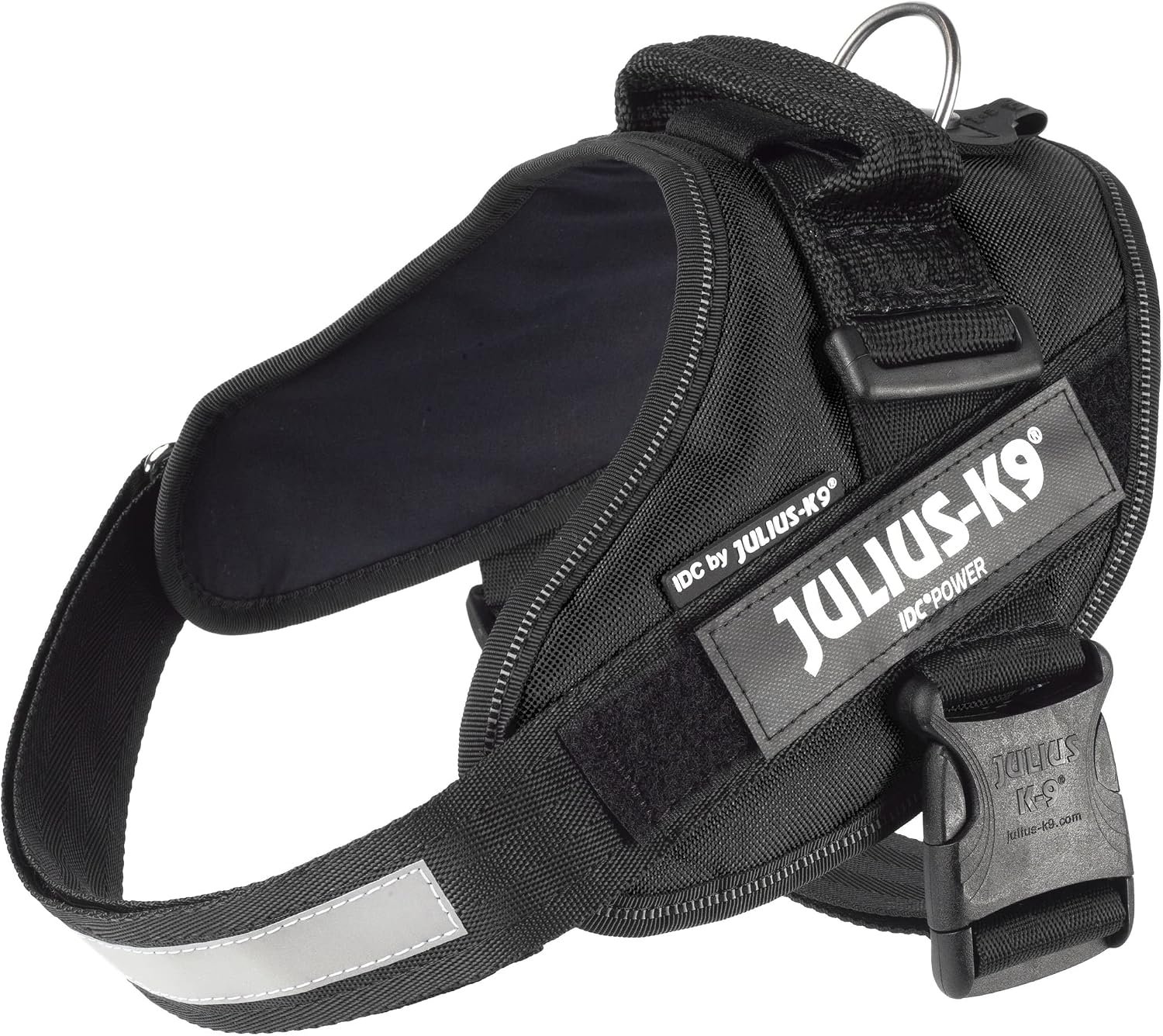
The Julius K9 IDC Power Harness is also a good option, although it’s more of a general-purpose harness with an optional front clip. It’s sturdy, highly visible (its reflective strips are especially good for winter walks), and built for long walks. Depending on the size, it costs around £30 to £40.
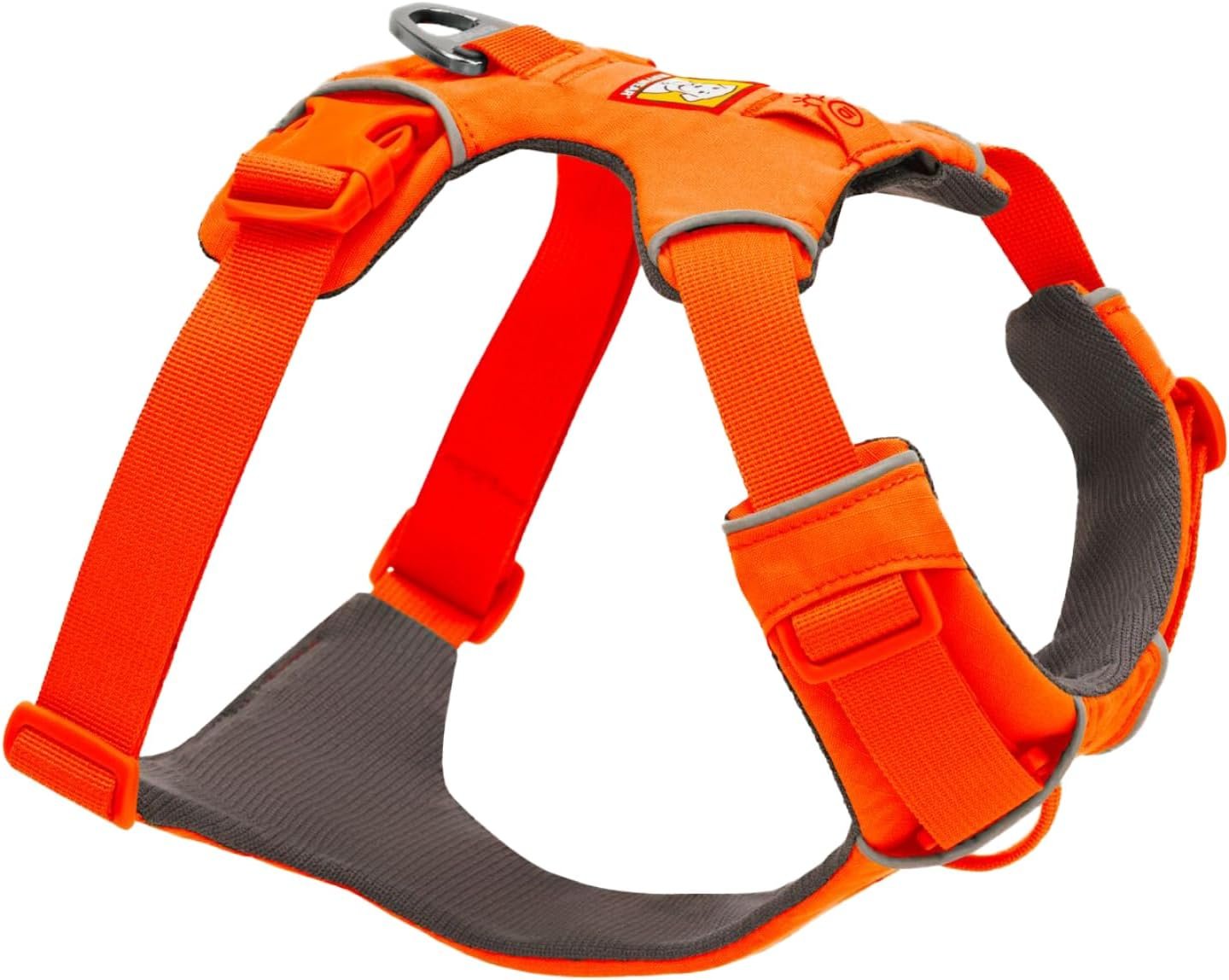
Ruffwear Front Range Harness
RUFFWEAR Front Range Harness, Reflective Y Medium Dog Harness, Adjustable Comfortable Padded Everyday Dog Walking, No Pull Pet Harnesses, 2 Lead Attachments & V Ring, Size Small, Blaze Orange
Ruffwear’s Front Range Harness is considered a premium option. It’s well-built, comfortable for the dog, and has both front and back clip points. Priced between £45 and £55, it’s the most expensive option on this list, but if you walk your dog daily, the build quality justifies its price.
Headcollars
Headcollars like the Gentle Leader work on a similar principle to a horse’s headcollar. They give you control of the dog’s head direction: where the nose goes, the body follows. When the dog pulls, the headcollar gently turns their head back towards you.
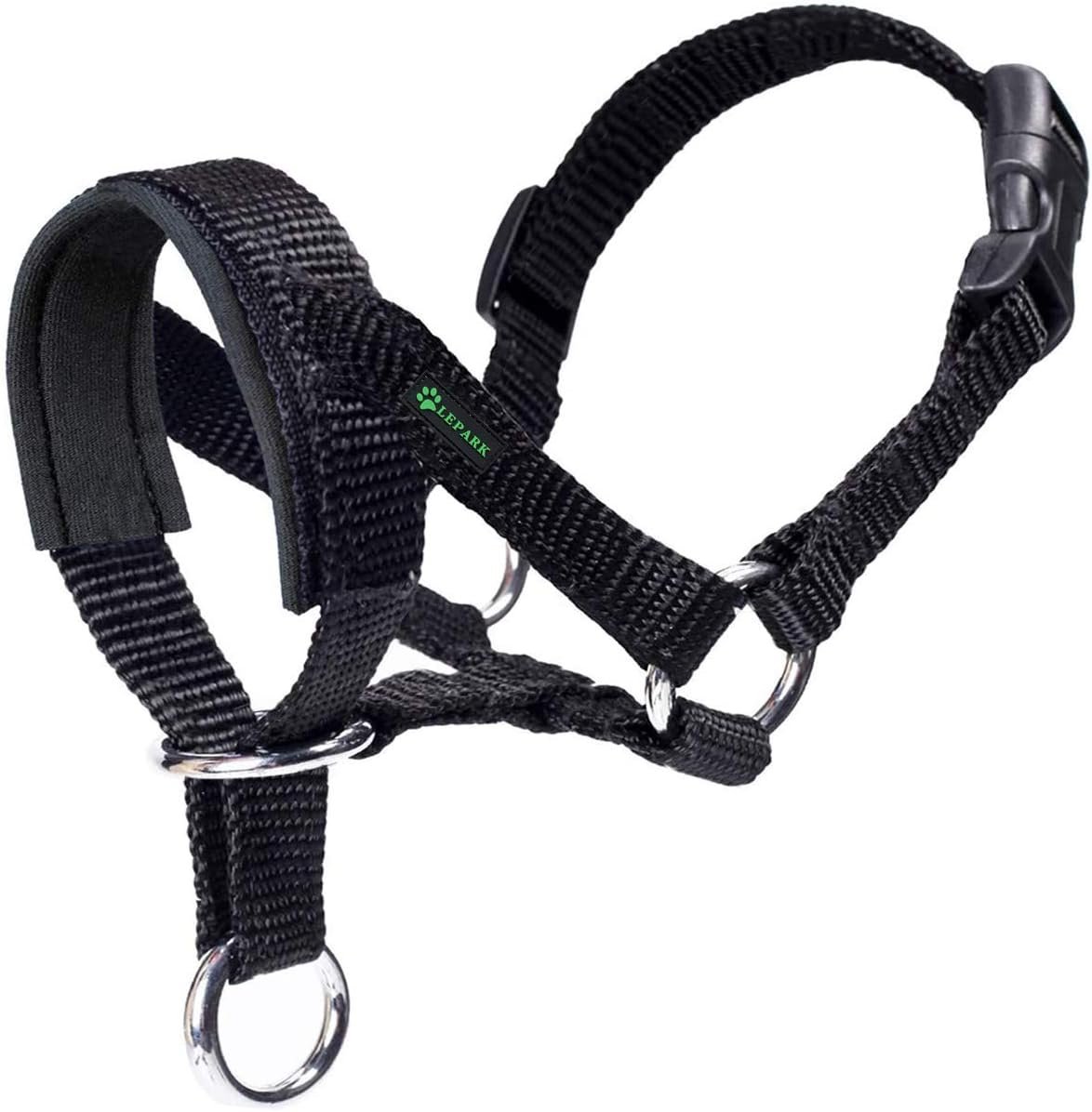
Dog Head Collar with Padded Fabric for Dogs
Dog Head Collar with Padded Fabric, Head Harness for Dogs, Anti pulling Head Halter Collar, Adjustable and Easily Control (S,Black)
They’re very effective for strong pullers, but some dogs find them uncomfortable and will paw at their face or refuse to walk. Introduce a headcollar gradually over several days, pairing it with treats, before attempting a full walk. Prices are around £15 to £20.
Leads
A standard lead of 1.5m to 2m is best for lead training. Fixed-length leads give you consistent control and contact. Retractable leads are not as helpful for training a pulling dog, as they teach the dog that tension on the lead is normal and that pulling extends its reach.
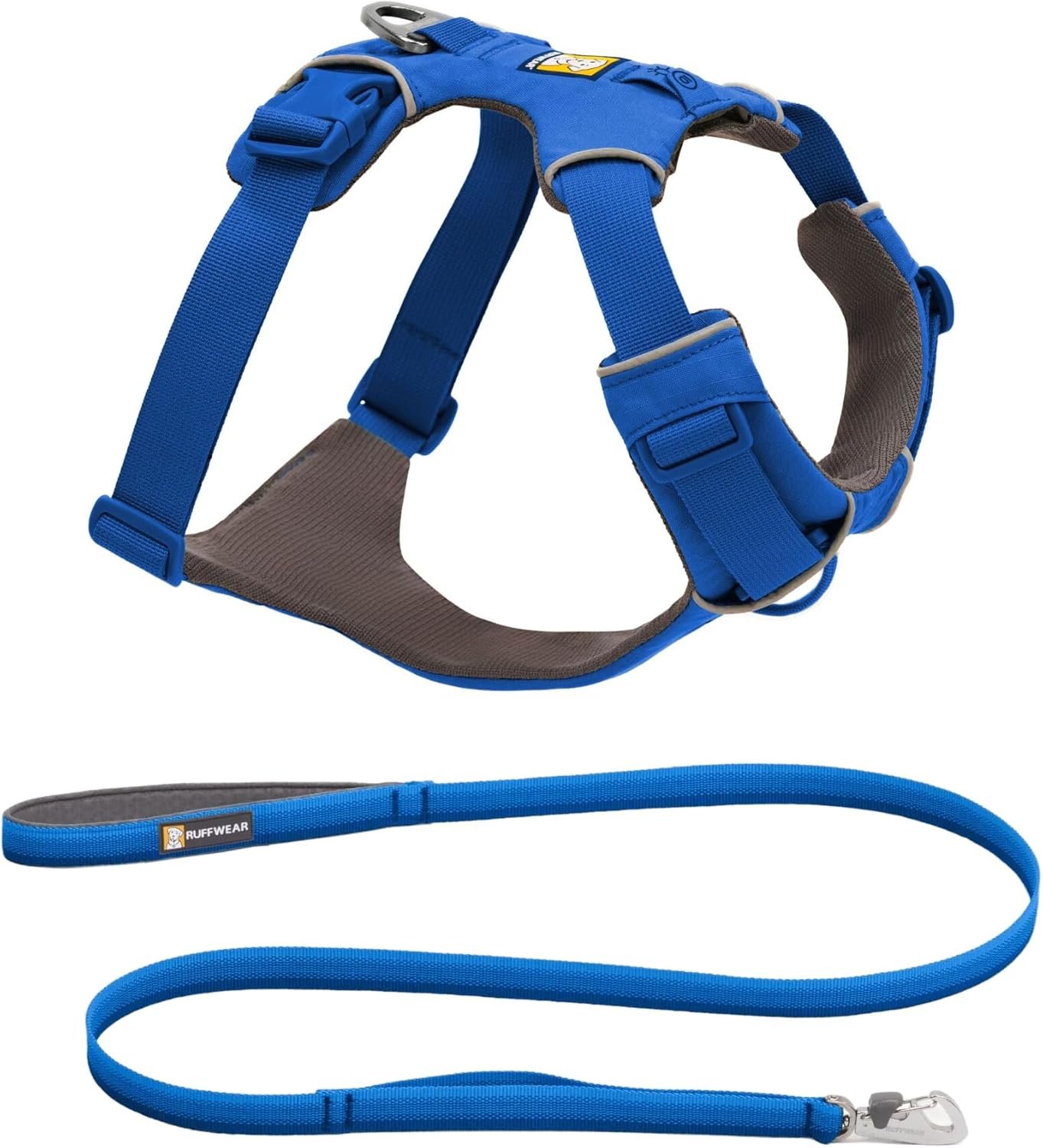
Ruffwear Front Range Dog Harness
The Ruffwear Roamer Leash is a good quality option with a stretch section that absorbs sudden lunges without giving the dog extra distance.
For a simpler option, a basic 2m nylon lead from any UK pet shop will do the job perfectly well. Rope slips leads are cheap and practical too. The key thing is length: keep it under 2m while you’re training.
Treat pouches
A treat pouch is a small but genuinely useful bit of kit for lead training. You need to reward your dog quickly and consistently during walks, and fumbling around in your pockets while your dog is pulling takes too long.
The Pets at Home Treat Bag is cheap (around £8 to £10), clips onto your belt or waistband, and holds enough treats for a 30-minute training walk. The Ruffwear Treat Trader Bag (£20 to £25) is the upgrade option with a better closure system that stops treats falling out when you bend down.
How to Train Loose Lead Walking Using Stop-and-Go
This is the foundation of loose lead training. It’s simple to understand, but it requires patience and consistency.
Here’s how: You start walking. The moment your dog moves ahead of you and the lead becomes tight, stop. Stop completely. Stand still like a tree. Don’t jerk the lead. Don’t say anything. Just stop.
Your dog might look back in surprise. Wait. The second it looks at you or the lead loosens even slightly, praise it affectionately and start walking again. If he pulls forward again, stop again. Repeat this process for the entire walk if necessary.
In the early days, you may only be able to walk 20 meters in 15 minutes. This is perfectly fine. The aim is to teach your dog a new rule: tension on the lead means the walk will stop. Loose lead means the walk will continue. Most dogs get the hang of this within a few sessions, although some stubborn breeds may take a little longer.
The most important thing is consistency. If you hold off on Monday but let him pull on Tuesday because you’re in a hurry, you’re teaching him that pulling sometimes works. And dogs are quite adept at understanding “sometimes.”
The Turn-and-Walk Method for Lead Pulling
This method works well in conjunction with the stop-and-go technique, especially for dogs who are so focused on something ahead that they ignore the tension of the lead and just keep pulling.
When your dog starts pulling toward something, get its attention by calling its name, then suddenly turn and start walking in the opposite direction. Don’t wait for it to stop. Just turn and walk. When it comes to you and starts walking with you, even if it’s just for a few seconds, give it a treat and praise.
This method teaches your dog to pay attention not just to the environment, but also to you. Dogs who are used to pulling in a straight line toward every distraction may find this quite confusing at first, but that’s precisely why it’s so effective.
Changing directions randomly is also good practice when your dog isn’t pulling. This keeps them engaged and focused on where you’re going, rather than checking every lamppost at full speed.
Positive Reinforcement Training for Loose Lead Walking
This is a positive reinforcement approach, and is recommended by most behaviorists in the UK. The idea is to actively reward your dog for walking on a loose lead, rather than discouraging it by simply stopping at pulling.
Walk your dog on your preferred side (traditionally the left side is used). Hold the treat in the hand that is closest to the dog, at about waist height. Now start walking forward. After every few steps, if the lead is still loose, give your dog a treat. Increase the number of steps between treats over time. 3 steps, treat. 5 steps, treat. 10 steps, treat. Gradually increase the gap.
You’re teaching your dog that staying close to you and letting go of the lead is rewarding. The treat acts as a lure, keeping him in the correct position, and constant repetition creates a habit. After a few weeks, most dogs will check in on you frequently during walks because they understand that paying attention to you leads to good things.
Once your dog can reliably walk 20 to 30 steps on a loose lead, you can gradually reduce the number of treats. Instead of rewarding every time, reward occasionally. Vary the reward as well; sometimes a treat, sometimes verbal praise, and sometimes a small game with a toy. Intermittent reinforcement often develops stronger behavior because your dog never knows when the next reward will come.
The “Find It” Game for Loose Lead Walking
Some dogs pull because they aren’t getting enough mental or physical stimulation. Walking is their biggest source of energy, so they want to cover as much ground as possible. The “Find It” game channels this energy into a productive activity.
Drop a small treat on the ground near your feet and give the command “find it.” Let your dog find and eat the treat. Then drop another treat a little distance away, followed by another. This way, you’re rewarding your dog for staying close to you and using its nose, and both naturally slow it down.
This technique is especially effective for scent-driven breeds like spaniels, beagles, and terriers. Sniffing is a mentally tiring activity for dogs. A 20-minute walk with regular “find it” breaks can sometimes tire a dog as much as a 40-minute brisk walk. This also gives you opportunities for natural stops where the lead loosens on its own.
Common mistakes that make pulling worse
I see the same mistakes over and over again in owners who are struggling with the masculine lead. This is the most common mistake.
Pulling back
When your dog pulls forward and you pull back, you’re essentially starting a tug-of-war. And dogs are very good at tug-of-war. Pulling the lead back increases the tension, often forcing the dog to pull harder in the opposite direction. This is called an opposition reflex, and it’s instinctively present in most dogs.
Instead, don’t pull back on the lead. Just stop walking. Stand in one place and wait until the lead loosens. Then start walking forward again.
Using a retractable lead
Retractable leads are not a good choice for pulling dogs. They teach dogs that applying tension to the lead extends their reach. This mechanism always keeps a slight tension on the lead, allowing the dog to become accustomed to the feel of a tight lead. When you later switch to a fixed lead, the dog may not understand why this is a problem anymore.
Retire your retractable lead (graciously). Always use a 1.5m to 2m fixed lead for training walks.
Letting the dog set the pace
If your dog decides the speed and direction of every walk, he has no reason to pay attention to you. Then you become just a passive passenger being dragged along behind him. Take back control and set the pace yourself. You decide when to stop, when to change direction, and when to go faster or slower.
Inconsistent corrections
Stopping every time the lead goes tight is exhausting for you. I know. But inconsistency is worse. If you correct pulling on some walks but not others, your dog learns that persistence pays off. Pull long enough and you’ll eventually give in. Be consistent even when you’re tired, rushed, or just can’t be bothered. Every walk is a training opportunity.
Getting angry
When your shoulder is hurting and your dog isn’t listening, it’s perfectly understandable to feel frustrated. But yelling, jerking the lead, or getting angry won’t help. Your dog doesn’t connect your anger to your pulling. They only feel tension and anxiety, which often overexcites them and can increase the pulling. Stay relaxed, be patient, and take deep breaths if necessary.
Equipment to avoid
Not all training equipment is created equal. Some of it is actively harmful or counterproductive.
Choke chains
Choke chains tighten around the dog’s neck when they pull, causing discomfort or pain. The theory is that the dog will stop pulling to avoid the choking sensation. In practice, many dogs simply tolerate the discomfort and keep pulling, which can cause neck injuries, tracheal damage, and in extreme cases, fainting. The British Veterinary Association advises against choke chains. They’re outdated and there are better alternatives.
Prong/pinch collars
Prong collars have metal prongs that press into the dog’s neck when the lead tightens. They’re banned in several countries and widely condemned by veterinary and behaviour professionals in the UK. They can cause tissue damage, increase anxiety, and actually make lead reactivity worse in many dogs. Avoid them completely.
Shock/e-collars
Electronic collars that deliver a shock when the dog pulls are illegal in Wales and heavily restricted elsewhere in the UK. The RSPCA opposes their use, and research consistently shows that positive reinforcement produces better, longer-lasting results without the welfare concerns. Don’t use them.
How long does it take to fix lead pulling?
Honest answer: it depends on the dog, the owner’s consistency, and how ingrained the habit is.
A young dog that’s been pulling for a few weeks might walk on a loose lead within 2 to 3 weeks of consistent training. An adult dog that’s been pulling for years will take longer, probably 2 to 3 months of daily practice to see reliable improvement.
Some dogs plateau. They’ll walk beautifully for 10 minutes then start pulling again when they spot something exciting. This is normal. Keep practicing. The plateau will extend. 10 good minutes becomes 20, then 30, then an entire walk.
Don’t expect perfection. Even well-trained dogs sometimes pull when they see a squirrel or another dog. The difference is that a trained dog will quickly return to loose lead walking when you ask, rather than pulling for the entire walk regardless of what’s happening around them.
When to get professional help
If you’ve been consistently training for 4 to 6 weeks and seeing no improvement whatsoever, it’s worth consulting a professional. A qualified dog behaviourist can assess whether there’s an underlying issue (anxiety, reactivity, pain) that’s contributing to the pulling.
In the UK, look for behaviourists registered with the Association of Pet Behaviour Counsellors (APBC) or the Animal Behaviour and Training Council (ABTC). These organisations hold their members to proper standards. Avoid anyone who guarantees quick fixes or recommends punishment-based methods involving choke chains, prong collars, or alpha-rolling.
Your vet is also a good first port of call, especially if the pulling is a recent change in an older dog. Pain from arthritis or musculoskeletal issues can sometimes manifest as pulling or restlessness on walks.
Tips for specific situations
Every dog’s walking situation is different, so it’s helpful to use different approaches in specific situations. The goal of these tips is to make walks calm and manageable for both you and your dog.
Pulling towards other dogs
If your dog pulls specifically towards other dogs, you’re dealing with reactivity rather than simple pulling. The training approach is different. You need to work on desensitisation and counter-conditioning: gradually exposing your dog to other dogs at a distance where they can stay calm, while pairing the presence of other dogs with high-value treats. This is a bigger topic than lead training alone, and a behaviourist can make a significant difference here.
Pulling on the way home
Many dogs pull more on the return leg of a walk because they’ve figured out that home means food, warmth, and rest. Try taking a circular route rather than an out-and-back one, so your dog can’t predict when the walk is ending. Vary your routes regularly to keep things interesting and less predictable.
Pulling in exciting environments
Parks, beaches, and woods are more stimulating than residential streets. Your dog’s arousal level goes up, and pulling gets worse. Practice loose lead walking in low-distraction environments first (your garden, a quiet street), then gradually increase the difficulty. Don’t expect the same behaviour in a busy park that you get on your quiet street at home.
Frequently asked questions
Will a no-pull harness stop my dog pulling on its own?
No. A no-pull harness makes pulling less effective and more uncomfortable for the dog, which helps, but it doesn’t teach them not to pull. If you rely solely on the harness without any training, your dog will eventually learn to pull against it. Use the harness as a management tool while you train proper loose lead walking. Over time, most dogs need the harness less as they learn better habits.
My dog only pulls on the way to the park. Why?
Because the park is the most exciting part of the walk and your dog knows it. They’re pulling towards something they want. Try stopping well before you reach the park and practising some calm sits and attention exercises before continuing. Don’t let the dog dictate when you arrive. If they pull towards the gate, turn around and walk 20 paces away. Only approach the gate when the lead is loose.
Is it too late to train my adult dog to stop pulling?
No. Adult dogs can absolutely learn loose lead walking. It sometimes takes longer than with a puppy because the pulling habit is more established, but the principles are exactly the same. Consistency matters more than the dog’s age. An adult dog that’s been pulling for 5 years can learn to walk nicely in 2 to 3 months with daily practice.
Should I use treats every walk forever?
No. Start with frequent treats to build the habit, then gradually reduce them. Once your dog is walking reliably on a loose lead, switch to intermittent rewards: a treat every few minutes, verbal praise, or a quick game. Eventually, the walk itself becomes the reward for most dogs. But keep some treats handy for high-distraction situations where your dog might need extra motivation to focus on you.
My dog pulls so hard I can’t hold them. What should I do?
If you’re physically unable to manage your dog on a standard lead, start with a front-clip no-pull harness immediately. It will dramatically reduce the pulling force you feel. Combine this with the stop-and-go method. If your dog is very large and strong, consider a double-handling technique: clip the lead to both the front of the harness and a collar, giving you two points of contact and much more control. And seek professional help. A qualified trainer can work with you and your dog in person, which is far more effective than reading about it online.
The bottom line
Lead pulling is fixable. It’s not a personality flaw in your dog, and it doesn’t mean you’re a bad owner. It’s a learned behaviour that can be unlearned with the right approach.
Invest in a decent front-clip no-pull harness and a fixed-length lead. Learn the stop-and-go method and use it on every single walk, no exceptions. Reward loose lead walking with treats and praise. Be patient and consistent, even when you’re tired and your dog seems to be going backwards.
Most dogs show noticeable improvement within 2 to 4 weeks of consistent training. Stick with it. Your shoulders will thank you.
For more dog training advice tailored to UK owners, check out our best dog training treats UK guide for treats that work well on walks.