

Small dogs eat less, and that changes everything about your budget
There’s one thing about owning a small dog that many people miss. A Chihuahua, which eats 60g of food a day, costs much less than a Labrador’s 300g. Same brand, same bag, but the monthly bill is wildly different. This simple math allows you to afford better quality food per day for a small breed, which would be hard to justify on a tight budget for a 30kg dog.
I’ve seen dozens of budget-friendly options for small breeds in the UK. Not just any food will do, but food that’s actually designed for dogs under 10kg. Because small breed nutrition is genuinely different, feeding your terrier or toy poodle standard adult kibble isn’t the best choice for them.
This guide covers the best cheap dog food for small dogs in the UK. Realistic prices from current UK retailers. An honest assessment of what’s inside the bag. And actual monthly cost breakdowns, so you can clearly see how much it will cost to feed a Jack Russell, Chihuahua, or French Bulldog.
Why small dogs need different food
Small breeds (typically under 10kg) burn through calories faster than larger dogs relative to their body weight. Their metabolic rate is higher. Their stomachs are smaller, so each meal needs to be nutrient-dense. And their mouths are physically smaller, which means oversized kibble is a genuine problem.
A 5kg dog might need 100-150g of food per day depending on activity level. Compare that to a 25kg dog needing 300-400g. The small dog’s daily portion is roughly a third, but their calorie needs per kilogram of body weight are actually higher. According to FEDIAF (the European pet food industry body), small breeds need food with a higher calorie density per gram to meet their energy requirements without overfilling their tiny stomachs.
Dental health is another factor. Small dogs are notorious for dental problems. Crowded teeth, plaque buildup, early tooth loss. Smaller kibble pieces can help here, provided they’re the right texture and density to encourage chewing rather than being swallowed whole. Some small breed foods also include specific dental benefits.
Then there’s the risk of hypoglycaemia. Toy breeds like Chihuahuas, Yorkies, and Pomeranians can suffer dangerous blood sugar drops if they go too long between meals. Frequent feeding schedules (2-3 times daily rather than once) matter more for them than for a greyhound who can happily eat once a day.
The hidden budget advantage of small dogs
If you buy a 12kg bag of Harringtons Small Breed Adult for around £28, the typical online price, it works out to roughly £2.33 per kilogram. A 7kg Chihuahua eating about 60g of food a day will finish this bag in roughly 200 days. This works out to 14p per day. £4.20 per month.
Even a premium option like James Wellbeloved Small Breed, which costs more per kilogram, still comes in below £15 per month for a toy breed. The same food for a medium or large dog can cost up to £40-£60 per month. The small dog advantage is real.
According to PDSA estimates, the average UK dog owner spends £20 to £50 per month on dog food. Small breed owners are usually at the lower end of this range, and often even lower. You can comfortably feed a small dog quality food for £8-£15 per month, which is what some people spend on coffee.
I’ll break down the exact monthly costs by breed next.
But the point is: if you’re budget-conscious and have a small dog, you’re in a genuinely good position. You don’t have to compromise on quality the way large dog owners often have to.
Best budget dry food for small dogs
1. Harringtons small breed adult
Harringtons is a reliable mid-range UK brand, and their small breed formula is one of the best value options around. Available in 2kg and 12kg bags, chicken is used as the primary protein source. The kibble size is noticeably smaller than their standard adult range, which makes a real difference for tiny mouths.
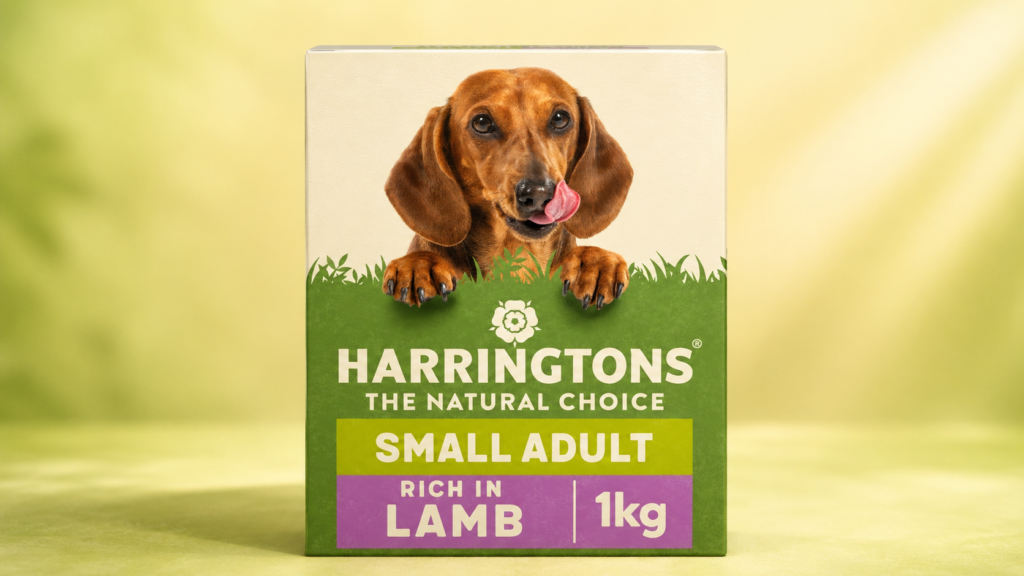
Ingredients include chicken (minimum 26%), whole grains like maize and wheat, peas, and a decent vitamin and mineral package. It’s not grain-free, and the protein content is 26%, which is adequate for most small breeds with normal activity levels. Nothing flashy, but solid nutrition.
Price: Roughly £5-£6 for 2kg, and £27-£30 for 12kg, depending on where you buy. At around 60g per day for a Chihuahua, a 12kg bag lasts over 6 months. You’re looking at roughly 10p-12p per day. It’s hard to argue with these numbers for this decent food.
Where it falls short: It contains some vegetable derivatives and the fat content is a modest 10%, so highly active small dogs may need supplementation. For more detail on how Harringtons performs compared to other budget brands,check our Harringtons vs Wagg comparison.
2. Purina BETA small breed adult
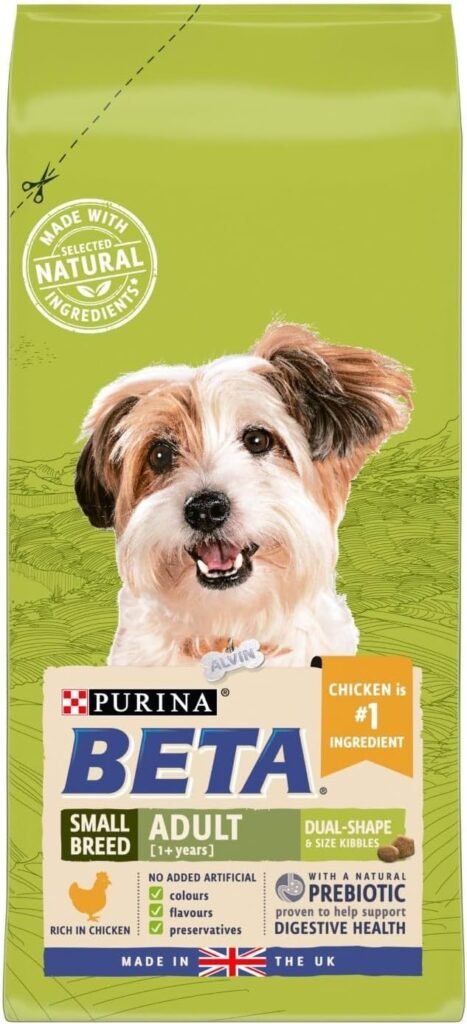
BETA’s small breed formula uses turkey as its main protein, with smaller kibble pieces designed specifically for dogs under 10kg. The ingredient list leads with turkey (14% minimum), maize, wholegrain barley, and poultry meal. Protein is at 28%, which is slightly higher than Harringtons.
Purina is a massive company and their quality control is consistent. Some people are suspicious of large manufacturers, but BETA avoids the worst ingredients (no added sugar, no artificial colours) and includes prebiotics for digestive health. The kibble shape is designed to slow eating, which helps with digestion and can reduce bloating.
Price: around £5-7 for 2kg, £25-30 for 12kg. Comparable to Harringtons. Widely available in supermarkets, pet shops, and online. For more budget dry options at similar prices, see our guide to the best dry dog food under £10 in the UK.
3. Wagg small dog complete
Wagg is one of the genuinely cheapest complete dog foods available in the UK, and their small dog formula keeps that affordability while adjusting kibble size for smaller breeds. Chicken is the primary ingredient alongside cereals, peas, and various vitamins and minerals.
At 20% protein, this sits at the lower end for small breed nutrition. It’s adequate but not generous. The fat content is 7.5%, which is on the lean side. For a relatively inactive dog (older Yorkshire terrier, for instance), this could work fine. For a lively Jack Russell who spends hours at the park, you might want something with more protein and fat.
The big selling point is price. A 2kg bag costs around £3-4, and a 12kg bag is typically £18-22. That makes Wagg one of the cheapest per-kilogram options available. If your budget is genuinely tight and your dog does well on it, Wagg delivers acceptable nutrition without emptying your wallet.
I should be honest though: Wagg uses more cereals and plant proteins than the other options on this list. It’s filling and complete, but the ingredient quality is noticeably a step down from Harringtons or BETA. If you can stretch your budget slightly, I’d recommend doing so.
4. James Wellbeloved small breed
James Wellbeloved sits at the upper end of what I’d call “budget” for small dogs. It’s not cheap compared to Wagg, but for small breeds the actual monthly cost is still very reasonable. Their small breed turkey and rice formula is a popular choice, and for good reason.
What sets JW apart is the ingredient quality. Turkey is the first ingredient (and the sole meat protein). It’s naturally hypoallergenic, using rice and barley instead of wheat or maize. No artificial colours, flavours, or preservatives. No beef, pork, soya, or dairy, which makes it a solid choice for dogs with known sensitivities.
The protein content is 27% and fat is 10%, which is well-balanced for small breeds. The kibble is small and designed for tiny mouths. JW also includes prebiotics (MOS) and added glucosamine for joint support, which is a nice touch even in a budget context.
Price: 2kg bags are around £10-12, and 7.5kg bags are roughly £32-36. For a small breed eating 50-80g daily, a 7.5kg bag lasts 3-4 months. Monthly cost works out to roughly £8-12 depending on your dog’s size and activity level. When you consider the quality difference versus cheaper brands, it’s genuinely good value for small dog owners.
If your small dog has a sensitive stomach or skin issues, this is probably the best option on this list. See our full budget dog food for sensitive stomachs guide for more details.
5. Burns mini bites
Burns is a Welsh company with a strong reputation among UK vets and dog owners. Their Mini Bites range is specifically formulated for small and toy breeds, using a simple recipe based on chicken, brown rice, and oats. It’s designed to be easily digestible, which is exactly what small dogs with sensitive stomachs need.
The ingredient list is shorter than most competitors, and that’s deliberate. Fewer ingredients means fewer potential triggers for food sensitivities. The protein comes from chicken (22%) and the carbohydrates are low-glycaemic (brown rice, oats), which provides steady energy rather than spikes and crashes. Good news for breeds prone to hypoglycaemia.
Burns is proud of their approach to dog food, and the BVA (British Veterinary Association) has historically supported simpler ingredient lists for dogs with digestive issues. The Mini Bites kibble is genuinely small, roughly the size of a small pea, so even 2kg toy breeds can eat it comfortably.
Price: 2kg bags are around £9-11, and 7.5kg bags are £30-35. Similar ballpark to James Wellbeloved. The monthly cost for a small dog is roughly £7-10. Burns frequently runs promotions on their own website, and many independent pet shops stock it at competitive prices.
The downside is the relatively low protein content at 22%. Active dogs might need more. But for the average small breed who gets a couple of walks a day, it’s plenty.
6. Forthglade small breed grain-free
Forthglade is a Devon-based company that’s built a loyal following for using natural ingredients and avoiding common allergens. Their small breed grain-free dry food is the most expensive option on this list, but it’s still affordable for small dogs because of the tiny portions involved.
The recipe uses chicken (40% minimum, including fresh and dried) as the primary ingredient, alongside sweet potato and peas instead of grains. It’s free from artificial colours, flavours, and preservatives. The protein content is a solid 32%, and fat sits at 12%, making this the most nutrient-dense option here.
If your dog does better on grain-free food (some small breeds genuinely do), or if you simply prefer to avoid grains, Forthglade is a strong pick. The kibble is small and the palatability is generally excellent. Forthglade is one of the brands we regularly recommend in our best grain-free dog foods guide.
Price: 2kg bags are around £12-14, and 6kg bags are roughly £30-35. For a small breed, that translates to roughly £8-14 per month. More expensive per kilogram than Harringtons or BETA, but the higher meat content and grain-free formulation justify the premium for many owners.
Best budget wet food for small dogs
Dry food dominates the budget conversation, but wet food deserves attention for small breeds. Pouches and small tins are convenient, palatable, and many small dogs simply prefer them. The moisture content is better for dogs who don’t drink much water (a common issue in toy breeds).
Butcher’s trays and pouches
Butcher’s is consistently one of the best-value wet foods in the UK. Their original recipe trays (400g) contain 90% meat, no artificial colours or preservatives, and cost around 80p-£1 each. For a small dog eating half a tray per day, that’s roughly 40-50p daily, or £12-15 per month.
They also do smaller 150g trays and individual pouches, which are ideal for tiny appetites. You’re not left with half an open tin going off in the fridge. The ingredient quality is decent for the price: real meat, vegetables, and added vitamins. No cereal bulk-fillers, which is refreshing at this price point.
Forthglade wet food trays
Forthglade’s wet food range pairs nicely with their dry food. Their 100% natural trays come in various flavours (chicken, turkey, lamb, duck) and cost around £1-1.30 for a 395g tray. The ingredients are clean: meat, vegetables, and nothing unnecessary.
For small dogs, the 150g trays are particularly useful. You get a single meal portion without waste. At around 70-80p per small tray, a dog eating one tray per day would cost roughly £21-24 per month. More expensive than Butcher’s, but the ingredient quality is noticeably higher.
Harringtons wet food pouches
Harringtons makes wet food pouches (100g) that complement their dry range. Chicken with vegetables is the most common flavour, and at around 50-70p per pouch, they’re affordable for daily feeding. They use proper meat (not derivatives) and avoid artificial additives.
One or two pouches per day for a small dog costs roughly £15-40 per month depending on portion size and whether you’re mixing with dry food. If you already feed Harringtons dry, their wet pouches make a natural pairing that avoids digestive upset from mixing brands.
Winalot and Chappie (supermarket staples)
If you’re doing a weekly shop and want to grab wet food from the supermarket aisle, Winalot and Chappie are the budget options. Winalot pouches cost around 50-60p each and Chappie tins (the original recipe with chicken and fish) are roughly 60-80p for a 400g tin.
I’ll be straight: the ingredient quality of both sits below Butcher’s and Forthglade. Chappie is decent for sensitive stomachs (it’s been recommended by vets for decades for that reason), but Winalot contains some cereal filler and the meat content is lower. They work in a pinch and many dogs thrive on them, but you’re not getting the best nutrition available at this price point.
For a broader look at budget wet food, our best cheap dog food UK guide covers more options in detail.
Mixing wet and dry food for small dogs
I’m a fan of mixed feeding for small breeds. It gives you the convenience and dental benefits of dry food alongside the palatability and hydration of wet food. Small dogs are often fussy eaters (more on that below), and mixing makes meals more appealing without doubling your food bill.
The simplest approach is a 75/25 split: three quarters dry kibble, one quarter wet food as a topper. You’re not adding much cost (a 100g pouch of Butcher’s costs around 50p and might last a small dog 2-3 meals when used as a topper), but the difference in how eagerly your dog approaches their bowl is often dramatic.
Another approach: feed dry food for breakfast and wet food for dinner. This works well for small dogs who benefit from two meals per day anyway. It spreads the cost, adds variety, and ensures good hydration from the wet food.
Our wet vs dry dog food comparison goes deeper into the pros and cons of each type and why mixing can give you the best of both worlds.
One thing to watch: if you’re mixing brands, introduce each one gradually over 7-10 days. Small dog digestive systems can be surprisingly sensitive, and a sudden change will likely result in loose stools or vomiting. Transition slowly.
Feeding tips for small breeds
Portion control matters more than you think
Small dogs need tiny portions. An extra 10g of kibble per day for a 5kg dog is equivalent to an extra 300g for a 30kg dog. It’s easy to overfeed without realising it. Use kitchen scales if you need to, especially at first. A small dog’s ideal weight is a narrow range, and even a few hundred grams of excess can strain their joints and organs over time.
Follow the feeding guidelines on your chosen food’s packaging as a starting point, then adjust based on your dog’s body condition. You should be able to feel their ribs without pressing hard, and their waist should be visible from above. If in doubt, ask your vet to assess their weight at the next check-up.
Dental health isn’t optional
Small breeds are disproportionately affected by dental disease. According to the British Veterinary Association, up to 80% of dogs over age 3 show signs of dental disease, and small breeds are hit hardest. Their teeth are crowded together, which traps food particles and bacteria.
Dry food helps mechanically (the chewing action scrapes plaque from teeth), but it’s not enough on its own. Brush your dog’s teeth daily if possible, or at least several times a week. Use a dog-specific toothpaste (human toothpaste is toxic to dogs). Dental chews designed for small mouths can supplement brushing but shouldn’t replace it entirely.
Fussy eating is normal in small breeds
Small dogs are fussy. It’s partly nature (they evolved as scavengers who needed to be selective about what they ate) and partly nurture (owners who offer alternatives the moment a dog turns their nose up at a bowl). The cycle reinforces itself: dog refuses food, owner offers something tastier, dog learns that refusal gets rewarded.
If your small dog is a fussy eater, try feeding at set times (leave the bowl down for 15-20 minutes, then take it away until the next scheduled meal). A healthy dog will not starve themselves. It might take a few days of frustrated mealtimes, but most dogs will eat when they’re genuinely hungry. Mixing in a small amount of wet food can help with the transition.
Another trick: warm the food slightly. The aroma makes it more appealing. And make sure the kibble isn’t stale. Once a bag is open, the fats start to oxidise and the food loses flavour within a few weeks. Store it in an airtight container and use it within 6-8 weeks of opening.
Watch for hypoglycaemia in toy breeds
Toy breeds under 4kg (Chihuahuas, Pomeranians, Yorkies) are susceptible to drops in blood sugar, especially puppies. Symptoms include wobbliness, confusion, lethargy, and in severe cases, seizures. If you notice these signs, rub a small amount of honey or glucose syrup on your dog’s gums and contact your vet immediately.
Prevention is simple: feed toy breeds at least twice daily, and keep the portions consistent. Don’t skip meals. If your dog is particularly active or has gone a long time without eating, offer a small biscuit or treat between meals. For puppies specifically, our best puppy food for small breeds guide covers feeding schedules in more detail.
Monthly cost breakdown by breed
I’ve calculated realistic monthly feeding costs for three popular small breeds. Prices assume buying online in larger bag sizes where possible, and include a small allowance for treats and a few wet food topper meals.
Chihuahua (3-5kg)
A typical Chihuahua eats 40-60g of dry food per day. Using Harringtons Small Breed at the 12kg bag price of roughly £28:
- Dry food: 50g x 365 days = 18.25kg per year. A 12kg bag lasts roughly 240 days. Annual cost: roughly £43, or £3.55 per month
- Wet food topper (1 small pouch per week, 50p each): £2 per month
- Treats and extras: £3-5 per month
- Total: roughly £8-11 per month
Even with James Wellbeloved (the most expensive dry option here), you’d still be under £15 per month total. A Chihuahua is remarkably cheap to feed well.
Jack Russell terrier (6-8kg)
Jack Russells are more active than average small breeds, so they eat a bit more. Expect 80-120g of dry food per day. Using Harringtons Small Breed:
- Dry food: 100g x 365 days = 36.5kg per year. Two 12kg bags needed (plus part of a third). Annual cost: roughly £85, or £7.10 per month
- Wet food topper (2-3 pouches per week): £4-5 per month
- Treats (they’re active, they earn them): £5-8 per month
- Total: roughly £16-20 per month
Jack Russells are still very affordable. Even feeding them Forthglade grain-free, the most premium option on this list, keeps you under £25 per month.
French Bulldog (8-12kg)
French Bulldogs vary in weight, and many sit at the upper edge of “small breed.” Expect 100-150g of dry food daily. Using BETA Small Breed at the 12kg bag price of roughly £28:
- Dry food: 130g x 365 days = 47.45kg per year. Four 12kg bags needed. Annual cost: roughly £112, or £9.35 per month
- Wet food topper (3-4 pouches per week): £6-7 per month
- Treats and dental chews: £5-7 per month
- Total: roughly £20-24 per month
Frenchies sit at the upper end of the small breed budget, but they’re still significantly cheaper to feed than any medium or large breed. For a broader perspective on how costs compare across the price spectrum, read our cheap vs premium dog food breakdown.
Comparison table: budget dry food for small dogs
| Brand | Protein % | Fat % | Grain-free? | Approx. price (12kg bag) | Monthly cost (5kg dog) |
|---|---|---|---|---|---|
| Harringtons Small Breed | 26% | 10% | No | £27-30 | £3.50-4 |
| Purina BETA Small Breed | 28% | 12% | No | £25-30 | £3-4 |
| Wagg Small Dog | 20% | 7.5% | No | £18-22 | £2.50-3 |
| James Wellbeloved Small Breed | 27% | 10% | No (hypoallergenic) | £32-36 (7.5kg) | £8-12 |
| Burns Mini Bites | 22% | 7.5% | No | £30-35 (7.5kg) | £7-10 |
| Forthglade Small Breed GF | 32% | 12% | Yes | £30-35 (6kg) | £8-14 |
Prices checked from Amazon UK, Zooplus, and Pets at Home as of early 2026. Prices fluctuate, so always compare before you buy. Our dog food deals page tracks the best current offers.
Where to buy cheap small dog food in the UK
Online specialists like Zooplus, PetPlanet, and Monster Pet Supplies consistently beat supermarket prices on dry food, especially on larger bags. Amazon’s Subscribe and Save can knock 5-15% off repeat orders, and delivery is usually free on pet food orders over £20-25.
Supermarkets are convenient for wet food (pouches and tins) and small bags of dry food, but they’re rarely the cheapest option for 6kg+ bags. Aldi and Lidl offer the best supermarket value on their own-brand ranges (Gusto and Milo respectively), though neither makes a specific small breed formula. Wagg’s small dog kibble is widely stocked in supermarkets if you need something in a hurry.
For a full breakdown of what each supermarket offers, see our best supermarket dog food guide.
Buying direct from manufacturers can also save money. Burns and Forthglade both run regular promotions on their websites, and James Wellbeloved offers a loyalty scheme. Signing up for brand newsletters usually gets you a first-order discount of 10-15%.
Frequently asked questions
Can small dogs eat regular adult dog food?
Yes, technically. Complete adult dog food meets minimum nutritional requirements regardless of breed size. But regular kibble is often too large for small mouths, and the calorie density might not be right for their faster metabolism. Small breed-specific food has smaller kibble, higher calorie density per gram, and is formulated to support their specific needs (dental health, digestion, blood sugar stability). The price difference is usually minimal, so it’s worth buying the small breed version if your budget allows it.
Is grain-free food better for small dogs?
Not necessarily. Most small dogs digest grains perfectly well, and grains provide useful energy and fibre. Grain-free food became popular because of marketing, not because of widespread evidence that grains harm dogs. The FEDIAF guidelines confirm that grains are a safe and nutritionally appropriate ingredient in dog food.
Even so, some individual dogs have genuine grain sensitivities or allergies. If your dog has itchy skin, loose stools, or ear infections that don’t resolve with other treatments, a grain-free trial might be worthwhile. If your dog is healthy on a grain-inclusive food, there’s no compelling reason to switch.
How much should a small dog eat per day?
It varies by breed, age, and activity level, but as a rough guide: a 3-5kg toy breed needs 40-80g of dry food per day, a 5-8kg small breed needs 70-120g, and an 8-12kg small-medium breed needs 100-160g. Always check the feeding guidelines on your specific food, as calorie density varies between brands. Puppies need roughly double the adult amount per kilogram of body weight, split across 3-4 meals per day.
How do I get my fussy small dog to eat budget food?
Mixing is your best bet. Start by adding a small amount of wet food or a tasty topper to the dry kibble. Butcher’s trays work well for this. Over time, gradually reduce the wet component. You can also try warming the food slightly (not hot, just take the chill off), adding a splash of warm water, or crumbling a small amount of cheese over the top. If your dog has been eating premium food and you’re switching to a budget option, transition over 10-14 days instead of the usual 7. And stay firm: a healthy dog won’t starve themselves, no matter how much they stare at you with those eyes.
Is the cheapest dog food bad for my dog?
The cheapest complete dog foods in the UK (Wagg, Lidl Milo, Aldi Gusto) all meet FEDIAF nutritional standards. Your dog can live a healthy life on them. The differences between cheap and mid-range food are mainly about ingredient quality, digestibility, and long-term health rather than immediate harm. Cheap food often uses more cereals and plant proteins, which means your dog gets less meat per serving and might produce more waste (firmness and quantity). For a thorough comparison of what you actually get at each price point, check out our cheap vs premium dog food article and the independent reviews at All About Dog Food.
For a comprehensive overview of the best options at every price point, our best dog food UK 2026 guide covers everything from budget to premium.