
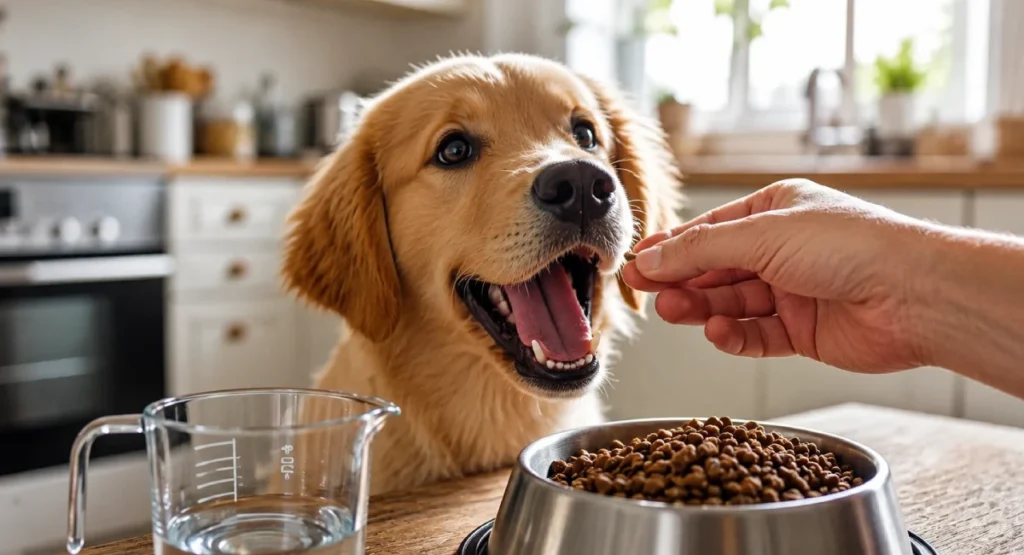
Bringing home a new puppy is one of the most exciting experiences for any dog owner, but it also comes with a lot of responsibility. One of the biggest questions new puppy parents have is: How much food should I give my puppy? Getting your puppy’s nutrition right during those crucial first few months can have a lasting impact on their growth, development, and long-term health.
In this complete puppy feeding guide for UK dog owners, we’ll tell you everything you need to know about feeding a growing puppy, such as how many meals a day they need at each age stage, what portion sizes should be for small, medium, and large breeds, and how to spot whether you’re overfeeding or underfeeding. Whether you’ve just brought home a tiny Chihuahua puppy or a bouncy Labrador, this guide covers it all.
Understanding Your Puppy’s Nutritional Needs
Before delving into specific feeding amounts, it’s important to understand why the nutritional requirements of puppies are so different from those of adult dogs. Puppies grow very fast in their first year. Some breeds can gain up to 70 times their birth weight by adulthood. Such rapid growth requires a carefully balanced diet.
According to the European Pet Food Industry Federation (FEDIAF), puppies require significantly higher amounts of protein, fat, vitamins, and minerals than adult dogs. These guidelines are the gold standard for pet food manufacturers across Europe and are backed by extensive scientific research on canine nutrition.
Key Nutrients Every Puppy Needs
Protein
Protein is the building block of your puppy’s growing body. It supports the development of muscles, organs, skin, coat, and the immune system. The British Veterinary Association (BVA) recommends that puppy food should contain a minimum of 25-30% protein from high-quality animal sources, such as chicken, lamb, fish, or turkey. Look for named meat proteins at the top of the ingredient list, rather than generic “meat meal” or animal derivatives.
Fat
Fat provides puppies with the concentrated energy they need for fast growth and nonstop activity. Puppy food should typically contain 12-18% fat. Fat also provides essential fatty acids, including omega-3 and omega-6, which are essential for brain development, healthy skin, and a shiny coat.
DHA (docosahexaenoic acid), an omega-3 fatty acid found in fish oil, is especially important for cognitive and visual development in young puppies.
Calcium and Phosphorus
These two minerals work together to help build strong bones and teeth. Their correct balance is very important. Too little calcium can cause skeletal problems, while too much calcium can cause abnormal bone growth, especially in large breed puppies.
FEDIAF guidelines specify precise calcium-to-phosphorus ratios for puppy food. Therefore, it is very important to feed specially formulated puppy food instead of adult food. Large breed puppy foods are specially designed with controlled calcium levels, so that bones can develop steadily and healthily.
DHA (Docosahexaenoic Acid)
DHA is an omega-3 fatty acid that plays a very important role in your puppy’s brain and eye development. Puppies whose mothers received adequate DHA during pregnancy, and puppies that continue to receive DHA from their diet, may experience better trainability, better problem-solving abilities, and improved visual development.
Quality puppy foods often include fish oil or fish meal, which are natural sources of DHA.
Vitamins and Minerals
Puppies need a full range of vitamins and minerals to support their developing immune system, growing bones, and overall health. Key vitamins include vitamin A for vision and immune function, vitamin D for calcium absorption, vitamin E as an antioxidant, and B vitamins for energy metabolism. A “complete” puppy food will contain all of these in the correct proportions.
For a detailed look at the best puppy food options available in the UK, check out our comprehensive guide to the best puppy food in the UK.
How Much Should You Feed Your Puppy? – By Age
One of the most common mistakes new puppy owners make is using a one-size-fits-all approach to feeding. In reality, a puppy’s nutritional needs change significantly as they grow. The requirements of a 6-week-old Chihuahua are very different from those of a 6-month-old German Shepherd. Below, we explain exactly how much you should feed your puppy at each stage of development.
8-12 Weeks (Newly Weaned)
This is the age when most puppies go to their new homes. They are recently weaned from their mother’s milk and are adjusting to solid food. Their stomachs are small at this stage, so they need frequent, smaller meals to maintain steady energy levels and blood sugar.
Feeding Schedule
- Meals per day: 4 meals spread evenly throughout the day
- Example times: 7:00am, 11:00am, 3:00pm, 7:00pm
Daily Amount Guide
- Small breeds (e.g., Chihuahua, Pomeranian): 50-100g per day
- Medium breeds (e.g., Cocker Spaniel, Border Collie): 100-200g per day
- Large breeds (e.g., Labrador, Golden Retriever): 200-350g per day
Nutritional Focus
At this stage, your puppy is adjusting to its new life away from its mother. Consistency is very important. For the first week, at least, feed it the same food it was eating at the breeder to avoid digestive upset.
If you want to change foods, follow a gradual transition over 7-10 days. Food should be calorie-dense and nutrient-rich to support the puppy’s initial growth spurt.
Tips for 8-12 Week Old Puppies
- Always have fresh water available — puppies dehydrate quickly
- Keep meal times calm — no excitement or competition around the food bowl
- Soften kibble slightly with warm water if your puppy is struggling to chew
- Monitor weight gain weekly — puppies should gain weight steadily but not excessively
- Never leave food out between meals at this age (no free-feeding)
3-4 Months
At 3 to 4 months of age, your puppy starts to become more confident, active, and curious about the world. His growth rate peaks at this time, and he needs plenty of fuel to support his increasing activity levels and ongoing physical development.
Feeding Schedule
- Meals per day: 3 meals per day
- Example times: 7:00am, 1:00pm, 7:00pm
Daily Amount Guide
- Small breeds: 70-130g per day
- Medium breeds: 150-250g per day
- Large breeds: 250-400g per day
Nutritional Focus
This is a period of rapid growth, especially for medium and large breeds. Protein and fat requirements are still high. Your puppy’s immune system is also maturing, so foods containing antioxidants are beneficial, such as vitamin E, vitamin C, and selenium. This is also the age when many puppies begin their vaccination program, so supporting immune health through nutrition is especially important.
Tips for 3-4 Month Old Puppies
- Begin establishing a consistent daily routine — puppies thrive on predictability
- Start using meal times as training opportunities — ask for a sit before placing the bowl down
- If your puppy seems constantly hungry between meals, speak to your vet before increasing portions
- Be mindful of foods that are toxic to puppies — well-meaning family members may offer unsuitable treats
4-6 Months
Between 4 and 6 months, your puppy is entering its adolescent phase. Small breeds may be nearing their adult size by this time, while large breeds are still in the early stages of their growth journey. This is the period where overfeeding can become a real risk, as the puppy’s rapid growth begins to slow down, but its appetite may still be voracious.
Feeding Schedule
- Meals per day: 3 meals per day (beginning to transition towards 2 meals for some breeds)
- Example times: 7:00am, 1:00pm, 7:00pm or 7:00am, 6:00pm
Daily Amount Guide
- Small breeds: 80-140g per day
- Medium breeds: 180-300g per day
- Large breeds: 300-450g per day
Nutritional Focus
Bone development is especially important at this stage, especially for larger breeds. If your dog is expected to weigh more than 25 kg when it reaches adulthood, make sure you feed a large breed-specific puppy food. Calcium and phosphorus levels in these foods are carefully controlled to prevent developmental orthopedic diseases. Joint-supporting nutrients such as glucosamine and chondroitin are also useful at this age.
Tips for 4-6 Month Old Puppies
- Start reducing from 3 to 2 meals per day if your puppy seems comfortable with the change
- Weigh your puppy regularly and compare against breed growth charts
- Be firm with the family about table scraps — this is when bad habits form
- Consider whether your puppy’s food still meets their needs — some fast-growing breeds may benefit from moving onto a different formula
6-9 Months
From 6 to 9 months, most puppies are on their way to becoming young adults. Their growth rate is slowing, but they are still developing muscle, bone density, and brain function. This is also the age when many puppies are neutered or spayed, which can affect their metabolism and calorie requirements.
Feeding Schedule
- Meals per day: 2 meals per day
- Example times: 7:00am, 6:00pm
Daily Amount Guide
- Small breeds: 70-120g per day (approaching adult portions)
- Medium breeds: 200-350g per day
- Large breeds: 350-500g per day
Nutritional Focus
As growth begins to plateau, especially in small and medium breeds, calorie requirements may begin to decrease. This is a time when extra attention should be paid to portion control, as many puppy owners continue to feed puppy-sized portions even after the dog’s growth slows, which can lead to unwanted weight gain.
If your puppy has been neutered, its calorie needs may decrease by up to 25%, so adjust portions accordingly.
Tips for 6-9 Month Old Puppies
- Transition firmly to a 2-meal-per-day schedule if you haven’t already
- Regularly assess your puppy’s body condition — you should be able to feel (but not see) their ribs
- If your puppy has been neutered, speak to your vet about adjusting their food intake
- Large breeds at this stage should still be on puppy food, but smaller breeds may be ready to transition to adult food
9-12 Months
Most small and medium breed puppies reach their full adult size by 9-12 months of age. Large breeds may still have a few months of growth remaining. At this stage, most dogs begin the transition from puppy food to adult food, and feeding amounts must be carefully managed.
Feeding Schedule
- Meals per day: 2 meals per day
- Example times: 7:00am, 6:00pm
Daily Amount Guide
- Small breeds: 60-110g per day (now on adult food)
- Medium breeds: 200-350g per day (transitioning to adult food)
- Large breeds: 350-550g per day (still on puppy food)
Nutritional Focus
The main focus at this stage is transitioning from puppy food to adult food. This transition should be done gradually over 7-10 days to avoid digestive upset.
Replace 25% of puppy food with adult food on days 1-3, then 50% on days 4-6, 75% on days 7-9, and switch fully to adult food from day 10. Always choose a high-quality adult dry dog food labeled “complete” to ensure it meets all nutritional requirements.
Tips for 9-12 Month Old Puppies
- Don’t rush the transition — your puppy’s digestive system needs time to adjust
- Monitor their stool quality during the transition period
- Large and giant breeds should stay on puppy food until 12-24 months
- This is a good time to reassess treats and extras — they should make up no more than 10% of daily calories
12+ Months (Transition to Adult Feeding)
By 12 months, most dogs are considered young adults and should be fully transitioned to an appropriate adult food. Exceptions are giant breeds, such as Great Danes, Mastiffs, and Saint Bernards, which can continue growing until 18-24 months and should remain on a growth formula for a longer period of time.
Feeding Schedule
- Meals per day: 2 meals per day (standard for most adult dogs)
- Example times: 7:00am, 6:00pm
Daily Amount Guide
- Small breeds (up to 10kg adult weight): 50-110g per day
- Medium breeds (10-25kg adult weight): 180-350g per day
- Large breeds (25kg+ adult weight): 300-550g per day
Nutritional Focus
Adult dogs require a different nutritional profile than puppies, specifically lower calorie density, controlled protein levels, and balanced minerals. Choose an adult food that matches your dog’s size, activity level, and any specific health needs.
If you’re unsure which food is best, our puppy food reviews also have recommendations that work well during the transition period.
Puppy Feeding Chart: Quick Reference
The puppy feeding chart below gives you a quick overview of how much food to feed based on your puppy’s age and breed size. These amounts are approximate guidelines for complete dry kibble. Always check the specific feeding guide on your puppy food packaging, as calories vary from brand to brand.
| Age | Meals per Day | Daily Amount (Small Breed up to 10kg) | Daily Amount (Medium Breed 10-25kg) | Daily Amount (Large Breed 25kg+) |
|---|---|---|---|---|
| 8-12 Weeks | 4 | 50-100g | 100-200g | 200-350g |
| 3-4 Months | 3 | 70-130g | 150-250g | 250-400g |
| 4-6 Months | 3 | 80-140g | 180-300g | 300-450g |
| 6-9 Months | 2 | 70-120g | 200-350g | 350-500g |
| 9-12 Months | 2 | 60-110g | 200-350g | 350-550g |
| 12+ Months | 2 | 50-110g | 180-350g | 300-550g |
Important: These are general guidelines. Always refer to the feeding guide on your specific puppy food packaging and consult your vet for personalised advice, especially if your puppy has specific health requirements.
How to Calculate the Right Portion Size
The feeding chart above gives you a strong starting point, but every puppy is different. Here’s how to fine-tune portions to your puppy’s individual needs.
Check the Feeding Guide on the Packaging
Every reputable puppy food brand includes a feeding guide on the packaging, based on your puppy’s current weight and expected adult weight. This is your best starting point. However, these guides are general estimates, so always adjust the amount based on your puppy’s body condition and activity level.
Use the Body Condition Score (BCS)
The PDSA recommends regularly assessing your puppy’s body condition using a simple 9-point scale. Here’s what to look for:
- Ideal (Score 4-5 out of 9): You can feel your puppy’s ribs easily without pressing hard, but they’re not visible. There’s a visible waist when viewed from above, and the belly tucks up when viewed from the side.
- Underweight (Score 1-3): Ribs, spine, and hip bones are easily visible. No discernible waist. The belly tucks up excessively.
- Overweight (Score 6-9): Ribs are difficult to feel under a layer of fat. No visible waist. The belly may sag rather than tuck up.
If your puppy scores above or below the ideal range, adjust their daily food amount by 10% and reassess after two weeks.
Adjust for Activity Level
A very active puppy, who goes on long walks, plays with a lot of energy, or attends training classes, will need more calories than a less active puppy. Conversely, a puppy recovering from illness or surgery may temporarily need smaller portions. Work with your vet to determine the right calorie intake for your puppy’s specific lifestyle.
Factor in Treats and Extras
According to the RSPCA, treats should make up no more than 10% of your puppy’s daily calorie intake. If you’re giving your puppy training treats, dental chews, or other extras throughout the day, reduce the portions of main meals accordingly. These small training treats add up surprisingly quickly!
Best Feeding Practices for Puppies
Giving the right amount of food is just one part. How you feed your puppy is just as important. Follow these best feeding practices to set lifelong healthy eating habits for your puppy.
Establish a Consistent Routine
Dogs thrive on routine, and puppies are no different. Feed your puppy at the same time and in the same location every day. This predictability helps with housetraining, as puppies usually want to go to the toilet shortly after eating. It also reduces anxiety and helps regulate the digestive system.
Use Mealtimes for Training
Mealtimes are an excellent opportunity for training. Before placing the bowl, ask your puppy to sit and wait calmly. This reinforces basic obedience and helps prevent food-related behavior problems, such as resource guarding or jumping on the bowl.
Always Provide Fresh Water
Your puppy should have access to clean, fresh water at all times. Puppies need more water per kilogram of body weight than adult dogs, roughly 50-60ml per kg of body weight per day, and this need may increase in hot weather or after exercise. Wash and refill their water bowl at least twice a day.
Keep Bowls Clean
Bacteria can build up quickly in food and water bowls, especially in warm weather. Wash your puppy’s bowls daily with hot soapy water or clean them in the dishwasher. Stainless steel or ceramic bowls are easier to keep hygienic than plastic bowls, as plastic can have scratches where bacteria can hide.
Avoid Free-Feeding
Free-feeding, i.e. leaving food out all day, is generally not recommended for puppies. This makes it difficult to monitor how much your puppy is eating, can increase the risk of overeating and obesity, can lead to the development of picky eating habits, and also makes house training more challenging.
Instead, give measured portions at set times and remove the bowl if the puppy doesn’t finish the food within 15-20 minutes.
Feed in a Quiet Location
Choose a calm and quiet spot for your puppy’s meals, away from busy areas of the house. If you have other dogs, feed them separately to prevent competition, stress, or food aggression. Teach children not to disturb the puppy during mealtimes.
Signs You’re Overfeeding or Underfeeding Your Puppy
Getting portion sizes right isn’t always easy, especially when your puppy seems perpetually hungry, as most puppies do! These are the key signs to watch for.
Signs of Overfeeding
- Excessive weight gain: Your puppy is gaining weight faster than expected for their breed
- No visible waist: When viewed from above, your puppy’s body appears barrel-shaped
- Difficulty feeling ribs: You have to press firmly to feel their ribcage
- Loose, frequent stools: More food than their digestive system can process
- Reduced energy levels: Paradoxically, overfed puppies can become sluggish
- Joint stress: In large breeds, excess weight puts undue stress on developing joints, potentially causing long-term problems
The Blue Cross that puppyhood obesity can significantly increase the risk of joint problems, diabetes, and heart disease later in life. Prevention is much easier than treatment.
Signs of Underfeeding
- Visible ribs, spine, and hip bones: These should not be prominently visible in a healthy puppy
- Low energy: Your puppy seems lethargic or disinterested in play
- Poor coat condition: Dull, dry, or flaky skin and coat can indicate nutritional deficiency
- Slow growth: Your puppy isn’t meeting expected weight milestones for their breed
- Excessive hunger: Your puppy is constantly scavenging, stealing food, or acting desperately hungry at meal times
- Stool issues: Small, hard stools or very infrequent bowel movements
If you notice any of these signs, adjust the portion size by 10-15% and monitor for improvement over the next 2 weeks. If you are unsure, always consult your vet.
Choosing the Right Puppy Food for Your Dog’s Age
With so many options available, choosing the right puppy food can feel overwhelming. Here are the key factors you should consider:
Always Choose “Complete” Food
In the UK, pet foods labeled “complete” must meet all the nutritional requirements of that stated life stage according to FEDIAF guidelines. “Complementary” foods, on the other hand, are designed to be fed alongside other foods and do not contain the full nutrients your puppy needs.
Always check the label. If it doesn’t say “complete,” it should not be your puppy’s sole food source.
Consider Breed Size
Many premium brands now offer size-specific puppy foods. Small breed puppy foods have smaller kibble sizes for tiny mouths and are often more calorie-dense to match the faster metabolism of small dogs.
Large breed puppy foods have controlled calcium and phosphorus levels, add joint-supporting ingredients, and are designed to support slower, steadier growth.
Dry vs Wet Food
Both dry kibble and wet food can form the basis of a healthy puppy diet, and many owners choose to feed a combination of the two. Wet puppy food is often more tasty and provides extra hydration, while dry kibble is more convenient, better for dental health, and usually more economical. If you mix wet and dry food, be careful not to overfeed; calculate the combined calorie content.
Grain-Free Considerations
Grain-free puppy foods have become quite popular, but it’s important to be aware of ongoing research on a possible link between grain-free diets and a heart condition called dilated cardiomyopathy (DCM) in dogs. Unless your vet has specifically recommended a grain-free diet due to a diagnosed allergy, you may prefer to choose a grain-inclusive food.
Read our full analysis to make an informed decision: whether grain-free food is good for puppies.
For our top-rated recommendations across all categories, visit our comprehensive guide to the best puppy food in the UK.
Special Considerations
Large and Giant Breed Puppies
Large breed puppies, those that weigh more than 25 kg when they reach adulthood, such as Labradors, Golden Retrievers, and Rottweilers, and giant breed puppies that weigh more than 45 kg, such as Great Danes and Mastiffs, have very specific nutritional requirements. The most important thing is controlling growth rate.
Overfeeding large breed puppies, especially food that is too high in calcium, phosphorus, or vitamin D, can cause developmental orthopedic diseases (DOD), including osteochondrosis, hypertrophic osteodystrophy (HOD), and panosteitis. These painful conditions can have a lifelong impact on your dog’s mobility and quality of life.
Key recommendations for large and giant breed puppies include:
- Always choose a food specifically formulated for large breed puppies
- Never supplement with calcium or vitamin D unless directed by your vet
- Keep your puppy lean — slightly underweight is far preferable to slightly overweight
- Avoid strenuous exercise until their growth plates close (typically 12-18 months)
- Giant breeds may need to stay on puppy food until 18-24 months of age
Small and Toy Breed Puppies
Small and toy breed puppies, which weigh less than 10 kg when they grow up, such as Pomeranians, Yorkshire Terriers, and Chihuahuas, face their own unique challenges. Their tiny stomachs mean they can’t eat large quantities at one time, but their fast metabolism demands frequent and energy-dense meals.
Small breed puppies are also more sensitive to hypoglycemia, i.e., low blood sugar. If meals are missed or delayed, this can be dangerous.
Key recommendations for small and toy breed puppies include:
- Choose a small breed-specific puppy food with smaller kibble and higher calorie density
- Never skip meals — feed at consistent times and ensure they eat before long periods of activity
- Monitor closely for signs of low blood sugar: lethargy, weakness, trembling, or confusion
- Keep a small amount of honey or glucose solution on hand as an emergency energy boost
- Small breeds typically reach adult size faster and can transition to adult food around 8-10 months
Puppies with Sensitive Stomachs
Some puppies are more prone to digestive upset, which can show up as loose stools, flatulence, vomiting, or a reluctance to eat. If your puppy is consistently experiencing digestive issues, consider these things:
- Choose a puppy food with a limited number of ingredients
- Look for foods containing prebiotics and probiotics to support gut health
- Avoid foods with artificial colours, flavours, or preservatives
- Always transition foods gradually over 7-10 days
- If problems persist, consult your vet — your puppy may have a food allergy or intolerance that requires a specific diet
Frequently Asked Questions (FAQ)
How many times a day should I feed my puppy?
The number of meals depends on your puppy’s age. From 8-12 weeks, feed 4 meals per day. At 3-6 months, reduce to 3 meals per day. From 6 months onwards, most puppies can be fed 2 meals per day. Always space meals evenly throughout the day and try to keep to the same times each day. Consistent feeding times help with house training and support healthy digestion.
Can I free-feed my puppy?
We strongly recommend against free-feeding (leaving food available all day). Free-feeding makes it very difficult to monitor how much your puppy is eating, increases the risk of overeating and obesity, can lead to picky eating habits, and makes house training much harder because you can’t predict when they’ll need the toilet. Instead, offer measured portions at set times and remove the bowl after 15-20 minutes.
How do I know if my puppy is eating enough?
The best way to tell is by regularly assessing their body condition score. A healthy puppy should have a visible waist when viewed from above, and you should be able to feel their ribs easily without pressing hard, but the ribs shouldn’t be visibly protruding. Your puppy should also have good energy levels, a glossy coat, and produce well-formed stools. If in doubt, ask your vet to assess your puppy at their next check-up.
Should I feed my puppy before or after walks?
The British Veterinary Association advises waiting at least 1 hour after feeding a puppy before exercising, and at least 1 hour after exercise before feeding. This is especially important for large and deep-chested breeds, as exercising immediately after a meal can increase the risk of gastric dilatation-volvulus (GDV), or bloat, a life-threatening condition.
For young puppies younger than 12 weeks and not yet fully vaccinated, exercise should be limited to garden play.
Can I mix wet and dry puppy food?
Yes, you can absolutely mix wet and dry puppy food. Many owners find this combination works well, as dry kibble provides dental benefits and convenience, while wet food adds taste and hydration.
But it’s important to calculate the combined calorie content so you don’t accidentally overfeed. A simple rule of thumb is to replace roughly 25% of the dry food volume with wet food, then adjust the amount according to your puppy’s body condition.Check out our best wet puppy food guide for quality options.
How much water should my puppy drink?
As a general guideline, puppies need roughly 50-60ml of water per kg of body weight per day. So, if the puppy weighs 5kg, it will need approximately 250-300ml of water daily. In hot weather, after exercise, or if it is eating dry kibble, which has a moisture content of around 10%, it may need more water than wet food, which has a water content of around 70-80%.
Always make sure your puppy has access to clean, fresh water. Also monitor its drinking habits, as excessive thirst can be a sign of illness.
When should I transition to adult dog food?
Timing depends on your puppy’s breed and size. Small breeds usually transition around 8-12 months. Medium breeds transition around 12 months. Large breeds should wait until 12-15 months, and giant breeds may need to remain on puppy food until 18-24 months.
Always transition gradually over 7-10 days, gradually increasing the amount of adult food. Consult your vet if you are unsure about the right timing for your specific puppy.
My puppy is not eating — what should I do?
A puppy refusing food can be worrying, but there are several common reasons. First, rule out illness. If your puppy hasn’t eaten in more than 24 hours, appears lethargic, is vomiting, or has diarrhea, contact your vet immediately.
If the puppy appears healthy but is simply being fussy, offer the same food at the next scheduled mealtime; do not offer alternatives. If it doesn’t eat within 15 minutes, remove the bowl. Sometimes puppies simply aren’t hungry, or they are waiting for tastier treats. Make sure you don’t overfeed treats between meals and don’t make mealtimes stressful. If the problem continues for more than a couple of days, seek veterinary advice.
Should I feed my puppy treats between meals?
Treats are an important part of puppy training and bonding, but they should be given in moderation. A general guideline from veterinary professionals is that treats should account for no more than 10% of your puppy’s daily calorie intake.
Choose small, low-calorie training treats and count them toward your puppy’s overall daily food allowance. Avoid human food treats, especially those that are salty, fatty, or contain toxic ingredients, such as chocolate, raisins, or onions. For a full list of dangerous foods, see our guide on what not to feed your puppy.
Can puppies eat the same food as adult dogs?
Puppies should not be fed adult dog food as their main diet during their growth period. Puppy food is specially formulated to meet the higher protein, fat, calories, vitamins, and mineral needs of growing dogs.
Adult food does not provide the right balance of nutrients for a developing puppy, which can lead to stunted growth, weak bones, and immune system problems. When your puppy reaches the correct transition age for breed size, you can switch to adult food using a gradual transition method.
Final Verdict
Feeding your puppy correctly is one of the most important things you can do to ensure they grow into a healthy, happy adult dog. The key takeaways from this guide are:
- Feed the right amount for their age and breed size — use our feeding chart as a starting point and adjust based on your puppy’s individual body condition.
- Choose a complete, age-appropriate puppy food — preferably one that’s been formulated according to FEDIAF guidelines and suits your puppy’s breed size.
- Follow a consistent feeding schedule — start with 4 meals per day at 8 weeks, gradually reduce to 2 meals per day by 6 months.
- Monitor their body condition regularly — use the body condition score system to ensure your puppy is growing at a healthy rate.
- Never free-feed — measured portions at set times lead to better eating habits, easier house training, and a healthier weight.
- Transition to adult food at the right time — based on breed size, and always do it gradually over 7-10 days.
Remember, every puppy is an individual. The guidelines in this article are based on general veterinary recommendations, but your own puppy’s needs may vary depending on their breed, health status, activity level, and metabolism. When in doubt, always consult with your vet — they can provide personalised feeding advice tailored to your puppy’s specific needs.
For more expert guidance on choosing the right food for your growing dog, explore our best puppy food in the UK reviews, where we’ve tested and rated the top products available to British dog owners. And if you’re about to change your puppy’s food, make sure you read our step-by-step guide on how to switch dog food safely to avoid any digestive upset.