
Many dog owners prefer to feed their dogs fresh and natural food, believing it to be healthier. Some people want to add variety to their dogs’ diets so that they don’t get bored. This approach is fine because dogs are often moody when it comes to food, which is why many owners think of trying something new.
But changing dog food also has some side effects that can harm your dog, which most dog owners don’t even think about.
Quick Answer: The best and safest way to change dog food is to do it gradually. This process should take approximately 7 to 10 days. Initially, mix 25% new food and 75% old food, then gradually increase the amount of new food every 2 to 3 days according to your dog’s needs and response. This way, your dog’s digestive system adjusts slowly and the risk of stomach upset or digestion issues is reduced.
The most common problem when changing dog food is stomach upset. That’s why gradual transition is considered the safest and most effective method, because it allows your dog’s stomach to adjust smoothly to the new food without any problems.
If your dog still isn’t adjusting well to the new food, slow the process down. Introduce the new food in very small quantities and gradually eliminate it, as every dog is different and some dogs take longer to adjust. This way, your dog’s stomach can adjust to the new food comfortably and without stress.
Why Switching Dog Food Can Upset Your Dog’s Stomach
Humans usually adjust to new foods quickly, but dogs’ digestive systems are quite sensitive. When you suddenly change their food, their gut bacteria don’t have the proper time to adjust to the new ingredients. This causes what dog owners often call “switching dog food diarrhea”—such as loose stools, stomach noises, gas, or vomiting.
Let’s put it simply: If you eat homemade food every day and suddenly start eating spicy pizza three times a day, your stomach will react. The same thing happens with dogs.
For example, if you’ve been feeding your dog soft food every day and suddenly switch to dry dog food, their stomach won’t adjust easily. This can cause digestive issues and make them unwell.
According to the PDSA, sudden diet changes are one of the most common causes of digestive upset in dogs in the UK. A dog’s gut needs time to adjust, and this is completely normal.
How to Switch Dog Food Safely Without Upsetting the Stomach
There’s a famous saying:
Slow and steady wins the race.
We’ve all heard the story of the tortoise and the rabbit, and the same principle applies to dog food transitions.
Dog nutritionists and vets recommend gradually changing dog food over 7 to 10 days. This way, your dog’s stomach can adjust to the new food slowly and without any stomach issues.
If your dog is adjusting well to the new food, you can gradually increase the amount of new food. But if he’s not adjusting, slow down the process further. Reduce the amount of new food or continue the old food for a few more days. The chart above is helpful for this, so you can easily understand how much old food and how much new food should be given on which day.
Dog Food Transition Chart
| Period | Old Food | New Food |
|---|---|---|
| Days 1–2 | 75% | 25% |
| Days 3–4 | 50% | 50% |
| Days 5–6 | 25% | 75% |
| Days 7–10 | 0% | 100% |
Tips to make the transition smoother:
⦁ Always use clean water bowls — hydration is key during the switch
⦁ Feed at regular times and don’t skip meals
⦁ Monitor your dog’s stools daily (yes, really — it tells you everything)
⦁ Avoid adding new treats or snacks during the transition period
⦁ If your dog has a sensitive stomach, stretch the transition to 14 days
This method allows the dog’s digestive system to slowly adjust to the new ingredients, reducing the risk of diarrhea or vomiting.
According to veterinary guidelines, a gradual diet transition gives gut bacteria time to adapt, so avoiding sudden changes is considered the safest approach.

When Should You Switch Your Dog’s Food?
Understanding why you want to change your dog’s food is one thing, but when to change the food is very important. Thinking about your dog’s diet at the right time is very important. Here are some important situations when you should consider changing your dog’s food.
Life Stage Transitions
According to PDSA, as your dog ages, its nutritional needs change significantly, so it is important to feed it a diet appropriate for its life stage.
- Puppy to Adult:Generally, small and medium breed dogs can be switched to adult food around 12 months of age. However, large breed dogs mature a little slower, so they should usually be kept on puppy food until 18 to 24 months of age.
- Adult to Senior: Dogs are generally considered “senior” at the age of 7 or 8. However, this depends on the breed; giant breeds tend to reach senior status sooner, while smaller breeds take a little longer. Food for senior dogs is usually lower in calories to help keep their weight under control. It also contains additional supplements, such as glucosamine, to support their joints and facilitate movement.
Sometimes, following trends or just thinking that a company is top, its rating is good, so it will be right for my dog, we choose it straight away. But this approach is also not right.
Choosing the right dog food is very important. The food that the dog eats, its body gives some signals that the food is not suitable for it. You need to pay attention to these signals also.
- Poor Coat and Skin: A dull, brittle coat, excessive shedding, or dry, flaky skin.
- Digestive Upset: Chronic gas, loose stools, or frequent vomiting are clear signs something is amiss. A sensitive stomach dog food could provide relief.
- Low Energy: If your usually bouncy dog seems lethargic, it could be linked to their diet not providing the right fuel.
- Itching and Licking: Constant scratching or licking of paws can be a primary symptom of a food intolerance or allergy.
If you notice these signals in your dog, especially if they appear suddenly, the first step is always to visit a vet. The vet will thoroughly examine your dog and confirm that there are no underlying medical issues.
Only after that can you safely consider introducing different foods.
It’s not necessarily the only problem with the food. These issues can be caused by other reasons as well.
We often make the mistake of immediately assuming that if our dog has an issue, we think it’s just because of the food. Simply changing the food is not always the right solution.
How Long Does It Take for a Dog to Adjust to New Food?
When switching dog foods, it usually takes a few days, according to Rover.com. Dr. Raskin says it’s important to take your time. Switching foods slowly is better. Keeping your dog on a familiar diet for at least a week helps reduce the risk of digestive upset. And if your dog is a picky eater, a slow transition helps your dog adjust to the new food.
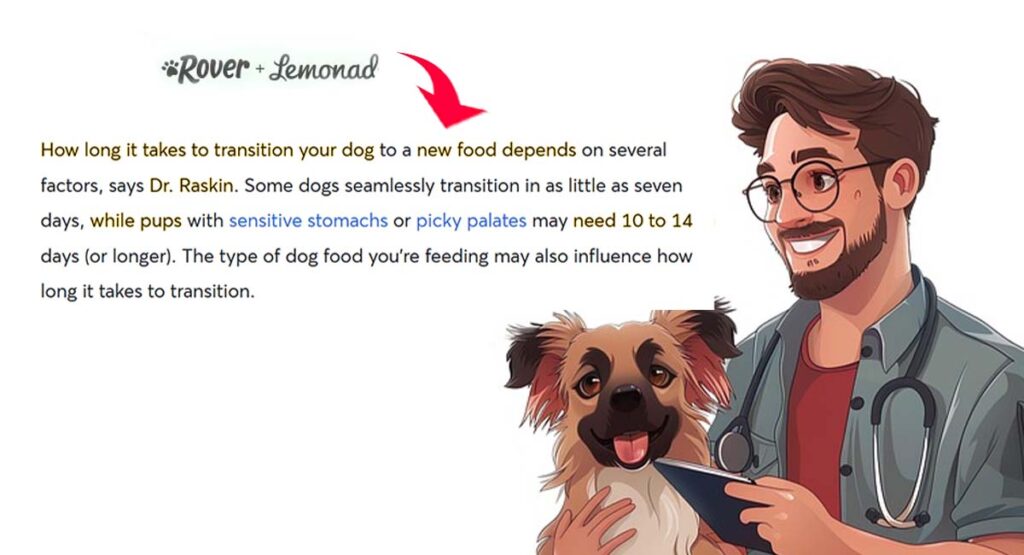
If we talk about switching dog food safely, most dogs easily adjust to a new food within seven to 14 days, but this is not the case for every dog. Senior dogs and dogs with IBD (Inflammatory Bowel Disease) may take three to four weeks to adjust. They adapt quickly, but still need a slow and careful transition.
If you are wondering how to change puppy food, follow the same transition method. Just change your dog’s food slowly and gradually increase the quantity. The digestive system of puppies is smaller and more sensitive, so it is very important to be extra careful when changing the food of puppies.
During this period, watch for these warning signs:
⦁ Loose stools or diarrhoea lasting more than 2 days
⦁ Reduced appetite or refusing food completely
⦁ Vomiting, especially after meals
⦁ Lethargy or unusual tiredness
When changing your dog’s food, if these symptoms persist for more than 3 days, contact your vet immediately. This is very important.
Extra care is especially important if you are switching between very different diet types, such as from grain-free to grain-inclusive food, or from raw to kibble.
In these cases, it may take longer for the dog’s gut to adjust, so it is very important to closely monitor their digestion and overall health.
Can You Switch Dog Food Suddenly?
To be honest, it depends on the dog. Simply saying that a sudden change in dog food is okay isn’t the answer. Some dogs can handle it easily, but for most dogs, a sudden food change is not appropriate and can lead to significant health issues.
If you’re switching from one protein source to another, such as chicken to salmon, or making a sudden food change, the risk of digestive issues increases. This can lead to problems like loose stools, gas, bad breath, vomiting, low energy, and an upset stomach. In some cases, the dog may even become weak and its overall health may be affected.
Switching dog food too quickly is one of the most common mistakes made by UK dog owners. This often results in an upset stomach, gas, poor digestion, and a low-energy or uncomfortable dog. If this issue recurs, it can also affect the dog’s long-term health.
Therefore, it’s best to change dog food gradually, ideally over 10 to 14 days. If your dog has a sensitive stomach, an even slower transition is better. Rushing too quickly can be detrimental, so the safest approach is to make food changes gradually and consult a vet if necessary.
Why Dog Owners Want to Switch Food
Switching dog food isn’t a random decision. Dog owners don’t usually change food without reason—there’s clear logic behind it. For example, if it’s a puppy, it grows and increases in size, so its nutritional needs change. Therefore, it gradually has to be shifted to adult food.
Similarly, when a dog becomes an adult, it’s also necessary to change the food over time according to its health. Many dog owners want to give their pets healthy and fresh dog food, and some even prefer homemade recipes.
The presence of vitamins and nutrients in dog food is very important, as these play a major role in the dog’s growth and overall health. Puppies generally require more energy to stay active and grow properly. However, adult dog foods tend to focus more on strengthening bones.
Therefore, as dogs grow, owners often switch their food to suit their needs.
Apart from this, here are some more reasons why dog owners should switch dog food:
- Allergies or intolerances—skin itching, ear infections, and gut issues often trace back to food ingredients
- ⦁ Life stage changes—puppies need puppy food, adults need adult food, seniors need senior-specific formulas
- ⦁ Better quality ingredients—many UK owners are moving towards natural, grain-free, or raw diets
- ⦁ Vet recommendation—conditions like obesity, kidney disease, or joint problems may require a specific diet change
- ⦁ Availability issues—sometimes a favourite brand gets discontinued or goes out of stock
- ⦁ Boredom—some dogs genuinely refuse to eat the same thing day after day
What Are Rotational Diets for Dogs?
Many dog owners regularly change their dog’s food, which is called rotational feeding. The simple idea is that no diet is 100 percent perfect. The question of whether it is right for your dog always remains. Therefore, rotating different diets reduces the chance that your dog will have problems due to a lack of a nutrient, excess quantity, or contamination. If the foods you are using are high quality, complete, and balanced, rotational feeding is generally safe and can sometimes be beneficial. However, if your dog becomes upset-stomached due to frequent food changes and needs to follow a specific medical diet, then this approach is not right. People follow it in different ways.
- Some people use 2-3 different kibble bags and change the food every week.
- Some go a little extreme—first finish kibble, then wet food for a few weeks, and sometimes home-cooked meals.
- some people rotate protein and carbs—for example, beef + barley one month, then chicken + rice the next.
The simple thing is that every dog is different, so the method you choose should be based on your dog’s digestion and health. This is very important. The same thing does not apply to every dog, no matter how perfect the dog food is.
Why Dogs Get Bored With Food & How to Fix It Easily
Some dogs are absolute drama queens when it comes to their food (yet we love them). If your dog suddenly stops eating his regular food, it doesn’t necessarily mean he hates it. There could be other reasons behind it, such as:
- They’re not feeling well
- ⦁ The food formula quietly changed (manufacturers do this more often than you’d think)
- ⦁ They’ve worked out they can hold out for something tastier
- ⦁ They genuinely are bored with the same flavour every single day
So what is the fix for this? It is easy. Try other dog foods. The same formula that you are using before. You can try different variants of the same dog food from different companies.
This means that if your dog is eating Royal Canin adult dry food before, then you can try different variants of the same. You will find these easily available at pet shops. If you want to buy online, then the best option is on Amazon UK.
You can see different best dog foods UK with good ratings. In the same range that you are using before, try different varieties. This keeps the base formula almost the same and it is also quite easy to adjust the gut of people. Some other top dog foods that are available on Amazon UK that you can try.
- Lily’s Kitchen Adult Dry Dog Food — natural ingredients, no artificial nasties, and dogs genuinely love it
- Burns Adult Maintenance Dry Dog Food — a UK favourite for dogs with sensitive stomachs
- Harringtons Complete Dry Dog Food — affordable, trusted across the UK, and easy to find
- Pedigree Complete Adult Dry Dog Food — a reliable, widely available option for everyday feeding
What Food to Avoid for a Dog with Skin Allergies?
When we change our dog’s food, a common concern is skin allergies. According to veterinary experts such as the American Kennel Club (AKC) and VCA Animal Hospitals, food-related allergies in dogs are more often linked to specific protein sources, not just a sudden food change. Often, the issue occurs when the new food contains an ingredient that the dog’s immune system reacts to.
If your dog is suffering from skin allergies, it’s very important to carefully select its diet. Research and veterinary sources such as the American Veterinary Medical Association also explain that not every skin allergy is caused by food. In many cases, environmental factors such as fleas, dust mites, and pollen also cause problems such as itching, redness, and irritation.
High-quality protein sources such as chicken, beef, and dairy can be common allergens in some dogs, but they do not affect every dog. Therefore, each dog’s reaction varies. Some dogs tolerate these proteins easily, while others may develop allergic reactions.
Veterinary guidance also suggests that novel protein sources such as turkey, fish, or duck are sometimes better tolerated, but they are not completely risk-free. Common food allergens include wheat, soy, corn, and dairy. Artificial additives and preservatives are often blamed, but increasingly, studies show that true food allergies are primarily linked to proteins, not just additives.
That’s why it’s important to identify the specific ingredient causing the reaction, rather than eliminating random foods. Experts, like those at VCA Animal Hospitals, consider an elimination diet the most reliable method for diagnosing food allergies. In this process, foods are gradually removed and then reintroduced to identify the exact trigger.
Overall, skin allergies in dogs are a complex issue that can be caused by both food and the environment. Proper diagnosis and a carefully planned diet is the best way to effectively manage this condition.
How I Create Content
When creating content at dogfoodsuk.com, we carefully research and review trusted pet care and veterinary sources. We reference guidelines from reputable organizations such as the American Kennel Club (AKC), the American Veterinary Medical Association (AVMA), and VCA Animal Hospitals, as well as follow widely accepted dog nutrition guidelines.
Along with expert sources, we also consider real-life experiences shared by dog owners to make the content more practical and easy to understand. Our goal is to simplify complex pet care information so every dog owner can make better and safer decisions for their pet.
Each article is written and reviewed with a focus on clarity, usefulness, and responsible information sharing. This content is created by Ghulam Mohiuddin with proper research and SEO-friendly writing practices, so that dog owners can get helpful and trustworthy guidance.
References & Trusted Sources:
⦁ PDSA (People’s Dispensary for Sick Animals)
⦁ Blue Cross UK
⦁ Dogs Trust UK
⦁ Royal Canin Feeding Guidelines
⦁ Amazon UK Dog Food Section — amazon.co.uk
Conclusion – How to change dog food safely
Changing dog food doesn’t have to be that complicated—it’s actually a simple process. You just need to make the change slowly, keeping your dog’s health condition, age, and overall sensitivity in mind.
If your dog is adjusting well to the new food, you can gradually increase the quantity. But if he’s not adjusting well, gradually reduce the amount of new food and slow the transition. This step-by-step approach is the safest.
And remember one important thing—no single dog food is perfect for every dog. Every dog’s body responds differently, so sometimes you’ll need to try different options to find the right food. It’s important to follow this process carefully. Most stomach problems occur when food is changed suddenly. Therefore, a slow transition of 7 to 10 days is considered the safest and most effective method.
Always consider your dog’s individual needs, such as age, health condition, and sensitivity. If the dog is experiencing discomfort or digestive issues, slow the transition further or temporarily return to the old food. This is the safest option.
The end goal is not just to change the food, but to support your dog’s better digestion, proper nutrition, and overall health.