

When The Independent covered a story about a major US dog food recall that was linked to possible cellulitis contamination, naturally, my attention was drawn to it as I always analyse the latest dog food trends to see what is going on in the industry because what happens in the US pet food industry has an impact on the lives of us UK dog owners.
So we read the entire report carefully, cross-checked the relevant US Food and Drug Administration recall notices and decided to explain it in a simple and clear way for UK dog owners. This is not a cliché or sensational headline. This is a real documented voluntary recall and if you feed your dogs raw pet food, whether it is from the UK or the US, this information is not to be ignored.
What Happened? The Albright’s Raw Pet Food Recall Explained
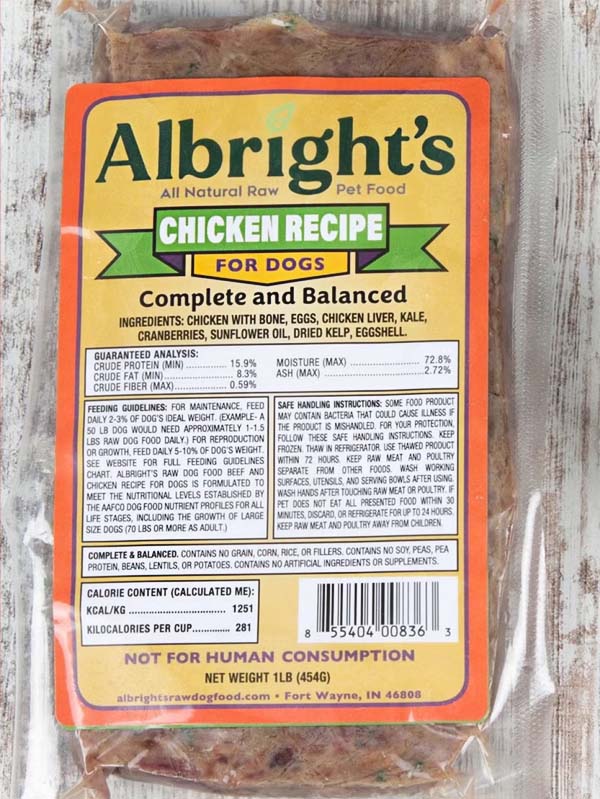
Albright’s Raw Pet Food has voluntarily recalled a specific lot of its Chicken Recipe for Dogs Complete and Balanced product due to a potential Salmonella contamination risk. This information was confirmed in an official notice from the U.S. Food and Drug Administration (FDA).
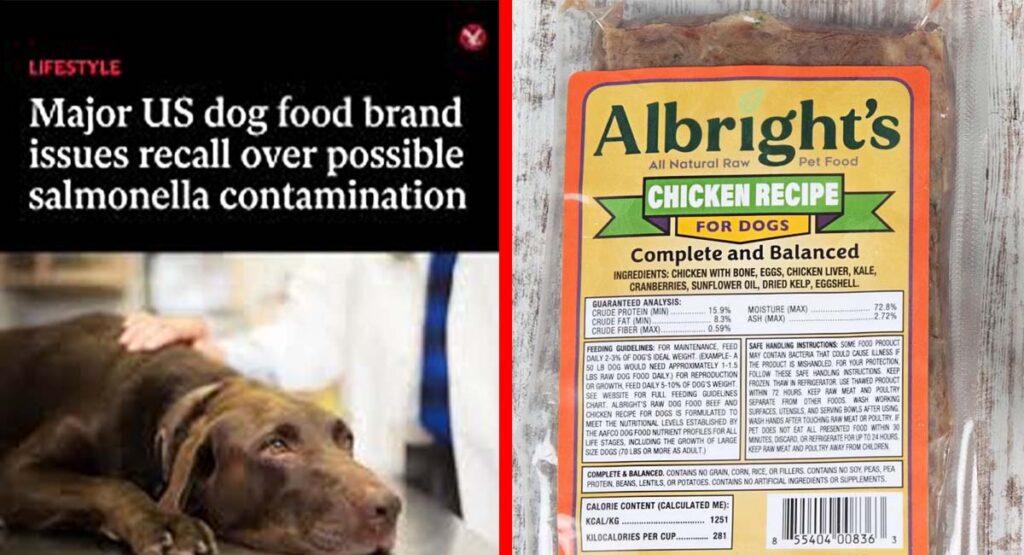
The FDA issued the recall notice on May 6, 2025. The company did not wait for reports of illness in dogs or humans to surface, but instead chose to remove the product from the market immediately. This swift action demonstrates the brand’s commitment to safety.
The affected product was sold in 450g (1 lb) frozen blocks, vacuum-packed and typically distributed in 13.6kg (30 lb) boxes.
This recall was initiated following routine testing by the FDA. Samples were tested for Salmonella, Listeria monocytogenes, and Escherichia coli. During these tests, a composite sample tested positive for Salmonella.
The brand also openly stated its commitment to maintaining the highest level of safety and transparency. Therefore, they initiated a voluntary product recall while continuing to evaluate the available data.
To be honest, this is responsible behavior. Not all companies in the pet food industry are known for their transparency and swift action. And this is an example that should be taken seriously, especially within the raw food community.
Which Products Are Affected?
The recalled lot was distributed direct to consumers nationwide, and also supplied to select retailers specifically in Massachusetts, California, South Carolina, North Carolina, Wisconsin, and New York. Additionally, the product was reaching customers through direct online sales, further widening the risk of exposure.
The specific product recalled is:
- Product Name: Chicken Recipe for Dogs Complete and Balanced
- Format: Frozen 1-lb. bricks in clear vacuum packaging
- Case Size: 30-lb. cases
- Lot Number: C001730
- Brand: Albright’s Raw Pet Food
According to U.S. Food and Drug Administration officials and LiveNOW from FOX, no pet or human illnesses have been reported so far due to consumption of this product.
This context is very important. This recall is precautionary, not reactive. The company did not wait for any dogs to become sick or for health complaints to surface. They took action as soon as the risk was identified.
And that’s what matters. Pet owners should take the situation seriously, but not panic unnecessarily. This is an example of how responsible pet food companies handle safety concerns with fast action, transparency, and prevention.
Why Is Salmonella in Dog Food So Dangerous?
Salmonella isn’t just a normal “stomach bug.” It’s a serious bacterial infection that can affect both animals and humans—and it doesn’t attack by sight.
Pets infected with Salmonella may experience symptoms such as lethargy, diarrhea or bloody diarrhea, fever, vomiting, loss of appetite, and abdominal pain. Importantly, some pets may not show any symptoms at all, yet they can still spread Salmonella through their faces and saliva.
And honestly, this is the point that deserves the most attention. Your dog may appear perfectly healthy, with no vomiting, no diarrhea, and no obvious problems. But they may still be spreading Salmonella to household surfaces, other pets, and humans.
Salmonella infection in humans can be serious, and in some cases, even life-threatening. Infection can spread through handling contaminated food, contact with an infected pet, or through contaminated bowls, utensils, kitchen counters, and other surfaces.
So, it’s not just a pet risk. It’s a household risk.
If your dog has consumed a recalled raw food product, regardless of brand, be on the lookout for these symptoms:
- Sudden lethargy or unusual tiredness
- Diarrhea, sometimes with blood
- Fever
- Vomiting
- Loss of interest in food or water
- Abdominal tenderness or bloating
If you think your dog has eaten a recalled product and is showing symptoms, contact a veterinarian immediately. Early treatment significantly improves the chances of recovery from bacterial infections. Delaying treatment can be risky.
The Raw Dog Food Risk: Why This Keeps Happening
This recall is not an isolated or one-off incident. According to scientific experts, Salmonella contamination in raw pet food is a recurring and foreseeable issue, meaning it has occurred in the industry in the past and remains a risk in the future.
Experts say that if a raw diet is not high-pressure pasteurized, there is a fair assumption that it may carry a risk of Salmonella, E. coli, Listeriosis, or other harmful pathogens. The risk is significantly lower with high-pressure pasteurized diets, but not completely zero.
The most important control point in food safety is cooking. When a product is intentionally sold in its raw form, the risk of contamination naturally exists. Good manufacturing practices and clean equipment can reduce cross-contamination, but they cannot completely eliminate bacteria already present in the raw ingredients.
This doesn’t mean that raw feeding is automatically wrong. Many responsible dog owners in the UK and US feed carefully planned raw diets and see good results. But it does mean that raw food, especially commercially produced raw food, requires extra caution from both manufacturers and pet owners.
The Food Standards Agency has long advised that raw pet food be handled with the same hygienic care as raw meat for human consumption.
What Other Raw Dog Food Recalls Have Happened Recently?
The recall of Albright’s Raw Pet Food does not appear to be an isolated incident. Multiple raw and freeze-dried dog food products have been recalled in the US during 2025 due to Salmonella concerns.
Viva Raw LLC voluntarily recalled two lots of its dog and cat food after contamination concerns involving Salmonella and Listeria bacteria emerged.
Similarly, Raw Bistro Pet Fare also voluntarily recalled two product sizes of its frozen grass-fed beef dog food due to possible Salmonella contamination. The affected products were distributed in September 2025 in California, Colorado, Illinois, and Minnesota.
Additionally, Fooddynamics also recalled specific lots of freeze-dried pet treats from Raw Dog Barkery, BellePepper Cats, and Kanu Pets brands over Salmonella contamination concerns.
Now, the pattern is quite clear. Contamination isn’t limited to just one brand, one recipe, or one state. It’s occurring repeatedly across multiple brands, different product formats, and wide distribution regions.
That’s why experts consider this a systemic challenge for the raw pet food sector, not just an isolated mistake by one company.
How to Handle a Recalled Dog Food Product Safely
If you have an affected Albright’s Raw Pet Food product or any recalled raw pet food, it’s important to follow these steps:
Step 1: Stop feeding immediately.
Do not continue using the product thinking it’s “wasted.” Ignoring the risk is not safe.
Step 2: Isolate and seal the product.
Pack the food in a sealed bag and dispose of it in an outdoor bin. Ensure children, other pets, and wildlife don’t have access to it.
Step 3: Clean all surfaces thoroughly.
Thoroughly wash dog bowls, feeding areas, utensils, and your hands with hot water and pet-safe disinfectant. This step is crucial to preventing the spread of contamination.
Step 4: Monitor your dog
Even if the dog appears completely normal, observe for the next few days. Salmonella can sometimes be shed without symptoms.
Step 5: Contact the Vet if Concerned
If vomiting, diarrhea, lethargy, or any unusual signs appear, do not delay and seek veterinary advice.
The company has also provided a refund process for US customers—submit a receipt and product pictures to info@albrightsraw.com. This guidance is aligned with a U.S. Food and Drug Administration notice.
UK consumers who purchase the product through online import should contact the retailer directly to request a refund or return.
Overall message is simple: fast action + proper hygiene = risk appears to be significantly reduced.
What This Recall Tells Us About the Pet Food Industry
Pet food regulation isn’t perfect in every country. In the US, when a company voluntarily initiates a recall, the U.S. Food and Drug Administration’s role is to review the recall strategy, evaluate the product’s health hazard, monitor the recall, and, if necessary, alert the public and other companies in the supply chain.
In the UK, the Food Standards Agency performs similar functions, publishing recall notices on its official website. Blue Cross UK and Dogs Trust also issue public guidance during major recalls.
On a positive note, Albright’s Raw Pet Food initiated the recall voluntarily before any confirmed illnesses were reported. In the US, the majority of recalls are also voluntary. But that doesn’t mean the seriousness of the contamination is diminished.
What We Can Learn from Albright’s Raw Pet Food Recall
After reviewing The Independent UK’s report and cross-checking it with official U.S. Food and Drug Administration recall documentation, our assessment is this:
The recall of Albright’s Raw Pet Food was a precautionary and responsible action. No confirmed illnesses have been reported so far.
But this event is part of a broader trend: Salmonella-related recalls have become more frequent in the raw pet food sector in 2025.
This reinforces an important lesson for dog owners: don’t blindly trust premium price tags or “natural” labels. Raw food, freeze-dried food, and high-protein diets have their own risk profiles. Responsible pet ownership means staying informed and taking proactive steps to protect your dog.
This article was written after reviewing the report published by The Independent UK and cross-referencing all information with the official FDA recall notice, PetfoodIndustry.com, and trusted veterinary sources. All facts presented are verified and sourced. DogFoodsUK.com does not reproduce copyrighted content from third-party publications — we read, research, and report independently.