
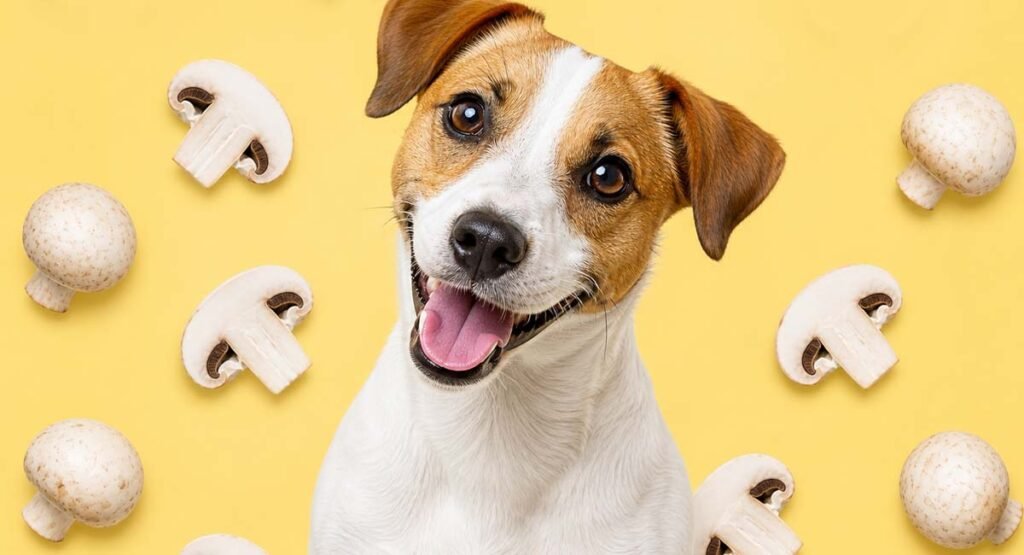
Mushrooms are very tasty and nutritious for humans, but the answer to whether dogs can eat mushrooms is not a simple yes or no. Some mushrooms are safe for dogs, but some are so toxic that they can be dangerous, even deadly.
In this article, you will learn everything you need to know before feeding mushrooms to dogs, including their risks and benefits.
Can Dogs Eat Mushrooms Safely?
The answer is that it depends on the type of mushroom. There are thousands of types of mushrooms in the world. Dogs can eat mushrooms without any problem. Dogs can also eat mushrooms that humans eat safely.
However, some mushrooms are toxic mushrooms that can be dangerous for dogs and can even be fatal. So, avoid them. Otherwise, your dog can eat mushrooms without any problem.
- Amanita phalloides (Death Cap)
- Amanita muscaria (Fly Agaric)
- Gyromitra esculenta (False Morel)
If a dog eats this toxic mushroom, different symptoms can occur, such as vomiting, diarrhea, petrification, epilepsy, seizures, and even death. If your dog has eaten any of these mushrooms, take him to the vet immediately.
But the good thing is that the mushrooms that humans normally eat are generally safe for dogs. Let’s now understand them in a little more detail so that your dog remains completely safe and eats healthy mushrooms.
What Kind Of Mushrooms Can Dogs Eat?
Dogs can eat mushrooms, but only store-bought mushrooms, such as white button, cremini, and portobello mushrooms. These mushrooms are generally safe because they are grown in a controlled environment with proper care. This significantly reduces the risk of toxic contamination.
Experts such as the American Kennel Club and PetMD also recommend that if you want to give your dog mushrooms, only commonly grown store-bought mushrooms.
From a health point of view, mushrooms also contain some useful nutrients. They contain antioxidants that support the immune system, as well as vitamin B complex, which is helpful for energy and metabolism. Additionally, mushrooms also contain a small amount of fiber, which supports digestion.
But it’s important to understand that dogs don’t necessarily need mushrooms, as their regular dog food diet is already balanced. So, if you want to offer mushrooms, consider them as a treat or for a little variety, but they’re not a necessary part of their diet.
Mushrooms Safe for Dogs to Eat
While many mushrooms are toxic to dogs, there are also some that are safe for dogs to eat.
- Button
- Portobello
- Shiitake
- Turkey tail
- Maitake
- Chaga
- Phellinus
- Oyster
- Cordyceps
- Lion’s mane
- Reishi
What Kinds of Mushrooms Are Toxic to Dogs?
The most important part is that mushrooms are toxic to dogs. It is very important to know that all wild mushrooms are risky for dogs to eat. If your dog sees a mushroom on the roadside in the garden park, it is not safe to eat it.
According to research and veterinary experts, some mushrooms are very toxic, such as mushrooms from the Amanita group, also known as death caps, which can cause liver failure.Similarly, some other varieties are also giving wide distribution, which affects the nervous system.
According to VCA Animal Hospitals, the problem is that toxic and safe mushrooms often look the same, which makes it very difficult to identify them, even for experts. Therefore, the safe approach is to never let your dog eat outdoor mushrooms, lest the dog be harmed by the mistake.
In some cases, dogs accidentally eat mushrooms, especially when mushrooms grow more after rains.
Can Dogs Eat Cooked Mushrooms?
Cooked mushrooms are mostly safe for dogs, but only when they are prepared in a simple way. The advantage of cooking is that the tough structure of the mushrooms is broken down, which makes digestion easier and reduces the risk of stomach problems.
But there is a common mistake that people make. They cook human mushrooms with butter, garlic, onion, and spices, which are not at all safe for dogs. Garlic and onion are especially toxic to dogs, which can damage their red blood cells.
I have written an article in detail about which foods should never be fed to dogs. Check it out.
Therefore, if you want to give your dog mushrooms, it is best to steam or lightly cook them. The American Kennel Club also emphasizes that dogs should only be given plain cooked mushrooms.

What Are the Symptoms of Mushroom Poisoning in Dogs?
The effects of mushroom poisoning can be different in each case, but there are some common symptoms that you can easily notice. Initially, the dog may vomit and drool excessively. Some dogs may also experience weakness or unusual behavior changes. The dog may become weak.
In many cases, the symptoms are even more dangerous, such as seizures, tremors, or loss of coordination. If the poisoning affects the liver, the dog’s eyes or gums may turn yellow, which is a serious sign.

According to PetMD, the effects of some toxic mushrooms are delayed, meaning symptoms begin after six to 24 hours, which makes the situation more serious. If you have even the slightest doubt that your dog has eaten wild mushrooms, don’t wait a second. Contact your vet immediately. Early treatment is very important.
Can Dogs Eat Store-Bought Mushrooms?
Yes, you can eat them. Store-bought mushrooms are the best and safest option for dogs because they are properly regulated and tested. They are specially grown for human consumption, so there is no risk of toxic variants in them.
However, it is very important to keep a few things in mind here too. You should always use fresh mushrooms and not canned or processed mushrooms because they may contain salt and preservatives that can be harmful to dogs.
Experts at VCA Animal Hospital also suggest that if you have to give mushrooms, then they should be given only fresh and in plain form. Also, remember that being safe does not mean that you can give them in large quantities. Moderation is also important here.
Can Dogs Eat Raw Mushrooms?
Humans can easily eat raw mushrooms, but it is not recommended for dogs because it is a little difficulty digesting raw mushrooms. Therefore, it is better to steam or roast your mushrooms in the oven. Always serve them plain without any spices or oil so that your dog can get maximum nutrition from them. Mushrooms contain vitamin D, B vitamins, and antioxidants, which are beneficial for overall health.
How to Feed Mushrooms to Dogs?
If you want to safely give mushrooms to dogs, chop them into small pieces and then boil and steam them thoroughly.
The best way is to choose store-bought mushrooms from the store, then clean them thoroughly so that there is no dirt or residue. Always start with a small quantity and observe how the dog reacts. Every dog’s digestive system is different, so monitoring is very important. If there is any issue or any issue, be sure to contact the vet before taking them.
Experts recommend that mushrooms should only be an occasional treat and not part of your dog’s diet or daily routine because mushrooms are not a complete dog food.
Final Thoughts
Overall, dogs can eat mushrooms, but the risk is significantly higher with wild mushrooms. Therefore, the safest approach is to offer only store-bought mushrooms, and that too plain, cooked, and in small quantities.
Many dog owners like to give their dogs some variety—you might also want to learn about can dogs eat cucumber—so they often consider trying different foods. This is fine, but the focus should always be on a complete and balanced dog food. A properly balanced diet provides dogs with all the essential nutrients, vitamins, and minerals they need for overall health. If you are wondering about other human foods, check out our guide on can dogs eat meat as well.
If you occasionally want to give your dog mushrooms as a small treat, that’s generally fine. However, mushrooms should not become a regular part of a dog’s daily routine diet. The biggest concern is distinguishing between safe and unsafe mushrooms. If you’re not completely sure whether a mushroom is safe or not, it’s best to avoid it.
The simple fact is that dogs don’t actually need mushrooms. Good quality, balanced dog food is the best option for their overall health.
If you ever want to try additional foods, that’s your choice, but it’s always better to stay on the safe side and confirm with a vet first.