

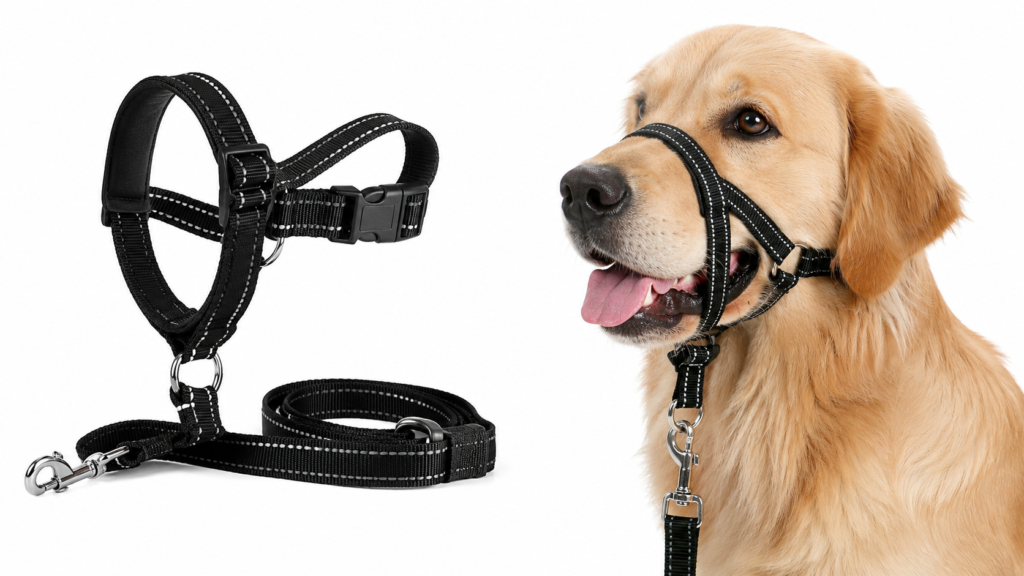
I got a letter through my door last Tuesday. Handwritten. From the woman at number 14. Two words that made my stomach drop: “the dog.”
My border collie, Stan, had been barking at the window for months. Every postman. Every cat. Every leaf that moved on the hedge. I thought I was managing it. Clearly, I wasn’t.
If you’re reading this, you’re probably in the same boat. Your neighbour’s had enough. You’ve tried everything. You’re now Googling “bark collar” at 11pm and feeling guilty about it.
I get it. I’ve been there. So here’s what I found after weeks of research, several purchases, and more conversations with my vet than I’d like to admit.
Quick answer: the 3 collars worth buying
If you’re in a rush and just need something that works, here are the three I’d recommend to a friend:
Best overall: DogRook Anti Bark Collar (about £25). No shock. Five sensitivity levels. Vibration and beep. The most popular barkless collar on Amazon UK for a reason. It stopped my dog barking within two days.
Best for sensitive dogs: PetSafe Spray Bark Dog Collar (about £45). Citronella spray instead of vibration. PetSafe is a well-known brand backed by proper research. Works well for dogs that panic at vibration.
Best UK brand: Woof Whisperer Anti Bark Collar (about £35). A UK company with a 4.7 out of 5 rating on Trustpilot. Solid build quality. Vibration and sound, no shock.
Now, let’s get into the detail. Because buying a bark collar in the UK isn’t as simple as it looks on Amazon.
The UK law on bark collars (this matters)
Here’s something most bark collar reviews won’t tell you: the law is different depending on where you live in the UK.
Wales
Bark collars that deliver an electric shock have been banned in Wales since 2010. The Royal Kennel Club campaigned hard for this. Under The Animal Welfare (Electronic Collars) (Wales) Regulations 2010, using one can get you up to a year in prison and/or a fine. Yes, really.
England
This is where it gets confusing. The government announced a ban on electric shock collars in 2018, but it still hasn’t actually happened. The Animal Welfare Act 2006 prohibits devices that inflict “unnecessary suffering,” which technically covers shock collars, but enforcement is patchy. People still buy them. People still sell them. It’s a grey area.
Scotland
Shock collars are legal in Scotland, but the Scottish government issued guidance in 2018 advising strongly against them. Vets in Scotland will almost always tell you not to use one.
Northern Ireland
No legal restrictions at all. You can buy and use any type of bark collar.
My advice? Avoid shock collars entirely, regardless of where you live. The DEFRA-funded research from 2014 found that 25% of dogs trained with shock collars showed negative behavioural effects, and there was little evidence of improved training outcomes. The Royal Kennel Club position is clear: these devices cause “unnecessary pain and suffering” and should be banned everywhere.
Every collar I’m reviewing here is shock-free. Vibration, sound, or citronella spray only.
Do bark collars actually work?
The honest answer: sometimes.
The RSPCA points out that barking is normal dog communication. It’s how dogs express themselves. A bark collar doesn’t fix the reason your dog is barking. It just interrupts the behaviour.
For some dogs, that interruption is enough. The vibration or spray startles them, they stop barking, and over time they learn that barking triggers an unpleasant sensation. DogRook claims 96% effectiveness with their collar, and in my experience with Stan, it did work within about 48 hours.
But for other dogs, it doesn’t work at all. Or it works temporarily, then the dog gets used to it. Or the barking stops but the underlying problem (anxiety, boredom, fear) just comes out in other ways. I’ve seen dogs that stopped barking but started chewing their own fur instead.
The DEFRA research I mentioned earlier is worth reading if you’re sceptical. It was a proper scientific study, not a marketing survey. It found that positive reinforcement training consistently outperformed punishment-based methods, including bark collars, for long-term behaviour change.
So yes, bark collars can work. But they’re a sticking plaster, not a cure.
Why your dog is barking in the first place
You can’t fix a problem you don’t understand. The RSPCA identifies several common causes of excessive barking, and addressing the root cause should always be your first step.

Separation anxiety
This is the big one, and it’s the one most people miss. If your dog barks when you leave the house, it might not be “naughty” behaviour. It might be genuine distress. The PDSA estimates that separation anxiety affects around 20-40% of dogs referred for behaviour problems.
Signs of separation anxiety: barking starts within minutes of you leaving, your dog follows you from room to room when you’re home, destructive behaviour when left alone, toileting indoors, panting and pacing before you go out.
A bark collar on an anxious dog is cruel. It’s punishing a dog for being scared. If you think separation anxiety is the issue, talk to your vet or a qualified behaviourist. The Dogs Trust has excellent free resources on managing separation anxiety, and in severe cases, your vet can prescribe medication alongside a behaviour modification programme.
Boredom
Some dogs bark because they’ve got nothing else to do. If your dog is left alone for long hours with no stimulation, barking is how they entertain themselves. Puzzle feeders, long walks before you leave, and leaving the radio on can all help. Check out our guide to the best dog walking accessories for ideas on making walks more stimulating.
Guarding and territory
This was Stan’s problem. He barked at anything that came near “his” garden. Dogs bred for guarding (terriers, German shepherds, Rottweilers) are especially prone to this. It’s instinctive. They’re doing the job humans bred them to do, even if we don’t want them to anymore.
Fear
Some dogs bark at things that scare them: loud noises, strangers, other dogs. This isn’t aggression. It’s a defence mechanism. A bark collar on a fearful dog can make things worse, because now the dog has two things to be scared of: the trigger and the collar.
Wanting attention
Dogs are smart. If barking gets you to look at them, talk to them, or feed them, they’ll keep doing it. The fix here is simple in theory (ignore the barking, reward quiet) but hard in practice when you’ve got neighbours complaining.
Which type of bark collar is right for your dog?
There are three main types of barkless collar available in the UK. Each works differently, and each suits different dogs.
Vibration collars
These detect your dog’s bark and deliver a vibration, similar to a mobile phone buzzing. The idea is that the vibration startles the dog and interrupts the barking. Most have adjustable sensitivity levels so you can tune them to your dog’s bark.
Best for: most dogs, especially those that are sound-sensitive. The vibration is enough to interrupt barking without causing distress. This is the most common type and the one most vets I spoke to were least concerned about.
Downsides: some dogs ignore the vibration entirely, particularly thick-coated breeds where the collar doesn’t sit close to the skin.
Citronella spray collars
These release a burst of citronella spray near the dog’s nose when they bark. Dogs dislike the smell (most do, anyway) and learn to associate barking with the unpleasant scent.
PetSafe is the main brand here, and their research suggests spray collars are effective for about 80-90% of dogs. The citronella is harmless. It’s just unpleasant.
Best for: dogs that are sensitive to vibration, dogs with thick coats where vibration doesn’t register well, and owners who prefer a non-electronic approach.
Downsides: you need to keep buying citronella refills (about £8-12 each). Some dogs actually don’t mind the smell. And if the wind is blowing the wrong way, you might get a face full of citronella yourself.
Ultrasonic collars
These emit a high-pitched sound when your dog barks. It’s inaudible to most humans but annoying to dogs. Some standalone ultrasonic devices sit in your house rather than attaching to the dog.
Best for: owners who don’t want anything attached to their dog at all, multi-dog households where you want to control all dogs at once.
Downsides: results are mixed. Some dogs barely react. Others get stressed by the constant sound. Older dogs with hearing loss won’t notice it at all. And some humans, especially younger people, can hear the ultrasonic frequency too, which is genuinely unpleasant.
For this article, I’m focusing on vibration and citronella collars, because the evidence base is stronger and they’re more reliable.
Full reviews: 8 barkless dog collars tested
I researched every barkless collar with decent reviews on Amazon UK. Here’s what I found, starting with the ones actually worth your money.
1. DogRook Anti Bark Collar
Price: about £25-30 | Type: Vibration + beep | Check price on Amazon UK
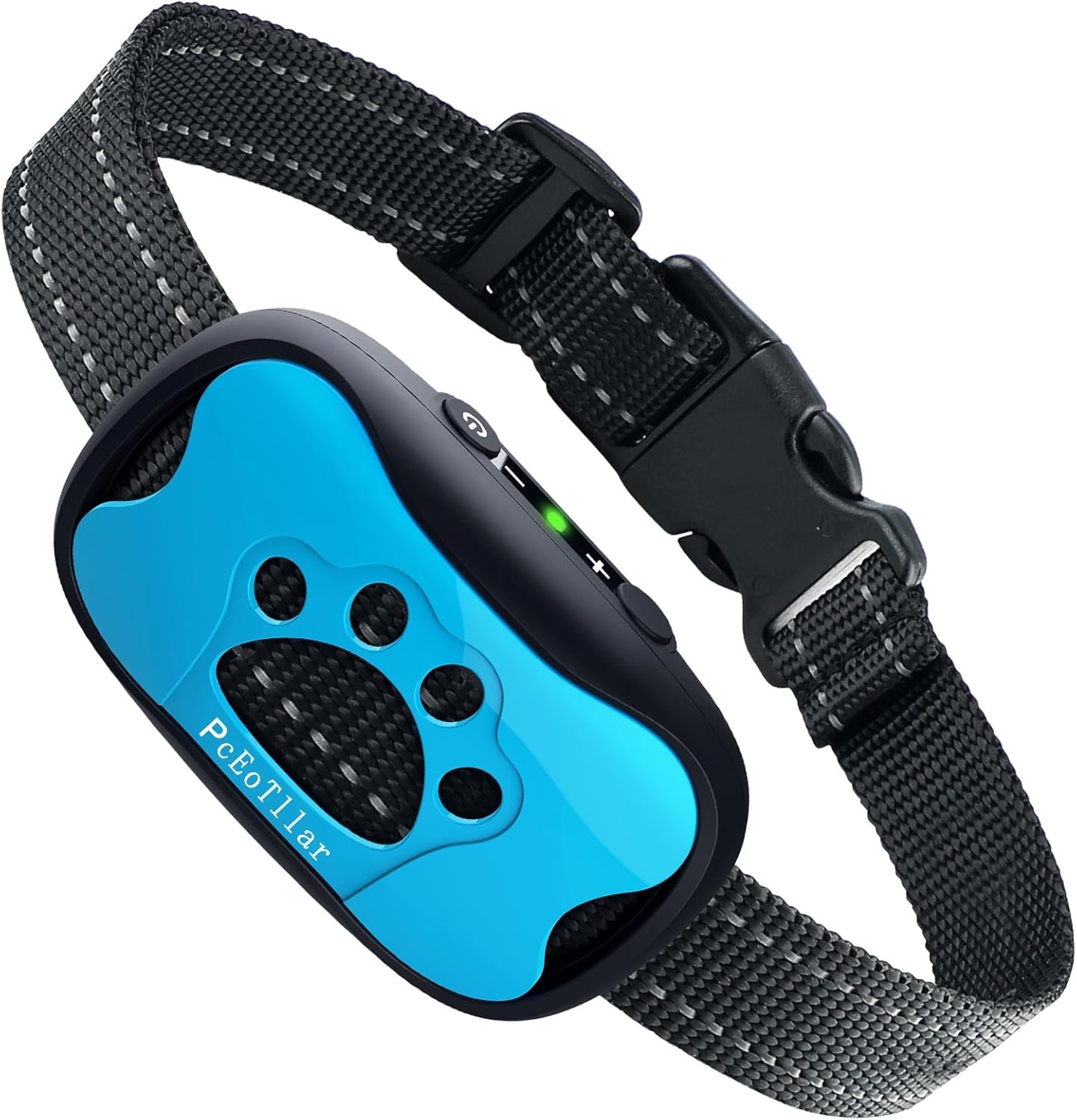
This is the one I bought for Stan, and it’s the one I’d recommend first. Five sensitivity levels let you dial it in. The lowest level worked for my collie, but a neighbour with a stubborn staffie said they needed level four.
It uses a replaceable CR2 battery rather than being rechargeable, which I initially disliked but actually came to appreciate. No faffing with USB cables. Just swap the battery every couple of months. One reviewer said it gave a “huge improvement” within hours, and another described how it “calms him down” almost immediately. My experience was similar: two days of wearing it and Stan had largely stopped his window-barking habit.
No shock function at all. Vibration and beep only. The beep on its own was sometimes enough for Stan, especially once he’d learned what the vibration meant.
Pros: Works fast. Five sensitivity levels. Cheap to run. No charging needed. Thousands of positive reviews on Amazon UK.
Cons: Replaceable battery (some people prefer rechargeable). The beep can be annoying for humans too. The collar itself is a bit bulky on very small dogs.
2. DogRook Rechargeable Bark Collar
Price: about £30 | Type: Vibration + beep | Check price on Amazon UK
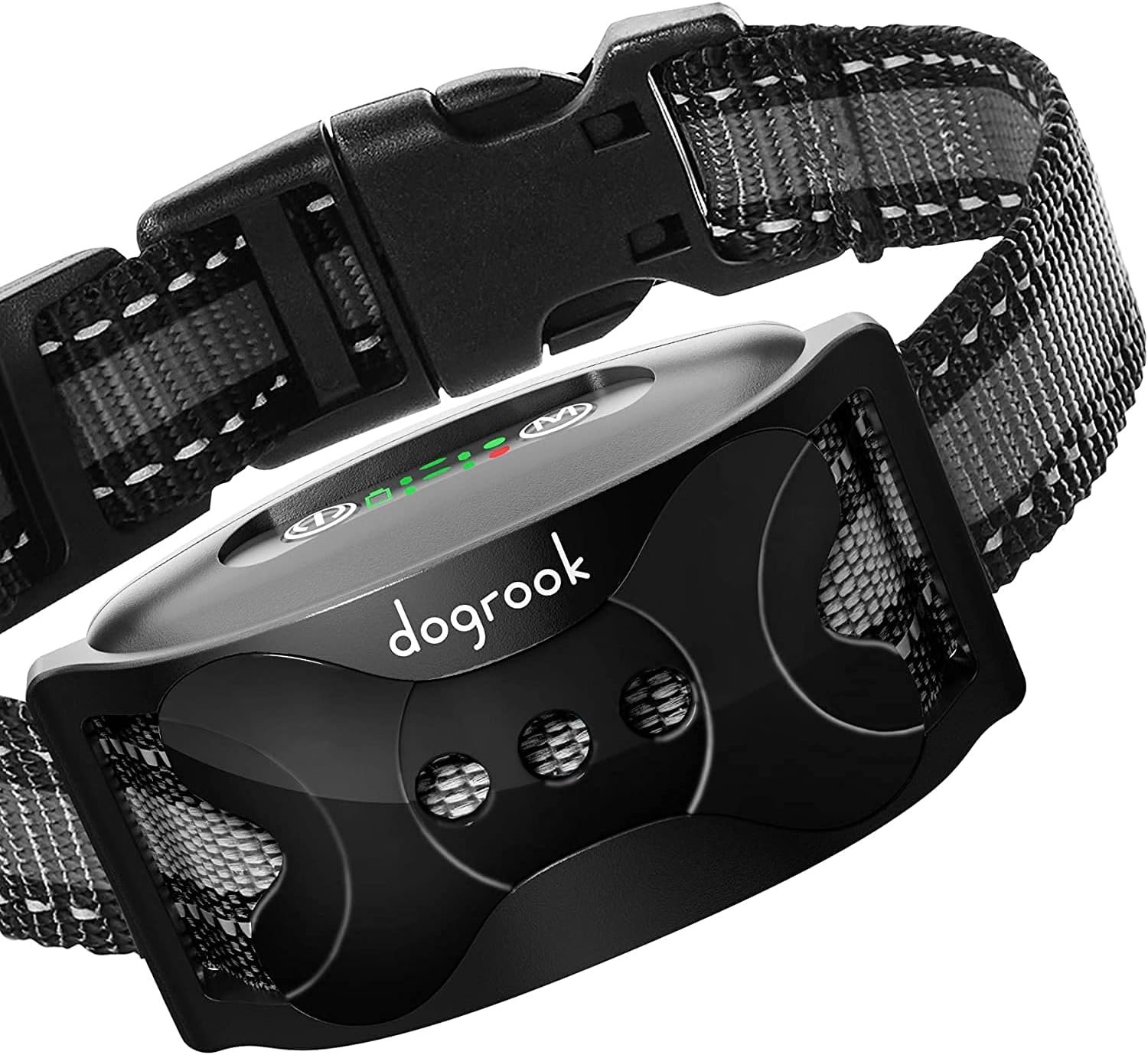
The rechargeable version of the collar above. DogRook claims 96% effectiveness, which sounds like marketing but actually matches what I’ve seen from real reviews and my own experience with the non-rechargeable version.
Two modes: vibration only, and vibration plus beep. Charges via USB and holds charge for about 14 days depending on how often it triggers. Waterproof, which matters if your dog likes puddles as much as Stan does.
The rechargeable version costs roughly the same as the battery version, so it comes down to whether you prefer the convenience of USB charging or the simplicity of swapping a battery. I’d probably go rechargeable if buying again.
Pros: USB rechargeable. Waterproof. Same reliable DogRook design. 2 modes.
Cons: Slightly more expensive than the original. Need to remember to charge it. No real improvement over the original in terms of bark-stopping power.
3. PetSafe Spray Bark Dog Collar
Price: about £40-60 | Type: Citronella spray | Check price on Amazon UK
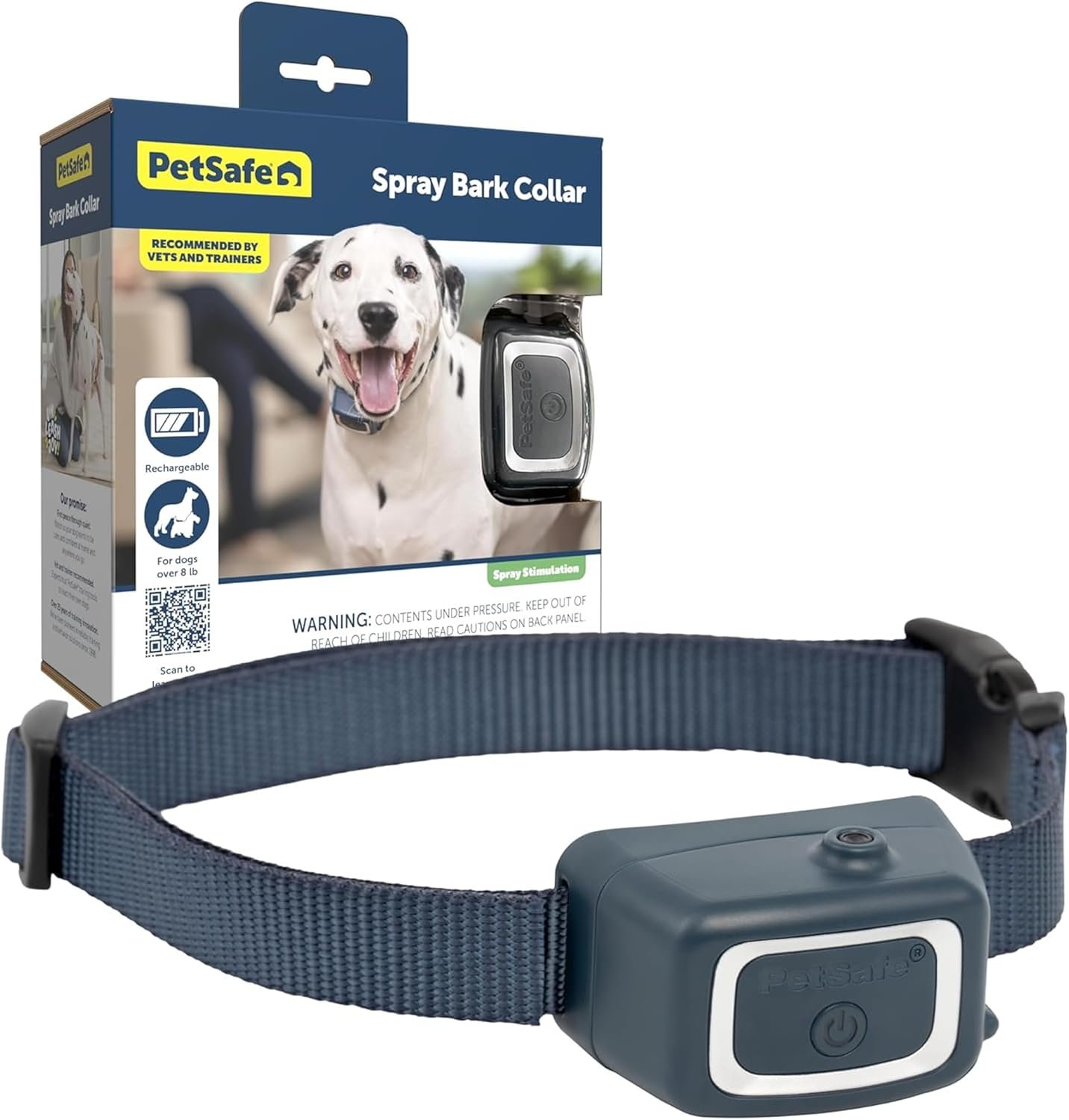
PetSafe is one of the biggest names in pet training equipment, and they actually invest in proper research. Their citronella spray collar has over 800 reviews on Amazon UK and holds a respectable 3.2 out of 5 star rating. That lower average compared to DogRook partly reflects the higher price point and partly the fact that citronella doesn’t work for every dog.
The spray is harmless. Citronella is a natural oil, and PetSafe sells both citronella and unscented refills. The collar comes with one citronella cartridge included, and you get about 30-40 sprays per cartridge. Replacements cost about £8-12 each.
Rechargeable via USB. Water-resistant but not fully waterproof. Fits dogs over 3.6kg. The detection is generally reliable, though some reviewers mention it can trigger from other dogs barking nearby.
Pros: No vibration at all. Harmless citronella. Backed by a reputable company. Rechargeable. Includes citronella refill.
Cons: Expensive upfront and ongoing (refills). Not waterproof. Can be triggered by other dogs’ barking. Some dogs don’t mind citronella.
4. PetSafe Anti Bark Spray Collar
Price: about £50-70 | Type: Spray + vibration | Check price on Amazon UK
This is PetSafe’s premium option. It combines spray and vibration in one collar, with adjustable stimulation levels. The idea is that you start with the spray, and if that doesn’t work, add vibration as a second layer of deterrence.
One of the top UK reviews calls it an “amazing anti-bark collar,” and it’s well-built, like everything PetSafe makes. But at £50-70, it’s a significant investment, and for most dogs the cheaper DogRook options will do the same job.
Pros: Two deterrent methods in one. Adjustable. Well-built. From a trusted brand.
Cons: Expensive. Ongoing refill costs. Overkill for most dogs.
5. Woof Whisperer Anti Bark Collar
Price: about £30-40 | Type: Vibration + sound | Check price on Amazon UK
Woof Whisperer is a UK-based company, which I like. It means customer service is in the same timezone, and if something goes wrong you’re not trying to get a refund from a seller based in Shenzhen. They’ve got a 4.7 out of 5 rating on Trustpilot from 147 reviews, which is solid.
The collar uses vibration and sound. No shock. Build quality feels better than the DogRook collars, with a slightly more premium feel to the materials. The adjustable strap fits necks from 15cm to 55cm, so it works for most breeds.
Pros: UK company. Good build quality. Trustpilot rating is excellent. Vibration and sound, no shock. Good size range.
Cons: Fewer reviews on Amazon than DogRook. Slightly more expensive. Less fine-tuned sensitivity adjustment.
6. Nakosite PET2433 Anti Bark Collar
Price: about £20-25 | Type: Vibration only | Check price on Amazon UK
The budget option. Nakosite’s collar is vibration only, with 7 sensitivity levels. Reviews suggest it reduces barking by about 50% on average, which isn’t as impressive as DogRook’s claims but is still meaningful if your dog’s barking is at the level where neighbours are complaining.
One of the things I like about the reviews is that people specifically mention “no distress or pain” when describing their dog’s reaction. That matters. At this price point, it’s worth trying before spending more on a premium option.
Pros: Very affordable. No shock. Multiple sensitivity levels. Reviewers report no distress.
Cons: Lower effectiveness than DogRook. Build quality reflects the price. Battery-powered, not rechargeable. Limited customer support.
7. HOMELYLIFE Citronella Bark Collar
Price: about £25-35 | Type: Spray / vibration / sound (4 modes) | Check price on Amazon UK
This one offers the most options at a mid-range price. Four modes: spray only, vibration only, sound only, or spray plus vibration plus sound all at once. IP67 waterproof rating, which means it can handle rain and even submersion. Good if your dog is a swimmer.
The flexibility is the selling point here. You can try each mode separately and see what your dog responds to best, then stick with that. The citronella spray is a nice addition at this price point, since most collars in this range only do vibration.
Pros: Four modes. IP67 waterproof. Citronella included at a reasonable price. Rechargeable.
Cons: Newer product with fewer long-term reviews. Citronella refills add ongoing cost. Brand is less established than PetSafe or DogRook.
8. LOSLAI No Shock Bark Collar
Price: about £20-30 | Type: Beep + vibration | Check price on Amazon UK
Another budget-friendly option with five sensitivity levels. Beep and vibration, no shock. Rechargeable and waterproof. One reviewer specifically said it “worked instantly on my cocker spaniel,” which is encouraging because cockers can be vocal dogs.
The build quality is adequate but nothing special. At this price point, you’re paying for basic functionality. If it works for your dog, great. If not, you haven’t lost much money.
Pros: Very affordable. Rechargeable. Waterproof. Five sensitivity levels. Instant results reported.
Cons: Budget build quality. Newer brand with limited track record. May not work on stubborn barkers.

When you should NOT use a bark collar
I’m going to be direct here, because too many reviews and roundups skip this section entirely.
Puppies under 6 months
Puppies bark to communicate. It’s how they learn. Slapping a bark collar on a puppy is lazy training. If you’ve got a barking puppy, you need a training plan, not a gadget. Our puppy training schedule covers the basics of teaching quiet on command, and the crate training guide helps with puppies that bark when confined.
Dogs with separation anxiety
I’ve said this already but it’s worth repeating. A bark collar on a dog with separation anxiety is punishing the dog for being scared. The Blue Cross and Dogs Trust both advise against using aversive training tools on anxious dogs. You need a behaviourist, not an Amazon order.
Dogs with medical conditions
If your dog has suddenly started barking more than usual, see your vet first. Pain, cognitive decline, hearing loss, and thyroid problems can all cause increased vocalisation. A bark collar won’t fix any of those. A vet consultation might.
Dogs that are fearful
If your dog barks at specific triggers because they’re scared (fireworks, other dogs, strangers), the barking is a symptom of fear. Adding another aversive stimulus (vibration, spray) on top of an already stressed dog risks making the fear worse. The PDSA has good advice on desensitisation techniques for fearful barkers.
As a replacement for proper training
A bark collar is a tool, not a trainer. It interrupts barking. It doesn’t teach your dog what to do instead. The best results come from using a bark collar alongside positive reinforcement training. Reward quiet behaviour. Teach an alternative behaviour (like going to a bed on command). Then, once the new habit is established, phase out the collar.
Dealing with neighbour complaints in the UK
Let’s talk about the elephant in the room. If you’re researching bark collars, there’s a good chance someone has complained about your dog. Here’s what you need to know about where you stand legally.
The council process
In England, Wales, and Scotland, your local council has a statutory duty to investigate noise nuisance complaints under the Environmental Protection Act 1990. If a neighbour complains, the council will typically:
- Send you a letter asking you to address the problem (this is the “informal” stage)
- Ask you to keep a noise diary for a couple of weeks
- Send an environmental health officer to assess the noise (they may install monitoring equipment)
- If they decide it’s a statutory nuisance, issue a noise abatement notice
- If you ignore the notice, you can be fined up to £5,000 (domestic) or £20,000 (commercial)
Most complaints get sorted at stage one or two. Councils don’t want to prosecute dog owners. They want the noise to stop. Showing that you’re taking steps (vet visits, training, bark collar) goes a long way.
Your rights
You have the right to be informed about who made the complaint (though councils sometimes withhold this to avoid neighbour disputes). You have the right to appeal a noise abatement notice. And you have the right to ask the council officer for advice on reducing the noise.
Practical advice
Document everything. Keep a record of what you’ve tried and when. This shows the council you’re taking it seriously. A bark collar, used responsibly alongside training, is a reasonable step to take and most council officers will see it that way. If you want a proper collar that handles daily walks too, check our guide to the best GPS dog collars for options that combine tracking with training features.
Training alternatives to bark collars
Before you buy anything, try these approaches. They take more effort than strapping a collar on your dog, but they produce better long-term results.
Teach “quiet” on command
Wait for your dog to bark (easy, right?). Say “quiet” firmly but calmly. The moment they stop, even for a second, reward with a treat. Repeat. Over time, your dog learns that barking ends the treat opportunity and being quiet earns one. This takes patience but it works. The Dogs Trust training guides walk through this step by step.
Remove the trigger
If your dog barks at the window, block access to the window. If your dog barks at the postman, move their bed to a room away from the front door. If your dog barks at other dogs on walks, try walking at different times or in different places. Obvious, but it’s staggering how many people don’t try the simplest fix first. A good harness can help you manage your dog more effectively on walks, reducing reactive barking.
Increase exercise and mental stimulation
A tired dog is a quiet dog. Most dogs need more exercise and mental stimulation than they get. Puzzle feeders, training sessions, snuffle mats, and longer walks all help. If your dog is barking out of boredom, adding 30 minutes to your daily walk and introducing a puzzle feeder could solve the problem entirely.
Desensitisation
If your dog barks at specific triggers (the doorbell, other dogs, strangers), you can desensitise them by gradually exposing them to the trigger at a low enough intensity that they don’t react, then rewarding calm behaviour. Over time, you increase the intensity. This is best done with a qualified behaviourist, but the Blue Cross and PDSA both have guides you can follow at home.
Professional help
If you’ve tried the basics and nothing works, get a behaviourist. The RSPCA recommends looking for a behaviourist registered with the Association of Pet Behaviour Counsellors (APBC) or the Animal Behaviour and Training Council (ABTC). A qualified behaviourist will assess your dog, identify the root cause, and design a specific training plan. It costs money (typically £100-200 for an initial consultation) but it’s cheaper than a council fine and better for your dog than a bark collar.
Frequently asked questions
Are bark collars legal in the UK?
Shock collars that deliver an electric shock are banned in Wales and strongly discouraged (but technically legal) elsewhere. Vibration, sound, and citronella spray collars are legal throughout the UK. I’d recommend avoiding any collar with a “shock” setting regardless of the law.
Can a bark collar hurt my dog?
Vibration and citronella collars are designed not to cause pain. Vibration is startling, not painful. Citronella is an unpleasant smell, not harmful. That said, any aversive tool used incorrectly can cause stress. Start on the lowest setting, monitor your dog’s reaction, and don’t leave the collar on for longer than recommended (usually no more than 8-12 hours a day).
How long does it take for a bark collar to work?
Most people see results within 2-7 days. Some dogs respond immediately (within hours). Others take a couple of weeks. If you haven’t seen any reduction after two weeks of consistent use, the collar probably isn’t the right solution for your dog.
Should I leave the bark collar on all the time?
No. Remove it at night and during periods when barking is expected or appropriate. Leaving any collar on 24/7 can cause skin irritation, and it’s not fair on your dog to be “on duty” constantly. The collar is a training aid, not a permanent fixture.
Will my dog become collar-averse?
Some dogs learn to associate the bark collar with the unpleasant sensation and resist having it put on. This is more common with poorly fitted collars or collars set too high. If your dog starts hiding when they see the collar, turn the sensitivity down or try a different type (switch from vibration to citronella, for example).
My neighbour has complained. What should I do first?
Start a noise diary yourself. Try the training methods above. Talk to your vet about possible causes. Consider a bark collar as one tool among several. If the council contacts you, respond politely and show them what steps you’re taking. Being proactive is always better than being defensive.
Do citronella collars work better than vibration collars?
It depends on the dog. Citronella works better on dogs that are unresponsive to vibration. Vibration is more reliable in windy conditions (citronella spray can get blown off course). Citronella has ongoing costs (refills). Vibration doesn’t. Start with vibration (it’s cheaper and simpler) and switch to citronella if vibration doesn’t work.
Can I use a bark collar alongside training?
Yes, and this is actually the best approach. Use the collar to interrupt the barking while you train an alternative behaviour. Once your dog reliably responds to the training, phase out the collar. Don’t use the collar as a standalone solution, and don’t skip training because the collar seems to be working on its own.
Will a bark collar stop my dog barking at the doorbell?
Probably not completely. Bark collars respond to vocalisation, but doorbell-induced barking is often an instinctive, rapid response that triggers before the dog is even aware of what they’re doing. Training (teaching your dog to go to a specific place when the doorbell rings) works better for this specific trigger than a bark collar does.
My dog only barks when left alone. Will a bark collar help?
Please read the separation anxiety section above carefully. If your dog’s barking is caused by separation anxiety, a bark collar is the wrong tool. Talk to your vet. They can rule out medical causes and refer you to a behaviourist if needed. The Dogs Trust also has a free behaviour support line.
What I’d buy (and what I actually bought)
I went with the DogRook Anti Bark Collar for Stan, and it worked within two days. He still barks occasionally at the window, but it’s at a level that doesn’t bother the neighbours. We also started training him to go to his bed on command, and we moved his bed away from the front window. The collar plus training combination is what made the lasting difference.
For most UK dog owners dealing with excessive barking, I’d suggest starting with the DogRook collar and investing time in basic training alongside it. If your dog doesn’t respond to vibration, try the PetSafe citronella collar. If you want a UK brand with good customer service, go with Woof Whisperer.
And if none of it works, get a behaviourist. It’ll cost more than a collar but it’ll actually solve the problem properly. Your dog, your neighbours, and your conscience will all be better off for it.
For more dog care advice, including choosing the right harness and feeding your dog a diet that supports overall health with probiotics for gut and skin, explore the rest of Dog Foods UK.