


Fleas are one of the most common parasite problems for dog owners, and the treatment market has grown so large that choosing the right product can be more difficult than necessary. Spot-ons, chewable tablets, collars, sprays, and shampoos; each format works differently, and not every option is suitable for every dog.
This guide will explain the best flea treatments for dogs available in the UK. Often, articles will feature the best flea treatment products but not available in the UK, so I will share UK-focused dog flea treatment products that are readily available in supermarkets and on Amazon UK.
In today’s article, we’ve considered veterinary guidance from trusted sources such as the PDSA and Blue Cross, as this is a health-related topic. Therefore, instead of random opinions or unverified information, we’re providing you with information based on trusted sources and independent comparisons.
This guide is specifically for UK dog owners who want straightforward, reliable, and practical information. At dogfoodsuk.com, we focus on UK-specific dog food reviews and dog care guidance, and this article follows a similar approach to help you easily choose the right option for your dog.
Why Flea Treatment Matters More Than Most Owners Realise
Fleas aren’t just a minor nuisance that causes itching. According to the PDSA’s Animal Wellbeing Report, many dog and cat owners skip flea treatment because they think it’s not necessary, especially for pets that rarely go outside. But this thinking can be risky.
An adult flea can blood feed in a single location for up to 3 hours, consuming approximately its body weight in blood. In puppies, senior dogs, or dogs with already compromised health, a heavy flea infestation can lead to flea anemia, a dangerous condition. Fleas can also spread tapeworms and trigger flea allergy dermatitis (FAD).
In this condition, the dog becomes very sensitive to flea saliva, and even a few bites can lead to problems like severe itching, hair loss, and skin damage.
Another problem is the number of fleas that many owners don’t realize. If there are 50 fleas on your dog, there are likely 1,000 or more fleas hiding in the form of eggs, larvae, and pupae in carpets, sofas, and skirting boards in your home. Treating the dog alone only solves about 5% of the flea problem. Most fleas are present in the environment of your home.
What Are the Different Types of Flea Treatment?
Before comparing specific products, it’s important to understand the four main flea treatment formats available in the UK. Ultimately, the “best” treatment is the one that best fits your dog’s lifestyle, age, and ability to tolerate handling.
Spot-On Treatments
Spot-on treatments are liquid pipettes that are applied directly to the skin, usually between the shoulder blades, to prevent the dog from licking the area. They remain one of the most popular flea treatment formats today because they are easy to apply and most products are available without a prescription.
Their active ingredient penetrates the skin’s natural oil layer and kills fleas on contact. Most spot-on products provide protection for approximately 4 weeks after a single dose. Its biggest drawback is that it’s not ideal for dogs who swim frequently or need frequent baths, as excessive exposure to water can reduce its effectiveness. It’s also important to keep the treated area dry for approximately 48 hours after application.
Oral Tablets and Chews
Tablets work systemically. Their active ingredient is released into the bloodstream, killing fleas the moment they bite the dog. This makes tablets a good option for dogs that swim regularly, have skin sensitivities, or for households where spot-on residue is not practical.
Most highly effective oral treatments available in the UK, including products in the isoxazoline class, are available with a vet prescription. These generally cost more than over-the-counter spot-ons, but many owners find the extra cost worthwhile due to their convenience and reliability.
Flea Collars
Collars slowly release active ingredients over several months, making them an attractive option for owners who forget to administer treatments every month. Both Blue Cross and PDSA state that most flea collars are not particularly effective. However, there is a notable exception: collars that use a combination of imidacloprid and flumethrin. These collars have been safety tested and can generally provide protection for dogs for approximately 7 to 8 months.
Household Sprays
Because the majority of flea infestations occur in the home environment rather than on the dog, treating the dog alone is not enough. Often, a household spray is necessary in conjunction with treating your dog. These products target eggs, larvae, and adult fleas present in carpets, sofas, soft furnishings, and skirting boards. Some products even claim to provide protection for up to 12 months after a single application.
The Best Flea Treatments for Dogs in the UK
So far, we’ve looked at the different forms of flea treatment. Now, let’s talk about the products most recommended by vets, pharmacies, and independent comparison websites in the UK. Below, you’ll find a practical breakdown of each option, so you can make the best decision based on your dog’s needs and lifestyle.
Top Flea Treatments for Dogs Products on Amazon UK
These flea treatment products are currently on Amazon UK and are some of the most reviewed and sold products that people buy for their pets.


Best Overall Spot-On: Frontline Plus
Frontline has been a trusted and well-known name for flea control in the UK for many years, and Frontline Plus is now available without a prescription. It contains fipronil which kills adult fleas, while (S)-methoprene prevents flea eggs from developing. Due to this combination, it is considered more effective than basic products containing only fipronil, because it targets not just one but two stages of the flea life cycle.
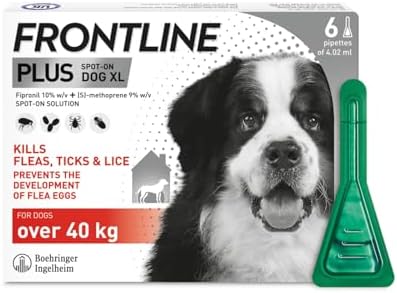
- KILLS FLEAS & TICKS – Fleas are killed within 24 hours and ticks within 48 hours, helping to protect dogs from the disco…
- KILLS FLEA EGGS – Unlike most flea treatments, FRONTLINE Plus not only kills fleas but also stops their eggs from hatchi…
- TRIED AND TRUSTED – FRONTLINE’s advanced vet-strength formula is highly efficacious and yet has an exemplary safety prof…
But one important thing needs to be understood. Several independent sources and recent veterinary reviews in the UK have indicated that fleas have developed resistance against fipronil in some areas. This means that Frontline is not able to give reliable results as early as possible. If you are using this product regularly and your dog is still having a flea problem, talk to your vet and recommend switching to an alternative flea treatment instead of doubling the dose.
Best for Convenience: Seresto Collar
The Seresto collar is one of the few flea collars genuinely recommended by vets. It contains a combination of imidacloprid and flumethrin, which is slowly released through a special polymer matrix. This allows a single collar to provide protection against fleas and ticks for up to 7 to 8 months.
Please enter product(-s) ASIN(-s)!This collar is water-resistant, has minimal odor after some use, and features a safety-release mechanism that opens if excessive pressure is applied to the collar, ensuring the dog’s safety.
In terms of cost, this collar may initially seem more expensive than a single spot-on pipette. But when you calculate its monthly cost, it often becomes one of the most budget-friendly options in the long term, as a single collar provides protection for several months.
Best Oral Tablet: NexGard
NexGard is a monthly beef-flavored chewable tablet that uses afoxolaner. It is part of the isoxazoline drug class and begins killing fleas within hours of the dog ingesting it. It is an especially good choice for dogs that resist spot-on treatments or that frequently play or swim in water, as the chewable treatment does not wash off with water.
But like other isoxazoline medications, there is an important precaution with NexGard. If your dog has a history of seizures or belongs to an epilepsy-prone breed, be sure to talk to your vet before starting treatment. Your vet can review your dog’s medical history to decide if this product is suitable for your dog or if an alternative option would be better.
Best Long-Lasting Tablet: Bravecto
Bravecto contains the active ingredient fluralaner, and a single chew can provide up to 12 weeks of flea protection. When calculated on a monthly basis, its longer dosing interval generally costs about the same as NexGard. For owners who find it difficult to remember to administer treatments every month, administering fewer doses annually is a significant advantage. In practical terms, missed doses are the most common reason for flea control failure.
Another great thing about Bravecto is that it is also available in a topical spot-on form. If your dog doesn’t like oral medication or chewing, a spot-on version can be used. This flexibility makes Bravecto a more convenient option than many other prescription flea treatments.
Best for Multi-Parasite Cover: Advocate
Advocate is a spot-on treatment that uses a combination of imidacloprid and moxidectin. It not only works against fleas, but also provides protection against lungworms, roundworms, and ear mites. If your dog is walked in areas where slugs and snails are prevalent, increasing the risk of lungworm infestation, this type of broad protection becomes more important than mere convenience.
Advocate is a prescription-only product, which means that your vet assesses your dog’s health and suitability before using it. This helps ensure that the treatment is safe and appropriate for your dog.
Best Budget Non-Prescription Option: Bob Martin Clear
The Bob Martin Clear range is readily available in UK supermarkets, such as Sainsbury’s, Tesco and Asda, and is one of the more affordable over-the-counter flea control options. It doesn’t provide the broad parasite coverage of prescription products, but can provide a reasonable level of protection without a vet visit for dogs with a low flea risk.
The PDSA has previously partnered with Bob Martin on flea prevention awareness campaigns, reflecting the considerable trust the brand enjoys within the UK veterinary charity sector. However, if your dog has a severe flea infestation or requires additional parasite protection, it’s best to consult your vet and consider prescription treatment.
Best Household Flea Spray: Virbac Indorex
Treating your dog alone isn’t a complete solution to your flea problem. Virbac Indorex is a household spray used in the UK for many years that targets fleas, their eggs, and larvae on carpets, furniture, and skirting boards. According to the manufacturer, one application can provide up to 12 months of protection.
This spray is not for use directly on pets. After spraying, the room should be left empty for approximately 2 hours and then thoroughly ventilated. If you have cats, take extra precautions, as some ingredients in household sprays can be toxic to cats. Therefore, always follow product instructions carefully and consult your vet if necessary.
A Quick Comparison Table
| Product | Type | Protection Length | Prescription Needed | Best For |
|---|---|---|---|---|
| Frontline Plus | Spot-on | 4 weeks | No | General use, budget-conscious owners |
| Seresto Collar | Collar | 7–8 months | No | Owners who forget monthly doses |
| NexGard | Oral chew | 4 weeks | Yes | Dogs that swim or resist spot-ons |
| Bravecto | Oral chew / spot-on | 12 weeks | Yes | Fewer doses per year |
| Advocate | Spot-on | 4 weeks | Yes | Multi-parasite cover, lungworm risk |
| Bob Martin Clear | Spot-on / tablet | 4 weeks | No | Lower-risk dogs, tighter budgets |
| Virbac Indorex | Household spray | Up to 12 months | No | Treating the home environment |
You can compare the current prices and availability of these products on Amazon UK, where most of these items are listed with verified buyer reviews. Before purchasing a product, always check that the weight band on the packaging matches your dog’s weight. In many cases, treatment fails because larger dogs are given a smaller dose than their weight.
How to Choose the Right Treatment for Your Dog
There isn’t a single “best” flea product for every dog. The right choice depends on your dog’s needs and lifestyle. Below is a simple process that makes the decision easier.
First, consider your dog’s lifestyle. If your dog goes swimming or is bathed frequently every week, an oral tablet may be more reliable than a spot-on treatment, as water can reduce the effectiveness of topical products. If your dog doesn’t like taking tablets or finds them difficult to handle, a spot-on or flea collar may be a better option.
Always keep age and weight in mind. Flea products often come in different weight bands. Giving a small dog dose to an older dog may provide less protection, and a large dog dose may be unnecessary for a younger dog. For puppies, only use products approved for their age. Many treatments are not suitable before 8 weeks, and some prescription chewables are only for dogs 6 months or older.
Also be sure to consider your dog’s health history. If there is a history of seizures (fits), consult a vet before using isoxazoline tablets like NexGard or Bravecto. It’s also important to seek veterinary advice before starting any new parasite treatment for pregnant or nursing dogs. If your dog is already taking any medications, inform your vet or pharmacist before adding a flea treatment.
Take extra precautions if there are other pets in the house. It’s very important to never use dog flea treatment on a cat. Many dog flea products contain permethrin, which is very toxic to cats and can be fatal even in small quantities. If you have both cats and dogs, carefully check the label of each product and keep cats away from the area after application until the product has completely dried.
Select prescription and over-the-counter products carefully. Prescription treatments generally undergo more rigorous testing and often provide protection against other parasites in addition to fleas. However, these may require a vet consultation and may cost more. On the other hand, over-the-counter products available in pet shops and supermarkets are more convenient, but their quality and effectiveness can vary. Therefore, it’s best to check the active ingredient and current UK veterinary guidance rather than just the brand name.
Buying Safely: What to Check Before You Purchase
In the UK, flea and tick products are regulated by the Veterinary Medicines Directorate (VMD), which is separate from the MHRA. The MHRA regulates human medicines, while the VMD oversees animal medicines and parasite treatments. If you are purchasing flea treatment online rather than from your vet, it is a good idea to check that the retailer displays VMD verification. This ensures that the products sold meet UK safety standards and testing requirements.
In the UK, flea products fall into a few different legal categories, which may be beneficial to understand:
- POM-V: These are prescription-only medicines that are only provided after a vet assessment.
- NFA-VPS: These do not require a prescription, but can only be sold by a vet, pharmacist, or Suitably Qualified Person (SQP). These products are often kept in a locked cabinet.
- AVM-GSL: These are general sale products that are available in supermarkets and pet shops without any restrictions.
NFA-VPS products are generally considered more effective than basic AVM-GSL products, although neither category requires a full prescription. If a shop assistant asks for your dog’s weight before selling a flea treatment, this is often a sign that the product is in the NFA-VPS category. This is generally considered a better sign of quality and effectiveness than products one can buy straight off the shelf.
Treating a Current Infestation vs. Preventing One
IIf your dog already has fleas, one treatment is often not enough. Adult fleas can survive for up to two weeks off their host, and their eggs can remain dormant in your home for up to a year, waiting for the right temperature and vibration. These steps are essential to effectively eliminate a flea infestation:
- Treat every dog, cat, and rabbit in the home on the same day, using a product approved for each species.
- Wash all pet bedding at 60°C, as temperatures lower than this do not effectively kill flea eggs.
Vacuum the house thoroughly and regularly, especially along skirting boards, under furniture, and in areas where your pet sleeps or spends a lot of time. - Use a household spray containing insect growth regulator (IGR) to target not only adult fleas but also the egg and larval stages.
- Repeat the treatment according to the product instructions. Don’t stop treatment just because visible fleas have disappeared.
Prevention is actually much easier and less expensive than treating the entire infestation. In the UK it is important to maintain flea protection year-round, even in winter, as centrally heated homes provide a comfortable environment for fleas throughout the season.
Do Natural Flea Treatments Really Work?
There’s a growing interest in natural flea treatments, and it’s perfectly reasonable to consider them if you want to avoid chemicals. However, according to veterinary experts, essential oil sprays, vinegar rinses, and some natural shampoos may only offer a mild repellent effect or supportive benefits. None of these have yet proven to be as effective as licensed veterinary flea treatments, especially when it comes to eliminating an active flea infestation.
Where natural products really come in handy is when used alongside effective flea treatments, not in place of them. For example, oatmeal-based shampoo can soothe irritated skin and help remove flea dirt, but it won’t eliminate the entire flea life cycle.
If you choose a completely chemical-free approach, it’s important to understand the trade-offs. This approach carries a higher risk of not completely controlling fleas, especially for dogs that regularly roam outside or spend a lot of time in outdoor environments.
Frequently Asked Questions
How often should I treat my dog for fleas?
This depends on the product. Most spot-ons and tablets need monthly reapplication, while Bravecto lasts 12 weeks and Seresto collars last 7–8 months. Always follow the specific product instructions, or your vet’s guidance if it was prescribed.
Can I use flea treatment and worming treatment together?
Generally yes, but always check with your vet first, especially the first time you introduce a new product, in case of any interaction or sensitivity.
Is it safe to use flea treatment on a pregnant or nursing dog?
Some products are specifically licensed for pregnant and lactating dogs, but not all. Always check the product label or speak to your vet before treating a pregnant or nursing dog.
What’s the cheapest effective flea treatment for dogs in the UK?
Calculated per month, a Seresto collar often works out among the cheapest effective options because one purchase covers 7–8 months, even though the upfront price is higher than a single spot-on dose.
Do indoor dogs still need flea treatment?
Yes. Fleas travel into homes on other pets, on clothing, and through visiting animals. Central heating also means UK homes stay warm enough for fleas year-round, regardless of how much time your dog spends outside.
Final Thoughts
The right flea treatment for your dog comes down to matching the product to their lifestyle, health history, and your own routine, not chasing whichever brand has the loudest marketing. Prescription options like NexGard, Bravecto, and Advocate generally offer the strongest, most reliably tested protection, while products like Seresto and Frontline Plus remain solid choices for owners who want effective, accessible options without a vet visit every time.
If you’re still working out which product suits your specific dog, your vet remains the best source of tailored advice, particularly if your dog has any health conditions or you share your home with other pets.