

Puppies are expensive. With vet bills, vaccinations, worming, toys, beds, and the amount of food a growing dog consumes, the costs add up very quickly. Puppy food is usually the most expensive type of dog food per kilo, and breeders and pet shops will happily sell you “premium” bags for £50, which your puppy will finish in 2 weeks.
You don’t need to spend that much. Genuinely good, cheap puppy foods are available in the UK that will give your puppy the nutrients he needs for proper growth, without costing you a lot of money. This guide covers the best cheap puppy food UK for owners, how much to feed at each stage, and when to switch to adult food.
Why Puppies need different food from adult dogs
Puppies grow very fast. A Labrador puppy gains roughly 2 kg per month for the first 6 months. This growth requires more protein, more fat, more calcium, and more calories per kilogram of body weight than an adult dog. Feeding puppies adult food does not provide these nutrients in sufficient quantities for proper development.
Here’s what puppy food needs to get right:
Protein: Puppies require more protein than adults. FEDIAF guidelines specify a minimum of 25% protein for growth formulas, compared to 18% for adult maintenance. Good puppy foods typically contain between 26-32%. Protein supports muscle development, tissue repair, and immune function. Insufficient protein can lead to stunted puppy growth and a weakened immune system.
Fat: Fat provides puppies with concentrated energy for growth. Puppy foods typically contain 10-16% fat, compared to 8-12% in adult foods. Fat content also provides essential fatty acids, omega-3 and omega-6, that support brain development, skin health, and coat condition. DHA, a specific omega-3 fatty acid, is especially important for puppy brain and eye development. This is the same nutrient that makes human infant formula “brain-boosting.” The principle is the same for dogs.
Calcium and phosphorus: These minerals are critical for bone development, but the ratio matters as much as the actual amount. Too much calcium can actually be worse than too little calcium. Excess calcium in large-breed puppies can cause skeletal deformities. This is why large-breed puppy foods exist. Calcium levels in them are carefully controlled. Our puppy food guide by breed size explains this in detail.
DHA: Docosahexaenoic acid, a type of omega-3 fatty acid, supports brain and vision development in puppies. Quality puppy foods include DHA, usually sourced from fish oil. This is one of the few supplements with strong evidence of benefit for growing dogs. Studies have shown that puppies fed DHA-supplemented foods perform better in training tasks and develop faster.
Calories: Growing puppies burn calories very quickly. They need roughly double the calories per kilogram of body weight than adult dogs. Therefore, you may find yourself refilling the food bowl more than expected. This is normal. A growing puppy can eat 2-3 times more than an adult dog of the same breed.
Feeding guide by age and weight
Puppy feeding changes significantly from 8 weeks to 12 months. This is a rough guide based on feeding recommendations from major puppy food brands:
8-12 weeks (just home)
Feed 4 meals a day. Puppies this age have small stomachs and high energy needs. Divide the daily ration into 4 equal meals and feed them throughout the day. Follow the guidelines for your specific food, as calorie content varies from brand to brand.
For a typical medium-breed puppy at 8-10 weeks of age, roughly 150-200g of dry kibble per day, divided into 4 meals. This equates to about a handful per meal. Always keep fresh water available. Puppies can dehydrate more quickly than adult dogs because they have a higher surface-area-to-volume ratio and kidney function is not yet fully developed.
Don’t leave food out all day, i.e., avoid free feeding. Set specific meal times and remove the bowl after 15-20 minutes. This helps with housetraining because you can predict when the puppy will need to go to the toilet, and it also prevents the puppy from becoming a fussy eater who eats small amounts of food throughout the day.
3-4 months
Reduce to 3 meals a day. Your puppy’s stomach is now a little bigger, so he can handle slightly larger portions in fewer doses. Most medium-breed puppies at this age eat 200-300g of dry food per day.
This is the teething phase, which can cause some puppies to lose interest in food. If your puppy temporarily reduces his kibble intake, try soaking it in warm water or mixing in a little wet food. Teething usually passes within a few weeks, and appetite returns to normal.
5-6 months
Reduce to 2 meals a day This is the stage where food consumption really starts to increase. A 6-month-old medium-breed puppy can eat up to 250-350g per day. Large-breed puppies eat much more. A 6-month-old Labrador puppy can easily finish 350-450g daily. Growth is at its peak at this time, and so is appetite.
This is also the time when you may notice your puppy getting a little chubby. Puppies should be lean, not roly-poly. If you can’t easily feel their ribs, you’re overfeeding. Reduce the daily amount slightly. Overfeeding during the growth phase can put stress on developing bones and joints.
6-12 months
Stick to 2 meals a day. As the puppy grows, the portions increase. By 9-10 months, growth begins to slow, and you may notice your puppy eating slightly less. This is normal. Their energy requirements begin to stabilize before they reach full adult size.
Our puppy feeding guide by age has more detailed charts with specific amounts for different breed sizes.
Best cheap puppy foods in the UK
Harringtons Puppy
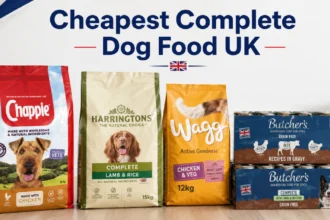
Harringtons Puppy is one of the best-value puppy foods available in the UK. It uses chicken as the main protein, along with rice, barley, and peas. It contains no artificial colors or flavors. There is also no added soy or wheat gluten.
Protein is 28% and fat is 12%, which comfortably fits within the FEDIAF guidelines for growth. This food contains DHA from fish oil for brain development, plus glucosamine for joint support. Glucosamine is good for large-breed puppies, as their joints are stressed during growth.
At roughly £2.50-£3 per kg for a 12kg bag, Harringtons Puppy is quite reasonably priced. If a 2kg puppy eats 100g per day, the monthly cost will be around £8-£10. If a 15kg puppy eats 300g per day, the monthly cost will be roughly £23-£27. This is good value for a food that meets all the right nutritional benchmarks.
Harringtons also makes dry puppy food in a grain-free version if you want to avoid grains, but the standard rice-based version is better for older puppies. Rice provides the easily digestible energy that growing pups need and is gentle on developing digestive systems.
Best for: all-round value, medium-breed puppies, and those owners who want a simple, reliable option.
Wagg Complete Puppy
Wagg is the cheapest named-brand puppy food available in the UK. Their Complete Puppy food uses cereals, wheat, and maize as its main ingredients, along with chicken. Protein is 26% and fat is 10%, which meets FEDIAF minimums.
At roughly £1.50-£2 per kg, Wagg Puppy Complete Puppy Food is as cheap as it gets. If a 15 kg puppy eats 300 g daily, the monthly cost would be around £14-£18. This is the go-to option for owners on a very tight budget.
Ingredients are not as clean as Harringtons or Beta. The bulk of the food is cereals, with a lower meat content. It has no added DHA, no glucosamine, and a basic vitamin and mineral profile. However, it is legally complete, nutritionally adequate, and thousands of puppies in the UK have successfully grown on it.
One thing to watch out for: Wagg Puppy contains wheat, which can cause sensitivity in some dogs. If your puppy develops loose stools or itchy skin, wheat may be the culprit and you may need to switch to a rice-based alternative. These are not common problems, but it’s useful to know.
Best for: Very tight budgets, owners who want the cheapest complete option, and puppies with no known sensitivities.
Purina BETA Puppy
BETA Puppy is one step better than Wagg in ingredient quality, but still remains affordable. It uses chicken as its main protein, along with wholegrain cereals. The protein content is 28% and fat is 14%, which is higher than Harringtons and provides plenty of energy for growing puppies.
BETA includes DHA for brain development, plus vitamins and minerals specially balanced for puppies. The kibble shape is designed to encourage chewing, which helps with digestion. BETA is a Purina brand, so the food is backed by proper feeding trials and quality control. It’s the stuff that matters. When a company has the resources to test its food on hundreds of dogs for months, its nutritional claims carry more weight compared to a brand that hasn’t conducted feeding trials.
At around £2.50-£3 per kg, BETA Puppy is available at a similar price to Harringtons. If a 15 kg puppy eats 300 g per day, the monthly cost will be roughly £23-£27. Higher fat content means slightly more calories per gram, so you may need to feed slightly less than lower-fat foods.
BETA also makes a Large Breed Puppy version that has controlled calcium levels. This is important if you’re raising a Lab, Retriever, GSD, or any dog that could weigh over 25kg at adulthood. Large-breed versions cost roughly the same per kilo, but have different mineral ratios to prevent skeletal problems caused by excess calcium in fast-growing breeds.
Best for: Owners who want brand-name quality assurance, large-breed puppies, and active puppies who require higher calories.
Butcher’s Puppy
Butcher’s is a wet food option, and wet puppy food has some real benefits. It’s more tasty, which matters for fussy eaters, it has more moisture, which is good for hydration, and it’s easier for very young puppies to eat when their teeth aren’t fully developed.
Butcher’s Puppy uses chicken in jelly or gravy, along with added vitamins and minerals to make it a complete food. The ingredient list is simple and easy to recognize: chicken, chicken liver, gelling agents, and supplements. No artificial colors or preservatives. Most puppies find it delicious, so it can be useful for fussy eaters or puppies recovering from illness.
The main drawbacks are cost and convenience. A 400g tray costs around £1.20-£1.50, and a medium-breed puppy needs 2-3 trays a day. This can cost roughly £75-£135 monthly. It’s significantly more expensive than dry kibble. If you want to go the wet food route, there are more options in our best wet puppy food UK guide.
A compromise that works well: Mix Butcher’s Puppy with budget dry puppy food. Split 1 tray into 2 meals, and complete the remaining portion with kibble. This way you get the taste benefits of wet food without the full cost. Plus, puppies who are introduced to both textures at an early age are usually less fussy as adults. This also helps with hydration, which is especially important for very young puppies.
Best for: very young puppies, fussy eaters, mixing with dry food, and adding variety.
Forthglade Puppy
Forthglade is another wet option, made in Devon with natural ingredients. Their puppy food comes in 150g trays and uses single proteins, chicken, turkey, or lamb, along with vegetables. No grains, no soy, and no artificial ingredients.
The single-protein approach is useful if your puppy has a sensitive stomach or you want to avoid potential allergens from the start. Forthglade is gentler on digestion than some more processed wet foods. The trays are small, which is convenient for puppies who don’t eat much in one sitting. If the puppy only eats half the tray, there’s less waste.
Cost-wise: Forthglade is similar to Butcher’s. Around £1-£1.30 per 150g tray. A medium puppy may need 3-5 trays per day, which gets expensive as a sole food source. Like Butcher’s, it works best mixed with dry food.
Best for: Sensitive puppies, small trays for small appetites, natural ingredients, and mixing with dry food.
Cheap Puppy Dog Food Comparison
| Food | Type | Protein | Fat | Price per kg | Monthly cost (medium puppy) |
|---|---|---|---|---|---|
| Harringtons Puppy | Dry | 28% | 12% | ~£2.50-3 | ~£23-27 |
| Wagg Complete Puppy | Dry | 26% | 10% | ~£1.50-2 | ~£14-18 |
| BETA Puppy | Dry | 28% | 14% | ~£2.50-3 | ~£23-27 |
| Butcher’s Puppy | Wet | ~10% | ~5% | ~£3-3.75 | ~£75-135 |
| Forthglade Puppy | Wet | ~10% | ~5% | ~£6.50-8.50 | ~£80-130 |
Dry vs wet puppy food
Dry puppy food is cheaper, better for dental development, and more convenient. It stores well, doesn’t smell, and you can buy it in bulk. Dry food is a practical choice for most pet owners on a budget. The crunching action of dry kibble also helps clean teeth as they emerge, which is important during the teething phase.
Wet puppy food is more tasty and easier to eat for very young puppies. It also has more moisture, which supports hydration and kidney function. The downside is cost. Feeding only wet food can be 4-5 times more expensive than dry food.Our puppy food vs adult dog food guide explains exactly Why puppies shouldn’t be fed adult food, and what happens if they do. Usually nothing dramatic happens in the short term, but long-term growth and development can be affected.
If you want to see the details in numbers, the All About Dog Food website has a useful tool for comparing the nutritional content of different foods.
Large-breed puppy considerations
If you’re raising a large or giant breed puppy, meaning one that will weigh more than 25kg when it’s an adult, its nutritional needs are different from those of small and medium breeds. This is so important it bears repeating: large-breed puppies need controlled calcium levels. Too much calcium can cause bones to grow too fast, which can later lead to skeletal deformities and joint problems.
BETA Large Breed Puppy is the best budget option for large breeds. It has the right calcium:phosphorus ratio and a slightly lower calorie density, so that growth doesn’t happen too fast. If you’re raising a Labrador, Golden Retriever, GSD, Rottweiler, or similar breed, be sure to look for “large breed” on the label.
Large-breed puppies also require slower and steadier growth. Don’t try to maximize growth rate by overfeeding. A slightly slower-growing large-breed puppy grows into adulthood with stronger bones and fewer joint problems. This is backed by decades of veterinary research.Our puppy food by breed size guide covers this topic thoroughly.
When to switch from puppy to adult food
This depends on breed size, and doing it at the right time is more important than most people think. Switching too early prevents the puppy from getting the full benefit of growth nutrients. Switching too late can cause problems due to the extra calories and minerals.
- Small breeds, under 10 kg adult weight: Switch at 9-10 months.
- Medium breeds, 10-25 kg: Switch at 12 months.
- Large breeds, 25-45 kg: Switch at 15-18 months.
- Giant breeds, 45 kg+: Switch at 18-24 months.
Large and giant breeds should stay on puppy food longer, specifically large-breed puppy food, because they are still growing. Great Danes are not physically mature at 12 months. Their bones, joints, and muscles are still developing. Switching to adult food too early can deprive them of the nutrients they still need.
Always transition gradually over 7-10 days. Gradually increase the amount of new food and gradually decrease the amount of old food. A sudden switch can cause diarrhea, which is uncomfortable for the puppy and messy for you. Start with 75% old and 25% new for 2-3 days, then 50/50 for 2-3 days, then 25% old and 75% new for 2-3 days, and then switch to fully new food.
How to save money on puppy food
Puppies eat a lot. A medium-breed puppy consumes more food than an adult dog between the ages of 4 and 12 months. Food bills peak during the growth phase. Here’s how to keep it manageable:
Buy bigger bags. The per-kilogram price of puppy food is significantly lower in larger bags. A 2kg bag of Harringtons Puppy can cost £8, or £4/kg. A 12kg bag is roughly £30, or £2.50/kg. This is a 37% saving per kilo. If you have the storage space, buy the largest bag that makes sense based on your puppy’s consumption rate. You don’t want a 12kg bag going stale because your Chihuahua only eats 50g per day.
Use Subscribe and save. Amazon, Zooplus, and direct-from-brand subscriptions offer discounts on recurring orders. Our best puppy food under £10 guide has specific price comparisons from different retailers. Zooplus often runs multi-buy discounts, especially if you buy 2-3 bags at once.
Don’t overfeed. Puppies should be lean, not roly-poly. Overfeeding doesn’t make them grow bigger. It makes them grow too fast, which puts stress on developing bones and joints. A lean puppy is a healthy puppy. Follow the guidelines on the bag and adjust according to your puppy’s body condition. If the ribs are disappearing beneath the fat, you’re overfeeding.
Don’t waste money on puppy milk. Cow’s milk often causes diarrhea in puppies because they become lactose intolerant after weaning. Specially formulated puppy milk is available, but it’s an unnecessary expense. After weaning, your puppy only needs fresh water to drink, and by the time you take him home at 8 weeks of age, weaning should already be complete.
Use kibble as training treats. Set aside a small portion of your puppy’s daily food allowance for training. Using his own kibble for rewards during training sessions saves money on purchasing separate treats, which are often overpriced and less nutritionally balanced. This also prevents overfeeding due to extra treat calories on top of meal calories. A puppy should never get more than 10% of its daily calories from treats.
What to avoid in cheap puppy food
Not every budget puppy food is of the same quality. Here are some things to watch out for:
Added sugar. Some very cheap puppy foods, such as bakers, add sugar or caramel to make the food more appealing. Sugar can contribute to dental problems, obesity, and hyperactive behavior. There is no nutritional need for sugar in dog food. Check the ingredients list and avoid foods that list sugar, glucose syrup, or caramel.
Artificial colors. Red, blue, and yellow colorings are added solely to attract human buyers. Dogs don’t notice the color of their food. These additives are linked to hyperactivity in some dogs and have zero nutritional purpose. If the kibble is brightly colored, that’s a red flag.
Unspecified “meat and animal derivatives.” UK law allows this phrase to refer to any animal and any part. It’s legal, but vague. You don’t know if it’s chicken, beef, pork, or a mix. For a growing puppy, named meat sources, such as chicken, lamb, or turkey, are better because you know what you’re feeding and can avoid allergens if needed.
Excessive calcium in large-breed puppies. The calcium levels in some puppy foods are too high for large-breed puppies. This can lead to developmental orthopedic disease. If you’re raising a large breed, choose a food specifically labeled for large-breed puppies. BETA Large Breed Puppy is a good budget option.
What the experts say
The British Veterinary Association (BVA) recommends feeding puppies complete, commercially produced puppy food rather than homemade diets. Growing dogs have very specific nutritional needs, and achieving the right balance in homemade food can be difficult. The PDSA offers the same advice and adds that puppies should be fed according to their expected adult size, not their current weight.
FEDIAF nutritional guidelines are the European standard for pet food formulation. Any food sold in the UK as “complete” must meet these minimum standards. Check the packaging for a FEDIAF compliance statement or a “complete and balanced” claim. “Complementary” foods are not complete and should not be fed as a sole diet.
BVA also stresses the importance of not overfeeding large-breed puppies. Rapid growth is a major risk factor for hip dysplasia and osteochondritis dissecans (OCD). Both conditions are painful and surgical treatment can be expensive. The goal should be slow and steady growth. Your puppy should be lean and active, not plump and sluggish.
Frequently asked questions
Can I feed my puppy cheap adult dog food instead?
I will not feed adult food. Puppy food contains higher protein, fat, calcium, and specific nutrients that growing dogs need. Adult food does not provide these things in sufficient quantities for proper development.
The first year of a dog’s life is when its bones, muscles, brain, and organs are developing. Compromising on nutrition at this time can cause long-term problems. Budget puppy foods like Harringtons or Wagg cost only slightly more than adult food. For most owners, the difference is £5-£10 per month. Read our puppy food vs adult dog food comparison for more details.
How much should I feed my puppy?
This depends on the puppy’s age, breed, and expected adult size. Follow the feeding guidelines for your specific food as a starting point, then adjust according to the puppy’s body condition.
A healthy weight puppy’s ribs are visible, but not too prominent. The waist should be visible from above, and the abdomen should be tucked in from the side. Detailed charts for different breed sizes are available in our puppy feeding guide by age.
Is grain-free puppy food better?
Not really. Grains like rice and barley are mostly well tolerated by puppies and provide useful carbohydrates for energy. Grain-free foods use potatoes, peas, or sweet potatoes instead of grains, which is fine, but not inherently better.
Some grain-free puppy foods are excellent. Some are average. Judge the food based on its overall ingredient quality and nutritional profile, not just whether it contains grain. If you want to understand this topic in more detail, our grain-free dog food guide covers the pros and cons.
My puppy has loose stools. Should I change food?
Maybe. Loose stools can be caused by overfeeding, a food transition, parasites, infections, or food intolerance. First, check to see if you’re overfeeding, as this is the most common cause. Then, make sure you’ve gradually transitioned from the current food over 7-10 days.
If both of these things are okay, try a food with a different protein source or a food designed for sensitive digestion. If loose stools persist for more than a few days despite dietary changes, see a vet. Puppies are vulnerable to gastrointestinal infections and parasites, which require proper treatment.
What treats can I give my budget puppy?
Use their normal kibble as training treats. Seriously, this works. Sometimes look for higher-value rewards in single-ingredient treats, such as dried liver, dried fish, or dried sweet potato. These are available at reasonable prices in pet shops and online.
Avoid rawhide, as it poses a choking hazard and a risk of digestive blockage. Also avoid items with added sugar, salt, or artificial ingredients. A wide range of natural puppy treats is available at various price points on Amazon UK.
The honest verdict
Harringtons Puppy is the best all-around cheap puppy food in the UK. The protein content is good, there’s DHA for brain development, glucosamine for joints, and the price is fair. BETA Puppy is a close second, with the added benefit of a large-breed formula. Wagg Complete Puppy delivers the lowest price, but the ingredient quality is clearly lower.
For wet food, Butcher’s Puppy and Forthglade Puppy are both solid options, but it’s best to mix them with dry kibble to keep costs reasonable. Don’t feed wet food alone unless you’re comfortable with the monthly cost.
Buy bigger bags, subscribe for discounts, use kibble as training treats, and don’t overfeed. These four habits can make a significant saving in your puppy’s first year. Check out our best puppy food under £10 guide for detailed price comparisons, and enjoy the chaos of puppyhood. It doesn’t last long, although judging by the food bills, it probably will.