
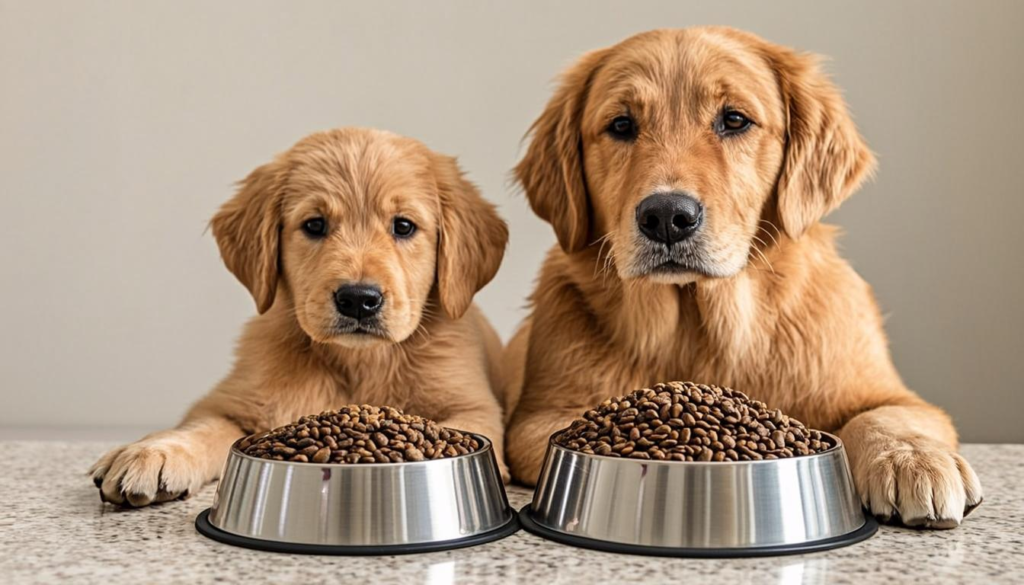
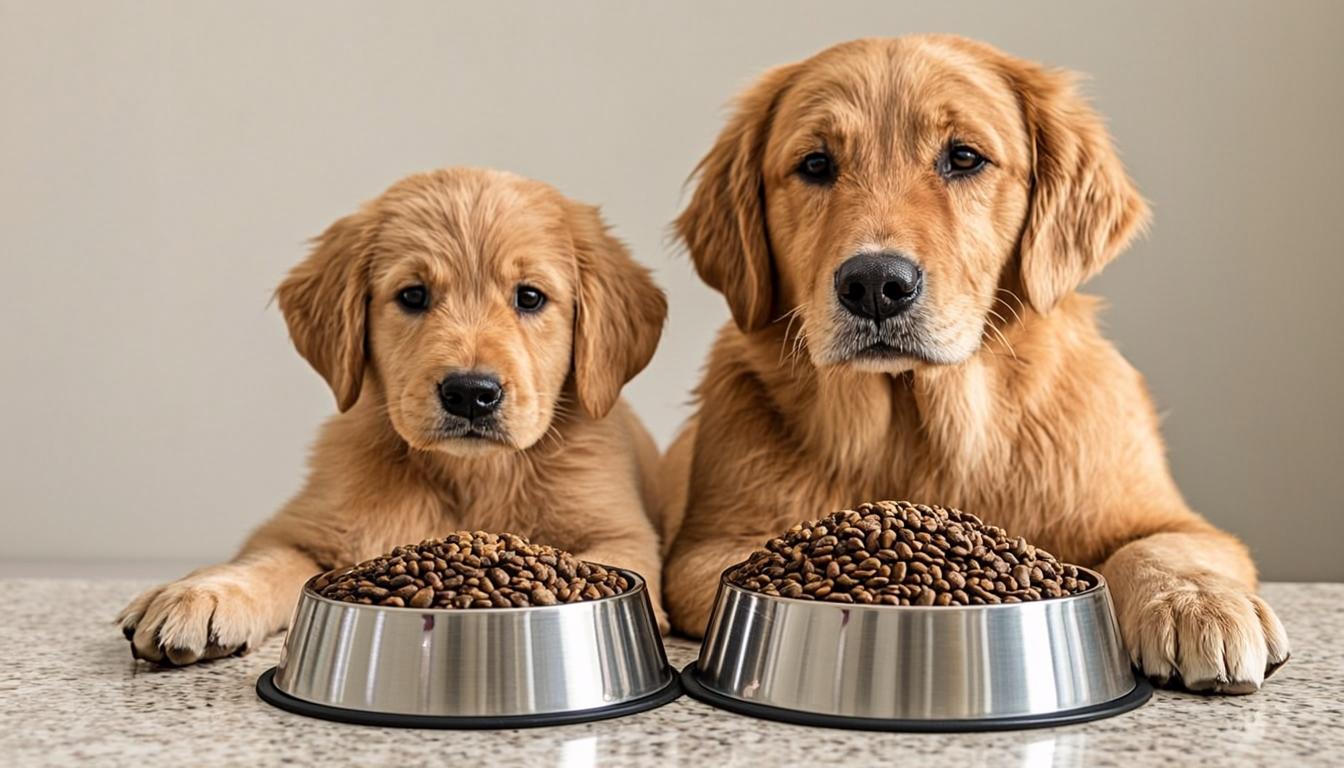
One of the most important decisions you’ll make as a puppy owner isn’t just which food to feed — it’s when to transition from puppy formula to adult dog food. Get the timing wrong, and you could be risking your dog’s long-term health. Switch too early, and your growing pup may miss out on vital nutrients for bone and muscle development. Switch too late, and you could be setting them up for weight gain, joint problems, and nutritional imbalances.
This complete guide covers everything you need to know about the puppy to adult food transition, including precise age recommendations for every breed size, a step-by-step transition plan, key nutritional differences between puppy and adult formulas, and expert advice from leading UK veterinary organisations. Whether you’re raising a tiny Chihuahua or a gentle giant Great Dane, we’ll help you get the timing exactly right.
For more background on feeding your growing pup, check out our puppy feeding guide, which covers portion sizes and schedules from weaning through to adulthood.
Why You Shouldn’t Keep Feeding Puppy Food Forever
It’s tempting to stick with puppy food — after all, your dog loves it, and it’s packed with extra nutrients. But puppy food is specifically engineered for rapid growth, and once your dog has reached skeletal maturity, those extra nutrients become more of a hindrance than a help.
The Risks of Excess Calcium and Phosphorus
Puppy food contains carefully calibrated levels of calcium and phosphorus to support healthy bone development during growth. Once your dog’s growth plates have closed and their skeleton is fully formed, continuing to feed high-calcium puppy food can lead to an imbalance. Excess calcium in adult dogs can contribute to bladder stones, kidney strain, and skeletal abnormalities, particularly in larger breeds where growth is already rapid and carefully controlled. According to the European Pet Food Industry Federation (FEDIAF), adult maintenance diets have significantly lower calcium requirements than growth formulas, and exceeding these can have serious consequences over time.
Weight Gain and Obesity
Puppy food is substantially more calorie-dense than adult dog food — typically containing between 10-25% fat compared to 8-18% in adult formulas. This extra energy is essential during the rapid growth phase, but once your dog stops growing, those surplus calories quickly convert to body fat. The PDSA estimates that over 40% of UK dogs are overweight or obese, and feeding puppy food to adult dogs is a contributing factor. Obesity increases the risk of diabetes, heart disease, arthritis, and certain cancers, and it can reduce your dog’s lifespan by up to two years.
Joint and Mobility Problems
Rapid weight gain from excess calories puts enormous strain on your dog’s joints, particularly in larger breeds that are already predisposed to conditions like hip dysplasia and osteoarthritis. By keeping your dog on puppy food beyond their growth phase, you’re essentially overloading their frame with unnecessary weight that their mature skeleton wasn’t designed to carry. The British Veterinary Association (BVA) highlights that maintaining a healthy weight throughout adulthood is one of the single most important things you can do for your dog’s joint health.
Protein Overload
Whilst adult dogs absolutely need protein for muscle maintenance, coat health, and immune function, the elevated protein levels in puppy food (often 25-30%) are unnecessary once growth is complete. Excess protein is metabolised and excreted through the kidneys, putting additional workload on these vital organs. For dogs with pre-existing kidney conditions — which can develop silently over time — this extra strain can be harmful. Adult dog food provides a more appropriate protein level of 18-25%, perfectly balanced for maintenance rather than growth.
When to Switch: A Comprehensive Guide by Breed Size
The single most important factor in determining when to switch your puppy to adult food is their expected adult size, not their age alone. Smaller breeds mature much faster than larger ones, and getting this right requires understanding how growth works across different breed categories. The following table provides a quick-reference guide, with detailed explanations for each category below.
| Breed Size | Examples | Age to Switch | Expected Adult Weight |
|---|---|---|---|
| Toy / Small (under 10kg) | Chihuahua, Pomeranian, Yorkshire Terrier, Maltese, Shih Tzu | 8–10 months | 1–10kg |
| Small / Medium (10–25kg) | Jack Russell, Cocker Spaniel, French Bulldog, Border Terrier, Beagle | 12 months | 10–25kg |
| Medium / Large (25–40kg) | Labrador Retriever, Border Collie, German Shepherd, Golden Retriever, Boxer | 12–15 months | 25–40kg |
| Giant (40kg+) | Great Dane, English Mastiff, Saint Bernard, Irish Wolfhound, Newfoundland | 18–24 months | 40kg+ |
Toy and Small Breeds (Under 10kg) — Switch at 8-10 Months
Toy and small breeds reach skeletal maturity remarkably quickly. A Chihuahua, for instance, will have completed the vast majority of its growth by just 6-7 months of age. By 8-10 months, most small breed dogs have fully closed growth plates and have reached their adult height and approximately 95% of their adult weight.
Why this age matters: Small breed puppies have an incredibly fast metabolic rate. They burn through calories rapidly and reach their full adult size in a fraction of the time it takes a large breed. Their growth plates (the soft cartilage at the ends of long bones that allow for growth) typically close between 6-9 months of age. Once these growth plates close, the puppy’s skeleton is essentially complete, and the additional calcium, calories, and nutrients in puppy food are no longer needed for bone development.
Signs your small breed is ready: Your puppy has reached their expected adult weight (check breed standards), their energy levels are stabilising rather than constantly spiking, they’re no longer visibly growing taller or longer, and their adult teeth are fully in place. You may also notice that their appetite has slightly decreased — a natural sign that their growth-fuelled hunger is tapering off.
Special considerations: Toy breeds are particularly prone to dental issues, so the transition to adult food is an excellent time to introduce kibble designed for smaller jaws if you haven’t already. Also, small breeds have tiny stomachs and fast metabolisms, meaning they may still need two meals per day even after transitioning. Be careful not to reduce portion sizes too aggressively — these little dogs can become hypoglycaemic (low blood sugar) if they go too long between meals.
Small and Medium Breeds (10-25kg) — Switch at 12 Months
Dogs in this category include some of the UK’s most popular breeds, including the French Bulldog, Cocker Spaniel, and Jack Russell Terrier. These breeds typically reach full skeletal maturity at around 12 months of age, making this the ideal time to transition to adult dog food.
Why this age matters: At 12 months, most dogs in the 10-25kg range will have achieved their full adult height, and their growth plates will have closed or be very close to closing. The rapid growth phase that characterised their first 8-9 months has slowed significantly, and their nutritional needs are shifting from “growth and development” to “maintenance and wellbeing.” According to the RSPCA, feeding appropriate portion sizes for your dog’s life stage is fundamental to responsible pet ownership.
Signs your medium breed is ready: Your dog has reached their breed-standard adult weight, their body proportions have stabilised (no longer looking “leggy” or “puppy-like”), they’ve settled into a more predictable activity pattern, and their stool consistency is regular and healthy on their current food.
Special considerations: French Bulldogs and other brachycephalic breeds in this category may benefit from staying on a slightly higher-quality puppy food for an additional month or two, as their slower development and predisposition to food sensitivities warrant a more cautious approach. Always discuss with your vet if you’re unsure. Similarly, working-breed types like Jack Russells and Border Terriers may have higher energy requirements even in adulthood, so consider choosing an adult food formulated for active dogs.
Medium and Large Breeds (25-40kg) — Switch at 12-15 Months
This category includes many of the UK’s most beloved breeds: Labradors, German Shepherds, Golden Retrievers, and Border Collies. These dogs take a bit longer to mature than their smaller counterparts, and the 12-15 month window is the sweet spot for making the switch.
Why this age matters: Large breed puppies undergo a prolonged growth period, and their growth plates may not fully close until 12-18 months of age. Switching too early — say at 9-10 months — means your dog is still actively growing but no longer receiving the nutrients optimised for that growth. However, waiting much beyond 15 months means continuing to feed calorie-dense, high-calcium food to a dog whose skeleton is essentially complete, unnecessarily increasing the risk of weight gain and joint strain.
Signs your large breed is ready: Your dog’s chest has broadened and deepened to its adult proportions, their height at the withers (shoulders) has stabilised, they’re no longer experiencing “growth spurts,” and your vet confirms that their growth plates are closing or have closed. Behaviourally, you may notice they’re calmer and more settled — the “lanky teenager” phase is passing.
Special considerations: Large breeds are the most susceptible to the negative effects of overfeeding during growth. Conditions like osteochondritis dissecans (OCD) and hip dysplasia are strongly linked to excessive calcium intake and too-rapid weight gain during the growth phase. This makes it absolutely critical to switch to adult food at the right time — not before, and certainly not well after. The Blue Cross recommends keeping large breed puppies lean during growth, ideally with a visible waist and easily palpable ribs.
Giant Breeds (40kg+) — Switch at 18-24 Months
Giant breeds are in a category of their own when it comes to growth and development. Great Danes, Mastiffs, Saint Bernards, and Irish Wolfhounds can continue growing well into their second year of life, and their nutritional needs reflect this extended development period.
Why this age matters: Giant breed puppies have the longest growth period of all dogs, sometimes not reaching full skeletal maturity until 18-24 months. Their growth plates are the last to close, and their bodies are building an enormous framework of bone, muscle, and connective tissue. Removing the extra nutrients provided by puppy food too early could compromise this final stage of development, potentially leading to weaker bones, less dense muscle mass, and inadequate joint support in a frame that will carry significant weight throughout adulthood.
Signs your giant breed is ready: Your dog’s weight has stabilised (they’re no longer gaining 1-2kg per week), their growth plates have been confirmed as closed by your vet (this can be verified via X-ray), their chest has filled out to its adult width, and their overall body condition is excellent — neither too thin nor carrying excess weight.
Special considerations: Giant breeds should ideally be fed large/giant breed-specific puppy food throughout their growth phase, as these formulas have carefully controlled calcium and phosphorus levels designed for the unique needs of rapidly growing giant skeletons. Regular puppy food often contains too much calcium for giant breeds, which can accelerate growth unnaturally and contribute to skeletal problems. When making the switch, choose a large breed adult formula that continues to support joint health with ingredients like glucosamine, chondroitin, and omega-3 fatty acids. See our guide to the best adult dog food in the UK for large breed recommendations.
Signs Your Puppy Is Ready for Adult Food
Beyond the general age guidelines by breed size, there are several specific physical and behavioural indicators that suggest your puppy is ready to transition to adult food. Monitoring these signs alongside the breed-specific timeline will help you choose the perfect moment for the switch.
Physical Signs
- Adult teeth are fully erupted: By 6-7 months, most puppies have their full set of 42 adult teeth. If all permanent teeth are in and the teething phase has passed, it’s a sign that the major developmental milestones are behind them.
- Height has stabilised: Your dog is no longer noticeably taller from week to week. You can track this by measuring their height at the withers (top of the shoulder blades) every couple of weeks. Once measurements stop changing, skeletal growth has largely ceased.
- Body proportions have matured: Puppies often go through an awkward “leggy” phase where they seem all legs and no body. Once their chest deepens, their body lengthens proportionally, and they take on their adult silhouette, they’re approaching maturity.
- Coat has changed: Many breeds undergo a coat change during adolescence, losing their soft puppy fluff and developing their adult coat texture. This typically coincides with the transition period.
- Weight has plateaued: Your dog’s weight gain has slowed from the rapid weekly increases of early puppyhood to more gradual, stabilising gains. If you’re weighing them regularly, the growth curve should be flattening out.
Behavioural Signs
- Decreased appetite: The insatiable hunger of early puppyhood often diminishes as growth slows. If your puppy is consistently leaving food in their bowl or seems less enthusiastic about meals, it may indicate their body no longer craves the extra calories of puppy food.
- Energy levels are more consistent: Puppies have famously erratic energy — explosive bursts followed by deep sleeps. As they mature, energy levels tend to become more steady and predictable throughout the day.
- Reduced destructive chewing: The intense chewing phase of puppyhood (driven by teething and jaw development) typically subsides by the time adult food transition is appropriate.
- Mental maturity: Your dog is more responsive to training, less easily distracted, and generally more settled in their behaviour. This correlates with the brain development that puppy food’s DHA and omega-3 content supports.
Body Condition Score
The body condition score (BCS) is a practical tool for assessing whether your puppy is at a healthy weight. The PDSA recommends a 9-point scale where 4-5 out of 9 is ideal. You should be able to feel (but not see) your dog’s ribs with light finger pressure, see a visible waist when viewed from above, and observe a tuck of the abdomen when viewed from the side. If your puppy is scoring 6 or above before you’ve made the switch, that’s a clear signal to transition to adult food sooner rather than later.
Puppy Food vs Adult Dog Food: Key Nutritional Differences
Understanding exactly what separates puppy food from adult dog food helps explain why the transition matters so much. These formulas are designed with fundamentally different goals: puppy food fuels rapid growth and development, whilst adult food supports long-term maintenance and health. The following table highlights the key nutritional differences.
| Nutrient | Puppy Food | Adult Dog Food | Why It Matters |
|---|---|---|---|
| Protein | 25–30% | 18–25% | Puppies need extra protein for muscle and tissue growth; adults need less for maintenance |
| Fat | 10–25% | 8–18% | Puppy food is more calorie-dense to fuel rapid growth and high energy needs |
| Calcium | 1.0–1.8% | 0.5–1.2% | Controlled calcium levels in puppy food support bone growth; excess in adults can cause problems |
| Phosphorus | 0.8–1.6% | 0.4–1.0% | Works with calcium in precise ratio for skeletal development |
| DHA (Omega-3) | Higher levels | Lower levels | DHA supports brain, eye, and cognitive development in growing puppies |
| Calorie Density | Higher (per 100g) | Lower (per 100g) | Puppies burn more energy proportional to their size; adults need maintenance calories |
| Fibre | Lower | Higher | Adults benefit from more fibre for digestive health and satiety |
| Glucosamine/Chondroitin | Varies | Often higher in adult/large breed formulas | Joint support becomes increasingly important as dogs age |
Protein Explained
Protein is the building block of every cell in your dog’s body, and puppies need significantly more of it because they’re literally building new tissue — muscle, bone, organs, skin, and coat — at an astonishing rate. High-quality animal protein (chicken, lamb, fish) should always be the primary ingredient in both puppy and adult food. The difference is one of degree rather than kind. Puppy food’s 25-30% protein provides the raw materials for growth, whilst adult food’s 18-25% provides enough for muscle maintenance, immune function, and healthy skin and coat without surplus that the body must process and eliminate.
The Role of DHA and Omega-3 Fatty Acids
DHA (docosahexaenoic acid) is a specific type of omega-3 fatty acid that plays an outsized role in puppy development. It’s a major structural component of the brain and retina, and research has shown that puppies fed diets rich in DHA demonstrate better trainability, improved memory, and enhanced visual development. Puppy foods are enriched with DHA from sources like salmon oil, fish oil, and flaxseed. Once your puppy’s brain and eyes have fully developed — which typically completes by around 12 months — the extra DHA is beneficial but no longer critical, which is why adult food contains lower levels.
Calcium and Phosphorus: The Growth Minerals
Perhaps the most important nutritional distinction between puppy and adult food is the calcium-phosphorus profile. These two minerals work in tandem to build strong bones and teeth, but the balance must be precise — especially in large and giant breeds. Too little calcium during growth leads to weak, brittle bones, whilst too much accelerates bone growth unnaturally and can cause developmental orthopaedic diseases. Puppy foods are formulated with specific calcium-to-phosphorus ratios (ideally between 1.2:1 and 1.4:1) optimised for controlled, healthy skeletal development. Adult foods have lower overall levels because the skeleton is complete and only maintenance mineralisation is needed.
How to Transition Your Puppy to Adult Food: Step-by-Step Plan
Making the switch from puppy to adult food should be a gradual process spread over 7-10 days. An abrupt change can upset your dog’s digestive system, causing diarrhoea, vomiting, wind, and reluctance to eat. Here’s the detailed transition plan we recommend.
The 7-Day Transition Schedule
| Day | Puppy Food | Adult Food | What to Watch For |
|---|---|---|---|
| Day 1-2 | 75% | 25% | Normal stools, good appetite, no vomiting |
| Day 3-4 | 50% | 50% | Stools should remain formed; slight softening is acceptable |
| Day 5-6 | 25% | 75% | Energy levels normal, coat condition maintained |
| Day 7+ | 0% | 100% | Fully transitioned — monitor for 48 hours |
For a more detailed look at safe food switching, our dedicated guide on how to switch dog food safely covers additional strategies including extended transitions for sensitive dogs and managing multiple changes at once.
Detailed Day-by-Day Guidance
Days 1-2: The Introduction
Begin by replacing just one quarter of your puppy’s usual meal with the new adult food. Mix it thoroughly so that the flavours and textures are blended — most dogs will simply eat the mixture without noticing the change. If your dog is particularly fussy, you can add a small amount of warm water to release the aromas and make both foods more appealing.
Days 3-4: The Halfway Point
By now, the ratio shifts to 50/50. This is the most critical point in the transition, as your dog’s digestive system is processing equal parts of two different formulas. Monitor their stools closely — some mild softening is completely normal as the gut microbiome adjusts to the new protein sources and fibre levels. However, if you notice severe diarrhoea, vomiting, or your dog refusing to eat entirely, slow the transition down. Go back to 75/25 for another day or two before trying to advance again.
Days 5-6: Almost There
Now your dog is eating 75% adult food and only 25% puppy food. At this stage, most dogs have adjusted well and their digestive system is comfortable with the new formula. Continue monitoring, but you should be seeing normal, well-formed stools and a healthy appetite. This is also a good time to start looking at the recommended portion sizes on the new adult food packaging, as they may differ from what you were feeding with the puppy formula.
Day 7+: Full Transition
Congratulations — your dog is now fully on adult food! Continue feeding the new formula exclusively and monitor their condition over the following weeks. You may need to adjust portion sizes slightly up or down based on your dog’s weight, activity level, and body condition. Remember that adult food is generally less calorie-dense, so you may need to feed a slightly larger volume to maintain the same calorie intake.
What to Do If Problems Arise
- Mild diarrhoea (soft but not watery): Slow the transition. Stay at the current ratio for an additional 2-3 days before progressing. Adding a spoonful of plain, unsweetened probiotic yoghurt can help support gut health.
- Severe diarrhoea or vomiting: Stop the transition immediately and revert to 100% puppy food. Once their digestion has returned to normal (typically 24-48 hours), restart the transition at a much slower pace — perhaps changing the ratio by just 10% every 2-3 days.
- Refusing to eat: Some dogs are sensitive to texture and smell changes. Try warming the food slightly, adding a small amount of low-salt chicken broth, or mixing in a tiny amount of their favourite treat. If your dog consistently refuses food for more than 24 hours, consult your vet.
- Excessive wind: This is common during transitions and usually resolves within a week. If it persists beyond the transition period, it may indicate that the new food doesn’t suit your dog’s digestive system, and you may need to try a different adult formula.
Best Adult Dog Food to Switch To
Choosing the right adult food is just as important as timing the transition correctly. The best adult food for your dog depends on their breed size, activity level, and any specific health considerations. Here are our recommendations, with detailed reviews available in our full guides.
Best Adult Food for Small Breeds
Small breed adult dogs benefit from kibble sized for smaller mouths, recipes that support dental health, and formulas with slightly higher calorie density (small dogs have faster metabolisms relative to their size). Look for foods with high-quality protein as the first ingredient, moderate fat content for energy, and added omega fatty acids for skin and coat health. Many premium brands including Royal Canin, James Wellbeloved, and Barking Heads offer excellent small breed adult formulas. For our full recommendations, visit our best adult dog food UK guide.
Best Adult Food for Medium Breeds
Medium breeds have the widest range of options available to them. Look for complete adult foods with 20-25% protein, 10-15% fat, and a healthy balance of vitamins and minerals. Brands like Harringtons, Skinner’s, and Naturediet offer excellent quality at different price points. If your medium breed dog is particularly active (think Springer Spaniels, working-type Collies, or terriers), consider a performance or active formula with slightly higher protein and fat to match their energy expenditure.
Best Adult Food for Large Breeds
Large breed adult dogs have specific nutritional needs that go beyond simply feeding more of a standard adult formula. Large breed adult foods typically contain glucosamine and chondroitin for joint support, controlled calorie levels to prevent weight gain, and larger kibble sizes that encourage slower eating and better digestion. Our best dry dog food UK guide includes detailed analysis of large breed options from brands like James Wellbeloved, Royal Canin, and Eukanuba.
For dogs approaching their senior years, it’s also worth familiarising yourself with the options in our best senior dog food guide, as the transition from adult to senior food will come around sooner than you might expect.
Common Mistakes When Switching
Even well-intentioned dog owners can make errors during this important transition. Here are the most common pitfalls and how to avoid them.
Switching Too Early
This is arguably the most dangerous mistake. Switching a puppy to adult food before they’ve finished growing means depriving them of the nutrients their developing body still needs. The consequences can be serious — stunted growth, weakened bones, poor muscle development, and compromised immune function. Always follow the breed-size guidelines and, when in doubt, err on the side of keeping your puppy on puppy food for a little longer rather than switching too soon. Your vet can assess your puppy’s growth plates and advise precisely.
Switching Too Abruptly
Dumping a whole bowl of new food in front of your dog with zero transition is a recipe for digestive disaster. A dog’s gut microbiome — the billions of beneficial bacteria that live in their digestive tract — needs time to adapt to new ingredients, protein sources, and nutrient profiles. An abrupt change can cause dysbiosis (imbalance of gut bacteria), leading to diarrhoea, vomiting, flatulence, and discomfort. Always follow the 7-10 day gradual transition, regardless of how healthy your dog seems.
Not Adjusting Portions
Adult food and puppy food have different calorie densities and different feeding guidelines. When you make the switch, don’t simply continue feeding the same volume you were giving with puppy food. Check the feeding guidelines on the new adult food packaging and calculate the appropriate portion for your dog’s current weight and activity level. You may need to feed slightly more volume (since adult food is less calorie-dense) or less (if your dog is already at a healthy adult weight and was previously eating calorie-rich puppy food).
Choosing the Wrong Adult Food for Breed Size
A Labrador shouldn’t eat small breed adult food, and a Chihuahua shouldn’t eat large breed adult food. Breed-size-specific formulas exist for good reason — they account for differences in metabolism, jaw size, kibble texture, joint support needs, and calorie requirements. Feeding a small breed formula to a large dog means they’d need to eat an impractically large volume to meet their calorie needs, whilst feeding a large breed formula to a small dog risks overfeeding and nutrient excess. Always match the adult food to your dog’s breed size.
Changing Food and Other Things Simultaneously
If your dog is also dealing with other changes — moving house, starting boarding, changing their exercise routine, or recovering from illness — it’s best to delay the food transition until things have settled. A dog’s digestive system is sensitive to stress, and piling a diet change on top of other disruptions increases the likelihood of problems. Time your transition for a period of relative stability in your dog’s routine.
Special Cases and Considerations
When to Keep Feeding Puppy Food Longer
There are circumstances where extending the puppy food period beyond the standard guidelines is appropriate and even recommended by veterinary professionals:
- Underweight puppies: If your puppy is below their ideal weight for their age and breed, continuing on puppy food (with its higher calorie density) for an additional 4-6 weeks can help them reach a healthier weight before transitioning. Work with your vet to monitor progress.
- Puppies recovering from illness or surgery: Illness, parasites, or surgical procedures can temporarily slow growth and deplete nutrient stores. These puppies benefit from the extra nutrition in puppy food during their recovery period.
- Large and giant breeds with slow maturation: Some individual dogs within large and giant breeds mature more slowly than average. If your vet determines that your dog’s growth plates haven’t closed by 15 months (large breeds) or 18 months (giant breeds), extending puppy food is the safest approach.
- Pregnant or nursing dogs: If your dog becomes pregnant during the transition period, or is nursing a litter, puppy food is actually the recommended diet. The increased calories, protein, and calcium support foetal development and milk production. The BVA recommends feeding puppy food to pregnant and nursing mothers from the third trimester through weaning.
Spaying, Neutering, and Food Transitions
Neutering (spaying or castrating) has a significant impact on your dog’s metabolism and energy requirements. After neutering, a dog’s metabolic rate typically decreases by 20-30%, meaning they need substantially fewer calories to maintain a healthy weight. If your puppy is neutered around the same time as the food transition, it’s important to adjust portion sizes accordingly — and perhaps consider a neutered dog-specific formula.
Many premium pet food brands now offer dedicated neutered dog formulas that are lower in calories and fat, higher in fibre (to promote satiety), and often include L-carnitine to support healthy fat metabolism. If your puppy is neutered before or during the transition to adult food, discuss these options with your vet. Even if you don’t switch to a neutered-specific food, you’ll likely need to reduce portion sizes by 10-20% compared to the feeding guidelines on standard adult food packaging.
Working Dogs and Active Breeds
Dogs from working lines — Springer Spaniels, Labradors bred for fieldwork, Collies from herding stock, and similar active breeds — often have significantly higher energy requirements than their show-line counterparts, even in adulthood. These dogs may benefit from an “active” or “performance” adult formula that provides higher protein (25-28%), higher fat (15-20%), and additional calories to fuel their active lifestyles. Alternatively, some working dog owners choose to keep their dogs on puppy food for slightly longer, as the extra calories and protein can support the demands of an active working life. This should be done under veterinary guidance and with regular body condition monitoring.
Frequently Asked Questions
Can switching to adult food too early harm my puppy?
Yes, switching too early can have genuine negative consequences. Your puppy’s body is still building bone, muscle, and tissue, and it relies on the specific nutrient profile of puppy food to do so. Removing these nutrients prematurely can result in incomplete skeletal development, reduced muscle mass, weaker immune function, and poor coat quality. The risks are most pronounced in large and giant breeds, where the growth period is extended. If you’re unsure whether your puppy is ready, always err on the side of continuing puppy food and consult your vet for an assessment.
What happens if I keep feeding puppy food to my adult dog?
Continuing to feed puppy food beyond your dog’s growth phase means they’re consuming excess calories, protein, calcium, and fat that their mature body no longer needs. Over time, this typically leads to weight gain and obesity, which in turn increases the risk of joint problems, diabetes, heart disease, and reduced lifespan. Excess calcium can contribute to bladder stones and kidney strain, whilst excess protein puts additional workload on the kidneys. It won’t cause immediate harm in the short term, but over months and years, the cumulative effect is significant.
How long does the transition from puppy to adult food take?
The standard transition period is 7-10 days, following the gradual mixing schedule outlined earlier in this guide. However, some dogs — particularly those with sensitive stomachs — may benefit from a slower transition of 10-14 days. The key principle is to change the ratio gradually enough that your dog’s digestive system can adapt without distress. There’s no prize for rushing it.
Should I change the feeding schedule when switching?
This depends on your dog’s age and the schedule you’ve been following. Young puppies typically eat 3-4 meals per day, which most owners gradually reduce to 2 meals per day by around 6 months. If you’re already on a twice-daily schedule, there’s no need to change it during the transition. If you’re still feeding 3 times daily, the transition to adult food is a good opportunity to drop to 2 meals per day, provided your dog is old enough and large enough to go 12 hours between meals without their blood sugar dropping. Small and toy breeds should always have at least 2 meals per day — fasting periods longer than 12 hours can be dangerous for tiny dogs.
My puppy has a sensitive stomach — how do I switch safely?
Dogs with sensitive stomachs need an even more gradual approach. Extend the transition to 10-14 days (or even longer if needed), and change the food ratio by just 10-15% every 2-3 days instead of 25% every 2 days. Consider adding a probiotic supplement during the transition to support gut health. Choose an adult food with similar ingredients to your puppy’s current food — if your puppy has been eating a chicken-based formula, switch to a chicken-based adult food rather than introducing an entirely new protein. If your dog has a diagnosed digestive condition, consult your vet before making any dietary changes.
Can I switch from wet puppy food to dry adult food?
Yes, you can absolutely switch between food formats during the transition. However, changing both the life stage and the food format simultaneously is a bigger adjustment for your dog’s digestive system. If you want to switch from wet puppy food to dry adult food, it’s best to do it in two stages: first transition from puppy to adult within the same format (wet puppy to wet adult), then gradually introduce the dry food. Alternatively, if you want to do it all at once, extend the transition to at least 14 days and monitor very closely for any digestive upset. Adding warm water to the dry adult food during the transition can soften the kibble and make it easier for your dog to adjust.
Do neutered dogs need different food?
Neutered dogs have reduced energy requirements due to hormonal changes that affect their metabolism. Most neutered dogs need 20-30% fewer calories than intact dogs of the same age and size. Many pet food manufacturers offer dedicated neutered dog formulas that are lower in fat and calories, higher in fibre, and supplemented with L-carnitine. If a neutered-specific food isn’t available, simply feed less of a standard adult formula and monitor your dog’s weight closely. Our best adult dog food guide includes options specifically designed for neutered dogs.
How do I know which adult food is right for my dog?
The right adult food depends on several factors: your dog’s breed size (small, medium, large, or giant), activity level (sedentary, moderate, or active), any known food sensitivities or allergies, and your budget. Key things to look for include a named meat protein as the first ingredient, compliance with FEDIAF nutritional guidelines, no artificial colours or preservatives, and an appropriate calorie content for your dog’s needs. Reading independent reviews and consulting your vet can also help narrow down the options. We’ve done extensive research to help — our best adult dog food UK guide covers all the top-rated options on the UK market.
Should I consult my vet before switching?
Whilst the general guidelines in this article apply to the vast majority of healthy dogs, consulting your vet is always a good idea — especially for first-time dog owners, dogs with known health conditions, and owners of large or giant breeds. Your vet can assess your individual dog’s growth progress, body condition, and overall health, and provide personalised advice on timing and food choice. The RSPCA recommends regular veterinary check-ups throughout your dog’s life, and the food transition period is an ideal time for a wellness examination.
Can large breed puppies eat regular puppy food?
Large breed puppies (those expected to weigh over 25kg as adults) should ideally eat a large breed-specific puppy food rather than regular puppy food. Large breed puppy formulas have carefully controlled levels of calcium, phosphorus, and calories designed to promote steady, controlled growth rather than rapid growth. Regular puppy food often contains too much calcium and too many calories for large breed puppies, which can accelerate bone growth and contribute to developmental orthopaedic diseases like osteochondrosis, hypertrophic osteodystrophy (HOD), and hip dysplasia. The difference in calcium content between regular and large breed puppy food may seem small on the label, but the impact on a rapidly growing large breed skeleton is significant.
Final Verdict: Key Takeaways
The transition from puppy to adult dog food is one of the most significant dietary changes your dog will go through, and getting it right sets the foundation for a lifetime of good health. Here’s a quick-reference summary of everything we’ve covered.
| Key Point | Summary |
|---|---|
| Toy / Small breeds | Switch at 8-10 months; these dogs mature fastest |
| Small / Medium breeds | Switch at 12 months; the standard benchmark for most dogs |
| Medium / Large breeds | Switch at 12-15 months; allow full skeletal maturity |
| Giant breeds | Switch at 18-24 months; the longest growth period of all |
| Transition method | 7-10 day gradual transition (extend to 14 days for sensitive dogs) |
| Key risk of switching too early | Incomplete bone and muscle development |
| Key risk of switching too late | Obesity, joint strain, and nutritional imbalance |
| Post-neutering adjustment | Reduce calories by 20-30% or switch to neutered-specific formula |
| Most important nutrient difference | Calcium and phosphorus levels (critical for large breeds) |
| Golden rule | When in doubt, keep your dog on puppy food a little longer and consult your vet |
Remember, every dog is an individual, and these guidelines are exactly that — guidelines. Your dog’s specific needs may vary based on their genetics, health status, activity level, and individual growth pattern. The best thing you can do as a responsible pet owner is to monitor your dog’s growth and body condition regularly, follow the gradual transition process, and work with your vet to make informed decisions about their nutrition.
For further reading, explore our other guides including the best puppy food UK roundup, our best wet puppy food reviews, and the best dry dog food for all life stages. Your dog deserves the very best nutrition at every stage of their life, and we’re here to help you provide it.
Always consult your veterinary surgeon before making significant changes to your dog’s diet, especially if your dog has any known health conditions, allergies, or is currently receiving medical treatment. The information in this guide is for educational purposes and should not replace professional veterinary advice.