
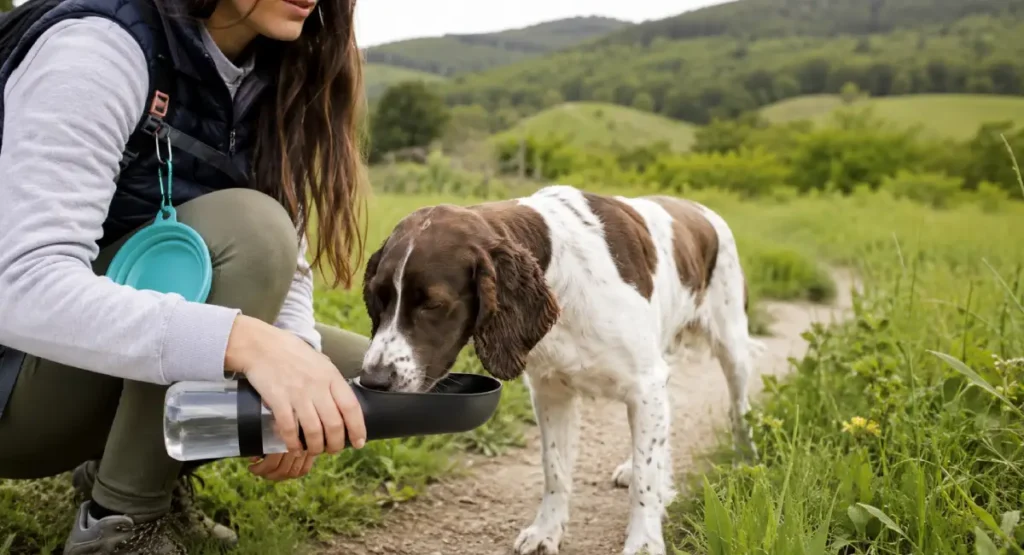
A couple of years ago I took my spaniel on a 10-mile walk along the South Downs in July. Brilliant day, great views, dog loved it. Halfway through, I realised I had forgotten her water bottle. The nearest tap was four miles away. She was panting hard, her gums were getting sticky, and I was genuinely worried.
It was a good thing that other people also came for a walk with their dogs. Seeing the condition of my dog, other owners helped me and then I realized how important a water bottle is for a dog.
Most UK dog owners have been in a similar situation. You are out walking, the weather is warmer than expected, and your dog needs water but there is none around. Pubs and cafes are hit or miss with dog bowls. Streams are not always safe or accessible. Carrying a proper portable dog water bottle solves this problem completely, and it costs about the same as a couple of coffees. At dogfoodsuk.com we spend a lot of time talking about what goes into your dog’s bowl at home. But what about when you are out and about? Hydration on the go matters just as much as good nutrition, and the right gear makes it easy.
This guide covers everything you need to know about portable dog water bottles and travel bowls in the UK. Which ones actually work, which are a waste of money, how much water your dog really needs on a walk, and how to keep the whole thing clean and hygienic. No fluff, no sponsored nonsense, just honest advice based on real use.
Why hydration matters for dogs on the go
Dogs cool themselves primarily through panting. Unlike humans, they do not sweat across their bodies. Panting works by evaporating moisture from the tongue, mouth, and upper respiratory tract. Every pant expels water from your dog’s body. On a warm day, or during vigorous exercise, that water loss adds up fast. A dog exercising in moderate heat can lose 1 to 2% of their body weight in water within an hour. That does not sound like much, but even a 2% loss starts to affect their performance and wellbeing. At 5% loss, you are looking at genuine dehydration with visible symptoms.
The PDSA lists dehydration as one of the most common preventable problems they see in dogs during warmer months. The symptoms are easy to miss if you are not looking for them. Lethargy, dry gums, excessive panting that does not stop after resting, sunken eyes, and loss of skin elasticity are the main signs. You can check skin elasticity by gently pinching the skin on the back of your dog’s neck. If it snaps back immediately, they are fine. If it stays tented for a second or two, they are dehydrated and need water right now.
Dehydration is not just a summer problem either. Dogs can become dehydrated in cold weather too, especially during energetic walks where they are running and playing. The cold air is often dry, which increases moisture loss through breathing. And dogs do not always feel thirsty in cold conditions, so they might not drink even when water is available. This is where having a portable dog water bottle that you actively offer to your dog makes a real difference.
Puppies are especially vulnerable. Their bodies have a higher water content than adult dogs, and they lose water faster. Senior dogs are also at higher risk because their ability to concentrate urine and conserve water declines with age. Brachycephalic breeds like Pugs, French Bulldogs, and Bulldogs are another group to watch. Their shortened airways mean they pant less efficiently and have to work harder to cool down, which uses more energy and more water. If you own any of these dogs, carrying water on walks is not optional. It is essential.
The Blue Cross recommends offering water to your dog every 20 to 30 minutes during walks in warm weather. That is easy to do if you have the right bottle and bowl with you. Trying to cup water in your hands or letting them drink from a puddle is not the same thing. A portable dog water bottle gives you a clean, controlled way to hydrate your dog wherever you are.
How much water does your dog actually need
The general rule is that dogs need roughly 50 to 60ml of water per kilogram of body weight per day. A 10kg terrier needs about 500 to 600ml daily. A 30kg Labrador needs 1.5 to 1.8 litres. A 5kg Chihuahua needs about 250 to 300ml. These are baseline figures for a moderately active dog at a comfortable temperature. On a hot day, or during a long walk, that requirement can double.
But daily intake is not the number that matters when you are out walking. What matters is how much water your dog needs during the walk itself. A good starting point is to offer 100 to 200ml per hour of moderate walking, depending on the dog’s size and the weather. Large breeds and those with thick coats need more. Small dogs and short-haired breeds need slightly less. If your dog is running off lead and playing with other dogs, bump that up. They are working a lot harder than you are on the lead.
A practical approach is to carry more water than you think you need. A 500ml bottle is enough for a short walk with a small dog. For anything over an hour, or for larger dogs, you want a litre or more. I carry two bottles on long walks: one for drinking and one spare. It weighs almost nothing and means I never run out. The RSPCA advises that you should always carry water for your dog on walks, even in cooler weather, because dehydration can happen faster than most owners realise.
If your dog is eating a dry food diet, they will need more water than a dog on wet food. Dry kibble contains roughly 10% moisture, compared to 70 to 80% in wet food. That difference has to come from somewhere, and drinking water is how your dog makes it up. If you are feeding your dog a good quality dry food, which we cover in our dry dog food guide, then making sure they have constant access to fresh water is even more important.
Watch your dog’s behaviour during walks. If they are lagging behind, panting with their tongue hanging out further than usual, or seeking shade, they probably need water. Some dogs will actively seek out streams and puddles to drink from, which is a clear sign they are thirsty. Offer water before they get to that point. Prevention is easier than dealing with a dehydrated dog.
Types of portable dog water bottles
Not all dog water bottles are the same. The market has expanded a lot in the last few years, and there are now several distinct types. Each has strengths and weaknesses, and the right one depends on your dog, your walking habits, and how much you are willing to carry.
All-in-one bottles with attached bowls
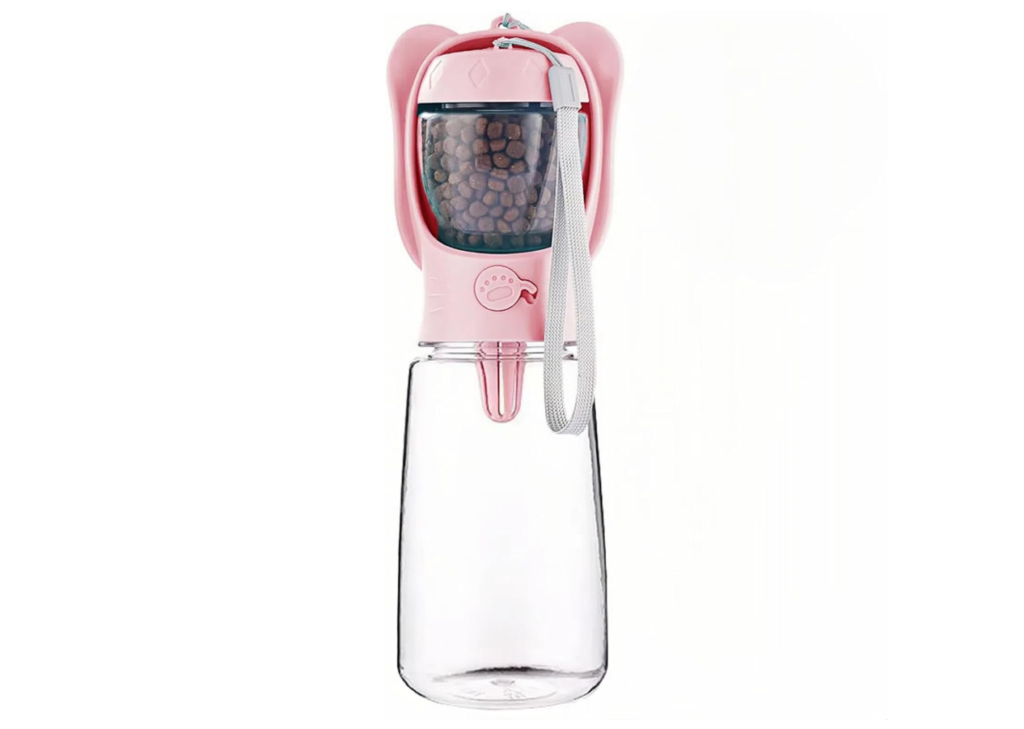
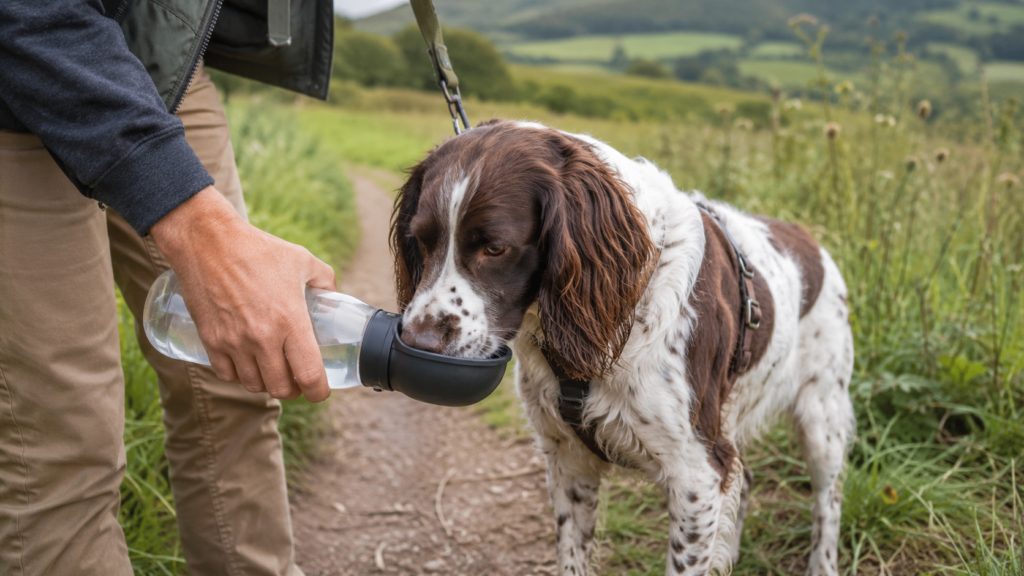
These are the most popular type and probably what most people picture when they hear “portable dog water bottle.” The bottle has a trough or bowl built into the lid or the side. You press a button or squeeze the bottle, and water flows into the trough. The dog drinks from the trough. Any water they do not drink flows back into the bottle when you release the button, so nothing is wasted. It is a clever design that works well in practice.
The main advantage is convenience. You do not need a separate bowl. Everything is in one unit, so there is less to carry and less to lose. These bottles are usually leak-proof when closed, which means you can throw them in a bag without worrying about everything getting wet. They come in various sizes, from 250ml up to about 800ml.
The downside is that the troughs are often quite small. Large dogs with wide muzzles can struggle to drink from them comfortably. The flow-back mechanism also means that saliva goes back into the bottle, which some owners find unhygienic. And if the mechanism gets sticky or clogged with dog hair, it stops working smoothly. A good clean after every few uses keeps this from becoming a problem.
Squeeze bottles with separate collapsible bowls
This is the system a lot of walkers and hikers prefer. You carry a standard water bottle, either a dedicated dog one or just a regular bottle, and you pair it with a lightweight collapsible bowl. When your dog needs water, you pour some into the bowl. When they are done, you fold the bowl flat and keep walking.
The advantage here is flexibility. The bowl gives your dog a proper drinking surface, which is more natural for them and works for dogs of all sizes. You can also use the bowl for food if you need to. The bottles tend to be simpler and more durable because they do not have any moving parts or flow mechanisms. Cleaning is straightforward: wash the bottle, wash the bowl, done.
The downside is that you are carrying two things instead of one, and you have to manage the pouring. On a windy day, water can go everywhere. If your dog is a messy drinker, you might end up with a wet bag. But for most people, the trade-off is worth it for the improved drinking experience and the ease of cleaning.
Standard water bottles with clip-on bowl attachments
Some bottles come with a carabiner clip and a shallow bowl that clips directly onto the bottle neck. It is a middle ground between the all-in-one designs and the separate bowl system. The bowl stays attached to the bottle when not in use, so you do not lose it, but it detaches when you need it for drinking.
These are decent but not as popular as the other two types. The clip mechanism can be fiddly, especially with cold or wet hands. The bowls tend to be quite small. And you still have the issue of managing a separate component. They work, but the other options are generally better.
Travel water dispensers
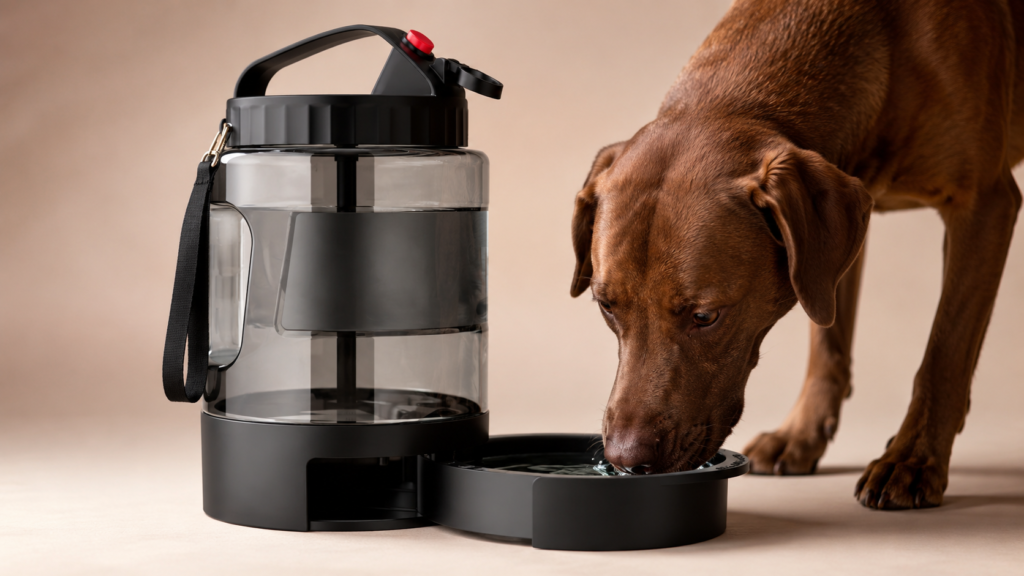
These are larger containers, often holding 2 to 4 litres, designed for longer trips, days out, camping, or multi-dog households. They usually have a wide base and a flip-up drinking trough. You fill them at home or at a tap, carry them in the car or a larger bag, and set them down when your dog needs a drink.
These are not really walk bottles. They are too heavy and bulky for that. But if you are going to the beach for the day, spending a Saturday at the park, or taking your dog on a camping trip, a larger dispenser is a good investment. They mean you have enough water for the whole day without needing to find a tap.
Collapsible and silicone travel bowls
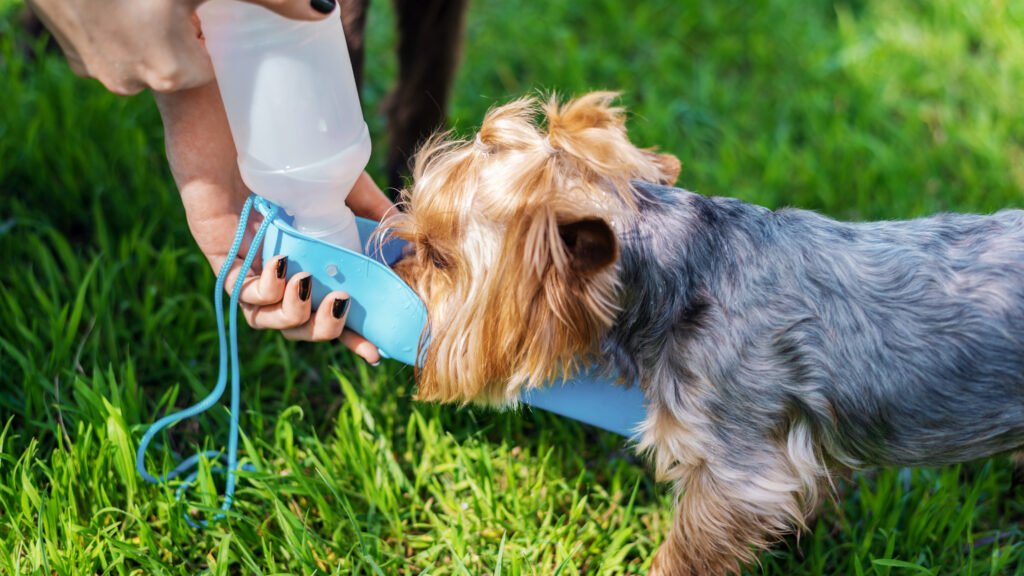
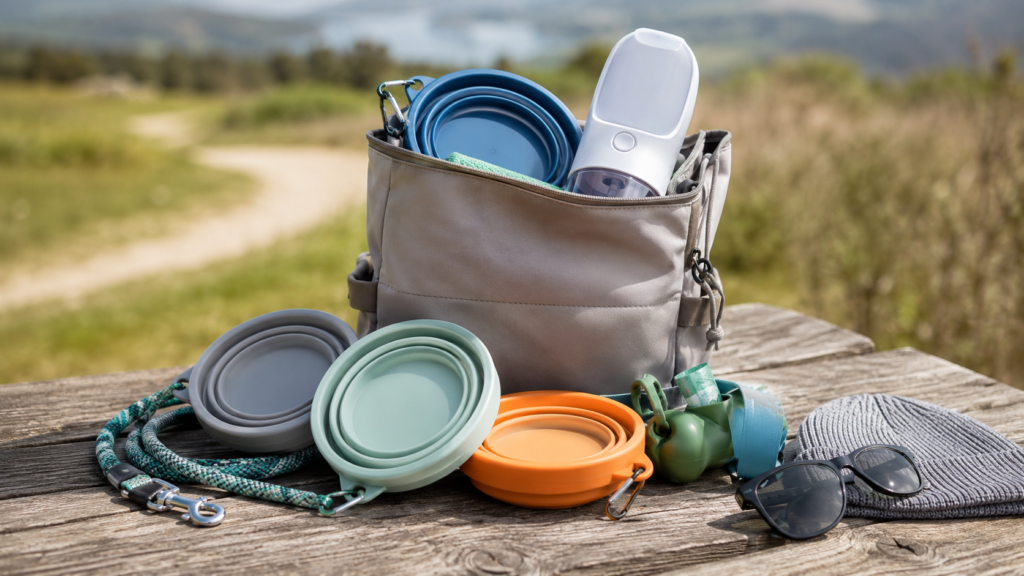
Travel bowls deserve their own section because they are so useful. Even if you use an all-in-one bottle, having a collapsible bowl in your bag opens up options. You can use it for water if your bottle runs out and you find a tap. You can use it for treats or food. You can use it to hold water for cleaning muddy paws before getting back in the car. At £5 to £10, there is no reason not to carry one.
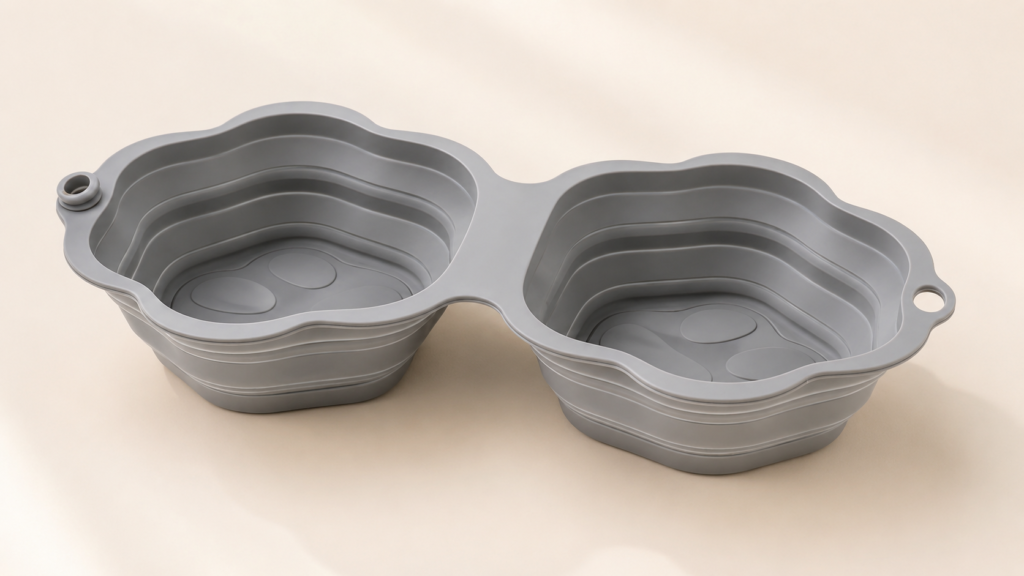
Silicone travel bowls are the most common type. They are made from food-grade silicone, which is flexible, durable, and safe for dogs. They fold flat to about 2cm thick and weigh almost nothing. Pop one in your walking bag or jacket pocket and you will forget it is there until you need it. They come in various sizes, from small cups for tiny dogs up to large bowls that hold 1.5 litres or more.
The best silicone bowls have a rigid rim that holds their shape when expanded. Cheaper versions can collapse inward when the dog pushes their nose into them, which is annoying. Look for bowls with a slight lip or edge that keeps them open. Bright colours are also worth choosing because they are easier to spot if you set the bowl down on grass or mud and momentarily look away.
Fabric travel bowls are another option. These are usually made from nylon or canvas with a waterproof lining. They fold or roll up, and some have a carabiner clip for attaching to a bag or lead. They are lighter than silicone but less rigid, and the fabric can retain smells over time, especially if you use them for food. Silicone is generally the better choice for most people.
Hard plastic travel bowls exist too, but they are less popular for walks because they do not collapse. They are more of a permanent fixture for the car boot or a kennel. If you want something that lives in your car permanently, a hard plastic bowl is fine. For walking, go with silicone.
Brands to look at include Alfie, Outward Hound, and Ruffwear. All make decent collapsible bowls at reasonable prices. Amazon UK sells them in packs of two or three, which is handy if you have multiple dogs or want to keep one in the car and one in your walking bag.
Best portable dog water bottles reviewed
I have tested a range of bottles over the past year, both on regular daily walks and on longer hikes. Here are the ones that stood out, along with honest assessments of what they do well and where they fall short.
MalsiPree Dog Water Bottle
Best for: Everyday walks with small to medium dogs.
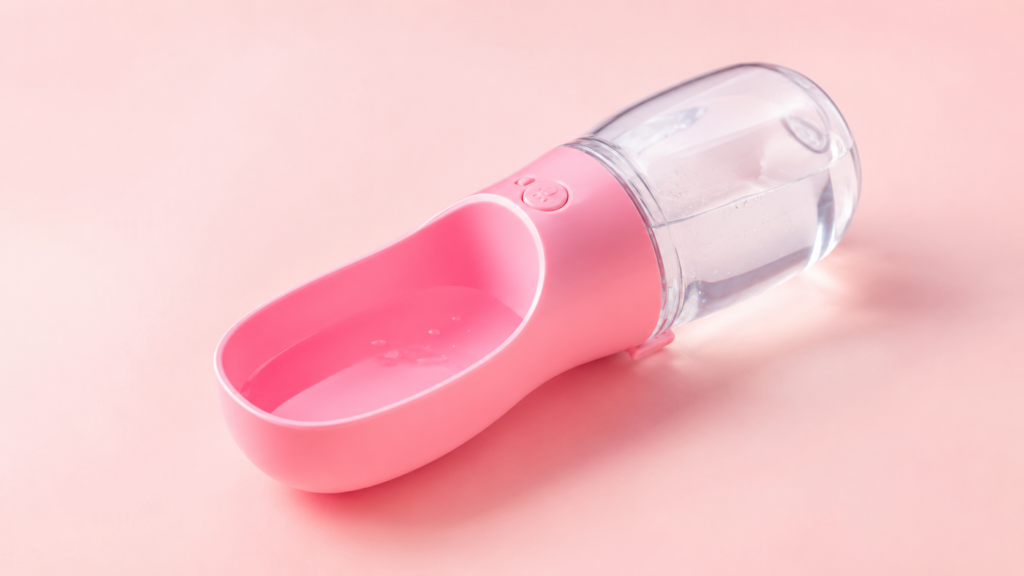
The MalsiPree is one of the most popular portable dog water bottles on the UK market, and for good reason. It has a simple squeeze design with a trough attached to the lid. You fill the bottle, hold it at an angle, and squeeze. Water flows into the trough. When your dog has finished drinking, you hold the bottle upright and the remaining water drains back in.
It works well. The flow is controlled and not too fast, which means your dog can actually drink rather than just getting a face full of water. The leak-proof seal is genuinely effective. I have carried this bottle in a rucksack on multiple walks without a single leak. It comes in several sizes, with the 550ml and 350ml versions being the most practical for walking.

The trough is a reasonable size for small and medium dogs. Large breeds with wide muzzles, like Retrievers and Mastiffs, might find it a bit cramped. My spaniel drinks from it comfortably. My mate’s Labrador manages but looks slightly ridiculous doing it. The build quality is decent. The plastic is BPA-free and feels solid enough to survive being dropped on a path a few times. The one-handed operation is genuinely useful when you are also holding a lead.
You can pick up a MalsiPree from Amazon UK for around £10 to £15, depending on the size. That is excellent value for a bottle that does exactly what it promises. Replacement lids are also available if the mechanism wears out over time.
Downside: The flow-back mechanism means saliva goes back into the bottle. You need to clean it thoroughly and regularly, especially in warm weather when bacteria multiply faster. The trough is also quite shallow, which means enthusiastic drinkers can splash water out of it.
Lesotc Portable Dog Water Bottle
Best for: Dog owners who want a bottle and bowl combo at a budget price.
Lesotc makes a portable dog water bottle that comes with a detachable drinking bowl. The bottle itself is a standard squeeze bottle with a one-touch valve. You press the button, water flows into the attached bowl, and the dog drinks. The bowl is wider than the MalsiPree trough, which makes it more comfortable for medium and large dogs.
The design is straightforward and it works. The bottle holds 500ml, which is enough for most walks, and the seal is reliable. I have not experienced any leaking issues with mine. The valve mechanism is simple and does not seem to clog easily. The bottle comes with a lanyard and a carabiner clip, which is a thoughtful touch for carrying it on a bag or belt loop.

The wider bowl is the main advantage over the MalsiPree for larger dogs. My mate’s Labrador definitely prefers drinking from the Lesotc because he can get his whole muzzle in. The build quality is acceptable for the price, though the plastic feels slightly thinner than the MalsiPree. Not a problem in normal use, but I would be less confident about it surviving a really hard drop onto concrete.
The Lesotc is available on Amazon UK for around £8 to £12, making it one of the more affordable options. Good value if you want something functional without spending much.
Downside: The bowl attachment feels a bit flimsy. The plastic clip that connects the bowl to the bottle is the weakest point, and I can see it breaking after extended use. The flow-back feature also works less smoothly than on the MalsiPree. Some water tends to stay in the bowl rather than draining back, which means you lose a bit each time.
Ruffwear Quench Bowl
Best for: Walkers, hikers, and owners who want a durable travel bowl from a reputable outdoor brand.

Ruffwear is an American company that makes serious outdoor gear for dogs, and the Quench Bowl is one of their most popular products. It is a collapsible bowl made from food-grade silicone with a reinforced rim. It holds about 1.4 litres, which is plenty for a drinking break. When collapsed, it is about 2.5cm thick and easily slips into a bag or pocket.
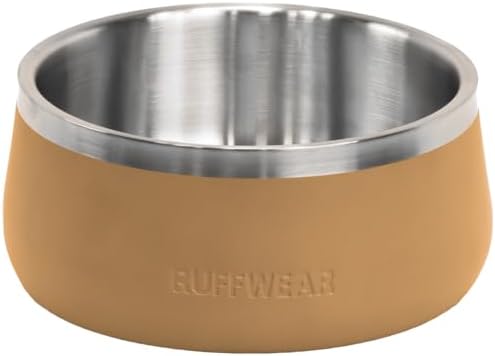


The Quench Bowl is not a bottle, so you need to pair it with a separate water source. That is fine for most people. The quality of this bowl is noticeably higher than the cheaper silicone options. The rim holds its shape well, even when a large dog is pushing against it. The base is stable enough that the bowl does not tip over easily on uneven ground. And the silicone is thick and durable. Mine has been used for over a year and shows no signs of wear.
This bowl also doubles as a food bowl, which is handy on longer trips. I have used it for meals on camping trips and it works perfectly. The smooth interior surface makes it easy to clean, and it is dishwasher safe. Ruffwear also makes a smaller version called the Quench Cinch, which has a drawstring closure for transporting water. That one is less useful for walks but good for the car or campsite.
The Ruffwear Quench is available from Amazon UK for around £15 to £20. More expensive than generic silicone bowls, but the build quality justifies the price if you walk regularly. Ruffwear gear lasts.
Downside: It is just a bowl. You need your own water bottle. And at 1.4 litres capacity, the expanded bowl is quite large for very small dogs who only need a small amount of water. The smaller Ruffwear Bivy Bowl might be a better choice for toy breeds.
H2O4K9 Stainless Steel Dog Bottle
Best for: Owners who want a rugged, long-lasting bottle and do not mind paying more for quality.
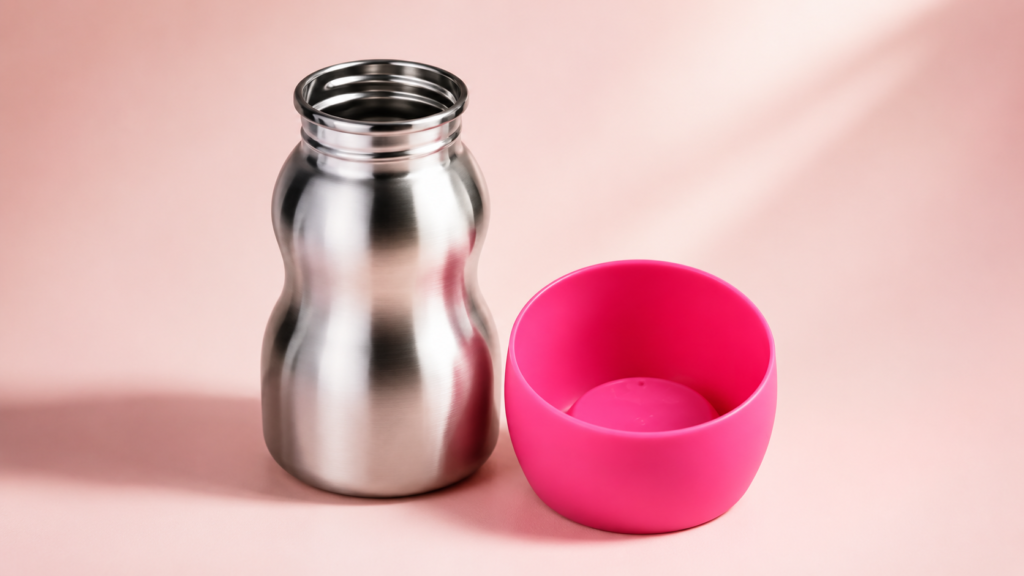
The H2O4K9 is a different animal entirely. It is a stainless steel bottle, similar in shape to a standard cycling water bottle, with a screw-on lid that has an attached drinking trough. You fill it, tip it, and water flows into the trough. There is no flow-back mechanism, so any water your dog does not drink stays in the trough. You tip the excess out or let them come back for another go.

The stainless steel construction is the standout feature. This thing is tough. I have dropped mine on rocks, roads, and paving slabs, and it barely has a scratch. It will outlast any plastic bottle on the market. The steel also means no plastic taste or smell, which some dogs are sensitive to. And it keeps water cooler for longer on warm days, which is a nice bonus.
The capacity is 750ml, which is generous. The trough is a decent size and works for most medium to large dogs. Small dogs can drink from it too, they just might not need as much water as the trough can hold at one time. The bottle is wider than most plastic options, which makes it easier to fill at a tap and easier to clean.
You can buy the H2O4K9 from Amazon UK for around £18 to £25. That is more expensive than the plastic alternatives, but you are paying for durability. This bottle will last for years.
Downside: It is heavier than plastic bottles. Stainless steel has weight. On a long hike, every gram counts, and this bottle is noticeably heavier than the MalsiPree or Lesotc. The lack of flow-back means you will waste some water if your dog does not finish what is in the trough. And the screw-on lid takes two hands, which is inconvenient when you are also managing a lead and a distracted dog.
How to choose the right bottle and bowl
Picking the right portable dog water bottle comes down to a few practical considerations. Think about these before you buy and you will end up with something that actually works for your situation rather than something that sits in a cupboard.
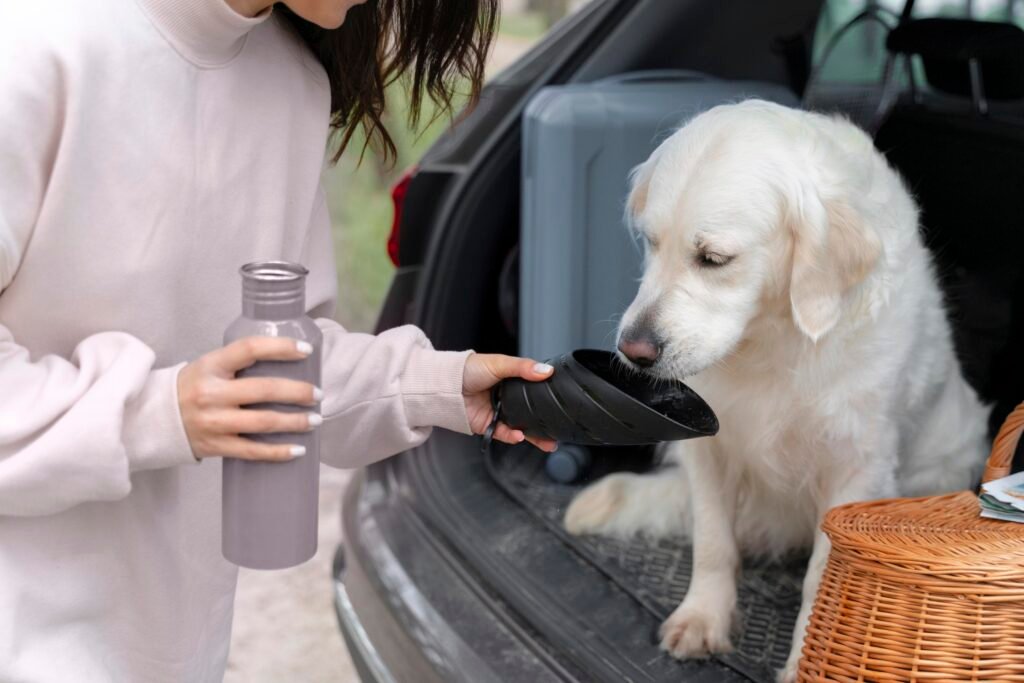
Dog size. Small dogs need less water but often prefer a smaller drinking surface. A 350ml bottle with a small trough is plenty for a Yorkshire Terrier on a 45-minute walk. Large dogs need more water and a wider trough. A 500ml or 750ml bottle, or a bottle paired with a separate collapsible bowl, works better for Labradors, German Shepherds, and similar breeds. If you have multiple dogs of different sizes, a bottle plus a separate collapsible bowl is the most flexible option.
Walk length. For short walks around the block or to the local park, a smaller bottle is fine. You are never far from home. For longer walks, hikes, or days out, you want more capacity. Carry at least 500ml per dog for anything over an hour. A separate bottle for yourself is a good idea too, especially in summer.
Carrying method. How are you going to carry it? If you walk with a rucksack, size and weight matter less. If you walk with just a lead and your pockets, you want something compact and light. A lot of bottles come with carabiner clips or lanyards for attaching to bags or belts. Think about where it will live on your walks and buy accordingly.
Cleaning and maintenance. Bottles with moving parts, like the flow-back mechanisms on the MalsiPree and Lesotc, need more cleaning attention than simple squeeze bottles or a bottle plus separate bowl. If you cannot be bothered with regular deep cleaning, go for a simpler design. Stainless steel bottles like the H2O4K9 are the easiest to keep clean because there are no crevices where bacteria can hide.
Budget. You do not need to spend a lot. A functional bottle and bowl setup can cost under £15. Paying more gets you better build quality, more durability, and sometimes better design features. But the basic function of delivering water to your dog is the same across the price range.
Cleaning and maintenance
Keeping your dog’s water bottle and bowl clean is more important than a lot of owners realise. A bottle that is not properly cleaned becomes a breeding ground for bacteria, algae, and biofilm. That slimy feeling on the inside of a water bottle? That is a biofilm, and it is gross. Your dog is drinking from it every time you offer water.
The basics are straightforward. Rinse the bottle and bowl after every use. If you used it with water only, a thorough rinse with clean water is usually enough. If you used the bowl for food or your dog left saliva in the bottle, wash it with warm soapy water. Use a bottle brush for the inside of the bottle. Most bottles come with one, or you can buy one for a couple of pounds. The brush matters because a quick rinse does not reach the corners and crevices where bacteria build up.
For a deeper clean, do it once a week. Dissolve a sterilising tablet, the kind used for baby bottles, in water and fill the bottle and bowl with the solution. Leave it for 15 minutes, then rinse thoroughly. Milton tablets are widely available in the UK and cost about £5 for a pack of 28. They kill bacteria effectively and do not leave a taste. Alternatively, a solution of one part white vinegar to three parts water works well. Vinegar is cheap, safe, and breaks down biofilm nicely.
If your bottle has a flow-back mechanism, pay special attention to the valve and the trough. These are the parts that get the dirtiest because they have direct contact with your dog’s mouth and the water that flows back in. Use a small brush or a cotton bud to clean the valve opening. If the valve gets sticky, it will not work properly, and you will end up with a leaky bottle or one that does not dispense water when you squeeze it.
Let everything air dry completely before putting it away. A bottle stored while still damp will grow mould and bacteria faster. Prop the bottle upside down on a draining rack or kitchen towel. If you are in a hurry, give it a quick shake to remove most of the water and leave the cap off until you get home.
Replace bottles that show signs of wear. Scratches on the inside of plastic bottles create more surface area for bacteria to cling to. Discoloured plastic, especially if it has turned cloudy or yellow, is past its best. The flow mechanisms on all-in-one bottles do wear out eventually. If your bottle is leaking, dispensing water unevenly, or the valve is sticking, it is time for a new one. A decent bottle costs under £15. Do not compromise your dog’s health to save a few quid.
If your dog is fed a good quality diet and has access to clean water at home, keeping their on-the-go kit clean is the logical next step. Check out our dry dog food recommendations for nutrition advice, and consider a pet water fountain at home to encourage drinking between walks.
Winter hydration tips for UK dog owners
Winter in the UK brings its own hydration challenges. The temperature drops, the days get shorter, and a lot of owners assume their dogs need less water because they are not as hot. That assumption is wrong. Dogs still need adequate water in winter, and in some ways, winter dehydration is more dangerous because the signs are easier to miss. Your dog is not panting heavily, they are not seeking shade, and you might not realise they are dehydrated until it has gone far enough to cause problems.
Cold air is dry air. When your dog breathes in cold, dry air on a winter walk, their body loses moisture with every breath. Running and playing in cold conditions causes significant water loss through respiration. If your dog is exercising hard in winter, they can become dehydrated just as easily as in summer, possibly more so because they are less likely to stop and drink voluntarily.
Carrying a portable dog water bottle in winter is just as important as in summer, but there are a few practical issues to deal with. Water in a bottle can freeze if the temperature drops below zero. A stainless steel bottle like the H2O4K9 conducts cold more than a plastic one, so the water inside freezes faster. Plastic bottles provide a bit more insulation but are still not immune to freezing on really cold days.
A simple trick is to carry the bottle inside your jacket, close to your body, rather than in an outside pocket or bag. Your body heat will keep it from freezing. Alternatively, you can fill the bottle with warm (not hot) water before you leave the house. It will cool down to a pleasant drinking temperature by the time your dog needs it, and it takes longer to freeze. Insulated bottle covers, the kind used for cycling water bottles, also work and cost about £5.
Do not let your dog drink from frozen puddles, snow, or ice. I know dogs love crunching on snow, and a small amount is harmless. But eating snow as a water source is dangerous. It lowers their core body temperature, which is the last thing you want in winter. Snow and ice can also contain antifreeze, road salt, and other contaminants that are toxic to dogs. Antifreeze in particular is lethal to dogs even in tiny amounts, and it tastes sweet so dogs are attracted to it. Always carry your own water.
If your dog has a water fountain at home, which we recommend for keeping your dog hydrated between walks, check it regularly in winter. Some fountains have parts that can be affected by cold drafts near doors or windows. Read our dog water fountain guide for specific product recommendations and maintenance tips.
Offer water more frequently in winter. Because your dog might not show obvious signs of thirst, do not wait for them to ask. Offer water every 20 to 30 minutes on longer walks, just as you would in summer. If they do not want it, fine. But make sure the option is there.
Where to Buy Portable Dog Water Bottles in the UK
Amazon UK is the most convenient option for buying portable dog water bottles and travel bowls. They stock all the bottles mentioned in this guide, plus dozens of other brands and options. Delivery is fast with Prime, and the review system is useful for checking whether a product actually lives up to its claims. Prices are competitive, and Amazon frequently runs deals on pet gear, especially in the spring and summer months. Search for “portable dog water bottle” and filter by average customer review to find the best-rated options.
Pets at Home, the UK’s largest pet retailer, stocks a range of portable bottles and travel bowls in their larger stores and on their website. The selection is smaller than Amazon, but if you want to see and handle a product before buying, this is your best high-street option. They also sell collapsible silicone bowls and travel accessories in store, which is handy if you need something immediately. Prices are generally fair, though you might pay slightly more than online.
Online pet retailers like VetUK, zooplus, and PetPlanet carry a good range of hydration products. Their prices are competitive and they often have deals on multi-packs of collapsible bowls. Delivery times are usually 2 to 4 days. Worth checking if you are already buying other pet supplies and want to consolidate orders.
Specialist outdoor retailers like Go Outdoors and Cotswold Outdoor sometimes stock dog hydration products, particularly from brands like Ruffwear. If you are already shopping for walking or hiking gear for yourself, have a look in the dog section. The selection is limited but the products they do stock tend to be good quality outdoor gear.
Direct from the manufacturer is another option. H2O4K9 and Ruffwear both sell through their own websites, though you might pay more than buying through a retailer. The advantage is that you are guaranteed to get the genuine article and can access the full range of products, including colours and sizes that might not be stocked by third-party sellers.
Wherever you buy from, check the reviews before purchasing. Look specifically for reviews from UK buyers that mention how the product performs in UK weather conditions, how durable it is, and whether the sizing works for their dog. A lot of the best-selling bottles on Amazon have thousands of reviews, which gives you a solid basis for making a decision.
Frequently asked questions
Can I just use a regular water bottle for my dog?
Yes, absolutely. A standard plastic water bottle works fine if you pair it with a collapsible bowl. The bottle itself does not need to be dog-specific. What matters is having a way for your dog to drink from it comfortably. Pouring water into a collapsible bowl or even into your cupped hands works. Dog-specific bottles are more convenient because of the attached troughs and one-handed operation, but they are not strictly necessary.
How do I get my dog to drink from a portable bottle?
Some dogs take to it immediately. Others are wary of new things and need a bit of encouragement. Start by offering the bottle at home when your dog is already thirsty, perhaps after a walk or a play session. Hold the bottle still and let them investigate it. Do not force their head towards the trough. Let them sniff it, lick the water, and figure it out at their own pace. Most dogs will start drinking within a minute or two once they realise what it is. If your dog is particularly hesitant, put a treat next to the trough to draw their attention to it.
Are collapsible silicone bowls safe for dogs?
Yes, provided they are made from food-grade silicone. Check the product description before buying. Food-grade silicone is non-toxic, BPA-free, and does not leach chemicals into water or food, even at warm temperatures. Cheaper silicone products that are not explicitly labelled as food-grade might contain fillers or additives that are not safe. Stick with reputable brands and check for the food-grade label. All the bowls recommended in this guide are food-grade.
How often should I replace my dog’s water bottle?
It depends on the material and how well you look after it. Plastic bottles should be replaced every 6 to 12 months if used regularly. Scratches inside the bottle, discolouration, and a persistent smell even after cleaning are all signs it is time for a new one. Stainless steel bottles last much longer, often several years, because they do not scratch easily and do not absorb odours. Collapsible silicone bowls should be replaced when they start to crack, tear, or lose their shape. If the bowl no longer holds its form when expanded, or if the rim is splitting, replace it.
Can I put ice in my dog’s water bottle?
Yes, ice cubes in a portable dog water bottle are fine in hot weather. They keep the water cooler for longer, which is pleasant for your dog and may encourage them to drink more. Do not fill the bottle entirely with ice though. Leave room for liquid water so your dog can drink straight away without waiting for the ice to melt. A couple of ice cubes in a mostly-full bottle is the right balance. On very hot days, freezing the bottle overnight (without the cap on to allow for expansion) and taking it out just before your walk means the water will stay cold for hours.
What if my dog refuses to drink on walks?
Some dogs are just not interested in drinking when they are excited or distracted. The walk is too interesting, there are too many smells, and stopping for water is boring. If your dog is like this, try finding a quiet spot away from other dogs and foot traffic. Sit down with them, be calm, and offer the bowl without making a big deal out of it. If they still refuse, do not force it. Try again in 10 minutes. You can also add a small amount of low-sodium chicken broth to the water to make it more appealing. Make sure it is proper low-sodium broth and not stock, which contains too much salt.
Is it safe to let my dog drink from streams and rivers?
Generally, no. UK streams and rivers can contain harmful bacteria like Leptospirosis and Giardia, parasites, agricultural runoff, and toxins. Stagnant water is the worst, but even fast-flowing water is not guaranteed to be safe. The PDSA advises against letting dogs drink from natural water sources, especially in areas with livestock or wildlife. If your dog does drink from a stream and subsequently develops vomiting, diarrhoea, or lethargy, contact your vet. Carrying your own water in a portable dog water bottle eliminates this risk entirely.
Should I carry water for my dog in the car?
Definitely. Keep a bottle and bowl in the car permanently. Dogs get thirsty during car journeys, especially in summer when the car interior heats up. Even with the windows open or the air conditioning on, a dog in a car uses energy regulating its temperature and needs water to do that. A spill-proof bottle and a collapsible bowl in the boot or door pocket mean you are always prepared. A larger dispenser bottle is ideal for the car because you do not have to carry it on walks.
How do I know if my dog is dehydrated after a walk?
Check their gums. Healthy gums should be pink, smooth, and moist. If they feel dry or tacky to the touch, your dog is dehydrated. The skin elasticity test works too: gently pinch the skin on the back of the neck, lift it up, and let go. It should snap back immediately. If it stays tented for even a second, dehydration is present. Other signs include sunken eyes, a dry nose, darker than usual urine, and lethargy. If your dog shows any of these signs after a walk, offer water immediately and let them rest. If the symptoms do not improve within an hour, call your vet.
Are expensive bottles worth the money?
Sometimes. The H2O4K9 at £20 to £25 is more expensive than the MalsiPree at £10 to £15, but the stainless steel construction means it will last years longer. If you walk every day and are hard on your gear, paying more for durability makes sense. If you walk occasionally and mostly want something basic, a cheaper bottle is perfectly fine. The function is the same. The expensive options are built better and last longer, but they do not magically make your dog more hydrated. The most important thing is that you actually carry water and offer it regularly.
Can I use a portable dog water bottle for food too?
Some all-in-one bottles can technically be used for both water and food, but it is not ideal. The troughs are not really designed for food. It gets messy, the flow-back mechanism can clog, and food residue is harder to clean out of the valve than water. If you want to carry food on walks, get a dedicated collapsible bowl. Use the bottle for water and the bowl for food. It is cleaner, simpler, and the bowl is easy to rinse and pack away. If you want to learn more about what to put in that food bowl, have a look at our dry dog food guide for recommendations.
For more honest advice on dog food, gear, and health, visit dogfoodsuk.com. We test things properly and write about what actually works so you can get back to what matters: walking your dog.