

You have probably seen the ads. You swab your dog’s cheek, pop it in the post, and a few weeks later you get a detailed breakdown of their breed mix, health risks, and family tree. It sounds almost too good to be true. But dog DNA test kits have been around for over a decade now, and the technology behind them has come a long way. Millions of dogs worldwide have been tested, and the databases these companies use are bigger than ever.
The question is whether a dog DNA test kit is actually worth your money, especially here in the UK where the options are slightly different from what you see advertised in the US. I have spent time looking at the main kits available to UK pet owners, reading through the science, and comparing what each one actually delivers. If you have ever wondered whether your rescue dog is part Labrador or part something entirely unexpected, or if you just want to know whether your dog might be carrying a genetic health condition, this guide covers everything you need to know.
The British Veterinary Association acknowledges that genetic testing has a real role in modern veterinary care. The Blue Cross also points out that understanding your dog’s breed makeup can help with training, exercise, and even choosing the right food. There are practical reasons to consider testing your dog, and the costs have come down enough that it is no longer only for breeders and vets.

How dog DNA testing works
The process is simpler than you might think. Every dog DNA kit works on the same basic principle. You collect a sample of your dog’s DNA, send it to a laboratory, and the lab analyses it against a database of known dog DNA profiles. The results come back as a report showing your dog’s breed composition, and depending on the kit, various health and trait markers.
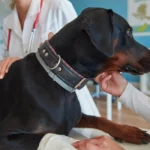
The sample collection is done using a cheek swab. The kit arrives in the post with a sterile swab, a collection tube, and instructions. You rub the swab firmly against the inside of your dog’s cheek for about 30 seconds. The swab picks up cells from the cheek lining, and those cells contain your dog’s DNA. You put the swab in the tube, seal it, and post it back. Some kits also accept blood samples, but those are usually done through your vet. For home testing, cheek swabs are the standard.
Once the lab receives your sample, technicians extract the DNA from the cells. They do not sequence the entire genome. Instead, they look at specific markers called single nucleotide polymorphisms, or SNPs. These are points in the DNA where dogs differ from one another. A typical dog DNA test looks at somewhere between 100,000 and 200,000 SNPs. By comparing the pattern of these markers against their reference database, the lab can work out which breeds are present in your dog’s genetic makeup.
The reference database is the most important part of this whole process. Every DNA testing company maintains its own database of DNA profiles from purebred dogs with documented pedigrees. The bigger and more diverse the database, the more accurate the results. Wisdom Panel, for instance, has tested over 4 million dogs and claims the largest breed database in the world. Embark has tested over 2 million dogs. Smaller companies like DNA My Dog and Find My Pet have smaller databases, which can affect how precisely they identify less common breeds.
The analysis typically takes 2 to 6 weeks from the time the lab receives your sample. Most companies send you an email when the results are ready, and you view them through an online portal or app. The report breaks down your dog’s breed composition as a percentage. A dog might come back as 50% Labrador, 25% Border Collie, and 25% mixed breed, for example. Some reports go back several generations and can identify great-grandparent level breeds.
What you learn from a dog DNA test
Most people buy a dog DNA test to find out what breed their mutt is. That is fair enough. There is something genuinely satisfying about finally solving the mystery of why your dog has wiry fur, pointy ears, and an obsession with retrieving tennis balls. But modern tests go well beyond breed identification.
Breed makeup is the core of every test. The report shows you which breeds contribute to your dog’s genetic profile, usually broken down by percentage. Some dogs come back as predominantly one breed with small contributions from others. Rescue dogs and crossbreeds often have a more complex mix. Most kits can identify breeds going back three generations, which covers your dog’s parents, grandparents, and great-grandparents. Beyond that, the DNA gets too mixed up to reliably identify individual breeds, and you will just see a category called “mixed breed” or “supermutt.”
Health screening is where things get more serious, and it is the main reason some vets recommend DNA testing. The better kits check your dog’s DNA for mutations associated with over 200 genetic health conditions. These include things like progressive retinal atrophy, which causes blindness, von Willebrand disease, a bleeding disorder, and MDR1 gene mutation, which makes dogs dangerously sensitive to certain medications. If your dog carries a mutation for one of these conditions, it does not necessarily mean they will develop it, but it tells you and your vet what to watch for.
Some health conditions are recessive, meaning a dog needs two copies of the mutated gene (one from each parent) to be affected. A dog with just one copy is a carrier. They will not show symptoms themselves, but if they are bred, they could pass the mutation on to their puppies. This information matters a lot if you are a breeder or if your dog came from an unknown background. The PDSA has written about the importance of genetic screening, particularly for breeders who want to reduce the prevalence of inherited diseases.
Trait testing is another feature on some kits. These look at specific genes associated with physical characteristics like coat colour, coat type, body size, and even certain behaviours. Your dog’s predicted adult weight is a common one, which can be genuinely useful if you have a puppy of unknown parentage. Some tests report on whether your dog is likely to have a double coat, a curly coat, or a short coat. Others claim to predict exercise needs or predispositions towards certain behaviours, though I would take those with a pinch of salt. Behaviour is influenced by far more than just genetics.

How accurate are dog DNA tests?
This is the question everyone asks, and the honest answer is that accuracy varies. The best kits, Wisdom Panel and Embark, claim accuracy rates above 95% for breed identification when the dog’s background includes breeds that are well represented in their database. For mixed breed dogs with several generations of crossbreeding, accuracy drops somewhat because the DNA becomes more muddled. But even then, the major breeds usually show up correctly.
The biggest limitation is the reference database itself. If your dog has ancestry from a rare breed or a breed that is underrepresented in the database, the test might misidentify it or lump it into a broader category. This matters less in the UK, where the most common breeds are well covered by all the major databases. But if you have a dog with recent ancestry from an unusual breed like a Mudi or a Kooikerhondje, the results might be less precise.
Health testing accuracy is generally high for well-studied mutations. The lab is looking for specific known genetic variants, so the test is effectively a yes or no question. Does this dog carry the MDR1 mutation? Does this dog have the gene for progressive retinal atrophy? These are straightforward tests with reliable results. The limitation here is that no test covers every possible genetic health condition. They screen for the most common and well-understood ones, but there are thousands of genetic diseases in dogs, and most kits cover 150 to 250 of them.
Independent validation studies have been done on some of these tests. A 2020 study published in the journal Animals compared Wisdom Panel results for dogs with known pedigrees and found the test correctly identified the primary breed in 93% of cases. Embark’s own published validation data shows similar numbers. Smaller companies rarely publish validation data, which is worth bearing in mind if accuracy matters to you.
One thing to be aware of is that different companies can give different results for the same dog. This happens because they use different databases, different marker panels, and different algorithms. If you tested the same dog with Wisdom Panel and Embark, you would likely get broadly similar results, but the exact breed percentages might differ, and you might see different secondary breeds listed. That does not mean one test is wrong and the other is right. It means genetic analysis involves interpretation, and companies interpret things slightly differently.
The best dog DNA test kits available in the UK
I have looked at the main options available to UK pet owners. All of these can be ordered online and shipped to a UK address, though processing times vary depending on whether the sample has to be sent to a lab overseas.
Wisdom Panel Premium
Best for: Dog owners who want the most comprehensive breed and health analysis available. Wisdom Panel is the market leader and has been running the longest.
Wisdom Panel is the biggest name in dog DNA testing, and for good reason. They have tested more dogs than any other company, and their breed database covers over 350 breeds, types, and varieties. The Premium kit includes breed identification going back three generations, screening for over 200 genetic health conditions, and trait testing for coat type, colour, body size, and other physical characteristics.
The health screening is where Wisdom Panel really shines. They test for a wide range of conditions including heart problems, eye diseases, blood disorders, neurological conditions, and metabolic diseases. The report is clear and well organised, with each condition explained in plain language and colour coded to show whether your dog is clear, a carrier, or at risk. For each at-risk result, they provide information about what the condition means, what symptoms to watch for, and what to discuss with your vet.
Wisdom Panel also includes a genetic age calculation, which estimates your dog’s biological age based on their DNA rather than just their chronological age. This can be interesting for older rescue dogs whose actual age is unknown. They also offer a medication sensitivity test for the MDR1 gene, which is genuinely useful because affected dogs can have severe reactions to common drugs like ivermectin.
Turnaround time is typically 2 to 3 weeks from when the lab receives your sample. The kit costs around £100 to £130 depending on where you buy it and current promotions. You can order directly from the Wisdom Panel website or through Amazon UK.
Cons: More expensive than budget options. The sample has to be posted to the US for processing, which adds a few days to the turnaround. Some UK users report that breed identification for less common British breeds like the English Setter can be slightly less precise than for American breeds, though this is improving as the database grows.
Embark Breed & Health DNA Test
Best for: Dog owners who want detailed health screening and are interested in genetic relatives. Embark has strong veterinary backing.
Embark was founded with the involvement of Cornell University’s veterinary genetics lab, and their test has a distinctly scientific feel to it. They test for over 220 genetic health conditions, which is slightly more than Wisdom Panel, and their breed database covers over 350 breeds. The health results are thorough and come with links to published veterinary research for each condition, which is a nice touch if you want to dig deeper into the science.
One feature that sets Embark apart is their genetic relative finder. If another Embark user has tested a dog that shares DNA with yours, the system will flag it. This works in a similar way to human ancestry sites. You can find your dog’s siblings, cousins, or other relatives. Whether this is useful depends on your situation, but for people who have adopted a dog from a specific rescue or area, it can be genuinely interesting to see if other related dogs have been tested.
The breed identification is detailed and goes back three generations. Embark also provides a wolfiness score, which is a bit of fun. It shows how much of your dog’s DNA traces back to ancient wolf ancestry rather than modern breed lineages. Most dogs score low on this, but it is a conversation starter.
Embark costs around £100 to £140 and processing takes 2 to 4 weeks. You can order from the Embark Vet website or through Amazon UK. They ship to the UK without issues.
Cons: Slightly longer turnaround than some competitors. The veterinary research links in the health report are helpful but can be overwhelming for owners who just want a simple answer. The price is at the premium end of the market.
DNA My Dog Breed Identification
Best for: Dog owners on a budget who mainly want to know their dog’s breed mix and do not need extensive health screening.
DNA My Dog is a Canadian company that offers a more affordable entry point into dog DNA testing. Their basic breed identification kit covers over 100 breeds and is priced significantly lower than Wisdom Panel or Embark, typically around £50 to £70. If your main interest is finding out what breeds make up your crossbreed, and you do not care about health screening, this gets the job done for less money.
The report includes breed identification going back three generations, predicted adult weight, and a personality profile based on breed traits. The personality part is reasonably accurate for dominant breeds but should be taken lightly for mixed breed dogs whose behaviour is influenced heavily by their environment and training.
DNA My Dog also offers a health testing add-on for an additional cost, but it screens for fewer conditions than the premium kits. If health screening is important to you, you are better off with Wisdom Panel or Embark from the start.
Cons: Smaller breed database means less accurate results for dogs with rare or unusual breeds in their ancestry. The health add-on is limited compared to competitors. Reports are less detailed and less visually polished than what you get from the more expensive kits.
Orivet Dog DNA Test
Best for: Dog owners who want breed-specific health screening tailored to their dog’s identified breeds. Also good for potential breeders.
Orivet takes a slightly different approach. They identify your dog’s breed mix and then run health screenings that are specifically relevant to those breeds. This makes sense because not every genetic health condition is equally relevant to every breed. If your dog turns out to be mostly Labrador, you probably want to know about exercise-induced collapse and centronuclear myopathy, which are common in Labs, rather than conditions that primarily affect Poodles or German Shepherds.
You can buy the Orivet kit as a general breed and health test or as a breed-specific panel if you already have a good idea what your dog is. The breed-specific panels are popular with breeders who want to screen their dogs for conditions relevant to their particular breed before breeding.
The breed database covers over 250 breeds, which puts it behind Wisdom Panel and Embark but ahead of DNA My Dog. Health screening covers around 150 conditions depending on the panel you choose. Results are delivered online within 3 to 4 weeks.
Cons: The user interface is less polished than Wisdom Panel or Embark. Reports can be dense and technical, which is fine if you are comfortable reading veterinary terminology but less ideal if you want something simple and clear. Customer service reviews from UK users are mixed, with some reporting slow response times.
Find My Pet DNA Test
Best for: UK dog owners who want a budget-friendly option from a company that ships quickly within the UK.
Find My Pet is a UK-based company, which gives it an advantage in terms of shipping and customer service for British buyers. The kit costs around £45 to £60, making it one of the more affordable options on the market. It covers around 100 breeds and provides basic breed identification going back three generations.
The results include a breed breakdown with percentages, predicted adult weight, and some basic trait information. It is a straightforward, no-frills test. You get what you pay for, which is a reasonable breed identification for a reasonable price. The smaller database means it is less reliable for dogs with complex or unusual mixes, but for a first-generation cross between two common breeds, it does a decent job.
Because the company is UK-based, shipping is fast and there are no international postage costs. The sample goes to a UK lab rather than being sent abroad, which some owners prefer. Turnaround time is typically 2 to 3 weeks.
Cons: The breed database is the smallest of all the kits mentioned here. No health screening is included, which limits its usefulness for owners concerned about genetic conditions. The results presentation is basic compared to the premium options.
How to collect a DNA sample from your dog
Getting a good sample is the most important step in the whole process. If the swab does not pick up enough cells, the lab cannot run the test and you will have to do it again. Every company sends detailed instructions, but here are the key points that apply regardless of which kit you buy.
Do not let your dog eat, drink, chew a toy, or groom another dog for at least an hour before you take the sample. Food particles and saliva from other animals can contaminate the swab and affect the results. An hour is the minimum, and two hours is better if you can manage it.
Use the swab that comes in the kit. These are sterile and designed for the job. Do not substitute a cotton bud from your bathroom because it has not been sterilised and the fibres are different. Open the packaging carefully without touching the swab tip to anything, including your fingers.
Hold your dog’s head gently but firmly. Tilt their head slightly to one side to expose the inside of their cheek. Rub the swab firmly against the inside of the cheek, rolling it as you go. You need to apply enough pressure to collect cells from the cheek lining. Gentle dabbing will not work. Most instructions say to swab for 15 to 30 seconds per cheek.
Some dogs are not keen on having something rubbed inside their mouth. If your dog is resistant, try having someone hold them while you do the swabbing. You can also try coating the swab with a tiny bit of peanut butter (make sure it does not contain xylitol) to encourage them to let you keep it in their mouth. The sugar and fat in peanut butter should not affect the DNA, but keep it to a minimum.
Once you have collected the sample, put the swab back in the collection tube as directed. Do not let the swab tip touch anything else. Seal the tube, put it in the return envelope, and post it. Most kits recommend sending the sample within a few days of collection.
Understanding your results
When the results arrive, take your time reading through them. The reports from Wisdom Panel and Embark are comprehensive and contain a lot of information. It is worth going through each section rather than just looking at the breed pie chart and calling it done.

The breed breakdown is usually presented as a family tree alongside percentage bars or a pie chart. Your dog’s parents are listed first, then grandparents, then great-grandparents. In some cases, the test can identify breeds at the parent level with high confidence. In others, particularly for mixed breed dogs, you might see results at the grandparent or great-grandparent level, with an “unknown” or “mixed breed” category for the rest.
Pay attention to the confidence levels. Most kits indicate how confident they are about each breed identification. A result that says “high confidence” for a particular breed at the parent level is very likely to be accurate. A “low confidence” result for a breed at the great-grandparent level is more speculative. Treat the low-confidence results as interesting possibilities rather than definitive facts.
The health section needs careful reading. Each condition will be listed as clear, carrier, or at risk. Clear means your dog has no copies of the mutation. Carrier means they have one copy and will not develop the condition themselves but could pass it on. At risk means they have two copies and may develop the condition. For at-risk results, speak to your vet. Do not panic, because carrying a genetic mutation does not guarantee the disease will develop. But your vet needs to know so they can monitor your dog appropriately.
Some results might suggest your dog should avoid certain medications. The MDR1 gene mutation is the most common example. Dogs with this mutation can have severe, potentially fatal reactions to drugs like ivermectin, loperamide, and some sedatives. If your dog tests positive for this, tell your vet and make a note on their medical records. It is genuinely important information that could save your dog’s life in an emergency.
Trait results are the fun part. Coat type predictions, expected adult weight, and physical characteristics can help you understand why your dog looks and behaves the way they do. If your dog has an unexpected coat texture or an unusual colour pattern, the trait results might explain why.
Privacy concerns and UK data laws
Your dog’s DNA is personal data, and in the UK it is covered by data protection legislation. The UK GDPR applies to any company processing personal data of UK residents, and genetic data is classified as special category data, which means it gets extra protection.
Both Wisdom Panel and Embark state that they comply with applicable data protection laws. They process and store your dog’s DNA data on their servers, and you can request that your data be deleted after testing is complete. Check the privacy policy of whichever company you choose before you buy, because policies vary. Some companies retain DNA samples and data for future research purposes by default, and you may need to actively opt out if you do not want your dog’s data used this way.
Consider what happens to your dog’s data if the company is sold, goes out of business, or changes its privacy policy. These are real possibilities. Some DNA testing companies have been acquired by larger firms in recent years, and the new owners may have different approaches to data use. Read the terms and conditions before you send your sample.
If you are concerned about privacy, look for a company that lets you opt out of data storage and research use. Wisdom Panel allows you to request sample destruction after testing. Embark lets you opt out of their research programme. Smaller companies like DNA My Dog and Find My Pet generally have shorter data retention policies, but always check.
One thing to be aware of: some pet insurance companies in the UK have started asking about genetic testing results during applications. If your dog tests positive for a genetic health condition, it could potentially affect your ability to get cover for that condition. I am not saying this happens in every case, but it is worth considering before you test, especially if your dog is currently insured and you are happy with your policy.
Limitations of dog DNA testing
Dog DNA tests are impressive, but they have real limitations that you should understand before spending your money.
They cannot tell you exactly what your dog is if their ancestry is very mixed. Beyond three generations, the DNA becomes too blended to identify specific breeds. Your dog might have six different breeds in their recent ancestry, but the test might only be able to reliably identify two or three of them. The rest gets lumped into a “mixed breed” or “supermutt” category. This is a limitation of the technology, not a flaw in the test.
Health tests screen for known genetic mutations, but they do not diagnose disease. A positive result for a genetic mutation means your dog has an increased risk of developing a condition. It does not mean they definitely will. And a clear result does not guarantee your dog will never get sick. There are plenty of health problems in dogs that are not caused by single gene mutations, including many cancers, joint problems, and age-related conditions. DNA testing is one tool, not a complete health guarantee.
The databases are biased towards American and European breeds. If your dog has ancestry from breeds that are rare in the west, the results may be less accurate. This is slowly improving as companies expand their databases, but it remains a limitation, particularly for dogs with recent ancestry from Asia, Africa, or Eastern Europe.
Behaviour predictions should be treated as broad tendencies, not certainties. A test might tell you your dog has genetic markers associated with herding behaviour. That does not mean your dog will herd things. Environment, training, socialisation, and individual personality play enormous roles in how a dog behaves. Do not use DNA results to make assumptions about your dog’s temperament or capabilities.
Finally, these tests are not regulatory. If you buy a dog advertised as a particular crossbreed and a DNA test shows something different, you have no legal recourse based on the test results alone. DNA tests are not recognised as definitive proof of breed by the Kennel Club or most regulatory bodies. They are informative tools, not legal documents.
When is DNA testing worth doing?
There are several situations where testing your dog’s DNA makes practical sense.
If you have a rescue dog and genuinely want to know their breed mix, a DNA test will give you the best answer available. Knowing your dog’s breed composition can help with training approaches, exercise planning, and understanding certain behaviours. If your dog turns out to be mostly Border Collie, you can plan for high energy levels and a need for mental stimulation. If they are mostly Greyhound, you know they will probably love sprinting but be lazy the rest of the time. Understanding your dog’s breed makeup can also help you choose the right dry dog food, because different breeds can have different nutritional requirements.
Health screening is worth doing if your dog comes from unknown parentage and you want to stay ahead of potential problems. Finding out your dog carries the MDR1 mutation, for example, is practically useful because it tells you and your vet to avoid certain drugs. Discovering your dog is at risk for a heart condition means you can arrange regular cardiac checks. For breed-specific nutrition advice that accounts for your dog’s actual genetic makeup, our breed-specific nutrition guide is worth a read once you have your results.
If you are considering breeding your dog, DNA testing is strongly recommended by the British Veterinary Association and responsible breeding organisations. Knowing whether your dog carries genetic mutations helps you make informed decisions and avoid producing puppies with preventable health conditions. If you are feeding a breeding dog or a puppy, you might also want to look at our grain-free dog food guide to understand the ongoing debate around grain-free diets and heart health in dogs.
Testing can also be useful if you suspect your dog has a specific breed in their makeup that is prone to certain health problems. If your vet suspects your dog might have a hereditary condition, DNA testing can sometimes confirm or rule it out without the need for more invasive diagnostic procedures.
Where to buy dog DNA test kits in the UK
All the kits mentioned in this guide are available online and can be shipped to UK addresses. Amazon UK stocks Wisdom Panel, Embark, DNA My Dog, and Orivet. The advantage of buying through Amazon is the customer reviews, fast delivery with Prime, and straightforward returns if there is a problem with the kit.
Buying directly from the company’s website is the other option. Wisdom Panel ships to the UK from their site, and they sometimes offer promotions that are not available on Amazon. Embark ships internationally from their website. Orivet and DNA My Dog also sell directly. Buying direct can sometimes get you a better price or bundle deals, especially around Black Friday and other sales periods.
Pets at Home and other large UK pet retailers sometimes stock DNA test kits in store or online, but the range is limited compared to Amazon or the manufacturers’ own websites. If you want to see the packaging and read the box before buying, it is worth checking your local store, but do not expect to find every brand on the shelf.
Prices vary, so it is worth shopping around. Wisdom Panel and Embark typically sell for £100 to £140. DNA My Dog and Find My Pet are usually £45 to £70. Orivet sits somewhere in the middle at £80 to £120 depending on which panel you choose. Watch for sales, because these products are discounted fairly regularly, and the difference between full price and sale price can be significant.
Make sure you are buying a genuine kit from an authorised seller. Counterfeit DNA test kits are not common, but buying from the official website or a reputable retailer like Amazon reduces the risk. Avoid buying second-hand kits from auction sites, because you have no way of knowing whether the swab is sterile or the activation code has already been used.
Frequently asked questions
How much does a dog DNA test cost in the UK?
Prices range from about £45 for a basic breed identification kit like DNA My Dog or Find My Pet, up to £140 for the premium kits from Wisdom Panel and Embark that include comprehensive health screening. Budget around £100 if you want both breed identification and meaningful health results.
How long does it take to get results?
Most kits take 2 to 4 weeks from the time the lab receives your sample. Add a few days for shipping, especially if the sample has to go to the US. UK-based kits like Find My Pet tend to be slightly faster because the sample does not have to travel as far.
Can I test a puppy?
Yes. You can DNA test a puppy of any age. The DNA does not change as the dog grows, so testing a 10-week-old puppy gives you the same results as testing the same dog at 5 years old. The only practical consideration is getting a clean swab from a small puppy’s mouth, which can be fiddly but is perfectly doable.
Are the results recognised by vets?
Vets generally accept DNA test results as useful information, particularly the health screening results. The British Veterinary Association supports the use of genetic testing in principle. However, DNA test results are not a substitute for proper veterinary diagnosis. If a health result concerns you, discuss it with your vet and follow their advice on next steps.
Can I test my cat?
Dog DNA kits only work on dogs. If you want to test your cat, you need a species-specific cat DNA test. Some of the same companies, including Wisdom Panel and Orivet, offer cat DNA tests, but you cannot use a dog kit on a cat or vice versa.
What happens if the lab cannot process my sample?
If the swab does not collect enough DNA, which can happen if your dog ate recently or the swab was not rubbed firmly enough, the lab will usually ask you to send another sample. Most companies include a spare swab in the kit for exactly this reason. If you run out of swabs, contact the company and they will send replacements.
Will my insurance company use the results against me?
This is a grey area in the UK. Some insurers ask about genetic testing on application forms, but there is no standard practice across the industry. A positive result for a genetic health condition could theoretically affect your ability to claim for that condition in the future. If you are concerned, check with your insurer before testing, or test after you have already secured a policy you are happy with.
How accurate are the breed percentages?
For dogs with one or two breeds in their recent ancestry, the percentages are usually very accurate. For complex mixed breeds with several generations of crossbreeding, the percentages become more approximate. Treat the specific numbers as estimates rather than exact figures, and focus on the identified breeds themselves rather than obsessing over whether your dog is 22% or 28% Springer Spaniel.
Do I need my vet to do the test?
No. All the kits mentioned here are designed for home use. You collect the sample yourself and post it back. The only time you might need your vet involved is if the kit requires a blood sample rather than a cheek swab, which is rare for consumer kits but more common in clinical-grade tests.
Can DNA testing tell me my dog’s exact age?
No test can pinpoint your dog’s exact age. Wisdom Panel’s genetic age estimate gives a rough biological age based on DNA markers, which can be useful for rescue dogs whose age is unknown. But it is an estimate, not a precise figure. If you need an accurate age assessment, your vet can give you a better answer based on a physical examination.
Dog DNA testing has moved from novelty to genuinely useful tool. The breed identification is fun and satisfying. The health screening has real practical value. And as the databases continue to grow and the science improves, the results are only going to get better. If you have ever looked at your dog and wondered what on earth they are, a dog DNA test kit will give you the closest answer science can currently provide.
For more advice on feeding, caring for, and keeping your dog healthy, visit dogfoodsuk.com. We test products honestly and write about what actually works, so you can spend less time researching and more time with your dog.