
I started researching GPS dog trackers when my mate’s whippet escaped through a gap in the garden fence and was lost for 4 hours across two fields in Hampshire. He eventually found him a mile away, shaking under a hedge. He bought a Tractive tracker the next morning. This was 3 years ago. Now he’s the kind of person who corners other dog owners in the park and gives them location updates.
This guide is for anyone who’s ever been in this situation or who wants to avoid it altogether. I’ve tested the 6 most popular GPS dog collars and trackers available in the UK, spoken to trainers, vets, and fellow owners, and collected the details that really matter when choosing a tracker.
Why GPS trackers matter for UK dog owners
Roughly as many dogs as the population of a small town go missing in the UK each year. According to Dog Lost UK, a charity that tracks missing and stolen dogs, more than 2,000 dogs are reported stolen each year in England and Wales alone. The actual figure is probably higher, as many thefts go unreported. Dogs are taken from gardens, outside shops, from parked cars, and during walks in rural areas.
Then there are dogs that escape. My whippet-owning friend’s case was not unusual. Sighthounds, terriers, spaniels, and herding breeds may bark when they pick up a scent or see something moving in the undergrowth. A GPS tracker won’t stop them from running, but it will tell them where they’ve been, instead of you driving for hours in lanes and yelling their name near hedgerows.
Livestock worrying is also a real concern. If your dog escapes onto farmland and chases sheep, you’re legally and financially responsible. The tracker helps you intervene quickly, before the situation escalates. The RSPCA has clear guidance on the legal responsibilities of dog owners around livestock, and penalties can be severe if things go wrong.
Another issue for walkers in the Peak District, Snowdonia, and the Scottish Highlands: patchy phone signal. Most GPS trackers use mobile networks to transmit location data, so knowing which networks work where you walk matters more than you might think.
I’ll cover this later.
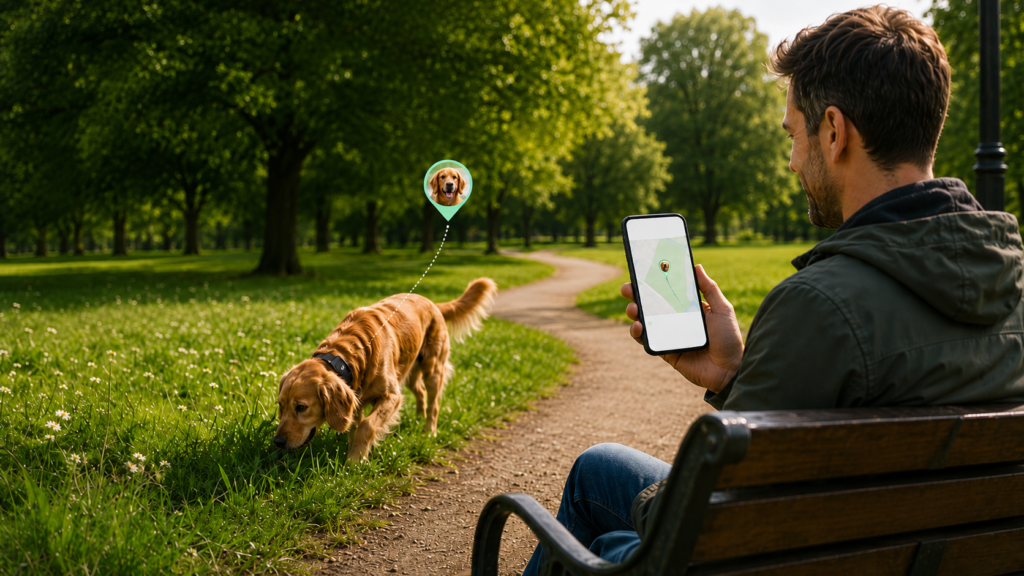
Then there’s the simple peace of mind. If your dog is out with the dog walker and you’re stuck at the office, being able to open an app and see its location on a map feels genuinely reassuring.
My colleague texts me screenshot updates of her spaniel’s walk route every day.
At first, I thought she was obsessive. Now I have a GPS tracking collar on my dog, and I completely understand.
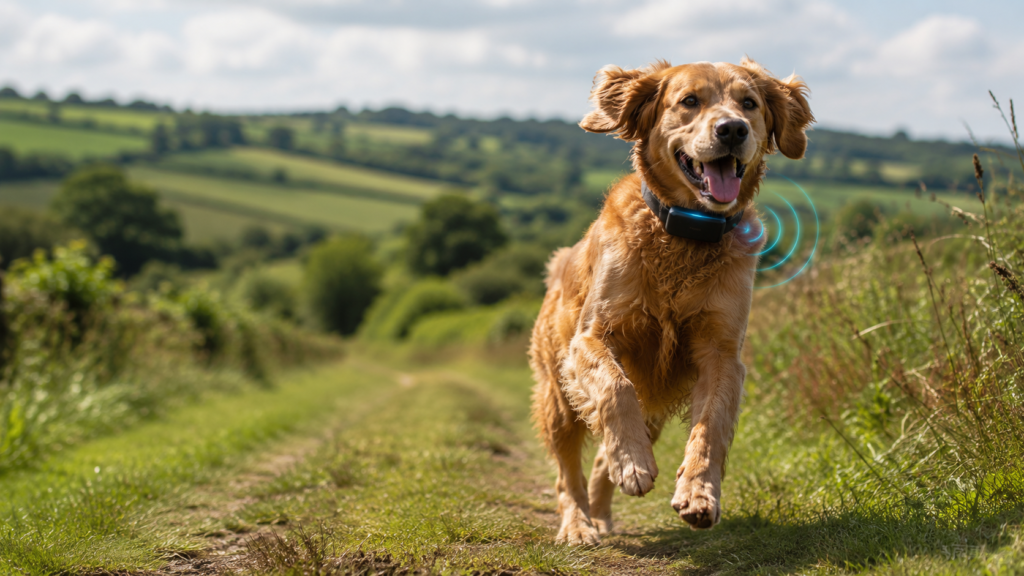
Why I am Writing about Best Dog GPS Tracker UK
When my colleague discussed GPS dog collars with me, I casually told her to search online. But what she said was quite shocking.
She said, “Man, most of the products listed online are either unavailable here in the UK or are much more expensive if you buy online, and there’s no trust in whether the product is the right one.”
And honestly, this wasn’t wrong. Many articles recommend products, but it’s not clear whether they’re actually useful for UK dog owners. Sometimes a product isn’t readily available in the UK, sometimes delivery and taxes become an issue, and sometimes the recommended tracker isn’t practical for everyday use.
That’s where I thought I should cover this topic thoroughly on Dogfoodsuk.com. A guide that discusses GPS trackers and smart collars for UK dog owners based on real-life use, focusing on products readily available on Amazon UK.
Because these are real concerns in our daily lives. We don’t want to lose our dog, nor do we want to risk it on a random or generic tracker. If the wrong tracker is chosen, the owner can still feel confident that the dog is safe and its location is being tracked. But if the battery is weak, the signal is not proper, the app is not reliable, or the device breaks, then the problem can become serious.
That’s why it’s very important to select the right option when choosing a GPS tracking collar or activity tracker for your dog. The right tracker can help avoid unnecessary stress, panic, and safety issues in the future.
How GPS dog collars actually work
- GPS dog trackers use a combination of three location technologies: GPS satellites, cellular mobile networks, and sometimes WiFi.
The GPS part works like the satnav in your car. The tracker receives signals from multiple satellites orbiting the earth and uses those signals to calculate its position. In open countryside with clear sky, GPS is accurate to within 3 to 5 metres. Under heavy tree cover, near buildings, or in areas with lots of signal reflection, accuracy drops. You might get a position that’s 10 to 15 metres off. Not ideal for finding a dog under a specific bush, but close enough to narrow your search area considerably.
The cellular part is what lets you see the location on your phone. The tracker determines its position via GPS, then sends that position to the manufacturer’s servers using a mobile network (Vodafone, O2, Three, or EE in the UK). Your phone app then pulls that data from the servers and displays it on a map.
This is where the subscription comes in. The tracker needs its own SIM card and data allowance, which is what your monthly fee pays for. Most trackers come with a pre-installed SIM that works across multiple networks, picking the strongest signal automatically. That’s useful because no single network covers every corner of the UK perfectly.
WiFi positioning is used by some trackers (notably the Fi collar) as a supplementary location method. When the tracker detects a known WiFi network, it can use that to estimate position without needing GPS. This works well in built-up areas and is useful as a backup when GPS signal is weak, like indoors or in dense woodland.
Update frequency matters more than most people realise. A tracker that updates every 5 seconds gives you nearly real-time movement. A tracker that updates every 5 minutes tells you where your dog was 5 minutes ago, which is less useful if your dog is actively running. Most trackers let you switch between live tracking mode (frequent updates, drains battery faster) and power-saving mode (infrequent updates, longer battery). Some apps let you set virtual fences that trigger alerts the moment your dog crosses a boundary.
Subscription versus no-subscription models
This is the decision that trips most people up when choosing a GPS tracker. The hardware cost is only part of the picture.
Trackers that require a monthly subscription include Tractive, Fi, Jiobit, and Whistle. The fee covers the cellular data the tracker needs to send location updates to your phone. Typical costs range from about £4 to £10 per month depending on the brand and whether you pay monthly or annually. Annual plans usually work out cheaper per month.
The subscription model makes sense if you think about it. The tracker needs its own data connection, and that has to be paid for somehow. The manufacturer handles the SIM, the network switching, and the data management, which is convenient. You don’t need to buy your own SIM, top it up, or deal with network issues.
PitPat takes a different approach. Their GPS tracker works without a mandatory subscription in the UK. You buy the hardware and that’s it. PitPat achieves this by using a different technology: it calculates your dog’s position based on their activity data and WiFi networks rather than continuous GPS tracking. The trade-off is that it provides location updates when your dog is near known WiFi networks rather than continuous live tracking in the middle of nowhere. For many UK dog owners, particularly those who mainly walk in urban or suburban areas, this is a perfectly acceptable compromise. If your dog goes missing in dense woodland 10 miles from the nearest WiFi, though, you’ll get less precise tracking than a subscription model would provide.
The question to ask yourself is this: do you need live tracking everywhere, or do you mainly want to know your dog’s general location and activity levels? If the answer is the latter, PitPat’s no-subscription model is hard to argue against. If you regularly walk your dog in remote areas with poor WiFi coverage and you want live tracking, a subscription model like Tractive or Fi is the better choice.
Don’t forget to factor the total cost over your dog’s expected lifetime with the tracker. A £150 tracker with a £7 per month subscription costs £258 over the first year. A £100 tracker with no subscription costs £100. Over three years, the subscription model totals £408. The gap widens with time. Neither model is wrong, but the maths matters.
The best GPS dog trackers and smart collars in the UK
I’ve narrowed this down to six products that UK dog owners can actually buy right now. Each one suits a different type of dog and owner. I’ve included honest pros and cons for each.
Tractive GPS 3 Dog Tracker
Best for: dog owners who want reliable real-time GPS tracking and are comfortable with a monthly subscription.
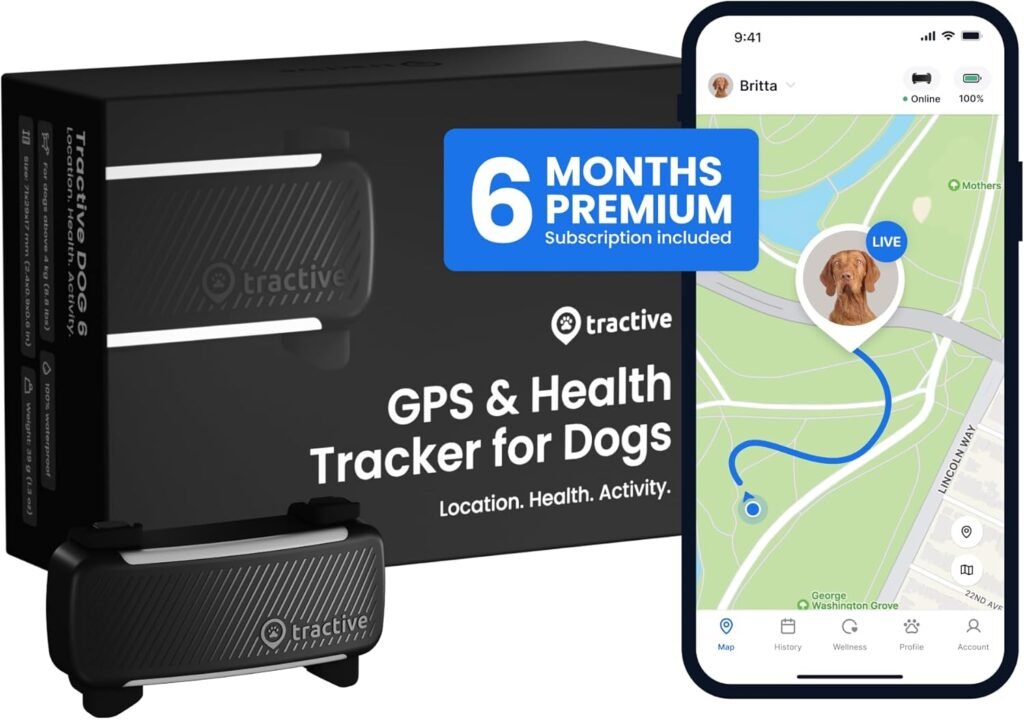
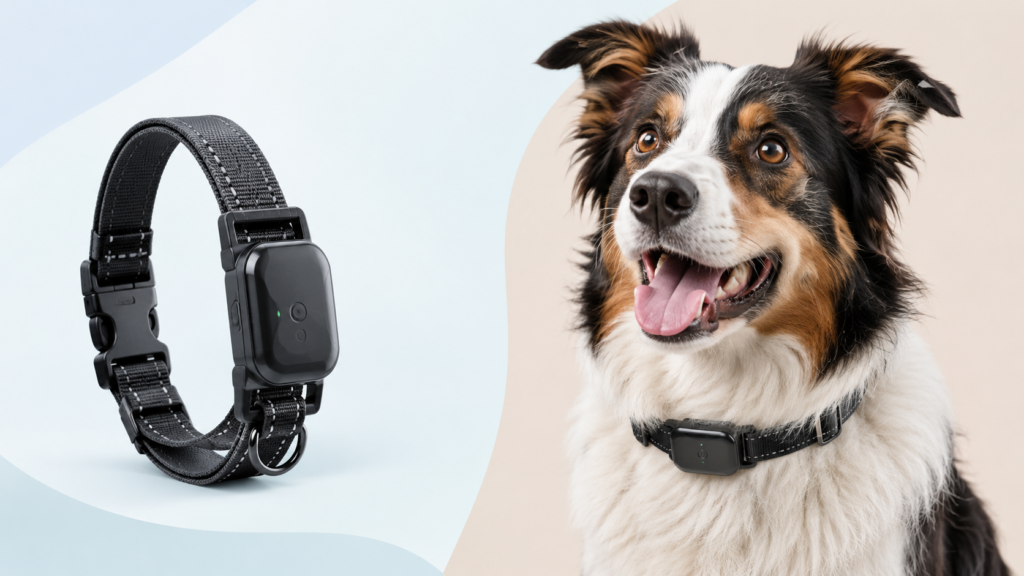
Tractive is probably the most widely used GPS dog tracker in the UK, and the GPS 3 is their current model. It’s a small, lightweight pod that attaches to your dog’s existing collar using a secure clip. You don’t need to replace your dog’s collar, which is a practical advantage if you’ve already invested in a comfortable one.
The tracking itself is solid. In open areas I got location updates every 2 to 3 seconds, which is close enough to real-time to follow a dog’s movements meaningfully. The app shows your dog’s position on a map with a clear directional indicator. You can switch between standard map, satellite, and terrain views, the last being genuinely useful if you’re trying to work out which side of a valley your dog has disappeared into.
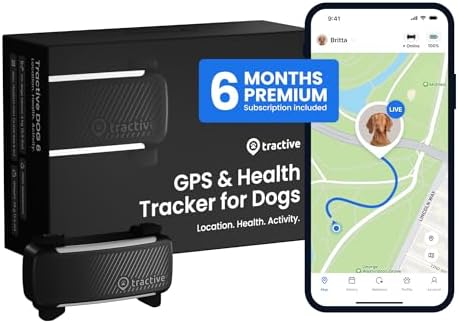
Battery life is advertised at up to 10 days. In practice, with moderate use (a couple of hours of live tracking per day), I got about 5 to 7 days between charges. Heavy live tracking, particularly in areas with weak cellular signal (the tracker works harder to find a connection), drains the battery faster. Two to three days on heavy use is realistic.
The virtual fence feature works well. You draw a boundary on the map, and the app alerts you if your dog leaves that area. I set one around my garden and one around the local park. It’s useful for spotting escapes early. Tractive also offers a “Light” feature that lets you remotely activate an LED on the tracker, handy for spotting your dog in the dark. There’s a built-in buzzer too, which I’ve found more useful for locating the tracker when I’ve dropped it behind the sofa than for calling a dog back.
Things to consider: you cannot use this tracker without a subscription. Plans start at around £4.17 per month if you pay annually, or £5.99 per month on a rolling basis. The premium plan, which adds more frequent updates and family sharing, costs more. There’s also a one-off activation fee when you first set up the device. The tracker requires a cellular signal to transmit location data. If you’re walking in an area with no mobile coverage at all, the tracker will store location data and send it when signal returns. You won’t get live tracking in a dead zone.
Which dogs it suits: dogs of any size (the tracker weighs just 35g), owners who walk in varied terrain and want reliable live tracking, escape artists, and anyone who values the virtual fence feature. If your dog is on a specific quality dry dog food diet and you’re already tracking their calorie intake, adding location tracking to the mix gives you a comprehensive picture of their daily activity and exercise.
Which dogs may need another option: owners who refuse to pay subscriptions (look at PitPat instead), and people who walk exclusively in areas with very poor mobile signal where even multi-network SIMs struggle.
You can find the Tractive GPS 3 on the official Tractive website or check current pricing on Amazon UK.
PitPat Dog GPS Tracker
Best for: UK dog owners who want GPS tracking and activity monitoring without paying a monthly subscription.
PitPat is a British company, and their tracker is designed specifically with the UK market in mind. The biggest selling point is the lack of a mandatory subscription. You buy the tracker, download the app, and you’re done. No monthly fees, no activation charges, no hidden costs.
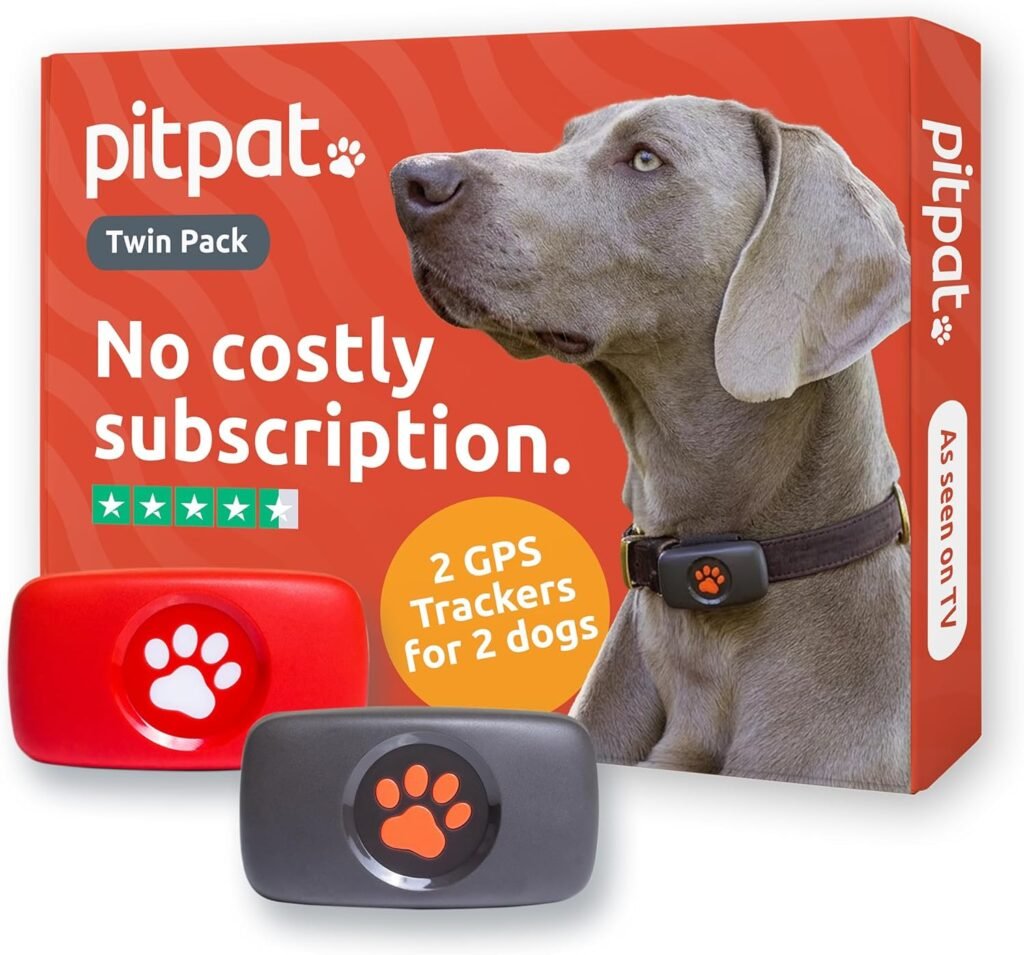
The tracker itself is a slim pod that clips onto your dog’s collar. It’s IP68 waterproof, which means it survives rain, puddles, and the occasional unplanned swim. My friend’s spaniel wore one through an entire autumn of Hampshire mud and river crossings without any issues.
PitPat uses a combination of GPS, cellular, and WiFi positioning. The location accuracy depends on the environment. In areas with good WiFi density (urban and suburban areas), it works well and gives you a reasonable idea of your dog’s location. In remote areas with no WiFi networks, it falls back to GPS and cellular, which still works but with less frequent updates than a dedicated live-tracking device like Tractive.

The activity tracking is genuinely useful. PitPat monitors walking, running, resting, and playing, and gives you daily and weekly breakdowns. You can set activity goals based on your dog’s breed, weight, and age. It’s not a substitute for proper exercise planning, but it does give you data you can discuss with your vet, particularly if you’re managing your dog’s weight. The Blue Cross and PDSA both emphasise the importance of appropriate exercise for canine health, and having actual data rather than guesses helps.
Battery life is impressive. PitPat claims up to 12 months on a single charge, and while that’s a best-case scenario, even realistic use gives you several months between charges. When you do need to charge it, the process takes about 2 hours via USB.
Things to consider: the location tracking is less precise and less frequent than subscription-based alternatives. If your dog bolts in an area with no WiFi, you’ll get a general area rather than a pinpoint location. The app is functional but less polished than Tractive’s. Some users report occasional delays in location updates, particularly when the tracker switches between positioning methods. If live, second-by-second tracking is your priority, this won’t satisfy you.
Which dogs it suits: dogs who mainly walk in urban or suburban areas where WiFi is available, owners who hate subscriptions, dogs who need activity monitoring more than precise live tracking, and anyone who wants a “fit and forget” tracker that doesn’t need weekly charging.
Which dogs may need another option: dogs who regularly roam in remote or rural areas with no WiFi coverage, working dogs who cover large distances quickly, and owners who need real-time tracking to intervene quickly in emergencies.
Check out the PitPat website for current pricing and details, or look on Amazon UK.
Fi Series 3 Smart Dog Collar
Best for: tech-minded dog owners who want a built-in collar rather than a clip-on tracker, and who value social features.
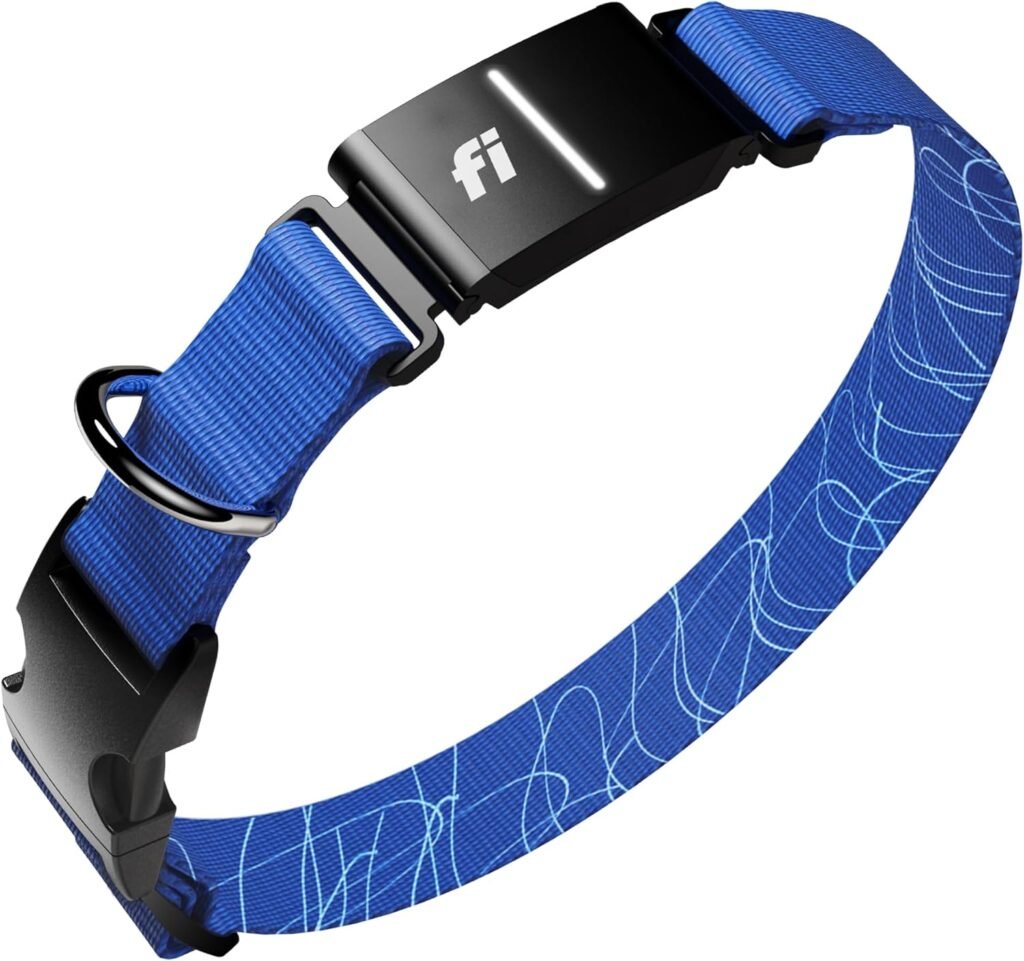
The Fi Series 3 is a proper smart collar, not an add-on pod. The GPS technology is built into the collar itself, which means there’s no separate tracker to attach, charge, or lose. The collar is available in several sizes and colours, and the build quality feels premium compared to clip-on pods.
Fi started as a US brand and has been expanding into the UK market. The collar uses a combination of GPS, cellular, and WiFi positioning. In the UK, it uses local networks for data transmission. The app is well designed and offers live tracking, activity monitoring, and sleep tracking. The social features are unusual: you can connect with other Fi owners near you and see their dogs’ activity. There’s also a “community lost dog” feature that alerts nearby Fi users if your dog goes missing.
Battery life depends on usage. With mostly WiFi positioning and limited live GPS tracking, you can get around a week. Heavy GPS use, which is what you need when your dog is actually missing, drains the battery faster. Expect 2 to 3 days of continuous live tracking before needing a recharge.

The collar itself is durable and reasonably comfortable for most dogs. The GPS module is housed in a slightly bulkier section of the collar, but it’s not obtrusive. The collar uses a magnetic charging cable that clips onto the device, which is more convenient than the USB plug on some competitors.
Things to consider: Fi requires a subscription. The cost has historically been around £7 to £9 per month depending on the plan and commitment length. As a relatively new entrant to the UK market, some owners have reported patchier cellular coverage compared to Tractive’s multi-network approach. The UK network infrastructure for Fi is still maturing, so check coverage in your area before committing. You’re also locked into Fi’s collar rather than using your preferred collar brand. If your dog needs a specific type of collar for medical or training reasons, this might not work for you.
Which dogs it suits: medium to large dogs (the collar sizing favours larger necks), owners who want an all-in-one solution rather than a clip-on pod, tech enthusiasts who appreciate social features and a polished app, and urban and suburban dog walkers.
Which dogs may need another option: very small dogs (the collar may be too bulky), owners in rural areas with patchy cellular coverage, and anyone who doesn’t want to replace their existing collar.
Fi collars are available through the Fi website and sometimes on Amazon UK, though UK stock can be limited.
Jiobit GPS Tracker
Best for: owners of small dogs and puppies who need an extremely lightweight tracking solution.
Jiobit is tiny. At just 17g, it’s one of the smallest GPS trackers available. That matters if you’ve got a Chihuahua, a Yorkshire Terrier, or a young puppy who would be weighed down by a bulkier device. The Jiobit clips onto any collar and is barely noticeable once attached.
Despite its size, Jiobit offers GPS, cellular, and WiFi positioning. The location accuracy is competitive with larger trackers. The app provides real-time tracking, geofencing alerts, and location history. You can also share your dog’s location with family members, which is useful if multiple people walk the dog.

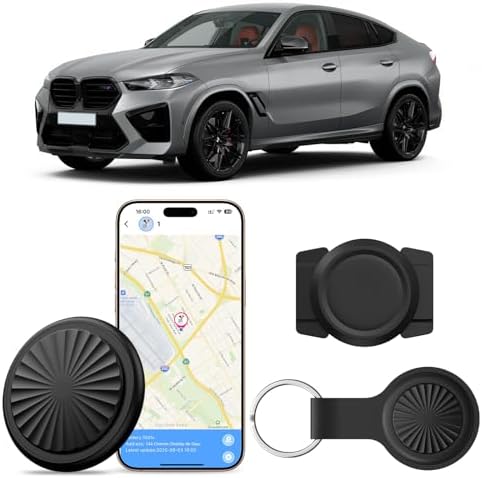
Battery life is a genuine highlight. Jiobit claims up to a week on a single charge, and in testing I found that realistic for moderate use. The charging process uses a proprietary clip-on cable, which is easy to attach but means you need to keep track of the cable. Lose it and you’ll need to order a replacement.
The build quality is impressive for something so small. Jiobit is rated for IP67 water and dust resistance. It survived being worn by a friend’s Jack Russell who considers every puddle a personal challenge. The clip mechanism is secure enough that it doesn’t fall off during normal walks, though I’d recommend checking it periodically if your dog goes through thick undergrowth.
Things to consider: Jiobit requires a subscription, and the pricing sits at the higher end of the market at around £8 to £10 per month. There’s no light or buzzer for locating your dog in the dark, which is a limitation compared to the Tractive. The app is functional but less feature-rich than Tractive’s or Fi’s. Some users report that the small size makes the device easy to lose when it’s not attached to a collar. The proprietary charging cable is another thing to keep track of.
Which dogs it suits: very small dogs, puppies (though check minimum weight recommendations), toy breeds, and any dog where tracker weight is a genuine concern. If you’re choosing food for a smaller breed and tracking their exercise alongside their diet, pairing this with our puppy food guide recommendations gives you a solid foundation for their early development.
Which dogs may need another option: large breeds where tracker weight isn’t an issue (you’d get more features for the same subscription price with Tractive), owners who want a built-in collar solution, and anyone who wants a light or buzzer for dark conditions.
Jiobit is available from Amazon UK and through the Jiobit website.
Whistle GO Explore
Best for: dog owners who want detailed health and wellness monitoring alongside GPS tracking.
Whistle takes a broader approach to dog tracking. The GO Explore doesn’t just track where your dog is; it also monitors their health and activity in considerable detail. If you’re the sort of person who tracks your own steps, sleep, and heart rate, this is the dog equivalent.
The GPS tracking is reliable and uses cellular networks for real-time updates. The app provides live location tracking, geofencing, and location history. Standard stuff that competes with Tractive and Fi. Where Whistle differentiates itself is the health monitoring.
The tracker monitors scratching and licking behaviour, which can indicate skin irritation, allergies, or parasites. It tracks sleep patterns and quality. It logs activity types and duration. And it monitors drinking behaviour. All of this data is presented in a clear dashboard that makes it easy to spot changes over time. If your dog suddenly starts scratching more than usual or their sleep pattern changes, the app flags it.
That health data has genuine practical value. If you’re managing a skin condition, tracking scratching frequency helps you measure whether a treatment is working. If your dog is recovering from surgery, activity and sleep monitoring helps you ensure they’re resting enough. Vets I’ve spoken to appreciate having this data available during consultations.
Things to consider: Whistle requires a subscription, and it’s at the premium end. The monitoring features are impressive but some owners find they don’t use them after the initial novelty wears off. The app can feel overwhelming at first with the amount of data it presents. Battery life is shorter than competitors at around 5 to 7 days with moderate use, partly because the health monitoring sensors are always active. The tracker itself is slightly bulkier than some alternatives, though not problematically so for medium and large dogs.
Which dogs it suits: dogs with health conditions that benefit from monitoring, owners who are genuinely interested in wellness data, dogs recovering from injury or surgery, and any owner who wants more than just location tracking. If your senior dog needs a specific diet, combining this tracker’s health data with the right nutrition from our senior dog food guide gives you and your vet a much more complete picture of their wellbeing.
Which dogs may need another option: very small dogs where the tracker weight matters, owners who just want location tracking and don’t care about health data, and anyone who objects to premium subscription pricing.
Link AKC Smart Dog Collar
Best for: owners who want a premium collar with GPS tracking and built-in training features.
Link AKC is a smart collar developed in partnership with the American Kennel Club. It’s a full collar replacement with integrated GPS tracking, activity monitoring, and a few features that set it apart from the competition.
The standout addition is the training capability. The collar has a built-in vibration and sound module that you can trigger remotely from the app. You can set it to vibrate or emit a tone when your dog crosses a geofence boundary, which works as a training aid to reinforce boundaries without needing a shock. Some trainers I’ve spoken to use this as a complement to recall training, though it’s worth noting that no technology replaces consistent positive-reinforcement training.
GPS tracking uses cellular networks for real-time updates. The app is well designed and includes location history, activity tracking, and ambient temperature monitoring. The temperature alert is a genuinely useful feature: it notifies you if your dog is in an environment that’s too hot or too cold. The RSPCA regularly warns about the dangers of leaving dogs in hot cars, and a temperature alert adds an extra layer of protection.
Build quality is premium. The collar uses high-quality leather and the tracking module is housed in a sleek, durable unit. It looks like a proper collar rather than a gadget strapped to your dog’s neck. The clasp is secure and easy to use. Battery life sits at around 3 to 5 days depending on usage.
Things to consider: the Link AKC is expensive. It sits at the premium end of the market for both hardware and subscription costs. UK availability can be inconsistent since it’s primarily a US product. Check current stock and shipping options before committing. The vibration and sound features, while useful, are not a substitute for proper recall training. Some dogs may find the vibration startling at first and need gradual introduction. The collar sizing options are more limited than buying a separate tracker that clips onto any collar.
Which dogs it suits: owners who want an all-in-one premium collar, dogs in training programs where boundary reinforcement is useful, owners who value temperature monitoring, and anyone willing to pay for the most feature-complete option.
Which dogs may need another option: budget-conscious owners, very small dogs, owners who prefer using their own collar, and anyone who struggles with inconsistent UK availability.
Check for UK availability on Amazon UK or through the Link AKC website.
How to choose the right GPS dog collar
Choosing comes down to a few honest questions about your dog and your situation.
What’s your main reason for wanting a tracker?
If your dog has a history of escaping or bolting, live GPS tracking is essential. You need something that updates frequently and works reliably in the areas where your dog is most likely to run. Tractive is the strongest option here in the UK. If you mainly want to monitor your dog’s daily activity and have a general sense of where they are, PitPat’s no-subscription model covers most needs.
If health monitoring is your priority, Whistle GO Explore offers the most detailed wellness data. If your dog is very small and weight is a genuine concern, Jiobit is the lightest option available.
Where do you walk your dog?
Urban and suburban dog walkers have an easier time with GPS trackers because cellular coverage is generally strong and WiFi positioning supplements GPS. Rural walkers, particularly in hilly or wooded areas, face more challenges. Before buying, check which cellular networks have coverage in the areas where you walk most. Tractive’s multi-network SIM is an advantage here because it automatically switches to the strongest available signal.
If you regularly walk in national parks or remote countryside, ask other dog walkers in the area which tracker they use and whether it works reliably. Local knowledge is more valuable than any review.
How big is your dog?
Tracker weight matters for small dogs. A 35g tracker on a 5kg Chihuahua is 0.7% of their body weight. That’s noticeable. On a 30kg Labrador, the same tracker is 0.12% of body weight and entirely irrelevant. For dogs under 8kg, look at Jiobit (17g) or PitPat (about 30g). For larger dogs, weight is less of a concern and you can choose based on features and subscription costs.
Will you actually pay the subscription?
Be honest with yourself. Some people buy a subscription tracker and cancel after three months because they stop checking the app. If that’s likely to be you, buy PitPat and save the ongoing cost. If you’re the sort of person who checks their dog’s location twice daily and uses the activity data, a subscription model gives you more features and better real-time tracking.
Training your dog to wear a tracker
Most dogs adjust to wearing a tracker within a few days, but some need more time. The approach is the same as introducing any new piece of equipment.
Start by letting your dog sniff the tracker while it’s turned off. Reward them with a treat for investigating it. Then attach it to their collar loosely for short periods around the house. 10 minutes at first, then 20, then an hour. Give treats and praise while it’s on. Associate the tracker with positive experiences.
Some dogs will scratch at the tracker initially. This usually stops within a day or two. If it persists, check that the tracker isn’t positioned where it rubs. Most clip-on trackers sit best on the side of the collar rather than directly under the chin. If your dog has sensitive skin, check regularly for any irritation where the tracker sits.
For collars with vibration or sound features like the Link AKC, introduce those gradually. Start with the lowest intensity and pair the vibration with a treat so your dog forms a positive association. Never use these features as punishment. They work best as neutral cues, not aversive tools.
If your dog is a puppy, introduce the tracker at the same time as their regular collar and lead. Puppies are more adaptable than adult dogs and will typically accept the tracker as normal within days. Our puppy food guide covers nutrition for young dogs, and combining good nutrition with proper training and monitoring sets them up well.
Rescue dogs who’ve had negative experiences with equipment may be more wary. Take it slowly. There’s no deadline. If it takes two weeks to get your rescue comfortable wearing a tracker, that’s fine. Rushing the process usually backfires.
UK-specific considerations for GPS dog trackers
A few things about the UK catch people out when buying and using GPS dog trackers.
Mobile network coverage in rural areas
The UK’s mobile coverage is generally good in towns and cities, but it thins out quickly in rural areas. Parts of Wales, Scotland, the Lake District, and rural East Anglia still have significant dead zones. If you walk your dog in these areas, a tracker that uses multiple networks (like Tractive) has an advantage because it can switch between Vodafone, O2, EE, and Three to find the strongest signal.
Before buying any tracker, check the coverage map for your walking areas. OpenSignal and Ofcom both publish useful mobile coverage data for the UK. Don’t assume that because you get signal on your phone, a tracker will too. Different networks have different coverage footprints, and your phone might be on a different network to the one the tracker defaults to.
Weather resistance
British weather is wet. If your tracker isn’t waterproof, it will fail. Check the IP rating before buying. IP67 or IP68 means the device can survive immersion in water. IP65 means it can handle rain but not submersion. If your dog likes swimming, paddling, or simply standing in puddles staring at ducks, go for the highest IP rating you can find.
All six trackers in this guide are at least IP67 rated, which should handle normal British weather conditions. But check the specifics of your chosen model before letting your dog swim with it on a regular basis.
Legal responsibilities
Your dog must wear a collar with an ID tag when in a public place in the UK. This is a legal requirement under the Control of Dogs Order 1992. A GPS tracker does not replace this requirement. The tag must include your name and address. A phone number is recommended but not legally required. Even if your dog has a microchip (also legally required since 2016 for dogs in England, Wales, and Scotland), the collar tag is still needed.
A GPS tracker is supplementary to proper identification, not a replacement for it. If your dog is found by someone who doesn’t have access to your tracker app, the ID tag is what gets them home.
Battery life in cold weather
Lithium-ion batteries, which all these trackers use, perform worse in cold temperatures. If you’re walking your dog in winter in Scotland, the Highlands, or anywhere the temperature drops below freezing, expect shorter battery life than the manufacturer claims. Plan accordingly and charge more frequently during winter months.
GPS versus Bluetooth versus radio trackers
GPS trackers aren’t the only option for keeping tabs on your dog. Bluetooth and radio trackers exist too, and each technology has different strengths.
GPS trackers (Tractive, PitPat, Fi, Jiobit, Whistle, Link AKC) use satellites and cellular networks. They work over unlimited distances as long as there’s cellular coverage. You could theoretically track your dog from the other side of the country. The downside is the subscription cost and the dependency on mobile networks. No signal means no live tracking.
Bluetooth trackers (like Apple AirTag or Tile) have no subscription cost and are cheap. But their range is extremely limited, usually 30 to 100 metres depending on the model. They rely on other people’s devices passing nearby to extend the range via the manufacturer’s network, which works in cities but not in rural areas. Bluetooth trackers are useful for finding a lost collar in the house or garden, but they’re not a reliable solution for a dog that’s actually escaped and running.
Radio trackers work by transmitting a radio signal from a collar to a handheld receiver. They don’t need cellular coverage or WiFi, which makes them popular with rural walkers, gamekeepers, and working dog handlers. Range varies from a few hundred metres to several kilometres depending on the terrain and the specific product. Radio trackers are reliable in areas where GPS trackers fail due to lack of cellular signal. The downsides are cost (good radio tracking systems are expensive), the need to carry a separate receiver, and the fact that they only tell you direction and approximate distance, not a precise location on a map.
For most UK dog owners in urban or suburban areas, GPS is the right choice. If you regularly walk your dog in very remote areas with no cellular coverage, a radio tracker might be worth considering as a backup. Bluetooth trackers are best treated as a supplement to proper identification rather than a primary tracking solution.
Common problems with GPS dog trackers
The tracker shows the wrong location
Inaccurate positioning usually happens in areas with poor GPS signal: dense woodland, narrow valleys, near tall buildings, or anywhere with significant signal reflection. The tracker’s position jumps around because it’s struggling to get a clear signal from enough satellites. This is normal and improves when you move to a more open area. Most apps have a “GPS accuracy” indicator that shows you how reliable the current position is.
Battery drains faster than expected
Live tracking mode drains batteries quickly. If you’ve left your tracker in live tracking mode rather than switching to power-saving mode between walks, expect much shorter battery life. Cold weather reduces battery capacity. An old battery (after 2 to 3 years of regular use) won’t hold as much charge as a new one. If your tracker used to last a week and now barely manages 3 days, the battery is likely degrading and may need replacing.
The tracker falls off the collar
This happens, particularly with clip-on trackers. The clips can work loose over time, especially if your dog wears the tracker through thick undergrowth. Check the clip attachment daily, and consider using a small cable tie or secondary attachment as a backup. Some owners use two attachment points to prevent loss. Losing a £150 tracker because a clip worked loose is annoying and entirely preventable.
Can’t connect the tracker to the app
Most connectivity issues come down to the same few causes. Make sure your phone’s Bluetooth is turned on (needed for initial setup and some functions). Check that the tracker is charged. Restart both the tracker and the app. If the tracker uses WiFi, make sure you’re connecting to a 2.4GHz network if that’s what the device requires. Some trackers need a firmware update before first use, which the app should prompt you to install.
The tracker stops updating during a walk
This usually means you’ve entered a cellular dead zone. The tracker has GPS signal but can’t transmit the location because there’s no mobile network to send it through. When you move back into coverage, the stored locations will update. This is one of the main reasons to choose a multi-network tracker like Tractive if you walk in rural areas. Single-network devices lose tracking entirely in dead zones.
Where to buy GPS dog trackers in the UK
Amazon UK is the most convenient option for most people. Fast delivery, easy returns, and you can read reviews from other UK buyers. Search for GPS dog collars on Amazon UK and filter by rating to find the most consistently well-reviewed options.
Direct from the manufacturer can be cheaper, especially if they’re running a promotion. Tractive and PitPat both sell directly through their websites and sometimes offer discounts that you won’t find on Amazon. Fi sells primarily through their own site. Buying direct also means you get full warranty support from the manufacturer rather than going through a marketplace.
Pet supermarkets like Pets at Home occasionally stock GPS trackers, particularly PitPat and Tractive. The advantage is seeing the product in person before buying. The disadvantage is a smaller selection and often higher prices than online.
Specialist pet retailers like VetUK, Vet Pharmacy, and online specialists often carry a selection of GPS trackers with proper UK warranty support and customer service.
Wherever you buy, check the returns policy. GPS trackers need testing in your specific area and on your specific dog to know if they work for you. A 14 to 30 day return window gives you time to do that properly. If a retailer offers only 7 days, that might not be long enough to form a proper assessment.
Final thoughts
After spending several months testing these trackers on dogs of various sizes, in various locations, and in various weather conditions (British weather supplied plenty of variety), here’s where I land.
For most UK dog owners, the Tractive GPS 3 is the strongest all-round choice. Reliable tracking, good app, reasonable subscription cost, and it works on any collar. It’s the tracker I’d recommend to a friend who asked me which one to buy.
If you don’t want a subscription, PitPat is the obvious answer. It does less than the subscription alternatives, but what it does, it does without asking you for another monthly direct debit. For a lot of dog owners, that simplicity is worth more than live tracking in remote areas they’ll never visit.
For very small dogs, Jiobit’s 17g weight makes it the only sensible choice. Heavier trackers can cause discomfort and behavioural issues in dogs under 5kg, and compromising on that for the sake of extra features is a poor trade-off.
For health monitoring, Whistle GO Explore offers the most comprehensive data. If your dog has an ongoing health condition, or if you’re the sort of owner who genuinely uses wellness data, the premium is justified. If you’ll check it for a week and then forget it exists, save your money.
Whatever tracker you choose, remember that it’s a tool, not a guarantee. A GPS tracker helps you find your dog faster if they go missing. It doesn’t replace proper training, secure fencing, appropriate supervision, or a collar with an ID tag. Combine the right technology with good dog ownership practices and you’re doing everything reasonable to keep your dog safe.
Frequently asked questions
How accurate are GPS dog trackers?
In open areas with clear sky view, most GPS trackers are accurate to within 3 to 5 metres. Under tree cover, near buildings, or in valleys, accuracy drops to 10 to 15 metres. WiFi positioning can improve accuracy in built-up areas. No consumer GPS tracker gives you pinpoint room-level accuracy, and you should be sceptical of any manufacturer that claims otherwise.
Do GPS dog trackers work without phone signal?
The tracker itself determines its position using GPS satellites, which don’t require phone signal. But transmitting that position to your phone requires a cellular data connection. If there’s no mobile signal where your dog is, the tracker stores the location data and sends it when signal returns. You won’t get live updates in a dead zone, but you will get the history of where your dog went once coverage is restored.
Can a GPS tracker replace a microchip?
No. A microchip is a permanent form of identification that any vet, rescue centre, or dog warden can scan. A GPS tracker requires specific app access and cellular connectivity. Both are useful, but they serve different purposes. Your dog should have both a microchip (legally required in the UK) and a GPS tracker if you want location monitoring.
Will a GPS tracker hurt my dog?
Not if you choose the right size for your dog and attach it properly. Trackers weighing under 35g are suitable for most dogs. For very small dogs, choose a lighter tracker like Jiobit at 17g. Watch for signs of irritation under the tracker and reposition if necessary. If your dog has skin sensitivities, check the area regularly.
How long do GPS tracker batteries actually last?
It depends on the tracker and how you use it. In power-saving mode with occasional checks, PitPat can last months. Tractive and Fi typically last 5 to 7 days with moderate use. Heavy live tracking drains any tracker in 2 to 3 days. Cold weather reduces battery life for all models. Expect the advertised maximum to be roughly double the realistic figure for normal daily use.
Can I use a GPS tracker on a cat?
Some trackers are marketed for both dogs and cats. Jiobit and Tractive both offer cat-sized options. The main considerations are weight (cats are generally smaller than dogs, so a lighter tracker is essential) and the attachment method. Cats are more likely than dogs to snag a tracker on branches or fences, so a secure attachment is important. Check that the specific tracker model you’re considering is rated for cats before buying.
Is it legal to track my dog with GPS in the UK?
Yes. There are no restrictions on using GPS trackers on your own dog in the UK. The tracker must be used on your own pet. Tracking someone else’s dog without their consent would potentially raise legal issues. Data protection laws apply to the location data collected, but the major tracker manufacturers handle this through their privacy policies and secure data storage.
What happens if the tracker gets damaged?
Most manufacturers offer a warranty that covers manufacturing defects but not physical damage from your dog chewing the tracker or it being run over by a car. Check the specific warranty terms before buying. Some manufacturers offer replacement programmes at a reduced cost. Tractive, for example, offers a replacement service. Given that trackers get exposed to mud, water, impact, and teeth, it’s worth checking whether accidental damage cover is available as an add-on.
Can multiple people track the same dog?
Yes. Most tracker apps allow you to share access with family members. Tractive lets you add multiple users to a single dog’s profile. PitPat, Fi, and Whistle all offer family sharing features. This is useful for households where different people walk the dog, or where you want a dog walker to be able to see the dog’s location during their walks.
Do GPS trackers work for dogs who swim?
Most modern GPS dog trackers are waterproof to IP67 or IP68 standard, which means they can survive submersion in water. Swimming dogs are fine. Salt water can be more corrosive than fresh water, so rinse the tracker with clean water after your dog has been in the sea. Prolonged deep submersion (like a dog diving repeatedly to retrieve from the bottom of a lake) may eventually cause issues even with waterproof ratings, so use common sense.