

Choosing the right food for your new puppy is one of the first big decisions you’ll make as a dog owner. And honestly, it matters more than most people realise. The food your puppy eats during their first 12 months directly affects their bone development, immune system, energy levels, and long-term health. Get it wrong and you could be dealing with digestive issues, poor growth, or allergies that stick around for years.
I’ve spent weeks researching the UK puppy food market, reading ingredient lists, comparing nutritional profiles, and looking at what actual owners (and their vets) recommend. This isn’t a sponsored list pushed by brands. It’s an honest breakdown of the best puppy food options available in the UK right now, based on nutritional quality, ingredient transparency, value for money, and real-world feeding results.
Whether you’ve just brought home a wriggly Labrador pup, a tiny Chihuahua, or anything in between, this guide will help you figure out what to feed them and why.

Why puppies need different food to adult dogs
Puppies aren’t just small dogs. Their bodies are doing something fundamentally different to adult dogs. They’re building bones, developing muscles, forming neural pathways, and growing at an astonishing rate. A medium breed puppy will reach roughly half its adult body weight by around five months old. Large breeds grow even faster in terms of absolute weight gain.
This growth process demands a very specific nutritional profile. Puppies need more protein than adult dogs, more calories per kilogram of body weight, and carefully controlled levels of certain minerals like calcium and phosphorus. Feed a puppy standard adult dog food and you risk underfeeding them the building blocks they need for proper development.
But it goes both ways. Overfeeding certain nutrients can be just as harmful. Too much calcium in a large breed puppy’s diet, for instance, can cause skeletal abnormalities and joint problems later in life. The FEDIAF nutritional guidelines set out detailed specifications for puppy food, and any product worth considering should meet or exceed those standards.
The PDSA puppy feeding guide also stresses that puppies need smaller, more frequent meals than adults because their digestive systems are still maturing and their stomachs are physically smaller. Feeding them two or three times a day (rather than once or twice for adults) helps maintain steady energy and prevents the blood sugar crashes that can make puppies irritable and lethargic.
Breed size matters enormously here. A Cavalier King Charles Spaniel puppy has very different nutritional requirements to a Great Dane puppy, even though both are technically “puppies” for roughly the same calendar period. Large and giant breed puppies need slower, more controlled growth, which means lower calorie density and stricter calcium limits. Small breed puppies, on the other hand, need calorie-dense food because their tiny stomachs can’t physically hold large portions.
If you want to dig deeper into the differences, I’d recommend checking out the All About Dog Food review site, which has detailed nutritional analysis of hundreds of UK dog foods and explains how they compare against FEDIAF standards.
What to look for in puppy food
Puppy food quality varies enormously. Some products look the part with attractive packaging and marketing claims, but fall short when you actually read the ingredient list. Here’s what I think matters most when you’re evaluating a puppy food.
Complete and balanced nutrition
This is non-negotiable. Any puppy food you buy should be labelled as “complete” rather than “complementary.” A complete food is formulated to provide all the nutrients your puppy needs as their sole diet. Complementary foods (like many wet foods and treats) are designed to be fed alongside a complete food and lack certain essential nutrients if fed alone.
Look for a statement on the packaging confirming the food meets FEDIAF nutritional guidelines for growth. In the UK and EU, this is a legal requirement for foods marketed as complete, but it’s still worth checking. Some budget brands cut corners, and the BVA veterinary guidance has raised concerns in the past about foods that technically meet minimum standards but don’t provide optimal nutrition.
Protein quality matters
Puppies need around 25-30% protein on a dry matter basis for healthy growth. But the percentage alone doesn’t tell the whole story. What matters more is where that protein comes from.
Animal-based proteins (chicken, lamb, fish, turkey) are far more bioavailable to dogs than plant-based proteins. Your puppy can digest and absorb nutrients from chicken meal or fresh salmon much more efficiently than from soy, pea protein, or maize gluten. When you’re scanning an ingredient list, look for a named animal protein as the first ingredient. “Chicken meal” is good. “Meat and animal derivatives” is deliberately vague and could mean anything.
I’m wary of foods that pad out their protein content with cheap plant proteins. It’s technically allowed, and it boosts the protein percentage on the label, but your puppy won’t get the same nutritional benefit from it. If you see peas, lentils, or potato protein listed near the top of the ingredients, that food is probably relying on plant protein to hit its numbers.
Fat content for energy and brain development
Puppy food should contain around 10-20% fat, and the type of fat matters a lot. DHA (docosahexaenoic acid), which is an omega-3 fatty acid found in fish oil, is genuinely important for brain and eye development. Puppies whose mothers received DHA during pregnancy and who continue to receive it through their food show improved trainability and cognitive development.
Look for foods that include fish oil, salmon oil, or specifically mention DHA on the label. Chicken fat is also a good quality fat source that provides energy and helps absorb fat-soluble vitamins. Avoid foods where the fat content comes primarily from generic “animal fats” or vegetable oils high in omega-6 but low in omega-3, as this can promote inflammation.
Speaking of which, if you’re interested in how food affects your dog’s long-term health, take a look at our anti-inflammatory foods for dogs guide, which explains how the right balance of fats can reduce joint inflammation and support overall wellbeing.
Calcium and phosphorus for bones
These two minerals need to be in the right ratio and at the right levels for healthy bone development. Too little calcium leads to weak bones. Too much, especially in large breed puppies, causes accelerated growth that outpaces the strength of developing bones and joints, leading to conditions like osteochondrosis and hip dysplasia.
The ideal calcium-to-phosphorus ratio in puppy food is roughly 1.2:1 to 1.4:1. Large breed puppy foods should contain no more than about 1.2-1.5% calcium (on a dry matter basis), which is lower than what’s typically found in standard puppy foods. This isn’t something most owners think to check, but it’s one of the most important distinctions between large breed and regular puppy food.
Ingredients worth avoiding
There are a few things I’d recommend steering clear of in puppy food. Artificial colours (like sunset yellow, tartrazine, or Brilliant Blue) serve no nutritional purpose. Your puppy doesn’t care what colour their food is, and some artificial colourants have been linked to hyperactivity and allergic reactions in dogs.
Artificial preservatives like BHA, BHT, and ethoxyquin are also worth avoiding. Natural preservatives like tocopherols (vitamin E), rosemary extract, and ascorbic acid (vitamin C) do the same job without the potential health concerns.
I’d also be cautious about foods with excessive added sugar or salt. Some treats and lower-quality wet foods contain surprising amounts of both. Puppies don’t need added sugar in their diet, and too much salt stresses their developing kidneys.
And then there’s the vague ingredient problem. “Meat and animal derivatives” could include anything from chicken to hooves. “Cereals” could mean rice (good) or wheat (potentially problematic for sensitive dogs). The more specific and clear the ingredient list, the better. If a brand is proud of what goes into their food, they’ll name it clearly.
Types of puppy food available in the UK
There are three main categories of puppy food you’ll encounter in the UK. Each has its own advantages and drawbacks, and the best choice depends on your puppy, your budget, and how much time you’re willing to spend on preparation.
Dry puppy food (kibble)
Dry food is by far the most popular choice in the UK, and for good reason. It’s convenient, has a long shelf life, is generally the most cost-effective option, and the crunchy texture can help reduce plaque buildup on teeth. Quality dry dog food UK brands offer excellent complete nutrition at competitive prices.
The main disadvantage of dry food is that some puppies find it less palatable than wet food, especially very young pups who are just transitioning from their mother’s milk. You can soak kibble in warm water for 15-20 minutes to soften it for puppies under 8-10 weeks old. Most manufacturers also offer smaller kibble sizes specifically designed for puppy mouths.
Storage is straightforward. Keep it in a cool, dry place in an airtight container and it’ll stay fresh for several weeks after opening. This makes dry food ideal for bulk buying, which is where the real savings come from.
Wet puppy food
Wet food comes in tins, pouches, and trays. It’s typically more palatable than dry food (most puppies love it), has higher moisture content (helpful for hydration), and tends to use fewer artificial preservatives because the canning process itself preserves the food.
The downsides are that it’s more expensive per calorie than dry food, it needs to be refrigerated after opening and used within a couple of days, and it doesn’t provide the same dental benefits as crunchy kibble. Wet food alone can also lead to faster plaque buildup.
Many owners feed a combination of dry and wet food, which I think is a sensible approach. It gives you the convenience and dental benefits of kibble alongside the palatability and moisture content of wet food. If you’re exploring this route, our wet dog food options page covers some excellent products worth considering.
Raw and fresh puppy food
Raw feeding has become increasingly popular in the UK over the past few years, and there are now several commercial raw puppy food brands that offer complete, nutritionally balanced formulas. Fresh cooked puppy food delivery services have also emerged, offering gently cooked meals sent direct to your door.
The advantage of raw and fresh food is ingredient quality. These products typically use high-quality, identifiable meats and vegetables with minimal processing. Some owners report improved coat condition, smaller firmer stools, and better energy levels on raw diets.
But there are real concerns too. Raw food carries a higher risk of bacterial contamination (salmonella and E. coli are the main worries), both for your puppy and for humans in the household. You need to handle it carefully, clean surfaces and bowls thoroughly, and be mindful of hygiene in a way that isn’t necessary with commercial cooked foods. The RSPCA dog feeding advice notes that raw feeding requires careful planning to ensure nutritional completeness.
Fresh cooked food delivery services avoid the bacterial contamination risk but tend to be the most expensive option by a significant margin. Some owners I’ve spoken to pay upwards of £80-120 per month for fresh puppy food, which isn’t realistic for everyone.
If you’re curious about preparing your own puppy food at home, our homemade dog food guide covers what’s involved, but I’d strongly advise against attempting a homemade diet for a puppy without veterinary supervision. Getting the calcium and phosphorus balance wrong during a puppy’s growth phase can cause permanent health problems.
Best puppy food brands in the UK: our honest picks
Here are eight puppy foods I’d recommend, based on ingredient quality, nutritional profile, value for money, and feedback from UK dog owners. I’ve tried to cover a range of budgets, so there should be something here regardless of what you can spend.
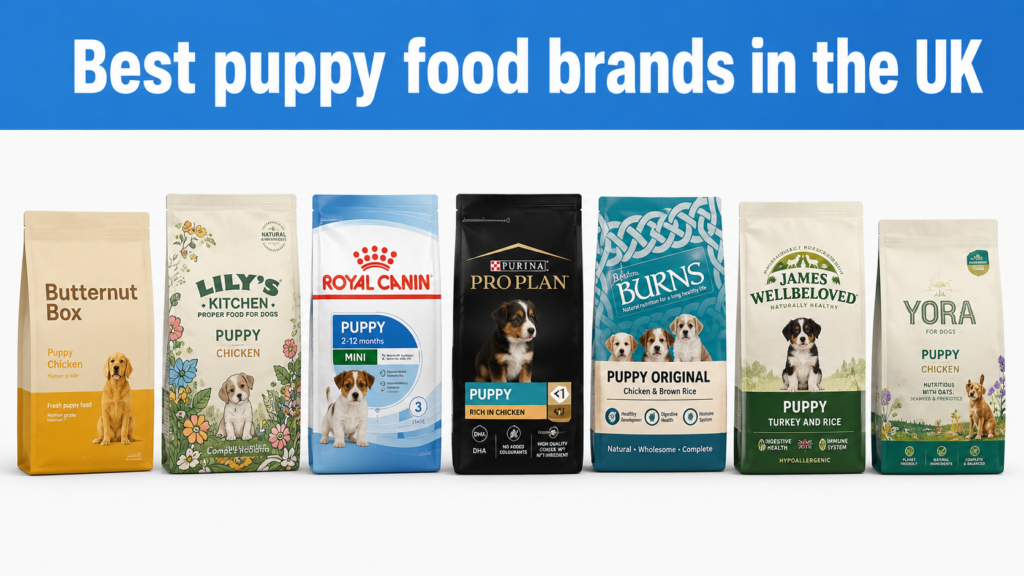
For pricing reference, you can compare current prices on Amazon UK, which often has competitive deals on all of these brands.
1. Royal Canin Puppy – best for breed-specific nutrition
Best for: Owners who want tailored nutrition for their specific breed, or owners of large and giant breed puppies where controlled growth is essential.
Royal Canin is one of the most widely recommended brands by UK vets, and I think that recommendation is generally deserved. What sets them apart is their breed-specific range. They produce dedicated puppy formulas for Labrador Retrievers, French Bulldogs, German Shepherds, Cocker Spaniels, Golden Retrievers, and more, plus separate formulas for small, medium, and large breed puppies.
Each breed-specific formula accounts for differences in growth rate, jaw shape (kibble size and texture), and common breed-specific health concerns. The Royal Canin product page explains their research approach, and while I take manufacturer claims with a pinch of salt, the nutritional profiles are solid.
Key nutrition points: Protein around 29-32%, fat 15-21% depending on the specific formula. Their large breed puppy food has carefully controlled calcium levels (around 1.1%) to support safe skeletal development. Most formulas include DHA for brain development, plus a tailored fibre blend for digestive health.
Things to consider: The ingredient list isn’t the most open I’ve seen. Royal Canin uses “dehydrated animal proteins” and “animal fats” without always specifying the source, which bothers some owners. I think the nutritional science behind the food is strong, but if clear ingredient details are your top priority, this isn’t the brand for you. It’s also relatively expensive, typically costing £45-65 for a 12kg bag depending on the specific formula.
Which dogs it suits: Breed-specific formulas are genuinely useful for breeds with known growth patterns or health predispositions. The large breed puppy formula is particularly good for Labrador, Golden Retriever, and GSD puppies.
Which dogs may need something different: If your dog has grain sensitivities or you prefer to see clearly named meat sources on the label, James Wellbeloved or Lily’s Kitchen would be better alternatives. For tight budgets, this brand is probably too expensive.
2. Hills Science Plan Puppy – best for science-backed nutrition
Best for: Owners who want a vet-trusted brand with strong clinical research behind it, particularly for puppies with specific health needs.
Hill’s Science Plan has a long history of clinical research and veterinary endorsement. Their puppy range includes formulas for small, medium, and large breeds, plus a sensitive stomach variant and a healthy development option. The Hills product page details the research behind each formula, and their evidence base is among the strongest in the commercial pet food industry.
Their large breed puppy formula is worth a particular mention. It contains clinically proven antioxidants, controlled levels of calcium for safe bone development, and optimal protein levels for lean muscle growth. I’ve spoken to several UK vets who specifically recommend this formula for large breed puppies.
Key nutrition points: Protein 27-31%, fat 15-19%. All formulas include DHA from fish oil, clinically proven antioxidant blend (vitamins C and E), and prebiotic fibre for digestive health. Their large breed puppy food contains approximately 1.0-1.2% calcium.
Things to consider: Similar to Royal Canin, the ingredient list includes some less-specific terms. “Poultry meal” rather than named chicken, for example. The food is effective and well-balanced, but if you want to know exactly which animal parts are in your puppy’s bowl, you won’t find that level of detail here. Price is in a similar range to Royal Canin, around £40-60 for 12kg.
Which dogs it suits: Puppies of all sizes, especially those whose owners value veterinary backing and clinical evidence. The sensitive stomach variant is genuinely helpful for puppies with loose stools.
Which dogs may need something different: Dogs with diagnosed allergies to specific grains or proteins may need a more limited ingredient diet. Owners prioritising natural ingredients should look at Lily’s Kitchen or Burns.
3. Burns Puppy Food – best for sensitive stomachs
Best for: Puppies with digestive sensitivity, loose stools, or skin irritations that may be linked to their diet.
Burns Pet Nutrition was founded by a vet, John Burns, and the company has built a strong reputation for simple, hypoallergenic recipes that are gentle on the digestive system. Their puppy food is based on the principle that fewer, higher-quality ingredients reduce the likelihood of food intolerances and digestive upset.
I’ve recommended Burns to several puppy owners whose dogs were struggling with runny stools on other brands, and the improvement is usually noticeable within a couple of weeks. The Burns pet nutrition website explains their philosophy of using whole grains and minimal ingredients.
Key nutrition points: Protein around 19-22%, fat 7-10%. These numbers are lower than most puppy foods, which is deliberate. Burns uses a lower protein, lower fat approach to reduce the strain on developing digestive systems. The food contains brown rice as the primary carbohydrate, which is easily digestible. No artificial colours, flavours, or preservatives.
Things to consider: The lower protein and fat content means this isn’t the best choice for puppies that need calorie-dense food (very small breeds with fast metabolisms, for example). Some owners worry that 19% protein is too low for a growing puppy, though Burns maintains that their food provides adequate protein through high-quality, easily digestible sources rather than simply boosting the percentage with cheap fillers.
Which dogs it suits: Puppies with sensitive digestion, recurring loose stools, or suspected food intolerances. It’s also good for owners who prefer a minimalist ingredient list.
Which dogs may need something different: Very active puppies, working breed puppies, or toy breed puppies that need higher calorie density. Puppies that are underweight or struggling to gain weight would probably do better on a higher-protein, higher-fat food.
4. James Wellbeloved Puppy – best hypoallergenic option
Best for: Puppies with known or suspected food allergies, particularly grain sensitivities.
James Wellbeloved is one of the UK’s best-known hypoallergenic pet food brands. Their puppy range uses single-source animal proteins and avoids common allergens like wheat, beef, and dairy. The James Wellbeloved website offers a useful guide to their ingredient choices and allergy management approach.
What I like about James Wellbeloved is the transparency. They use named meat meals (turkey, lamb, or duck depending on the variant), and their recipes are genuinely free from the ingredients most commonly associated with canine allergies. The inclusion of prebiotics and natural supplements like yucca extract (which may help reduce stool odour) is a nice touch.
Key nutrition points: Protein 26-27%, fat 10-14%. Contains added glucosamine and chondroitin for joint support, plus natural herbs and prebiotics for digestive health. Rice and barley as carbohydrate sources instead of wheat or maize.
Things to consider: The protein and fat levels are moderate rather than high, which is fine for most puppies but might not suit those needing extra calories. Some owners report that their puppies find it less palatable than some other brands, though this seems to vary considerably between individual dogs. It’s also not the cheapest option at roughly £45-55 for a 12-15kg bag.
Which dogs it suits: Any puppy with skin issues, ear infections, digestive problems, or a family history of food allergies. Also a good preventative choice if you want to minimise the risk of allergies developing in the first place.
Which dogs may need something different: Puppies without allergy concerns might get equally good nutrition from a cheaper brand. If your puppy needs grain-free food specifically (rather than just wheat-free), you’d need to look at other options since James Wellbeloved uses rice and barley.
5. Lily’s Kitchen Puppy – best natural ingredients
Best for: Owners who want genuinely natural, high-quality ingredients with clear provenance and minimal processing.
Lily’s Kitchen positions itself as a “proper food for pets” brand, and honestly, their ingredient lists are impressive. Their puppy food uses fresh chicken and salmon as the primary protein sources, with named vegetables and herbs you’d recognise from your own kitchen. The Lily’s Kitchen range includes both dry and wet puppy food options.
I think Lily’s Kitchen is one of the best options in the UK if ingredient quality and natural sourcing are your priorities. The food is certified by the Organic Food Federation (for their organic variants), and they’re open about where their ingredients come from. You won’t find any vague “meat and animal derivatives” on their label.
Key nutrition points: Protein 28-31%, fat 12-15%. Includes salmon oil for omega-3 fatty acids, prebiotics for gut health, and a range of natural supplements including seaweed (for trace minerals) and cranberry (for urinary tract health). No artificial anything.
Things to consider: It’s expensive. Expect to pay around £55-70 for a 12kg bag, which puts it at the premium end of the market. Some owners also find that the higher vegetable content can cause looser stools in sensitive puppies, at least during the initial transition period. If you need help with that transition, our guide on how to switch your puppy’s food safely explains the gradual method that usually prevents digestive upset.
Which dogs it suits: Puppies whose owners prioritise natural ingredients, organic sourcing, and clear labelling. Good for puppies that tolerate a varied ingredient profile.
Which dogs may need something different: Puppies with very sensitive digestion might struggle with the variety of ingredients. Budget-conscious owners will get better value from Harringtons or Wagg. Puppies with specific allergies to chicken or salmon would need an alternative protein source.
6. Forthglade Puppy – best wet food for fussy eaters
Best for: Puppies that are reluctant to eat dry food, fussy eaters, or owners who want to feed a high-quality wet food.
Forthglade is a Devon-based company that produces genuinely impressive wet food. Their puppy range uses high-quality, identifiable ingredients and avoids artificial additives entirely. The Forthglade puppy range comes in convenient tray format and includes several flavour varieties including chicken, turkey, and salmon.
What makes Forthglade stand out for fussy eaters is the palatability. The food has a strong, natural aroma that most puppies find irresistible, and the soft texture is easy for young puppies to eat. If your puppy turns their nose up at kibble or seems to be eating reluctantly, trying a Forthglade topper or mixed feeding approach often solves the problem quickly.
Key nutrition points: Their wet food ranges from 8-10% protein and 5-7% fat (as fed, which translates to roughly 30-35% protein and 15-20% fat on a dry matter basis). The food is grain-free, using sweet potato as the primary carbohydrate. Includes added vitamins and minerals for complete nutrition.
Things to consider: Because this is a wet food, it’s more expensive per calorie than dry alternatives. Feeding Forthglade exclusively would cost roughly £2-3 per day for a medium breed puppy, compared to around £0.80-1.20 for quality dry food. It also needs to be refrigerated after opening and doesn’t last long once opened. Some vets have expressed concerns about grain-free diets in general, though the research on this is still ongoing and mostly relates to adult dogs rather than puppies.
Which dogs it suits: Fussy eaters, puppies transitioning from weaning, small breed puppies with tiny teeth, and any puppy that needs encouragement to eat. Also good for dogs that don’t drink enough water, since wet food provides significant hydration.
Which dogs may need something different: Owners on a tight budget will find this an expensive daily feed. Puppies that need the dental benefits of dry kibble should have at least some dry food in their diet.
7. Harringtons Puppy – best budget-friendly option
Best for: Owners who want decent quality puppy food without spending a fortune.
Harringtons is a Yorkshire-based family company that produces surprisingly good food at remarkably low prices. Their puppy food isn’t fancy, and the ingredient list isn’t as clean as Lily’s Kitchen or Burns, but it provides solid, complete nutrition at a fraction of the price. The Harringtons puppy range uses chicken as the primary protein source with rice as the main carbohydrate.
I think Harringtons is probably the best value puppy food you can buy in the UK right now. The food is free from artificial colours and flavours, uses a named meat source, and includes added vitamins and minerals. It’s not going to win any awards for ingredient quality, but it meets FEDIAF standards and thousands of UK puppies are thriving on it.
Key nutrition points: Protein around 28%, fat 10-11%. Contains wheat as a carbohydrate source alongside rice. Includes prebiotics, added vitamins and minerals, and linseed as a natural source of omega-3 fatty acids. Available in standard and grain-free variants.
Things to consider: The grain-free variant uses potato instead of wheat, but some vets prefer dogs to have grains in their diet unless there’s a specific medical reason to avoid them. The protein comes partly from cereal sources as well as chicken, which isn’t ideal but is acceptable at this price point. If you check the All About Dog Food rating, Harringtons Puppy typically scores around 5.5-6 out of 10, which is fair for the price.
Which dogs it suits: Puppies from families on a budget who still want a named-meat, artificial-free food. Great for multi-dog households where food costs add up quickly.
Which dogs may need something different: Puppies with wheat sensitivities (though the grain-free variant addresses this). Puppies that need higher fat content for energy. Owners who want premium, natural ingredients should look elsewhere.
8. Wagg Puppy – best value supermarket pick
Best for: Owners on very tight budgets who still want complete, nutritionally adequate puppy food available on the high street.
Wagg is widely available in UK supermarkets, pet shops, and online, and it’s about as cheap as complete puppy food gets. A 12kg bag typically costs £22-28, which is roughly half the price of most “premium” brands. The Wagg puppy food is made in the UK and meets FEDIAF nutritional standards for growth.
I’ll be honest: Wagg isn’t going to impress anyone with its ingredient list. The protein source includes “meat meal” alongside chicken, and the food contains wheat and soya. But here’s the thing: it’s still a complete, balanced food that meets the minimum (and in some areas, above minimum) nutritional requirements for growing puppies. For owners who simply can’t stretch to £50+ per bag, Wagg is a perfectly acceptable choice that won’t harm your puppy’s development.
Key nutrition points: Protein around 27%, fat 10%. Contains chicken as a named protein source alongside meat meal. Includes whole grains, vegetables, and added vitamins and minerals. No artificial colours. Available in standard and sensitive (wheat-free) variants.
Things to consider: The inclusion of soya is controversial; some owners prefer to avoid it due to potential phytoestrogen concerns, though the evidence for harm in dogs is limited. The meat meal isn’t specified, so you don’t know exactly what animal it comes from. Some puppies may experience looser stools on this food, which is usually related to the fibre content or the soya.
Which dogs it suits: Puppies on a strict budget, puppies in rescue or temporary care, and owners who need an easily accessible complete food from the supermarket. Multi-dog households watching costs.
Which dogs may need something different: Puppies with sensitive digestion (go for Burns instead). Puppies with known allergies to wheat or soya. Owners who are uncomfortable with unspecified meat ingredients.
How much food does your puppy actually need
This is one of the questions I get asked most often, and the honest answer is: it depends. But I’ll give you some practical guidelines to work with.
Every puppy food brand provides feeding guidelines on the packaging, usually expressed as a daily amount based on your puppy’s current weight and expected adult weight. These guidelines are a reasonable starting point, but they’re just that: a starting point. Some puppies need more, some need less, and the only way to know for sure is to monitor your puppy’s body condition over time.
As a rough guide, here’s what typical daily food amounts look like for medium breed puppies (20-25kg adult weight) at different ages:
- 8-12 weeks: Around 150-200g of dry food per day, split into 4 meals
- 3-4 months: Around 180-250g per day, split into 3 meals
- 5-6 months: Around 200-280g per day, split into 2-3 meals
- 7-12 months: Around 220-300g per day, split into 2 meals
These are very approximate figures for a typical dry food. Always check the specific guidelines for the food you’re using, as calorie density varies enormously between brands. A cup of Lily’s Kitchen provides different calories to a cup of Wagg.
For large breed puppies, the amounts are significantly higher. A Great Dane puppy at 6 months might eat 350-450g per day. Small breed puppies eat much less, often just 50-80g per day, but they need calorie-dense food to get enough energy from those small portions.
The most reliable way to judge whether you’re feeding the right amount is body condition scoring. You should be able to feel (but not see) your puppy’s ribs with light pressure. Looking from above, your puppy should have a visible waist behind their ribs. From the side, their belly should tuck up slightly. If you can see their ribs clearly, they’re underweight. If you can’t feel them at all, they’re overweight. Most puppies are fine, but labrador and retriever puppies in particular tend to overeat if given the chance, so monitoring is important.
When to switch from puppy to adult food
The timing depends on your puppy’s breed size, and it’s important to get right. Switch too early and your puppy misses out on the extra nutrients they need for growth. Switch too late and they’ll be consuming more calories and calcium than their adult body needs, which can lead to weight gain.
Here’s a rough guide for when to transition:
- Toy and small breeds (under 10kg adult weight): Switch at around 9-12 months
- Medium breeds (10-25kg adult weight): Switch at around 12 months
- Large breeds (25-45kg adult weight): Switch at around 15-18 months
- Giant breeds (over 45kg adult weight): Switch at around 18-24 months
Large and giant breed dogs mature more slowly and benefit from staying on puppy food (specifically large breed puppy food) for longer. Their bones and joints are still developing well past their first birthday, and the controlled calcium and calorie levels in puppy food support that extended growth period safely.
When you do make the switch, do it gradually over 7-10 days. Start by replacing about 25% of their puppy food with adult food, then gradually increase the proportion over a week or so. If you want detailed instructions, our guide on how to switch your puppy’s food safely covers the step-by-step process and explains why rushing the transition causes problems.
Some signs that your puppy might be ready for adult food include reaching their expected adult height, starting to fill out rather than grow taller, and maintaining a stable weight on their current portion sizes. If you’re unsure, ask your vet at your puppy’s next check-up. They can assess your dog’s growth and advise on timing.
Common puppy feeding mistakes I see
After talking to dozens of puppy owners and several vets, I’ve noticed the same feeding mistakes coming up again and again. Here are the ones I think cause the most problems.
Free feeding (leaving food out all day). I understand why people do it. It seems convenient and puppies can eat whenever they’re hungry. But free feeding makes it nearly impossible to monitor how much your puppy is actually eating, which makes spotting appetite changes (a common early sign of illness) much harder. It also encourages picky eating habits and can contribute to overeating in food-motivated breeds. Set mealtimes are better for almost every puppy.
Switching food too quickly. A puppy’s digestive system is still maturing, and sudden dietary changes frequently cause diarrhoea and vomiting. Even if the new food is higher quality, your puppy’s gut bacteria need time to adjust. Always transition gradually over at least a week. Our full guide on switching dog food safely explains the process in detail.
Overfeeding. It’s incredibly common. Puppies are cute, they act hungry (puppies always act hungry), and owners naturally want to make sure their new arrival is well-fed. But overfeeding doesn’t just make puppies fat. It puts excessive strain on developing bones and joints, especially in larger breeds. Follow the feeding guidelines, adjust based on body condition, and resist those puppy dog eyes at the dinner table.
Supplementing a complete diet without veterinary advice. If you’re feeding a complete puppy food, adding calcium supplements, vitamin drops, or other extras can actually do more harm than good by disrupting the carefully balanced nutrient ratios. This is particularly dangerous with calcium in large breed puppies. Unless your vet has specifically recommended supplementation, stick to a quality complete food and leave the extras alone.
Feeding table scraps. I know it’s tempting, especially when your puppy is staring at you with those enormous eyes. But regular table scraps create bad habits, add unnecessary calories, and can unbalance a carefully planned diet. Some human foods are also toxic to dogs: onions, garlic, chocolate, grapes, raisins, and xylitol (a common artificial sweetener) can all cause serious illness. Keep your puppy on their own food and use proper dog treats for rewards.
Using treats as a significant portion of daily calories. Treats should make up no more than 10% of your puppy’s daily calorie intake. If you’re doing lots of training (which you should be, because puppies learn fast), use tiny pieces of their regular kibble as training rewards rather than separate treats. It’s effective, calorie-neutral, and won’t fill them up between meals.
Frequently asked questions about puppy food
How often should I feed my puppy?
Very young puppies (8-12 weeks) should eat four meals per day. From 3-6 months, three meals per day is appropriate. From 6 months onwards, most puppies do well on two meals per day. The key is consistency. Feed at the same times each day and remove uneaten food after 15-20 minutes. This helps establish a routine and makes house training easier because you can predict when your puppy will need the toilet.
Can puppies eat adult dog food?
Technically yes, but I wouldn’t recommend it unless you’re in a genuine emergency and have nothing else available. Adult dog food doesn’t have the right calcium-to-phosphorus ratio for growing bones, typically has less protein than puppies need for muscle development, and may lack adequate DHA for brain growth. A few days on adult food won’t cause lasting harm, but sustained feeding during the growth period really isn’t ideal.
Should I give my puppy grain-free food?
Only if there’s a medical reason to do so, such as a diagnosed grain allergy. There’s no evidence that grain-free food is inherently healthier for dogs, and some research has suggested a potential link between grain-free diets and a heart condition called DCM (dilated cardiomyopathy), though this research is still inconclusive and mostly relates to adult dogs. Most puppies digest grains like rice and oats perfectly well. If you think your puppy has a food allergy, speak to your vet rather than switching to grain-free on a hunch. True food allergies in puppies are less common than people think, and environmental allergies are often the real culprit.
Is raw food safe for puppies?
Commercial raw puppy foods that are labelled as complete and meet FEDIAF standards are nutritionally safe. The hygiene concern is real though. Raw meat carries bacteria that can make your puppy ill (though healthy dogs are fairly resistant) and can spread to humans in your household, particularly children, elderly people, or anyone with a compromised immune system. If you choose to feed raw, handle the food carefully, clean all surfaces and bowls with hot soapy water, and wash your hands thoroughly. The RSPCA has useful guidance on the hygiene considerations of raw feeding.
What about mixed feeding (dry and wet together)?
Mixed feeding is absolutely fine and in fact, I think it’s a great approach for many puppies. It combines the convenience and dental benefits of dry food with the palatability and hydration benefits of wet food. Just make sure both foods are nutritionally complete and that you account for the calories from both when calculating daily portions. Don’t just top up a full portion of kibble with wet food, or you’ll end up overfeeding.
My puppy has diarrhoea after switching food. What should I do?
Mild loose stools for a day or two after switching food are fairly common as the gut adjusts. If you’ve switched gradually over 7-10 days and your puppy still has persistent diarrhoea after the transition period, the new food might not suit them. Try a more easily digestible option like Burns Puppy or Hills Science Plan Sensitive Stomach. If diarrhoea is severe, lasts more than 48 hours, or is accompanied by vomiting, lethargy, or blood in the stool, contact your vet immediately. Puppies can dehydrate quickly, and ongoing digestive issues in young dogs should always be checked by a professional.
Do puppies need different food for different life stages?
Yes, and this matters more than many owners realise. Most puppy foods are designed for the initial growth phase (up to around 12 months for medium breeds). Some brands offer a “junior” stage for older puppies that are still growing but have passed the most rapid growth period. And then there’s the switch to adult food. In total, most dogs will be on at least two, sometimes three, different foods during their first two years. Our puppy food guides cover the different life stage options available in the UK.
How do I know if my puppy’s food is good quality?
Read the ingredient list. A named animal protein should be the first ingredient. Avoid foods where “cereals” or “meat and animal derivatives” appear first. Check that the food is labelled as complete and meets FEDIAF guidelines. Look at independent reviews and nutritional analysis on sites like All About Dog Food, which rates UK dog foods on ingredient quality, nutritional value, and transparency. And pay attention to your puppy. Good food produces firm, well-formed stools, a healthy coat, good energy levels, and steady weight gain. If your puppy looks healthy and feels well on their current food, it’s probably working for them.
Final thoughts
There’s no single “best” puppy food that works for every dog. The right choice depends on your puppy’s breed, size, sensitivities, your budget, and how much importance you place on ingredient transparency versus veterinary endorsement versus convenience.
If I had to pick a standout, I’d probably say Royal Canin or Hills Science Plan for most puppies, simply because the nutritional science is so well-established and they make it easy to find the right formula for your dog’s specific needs. But that comes with a premium price tag. For owners on a budget, Harringtons delivers surprisingly good quality at half the price. And for puppies with sensitive stomachs or allergies, Burns and James Wellbeloved are genuinely excellent options that I’ve seen work wonders for dogs struggling with other brands.
Whatever food you choose, remember that consistency matters more than perfection. And when your puppy eventually becomes a senior dog, be sure to check out our guide to the best senior dog food. Find a good quality, complete food that your puppy thrives on, stick with it, and resist the urge to keep switching based on marketing claims or online recommendations. Your puppy’s health is best judged by how they look and feel, not by the rating someone on the internet gave their food.
And if you’re ever in doubt, ask your vet. They see the results of different diets every day and can give you advice that’s specific to your individual puppy. No article (including this one) can replace that personalised guidance.
Good luck with your new puppy. The food decision feels overwhelming at first, but once you find something that works, you can relax and focus on the fun stuff. Like house training. And chewed shoes. And 3am toilet trips. Being a puppy owner is brilliant. For more puppy nutrition advice, including our picks for the best adult dog food, visit dogfoodsuk.com where we cover everything from choosing the right food to managing common dietary issues.