
Your dog’s gut health impacts more than just digestion. It also affects their immune system, skin and coat condition, mood, and ability to absorb nutrients from food. Over the past few years, UK dog owners have become increasingly aware of the important role gut health plays in their dog’s overall well-being. Because of this, probiotics for dogs are no longer a minor or niche supplement topic, but a common topic in canine nutrition.
At Dog Foods UK, we help UK dog owners understand the growing supplement market and explain what really works. In this complete guide, we explain what probiotics are, how they can be helpful for your dog, what natural food sources you can use at home, which commercial products in the UK are worth considering, and when you should be careful. We also explain the gut and skin connection, which is often overlooked, but very relevant for dogs with allergies and skin problems.
As we always say, it’s best to consult a vet before adding any new supplements to your dog’s diet, especially if your dog has a pre-existing health condition or is taking medication.
What Are Probiotics and How Do They Work for Dogs?
Probiotics are live microorganisms, mainly helpful bacteria, that support the natural balance of the gut microbiome when given in the right amounts. The gut microbiome is a complex community of bacteria, fungi, and other tiny microorganisms that live in your dog’s digestive tract. This community plays an important role in digestion, immune function, nutrient absorption, and the production of certain vitamins.
According to Davies Veterinary Specialists, probiotics help maintain a healthy balance of gut bacteria. This balance can be disturbed by illness, stress, medication, or dietary changes. When the balance of helpful and harmful bacteria in the gut is disrupted, the condition is called dysbiosis. Probiotics help restore this balance by adding helpful strains. These helpful bacteria compete with harmful bacteria for resources and a place to attach to the gut wall.
Not all probiotics are the same. Different bacterial strains have different effects in the body. Some strains are better at supporting digestion, some are more helpful for immune health, and some may provide specific benefits for the gut lining. Therefore, choosing a probiotic with the right strains matters, which we’ll cover in detail later in this guide.
The concept of using helpful bacteria to support health isn’t new. Fermented foods have been a part of human diets for thousands of years. But scientific understanding of exactly how these microorganisms work, and which specific strains are beneficial for dogs, has improved significantly in recent years. A 2023 review published in PMC (PubMed Central) examined the current evidence for probiotic use in companion animals and found that specific strains, especially Lactobacillus and Bifidobacterium species, appear promising for supporting digestive and immune health in dogs.
Prebiotics vs Probiotics vs Postbiotics
These three terms are often confused, but they have different meanings and work together to support gut health. Understanding the difference between them helps you make better choices about your dog’s nutrition and supplements.
Probiotics
As mentioned above, probiotics themselves are live beneficial bacteria. These are actually tiny microorganisms that you introduce into your dog’s gut. Common probiotic strains in dog supplements include Lactobacillus acidophilus, Bifidobacterium animalis, Enterococcus faecium, and Bacillus coagulans. To be effective, these live bacteria must survive the acidic environment of the stomach and reach the intestines alive. This is why delivery method and strain selection matter.
Prebiotics
Prebiotics are not bacteria. They are types of dietary fiber that serve as food for the beneficial bacteria already living in your dog’s gut. You can think of prebiotics as fertilizer for your dog’s gut garden.
When beneficial bacteria ferment prebiotics, they create short-chain fatty acids (SCFAs), such as butyrate. These nourish the cells that line the gut wall and support a healthy intestinal barrier.
Common prebiotics include fructooligosaccharides (FOS), galactooligosaccharides (GOS), inulin, and chicory root extract. Many quality dog foods and probiotic supplements combine prebiotics with probiotics, so that the two work together for a better effect.
According to Natural Vetcare, combining prebiotics and probiotics is one of the most effective ways to support your dog’s gut health long-term.
Postbiotics
Postbiotics are the bioactive compounds that probiotic bacteria create when they ferment prebiotics. These include short-chain fatty acids, vitamins, enzymes, amino acids, and antimicrobial peptides. Postbiotics are relatively new to the supplement world, but are gaining attention because they can provide many of the benefits of probiotics without the challenge of keeping live bacteria alive. They do not require refrigeration and are more stable during processing and storage. Some advanced dog supplements now include postbiotics in addition to or in place of live probiotics.
In practical life, the best approach to your dog’s gut health often involves a combination of all three. A food or supplement that combines probiotics with prebiotics, sometimes called synbiotics, gives beneficial bacteria the fuel they need to settle in the gut and grow.
Benefits of Probiotics for Dogs
The potential benefits of probiotics go far beyond simple digestion. Research and veterinary experience suggest that probiotics can have a positive effect on many areas of your dog’s health.
Improved Digestion and Nutrient Absorption
The most well-known benefit of probiotics is improved digestive health. Beneficial bacteria help break down certain parts of food that your dog’s own enzymes can’t easily process. This includes some fibers and complex carbohydrates.
When food is better broken down, your dog can absorb more nutrients from its food. Probiotics also help maintain regular bowel movements and can reduce common digestive problems like gas, bloating, and loose stools.
For dogs with food allergies or sensitivities, probiotics can help support the gut lining and reduce the severity of digestive reactions.
Stronger Immune System
A large portion of your dog’s immune system, approximately 70%, is located in the gut. Gut-associated lymphoid tissue (GALT) is the body’s largest immune organ and requires a healthy balance of gut bacteria to function properly.
Probiotics help produce antibodies, support the activity of immune cells, and help keep the intestinal barrier strong. This barrier acts as the first line of defense against harmful pathogens.
According to Pooch and Mutt, a healthy gut microbiome is one of the main foundations of a strong immune system in dogs.
Better Skin and Coat
The connection between gut health and skin health is now well recognized in veterinary medicine. This concept is called the gut-skin axis. We’ll explain this in detail in the next section, but in short, probiotics can help reduce inflammation within the body, which in dogs often manifests as skin problems.
Some owners notice an improvement in their dog’s coat condition after starting probiotic supplementation. For dogs with frequent skin issues or rashes, probiotics can be a useful part of a broader management plan.
Reduced Anxiety and Stress Response
The gut-brain axis is also an area of growing scientific interest. Research suggests that the gut microbiome may affect behavior and mood. This occurs through the production of neurotransmitters and the vagus nerve, which connects the gut to the brain.
Some studies on dogs have shown that specific probiotic strains may help reduce anxiety-related behaviors, especially in stressful situations, such as fireworks, travel, or separation.
This research is still growing, but early findings are promising. If your dog has stress-related health issues, supporting gut health may provide wider benefits than you expect.
Support After Antibiotic Treatment
Antibiotics are sometimes necessary to treat bacterial infections, but they work by killing bacteria and cannot distinguish between harmful and beneficial strains. A course of antibiotics can significantly disrupt the gut microbiome, often leading to digestive upset, loose stools, and decreased immunity.
Giving probiotics during and after antibiotic treatment can help replenish beneficial bacteria and quickly restore gut balance. This is one of the most well-documented and widely accepted uses of probiotics in veterinary medicine.
We will discuss this topic in more detail in the section titled “When Your Dog May Need Probiotics.”
The Gut-Skin Connection: Why Gut Health Affects Your Dog’s Skin
The connection between gut health and skin health is a very important and often overlooked part of canine well-being. In veterinary dermatology, this relationship is called the gut-skin axis, and understanding it can be especially helpful for dogs with chronic skin problems.
How it works, simply put. When the gut microbiome is balanced and healthy, the intestinal lining acts as a strong barrier. It prevents harmful substances, toxins, and half-digested food particles from leaking into the bloodstream. When the gut barrier is in proper condition, it is sometimes referred to as a strong gut lining.
But when dysbiosis occurs, meaning the balance of gut bacteria is disturbed, the intestinal lining can become more permeable. This is sometimes called a “leaky gut.” When half-digested proteins and other substances pass through the weakened gut barrier, the immune system mistakes them for foreign invaders and launches an inflammatory response. This body-wide inflammation can manifest in a variety of ways, with the most common form being skin inflammation.
Dogs that have chronic skin problems, such as itching, redness, hot spots, and frequent ear infections, often also have underlying gut health issues. The Protexin Veterinary team notes that supporting gut health is becoming an important part of managing skin conditions in dogs, alongside traditional dermatological treatments.
This gut-skin connection also explains why dietary changes can improve skin conditions. When you address the gut, such as removing foods that trigger inflammation and adding probiotics to restore bacterial balance, you are tackling the root cause of the skin problem, not just treating the symptoms. For dogs suspected of food allergies, supporting gut health with probiotics can complement an elimination diet and help speed the recovery of the gut lining.
Certain beneficial gut bacteria also produce vitamins and compounds that directly support skin health. These include B vitamins and short-chain fatty acids, which have anti-inflammatory properties within the body. When you support the gut microbiome, you are indirectly supporting the health of your dog’s largest organ, the skin.
Signs Your Dog May Need Probiotics
Probiotics aren’t just for dogs with diagnosed health conditions. Many dogs can benefit from probiotic support, but there are some signs that show your dog’s gut health may need attention.
Persistent Digestive Issues
If your dog regularly has loose stools, diarrhea, excessive gas, or bloating, it could be a sign of a gut bacteria imbalance. Occasional digestive upset is normal, but if the problem becomes chronic or keeps coming back, it could mean the gut microbiome needs support.
Probiotics can help restore bacterial balance and improve stool consistency. If your dog’s chronic diarrhea persists after giving probiotics, it’s important to consult a vet, as it could be a sign of an underlying condition that requires a veterinary check-up.
Frequent Skin Problems and Allergies
Dogs with frequent skin problems, such as itching, redness, hot spots, or ear infections, may benefit from probiotic support, as discussed in the gut-skin section above.
Dogs with environmental allergies or food sensitivities often have a disturbed gut microbiome, and restoring balance can help reduce the frequency and severity of flare-ups.
Probiotics alone are not enough to cure allergies, but they can be a useful part of a broader management plan that also includes the right diet and veterinary treatment.
After a Course of Antibiotics

This is one of the most common and well-supported reasons for giving your dog probiotics. Antibiotics disrupt the entire gut microbiome, not just the harmful bacteria they target. After completing a course of antibiotics, many dogs experience digestive upset, which can include diarrhea and changes in appetite.
Probiotic supplementation during and after an antibiotic course can help restore beneficial bacteria in the gut and speed the recovery of normal digestive function.
According to Pet Drugs Online, vets frequently recommend probiotics alongside antibiotics for this reason. It’s important to remember that it’s ideal to give the probiotic at a different time than the antibiotic, usually a few hours apart. This reduces the chance that the antibiotic will kill the probiotic bacteria before they reach the gut.
During Times of Stress
Stress can significantly disturb a dog’s gut microbiome. Common stressors include house moves, routine changes, travel, boarding, the arrival of a new pet or family member, and loud noises such as fireworks or thunderstorms.
During these periods, your dog’s gut bacteria can become out of balance, leading to digestive upset and behavior changes.
Probiotic supplementation during stressful periods can help stabilize the gut and support your dog’s resilience. Some probiotic strains are specifically marketed for stress support.
When Switching Foods
Changing your dog’s food, even if done gradually, introduces new ingredients and new nutrient profiles for gut bacteria, which take time to adapt. Some dogs may experience temporary digestive upset during this transition period.
Adding a probiotic supplement during a food transition can help the gut microbiome adjust more smoothly to the new diet. This can help reduce the risk of diarrhea and other digestive issues.
Natural Food Sources of Probiotics for Dogs
You don’t always need to purchase commercial supplements to add probiotics to your dog’s diet. Many natural foods are rich in beneficial bacteria and can be safely given to most dogs in moderation.
These whole-food sources can serve as a great complement to commercial probiotic products. In some cases, they can even be an alternative to commercial supplements.
Kefir
Kefir is a fermented milk drink and is considered one of the richest sources of natural probiotics. It contains a greater variety of bacterial strains than regular yogurt, including Lactobacillus kefiri, which is unique to kefir. Kefir also contains beneficial yeasts that can help support gut health.
Plain, unsweetened kefir is the best option for dogs. Avoid flavored or sweetened varieties, as they often contain added sugar, artificial sweeteners (some of which can be toxic to dogs), or fruit, which can upset digestion.
Start with a small amount, like around 1 teaspoon for small dogs or 1 tablespoon for larger dogs, and then gradually increase the amount over a week. Mix it into your dog’s regular food.
Some dogs with dairy sensitivity may not tolerate kefir well. If your dog already has a dairy intolerance, consider water kefir as a dairy-free alternative, or choose a non-dairy probiotic supplement.
Plain Yogurt
Plain, unsweetened yogurt is a well-known source of probiotics and is generally safe for most dogs. Choose live or bio yogurt that contains active cultures, such as Lactobacillus bulgaricus and Streptococcus thermophilus. Greek yogurt is a good choice because it has more protein and less sugar than standard yogurt.
Like kefir, avoid yogurt that contains added sugar, artificial sweeteners, especially xylitol, or flavorings. Xylitol is very toxic to dogs.
Give plain yogurt in moderation as a topper or occasional treat. Mixing 1 or 2 teaspoons into your dog’s meal is usually sufficient. Again, dogs with lactose intolerance may experience digestive upset. So introduce slowly and monitor your dog’s response.
Fermented Vegetables
Fermented vegetables like sauerkraut and kimchi can be excellent sources of beneficial bacteria. But it’s important to be very careful with them. Use only raw, unpasteurized fermented vegetables, as the pasteurization process kills beneficial bacteria. Commercially fermented vegetables found in jars are often pasteurized to make them shelf-stable and don’t contain live probiotics.
In addition, much commercial kimchi and sauerkraut contain onion, garlic, or excessive salt. All of these can be harmful to dogs. If you want to give your dog fermented vegetables, the safest way is to make your own at home using dog-safe ingredients, or purchase specifically dog-safe fermented vegetable products.
A small amount of plain sauerkraut, without onion or garlic, can be offered as an occasional topping. However, it has a strong flavor, so many dogs don’t like it.
Other Natural Sources
Small amounts of fermented fish, such as kefir made from fish stock, can provide probiotics. Some dog owners also use kombucha, but it should be administered with extreme caution, as many commercial varieties contain ingredients that are unsafe for dogs. These may include tea (caffeine), added sugars, and flavorings.
We generally do not recommend kombucha for dogs unless it is specifically formulated for canine consumption.
To support your dog’s health in a more comprehensive way through nutrition, our article on anti-inflammatory foods for dogs covers additional whole-food options that complement probiotic support.
Best Probiotic Dog Foods Available in the UK
Many UK dog food brands now include probiotics in their recipes, making it easy to support your dog’s gut health through their daily meals. Here are some of the best options available on the UK market.
Scrumbles
Best for: Dogs needing built-in probiotic support with every meal
Scrumbles is a UK-based, B-Corp-certified company that makes gut health a central focus of its food formulas. Their recipes contain a proprietary probiotic called Bacillus coagulans. This is a strong, spore-forming bacteria that survives the manufacturing process and reaches the gut alive.
Scrumbles is available in both dry and wet food formats. It uses British-sourced chicken and duck as its main protein sources and avoids common allergens. Their recipes also contain prebiotic fiber from sources like chicory root, which supports probiotic bacteria.

Scrumbles is available from their website, Amazon UK, and various UK pet retailers.
Approximate UK price: £24-30 for 2kg dry food
Forthglade
Best for: Dogs preferring natural, gentle food with digestive support
Forthglade is a Devon-based company known for its natural, gently processed dog foods. Their recipes include prebiotics to support digestive health, and some lines also contain added probiotics.
Forthglade offers both wet food trays and cold-pressed dry food. Their products are free of artificial colors, flavors, and preservatives, and use high-quality ingredients, including free-range chicken.
The prebiotic fiber in Forthglade recipes helps feed the beneficial bacteria already present in your dog’s gut.
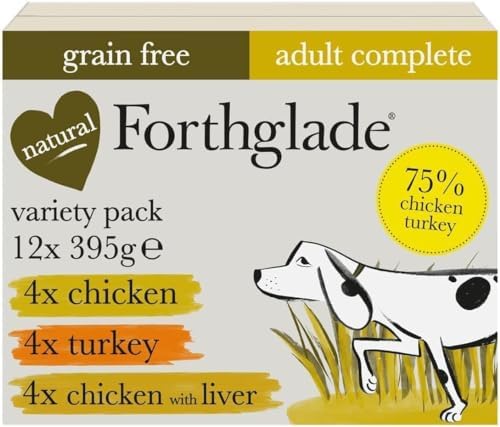

Approximate UK price: £18-24 for 12 x 395g wet trays
James Wellbeloved
Best for: Dogs with food sensitivities that need hypoallergenic food with gut support
James Wellbeloved is one of the UK’s most popular hypoallergenic dog food brands. Their recipes are designed to avoid common allergens, such as wheat, beef, dairy, soy, and artificial additives.
James Wellbeloved includes prebiotics in many of their recipes, usually chicory root extract, which helps support digestive health. They don’t add live probiotics, but the prebiotic fiber helps nourish the beneficial bacteria naturally present in your dog’s gut.
This makes James Wellbeloved a good choice for dogs with sensitivities and need additional digestive support. Our grain-free dog food guide includes more details about their product range.

Approximate UK price: £30-38 for 12.5kg dry food
Barking Heads
Best for: All-round natural nutrition with added digestive support
Barking Heads is a UK-made natural dog food brand that incorporates prebiotics and probiotics in many of its recipes. Their Puppy Days formula, for example, includes both to support the developing digestive systems of young dogs.
The brand uses high-quality natural ingredients, with named meat sources as the main protein. Their recipes are free of artificial colors, flavors, and preservatives.


Barking Heads is widely available in UK pet shops and online retailers, including Amazon UK.
Approximate UK price: £32-40 for 12kg dry food
Lily’s Kitchen
Best for: Owners wanting organic, natural ingredients with prebiotic support
Lily’s Kitchen creates premium natural dog foods made with organic ingredients and a high meat content. Their recipes include prebiotics to support digestive health, and the brand is known for its clear ingredient sourcing and ethical approach.
Lily’s Kitchen doesn’t typically add live probiotics to its foods, but prebiotic fibers like chicory root help support the existing gut microbiome.
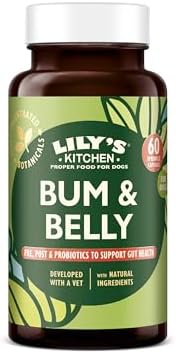


Their recipes are available in both wet and dry formats in the UK.
Approximate UK price: £38-48 for 2.5kg dry food
Best Probiotic Supplements for Dogs in the UK
If your dog’s food doesn’t contain probiotics, or if your dog needs extra gut health support, a dedicated probiotic supplement may be the answer. Here are some of the most reputable probiotic supplements available in the UK.

1. Protexin Pro-Kolin+
Best for: Acute digestive upset, vet-recommended
Protexin is one of the most respected names in veterinary probiotics, and Pro-Kolin+ is their main product for dogs. It is a tasty probiotic paste containing live beneficial bacteria, including Enterococcus faecium, along with prebiotics and cholin, which helps soothe the gut lining.
Pro-Kolin+ is widely recommended by UK vets for acute digestive upsets, such as diarrhea. It is often prescribed alongside antibiotic treatment. It comes in an easy-to-use syringe, making it easy to administer an accurate dose. Protexin also offers Synbiotic D-C, a daily maintenance probiotic powder for long-term use.
Pros: Vet-recommended; contains both probiotics and prebiotics; tasty paste format; fast-acting for acute issues; trusted brand with veterinary backing.
Cons: Paste format may be slightly less convenient for long-term daily use than powder or tablet; it is designed primarily for short-term use, not daily maintenance.
Approximate UK price: £15-20 for 30ml paste (available via vets and online pet pharmacies)
2. Lintbells YuDIGEST
Best for: Daily digestive support, long-term gut health maintenance
Lintbells, now part of the Virbac Group, is a well-known UK supplement company, and UDIGEST is their popular daily probiotic supplement for dogs. It contains a blend of beneficial bacteria, prebiotics, and gut-soothing ingredients.
YUDIGEST is designed for ongoing daily use. It comes in a tasty tablet format, which most dogs easily accept. Its formula was developed with veterinary nutritionists and is backed by quality testing.


Lintbells is perhaps best known for its YuMOVE joint supplement, and UDIGEST follows the same science-backed approach.
Pros: Designed for daily use; tasty tablet format; vet-developed; good quality control; From a trusted UK supplement brand.
Cons: May be more expensive per dose than some alternatives; tablet format may not suit every dog, but can be hidden in food.
Approximate UK price: £22-28 for 60 tablets (available on Amazon UK and pet retailers)
3. Pooch and Mutt Bionic Biotic
Best for: All-round gut and immune support with natural ingredients
Pooch and Mutt is a UK brand with a strong focus on natural, holistic canine health. Their Bionic Biotic supplement is a powder that combines probiotics with prebiotics, omega-3 and omega-6 fatty acids, and various vitamins and minerals.
This complete approach means it supports not only gut health, but also skin, coat, and immune function. The powder format makes it easy to sprinkle over your dog’s food, and the salmon oil content makes it a delicious taste for most dogs.


Pros: Multi-ingredient formula; includes omega fatty acids along with probiotics; natural ingredients; powder format makes it easy to mix with food; UK brand.
Cons: Multi-ingredient formula means the concentration of individual probiotic strains may be lower than dedicated products; contains fish oil, so may not suit dogs with fish allergies.
Approximate UK price: £18-24 for 200g powder (available from Pooch and Mutt website and Amazon UK)
4. Dorwest Herbs Enteric Coated Probiotic Tablets
Best for: Dogs that prefer tablets, from a long-established herbal brand
Dorwest Herbs, established in 1966, is one of the UK’s most trusted herbal pet product companies. Their Enteric Coated Probiotic Tablets are designed to protect probiotic bacteria from stomach acid and release them in the intestines, where they are most effective.
This enteric coating is a major advantage, as stomach acid is one of the biggest barriers to probiotic bacteria survival. The tablets contain a blend of beneficial bacteria, suitable for daily digestive support.
Pros: Enteric coating improves bacterial survival; from a trusted and long-established UK brand; tablet format makes dosing easy; suitable for daily use.
Cons: CFU count is lower than some competitors; formula is relatively simple and does not contain extra supportive ingredients.
Approximate UK price: £10-15 for 100 tablets
5. NutriAdvanced Canine Probiotic
Best for: High-potency, multi-strain probiotic support
NutriAdvanced offers canine-specific probiotic powder, which provides meaningful CFU (colony-forming unit) counts with multiple bacterial strains. It’s designed for professional use and delivers a concentrated dose of beneficial bacteria, making it suitable for dogs requiring strong gut health support.
The powder format allows for flexible dosing based on your dog’s size and needs. It’s available through veterinary channels and some online retailers.
Pros: High CFU count; multiple strains; professional-grade formula; flexible powder dosing.
Cons: May need to be sourced through vets or specialist retailers; price point may be higher; Due to the high potency, careful dosing is important.
Approximate UK price: £25-35 depending on size (available via vet practices and specialist retailers)
Many of these supplements, and some other options, are available on Amazon UK, where you can compare prices and read customer reviews. If your dog already has food allergies, always check the full ingredient list of any supplement to ensure it doesn’t contain any allergens your dog should avoid.
How to Choose a Quality Probiotic Supplement
The probiotic supplement market is growing rapidly, and the quality of products varies greatly. Here are key factors to consider when choosing a probiotic for your dog.
CFU Count (Colony Forming Units)
The CFU count tells you how many live bacteria are in each dose. This is one of the most important metrics for evaluating a probiotic supplement.
For dogs, most veterinary sources recommend at least 1 to 10 billion CFUs daily for general maintenance support. Dogs with specific digestive conditions or those recovering from antibiotics may benefit from higher doses, sometimes up to 20 billion CFUs or more.
But more is not always better. If the right strains or delivery mechanism are not present, even a very high CFU count may not provide additional benefits.
Choose a product that clearly states the CFU count at the time of use, not just at the time of manufacture, as some bacteria may die off during storage.
Bacterial Strains
The specific strains of bacteria in a probiotic matter more than the total CFU count. Different strains have different effects on the body.
The most researched and commonly used strains for dogs include Lactobacillus acidophilus, Bifidobacterium animalis, Enterococcus faecium, with SF68 being a particularly well-studied strain, and Bacillus coagulans.
A quality product clearly states which specific strains are included. Ideally, the strain designation should also be mentioned, for example, Lactobacillus acidophilus LAS, rather than just the species name.
Be wary of products that only list the genus or family name but do not specify the exact strain.
Delivery Mechanism
One of the biggest challenges for probiotics is surviving the acidic environment of the stomach. Many probiotic bacteria are killed by stomach acid before they reach the intestines, where they are needed.
Quality products handle this problem in different ways. Enteric-coated tablets or capsules protect bacteria until they reach the intestines. Spore-forming bacteria like Bacillus coagulans naturally survive stomach acid. Some powders use microencapsulation technology to protect individual bacteria.
The Protexin Veterinary team emphasizes that the survival of probiotic bacteria while passing through the stomach is a critical factor for the effectiveness of the product.
Storage Requirements
Some probiotics require refrigeration to keep the bacteria alive, while others remain shelf-stable at room temperature. This affects how you store the product and where you can purchase it.
Spore-forming bacteria and properly stabilized products can generally be stored at room temperature, making them more convenient for daily use.
Always follow the storage instructions on the label, as improper storage can significantly reduce the amount of live bacteria in the product, weakening its effectiveness by the time you give it to your dog.
Third-Party Testing and Quality Assurance
Unlike prescription medications, probiotic supplements are not tightly regulated. This means that the quality and contents of the products can vary greatly.
Choose products from reputable companies that conduct third-party testing to verify CFU counts and ensure the product is free of contaminants.
Brands that invest in quality testing and are clear about their results are more likely to actually deliver what they promise on the label.
Additional Ingredients
Consider whether you want a standalone probiotic or a combined product that also includes prebiotics, enzymes, vitamins, or other supportive ingredients.
Combined products can be convenient and cost-effective, but they may not provide the concentrated probiotic dose of a dedicated product.
Think about your dog’s specific needs when making this decision.
When to Avoid Probiotics
Probiotics are generally safe for most dogs, but there are some situations where they should be used with caution or avoided altogether.
Being aware of these contraindications is important for responsible supplementation.
Immunocompromised Dogs
Dogs with weakened immune systems, whether due to illness such as cancer or autoimmune conditions, immunosuppressive medications, or old age, may be at slightly greater risk from live probiotic bacteria.
In rare cases, in immunocompromised dogs, probiotic bacteria can enter the bloodstream from the gut, causing serious infections. This risk is small, but real.
If a dog’s immune system is compromised, probiotics should only be given under direct veterinary supervision. Your vet can advise whether a probiotic supplement is suitable, and if so, what product and dose would be safest.
Puppies Under a Certain Age
The gut microbiome of very young puppies is still developing, and their immune systems are not fully mature. Some puppy-specific probiotic products are available that may be helpful for weaning and early digestive support.
But generally, very young puppies should not be given adult-strength probiotic supplements without vet advice. The bacterial strains and CFU counts in adult products may not be suitable for a developing puppy’s gut.
Always choose a product specially formulated for puppies, or consult your vet before giving any probiotic to a puppy younger than 12 weeks.
Dogs with Short Bowel Syndrome or GI Surgery
Dogs that have had a significant portion of their intestine removed through surgery, or those with conditions that affect intestinal absorption, may have special requirements for supplementation.
Probiotics can be potentially helpful, but the type, dose, and delivery method must be carefully considered by a veterinary professional.
Do not give probiotics to a dog recovering from gastrointestinal surgery without your vet’s approval.
Dogs with Known Severe Allergies to Supplement Ingredients
Some probiotic supplements contain additional ingredients, such as dairy, fish oil, or plant-based fillers, which can trigger allergic reactions in sensitive dogs.
Always carefully read the full ingredient list of any supplement. If your dog has known allergies, choose a product that does not contain those ingredients, or discuss alternative options with your vet.
For dogs with severe food allergies, a single-strain probiotic with minimal additional ingredients may be the safest choice.
When to See Your Vet First
If your dog has persistent diarrhea for more than 48 hours, blood in the stools, vomiting, abdominal pain, fever, lethargy, or weight loss, these could be signs of a serious underlying condition. In such a situation, probiotic supplementation alone is not sufficient; veterinary attention is needed.
Probiotics are a supportive measure, not a treatment for serious illness. If your dog experiences concerning symptoms, always consult your vet, and use probiotics as complementary support to proper veterinary care.
How to Introduce Probiotics to Your Dog’s Diet
Introducing any new supplement, including probiotics, should be done slowly to reduce the risk of digestive upset. Probiotics are beneficial, but suddenly introducing too many new bacteria can cause temporary changes in your dog’s digestion.
Start with a Small Dose
Start with half the recommended dose for the first 3 to 5 days. This gives your dog’s gut time to adjust to the new bacteria.
Observe your dog’s stool quality, appetite, and overall behavior during this starting period. If everything seems normal, gradually increase to the full recommended dose over the next week.
Choose the Right Format
Probiotics come in different formats, such as powders, pastes, tablets, chews, and liquid drops. Consider both your dog’s preference and your convenience.
Powders are easy to mix into wet food or slightly moist dry food. Pastes can be given directly with a syringe, which is useful for dogs who are not eating food.
Tablets and chews are accepted by some dogs like treats. The best format is one that your dog can consume regularly without fuss.
Timing Matters
If your dog is also taking antibiotics, give the probiotic at a different time, ideally 2 to 3 hours apart. This reduces the chance that the antibiotic will kill the probiotic bacteria before they reach the gut.
For daily maintenance, consistency is more important than timing. Give the probiotic at roughly the same time each day, ideally with a meal, to aid absorption and establish a routine.
Be Patient
Probiotics are not a quick fix. Some dogs may notice improvement within a few days, especially with acute digestive issues, but the full benefits of probiotic supplementation usually develop after 2 to 4 weeks of consistent use.
Bacteria need time to colonize the gut and establish beneficial populations. So, give the supplement a minimum of 1 month before deciding if it is making a difference for your dog.
Monitor and Adjust
Keep notes of your dog’s digestive health, coat condition, energy levels, and any specific issues you want to improve. This will help you determine whether the probiotic is having the desired effect.
If no improvement is seen after 4 to 6 weeks of consistent use, it may be worth trying another product with different strains, or discussing alternative approaches with your vet.
If you are introducing probiotics with a dog food change, it may be better to time the probiotic introduction to coincide with the food transition to maximize benefits.
Frequently Asked Questions
Can I give my dog human probiotics?
Some human probiotic strains are similar to those used in dog products, but it’s generally better to choose a probiotic specially formulated for dogs.
Dog-specific products contain strains that have been selected and tested for canine digestive systems, and CFU counts are suitable for dogs’ body size.
Some human probiotic capsules also contain additional ingredients, such as xylitol or other sweeteners, which can be toxic to dogs.
If you must use a human probiotic temporarily, carefully check the ingredient list for harmful additives and consult your vet for the correct dosing.
How long should my dog take probiotics?
This depends on the reason for supplementation. For acute digestive issues or recovery after antibiotics, a course of 2 to 4 weeks may be sufficient.
For ongoing support, such as in dogs with chronic digestive sensitivities, allergies, or stress-related gut issues, long-term daily supplementation may be beneficial.
Some vets recommend periodic use rather than continuous supplementation for otherwise healthy dogs. Consult your vet for the right duration based on your dog’s individual situation.
Can probiotics help with my dog’s bad breath?
Bad breath in dogs can have many causes, including dental disease, oral infections, and gastrointestinal issues.
If bad breath is caused by digestive problems or an imbalanced gut microbiome, probiotics may help by improving overall digestive health.
But if the underlying cause is a dental issue, probiotics alone are less likely to resolve the problem.
Persistent bad breath should be checked by a veterinarian, as it could be a sign of dental disease or other health problems that require proper treatment.
Are there any side effects of probiotics for dogs?
Probiotics are generally very well tolerated in dogs. If side effects do occur, they are usually mild and temporary digestive changes, such as slightly loose stools, excessive gas, or mild bloating for the first few days as the gut adjusts.
These symptoms usually resolve within a week. If your dog experiences persistent digestive upset, vomiting, or any other concerning symptoms after starting a probiotic, discontinue use and consult your vet.
Should I give probiotics with or without food?
Most probiotic supplements are best given with food. Mixing the probiotic into your dog’s meal slightly buffers the effect of stomach acid, improving the bacteria’s chances of surviving and reaching the intestines.
This also makes the supplement more palatable for most dogs. Be sure to check the specific instructions on your product, as some specialized products may have different recommendations.
Can puppies have probiotics?
Yes, puppies can benefit from probiotics, especially during weaning, after antibiotic treatment, or during stressful transitions, such as moving to a new home.
But choose a product specially formulated for puppies, and always consult your vet before giving any supplements to a very young puppy.
Puppies’ digestive systems are still developing, so the right dosage is very important.
Do probiotics expire?
Yes. Because probiotics contain live bacteria, their potency diminishes over time. Always check the expiration date on the product and use it before that date for maximum effectiveness.
Even before the expiration date, if storage is not proper, such as exposure to heat or moisture, the amount of live bacteria may decrease.
When a probiotic product has expired, it may still be safe to consume, but there’s a chance it won’t provide the stated CFU count and may not be effective.
To support your dog’s overall nutrition, our salmon oil for dogs guide covers another important supplement that can work well with probiotics.
Conclusion
Probiotics for dogs are a practical and evidence-informed way to support your dog’s gut health. Gut health affects digestion, immunity, skin condition, and overall well-being. Whether you choose natural food sources like kefir and plain yogurt, use a quality commercial supplement, or select a dog food that includes probiotics in the recipe, the key is that the product has the right strains, an adequate CFU count, and a proper delivery mechanism.
The gut-skin connection is one of the strongest reasons to consider probiotics for your dog, especially if he or she has allergies, frequent skin problems, or digestive sensitivities. By supporting the gut microbiome, you’re supporting a fundamental foundation of your dog’s health, not just treating isolated symptoms.
There’s an excellent range of probiotic products available to UK dog owners. This includes vet-recommended pastes like Protexin Pro-Kolin+, daily supplements like Lintbells UDIGEST, and natural food brands like Scrumbles that add probiotics to their recipes. The best approach depends on your dog’s individual needs, existing health conditions, and your vet’s recommendations.
At Dog Foods UK, our mission is to help UK dog owners make informed and confident decisions about their dog’s nutrition and supplements. We review products honestly, explain the science in plain language, and always prioritize your dog’s health over brand loyalty. Explore the rest of our site’s articles for more expert guides on dog nutrition and health.
Always consult your vet before adding any new supplements to your dog’s diet, especially if your dog has a pre-existing health condition, is taking medication, or has a weakened immune system.
This article is for informational purposes only and does not constitute veterinary advice.