

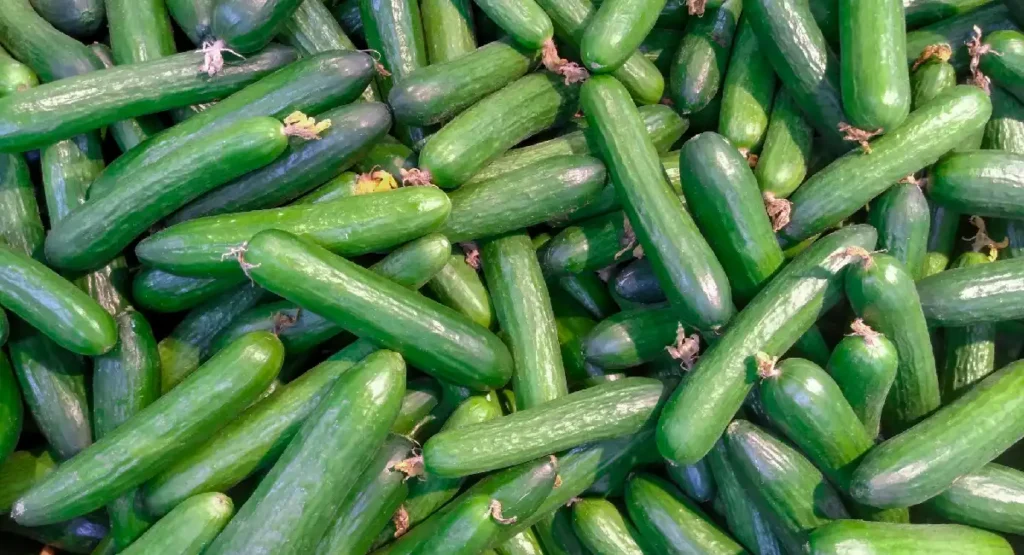
Cucumbers are widely available in every home, and they offer many benefits for humans. On a related note, you might be curious about whether humans can eat dog food. However, in today’s article, we’ll discuss whether dogs can eat cucumbers. Cucumbers are also very low in calories. So, when you’re making a salad and your dog is looking at you, the question that naturally comes to mind is whether it’s safe to give cucumbers to dogs. Today’s article is about this topic.
Can Dogs Eat Cucumbers?
The short answer is yes, cucumbers are one of the safest vegetables you can give your dog, but safe doesn’t mean you can feed cucumbers to your dog without thinking twice. How much you should give your dog, how the cucumber is prepared, and your dog’s individual health condition all matter. Just eat it, not medicate.
Here you’ll find everything you need to know, based on the UK Veterinary Organisation’s guidance and nutritional data.
Health benefits of cucumber for dogs
Cucumbers are about 96 percent water. If your dog is drinking less water or has been outside in hot weather, using a few slices of cucumber can be a good hydration top-up, but it also provides the body with a little extra fluid and acts as a light, refreshing snack.
Beyond water content, a cucumber contains:
- Vitamin K (supports blood clotting and bone health)
- Vitamin C (an antioxidant, though dogs produce their own)
- Potassium (supports heart and muscle function)
- Magnesium (supports nerve and muscle health)
- Copper and manganese (support connective tissue and bone development)
A half-cup of slices contains only around eight calories per 52 grams of calories. If you compare it to a normal dog biscuit, then a biscuit can contain 30 to 80 calories, depending on the brand. For this reason, cucumbers act as a general-purpose low-calorie treat for dogs on a weight management plan.
The PDSA, one of the UK’s leading veterinary websites, includes cucumbers among the vegetables that are considered safe for dogs. Blue Cross also confirms that cucumbers are the most dog-friendly food, provided they are properly prepared.
What vets say about dogs eating cucumber
According to veterinarians in the UK, cucumbers are generally considered a safe and low-risk snack for dogs. They don’t contain any toxic compounds that could harm them, such as thiosulfates found in onions or persin found in avocados.
Veterinarians typically focus on portion control and preparation. Large pieces of cucumber can pose a choking hazard, especially for small or fast-eating dogs. Therefore, veterinarians and dog nutritionists recommend cutting cucumbers into small, easily digestible pieces before offering them.
The British Veterinary Association (BVA) advises that treats of all kinds, including fruits and vegetables, should not exceed 10% of a dog’s daily calorie needs. An average adult Labrador needs around 1,400 calories a day, and 10% of this amount is approximately 140 calories. In contrast, a generous 100g serving of cucumber contains only about 15 calories, making it an easy addition to a healthy diet.
According to dogfoodsuk.com, an independent UK source, cucumbers are a safe snack and may be particularly helpful for dog owners who want to reduce the calories in their dog’s treats without decreasing the frequency of offering them.
You can offer cucumbers to your dog as an occasional snack, but they should never be considered a complete replacement for their diet.
Disclaimer: This article is for informational purposes only and does not replace consultation with a veterinarian. Always consult your veterinarian before making any changes to your dog’s diet.
Are there any risks of feeding cucumber to dogs?
Real risks do exist, and they’re worth covering clearly.
Choking. Feeding a dog a whole cucumber, or a large uncut chunk, is a genuine hazard. Slice it. For small breeds like Chihuahuas or Shih Tzus, cut pieces no larger than 1cm.
Digestive upset. Dogs that eat cucumber for the first time, or eat too much of it in one sitting, can experience gas, loose stools, or mild stomach discomfort. Their digestive systems aren’t built to process large amounts of raw vegetables efficiently.
Pesticide residue. Cucumbers in the UK are often treated with pesticides. Always wash the skin thoroughly before serving, or peel it entirely if you’re unsure of the source.
Pickled cucumbers (gherkins). These are off the table. Pickling brine typically contains salt, vinegar, and often garlic or dill in quantities that can cause sodium poisoning or gastrointestinal distress in dogs. Pickled = no.
Can dogs eat cucumber skin and seeds?
The skin is safe for most adult dogs, provided you wash it well. It contains a slightly higher concentration of fibre and some phytonutrients. Some dogs find the skin bitter and spit it out anyway. If your dog has a sensitive stomach, peeling the cucumber removes a potential irritant.
The seeds are also safe. They’re soft, small, and present no meaningful risk. Unlike apple seeds (which contain cyanogenic compounds) or cherry pits, cucumber seeds have no toxic properties.
For puppies or elderly dogs with dental sensitivities, peeling and deseeding makes sense as a precaution.
How much cucumber can dogs eat?
The 10% treat rule is the practical benchmark. But here’s how that looks in practice by breed size:
| Dog size | Approximate daily calories | Max treat calories | Cucumber equivalent |
|---|---|---|---|
| Small (e.g. Pug, Shih Tzu) | 400 kcal | 40 kcal | ~260g slices |
| Medium (e.g. Cocker Spaniel) | 800 kcal | 80 kcal | ~520g slices |
| Large (e.g. Labrador) | 1,400 kcal | 140 kcal | ~910g slices |
Cucumber is so low in calories that hitting the 10% limit on cucumber alone is nearly impossible. The practical limit is more about digestive tolerance than caloric math. A few slices, 2 to 3 times per week, is a sensible starting point for most dogs.
If your dog is new to cucumber, start with 2 or 3 small slices and watch for any digestive reaction over 24 hours.
Best ways to serve cucumber to dogs
Sliced raw. The default. Wash thoroughly, cut into appropriate-sized pieces, serve fresh. Simple and effective.
Frozen cucumber slices. Particularly useful in summer. Frozen cucumber is safe and many dogs enjoy the texture. It also slows down fast eaters.
Cucumber sticks as training rewards. If your dog accepts cucumber enthusiastically, it works well as a low-calorie training treat, especially for dogs on a weight-loss diet where every calorie counts.
Mixed into a dog-safe food bowl topper. A few cucumber slices alongside a small spoon of plain cooked chicken or a dog-approved yoghurt (no xylitol) adds texture variety.
Do not cook cucumber in butter, oil, salt, or with garlic and onions. Plain and raw is the only form dogs should eat.
For UK dog owners, fresh cucumbers are readily available from most supermarkets. If you shop via Amazon Fresh UK, cucumbers are typically available for same-day or next-day delivery. For portioning tools, a simple vegetable slicer such as the OXO Good Grips Mandoline Slicer (available on Amazon UK) lets you cut consistent, safe-sized slices in seconds, which is especially useful if you’re preparing cucumber regularly as a training treat.
Can puppies eat cucumber?
Yes, but with more care than for adult dogs.
Puppies have smaller digestive systems and are more susceptible to stomach upsets from new foods. Introduce cucumber gradually: start with 1 thin slice, observe for 24 hours, and increase from there only if there’s no adverse reaction.
Cut pieces smaller than you would for an adult dog. A piece no larger than your thumbnail is a safe starting size for a puppy under 6 months.
Avoid the skin for puppies under 12 weeks. Their digestive systems are still developing, and the higher fibre content in the skin can be harder to process.
The Dogs Trust, the UK’s largest dog welfare charity, recommends consulting your vet before introducing any new food to a puppy’s diet, particularly in the first few months.
Vegetables dogs can safely eat
Cucumber isn’t the only vegetable worth knowing about. UK vets and organisations including the PDSA and Blue Cross confirm the following are safe for dogs in appropriate amounts:
- Carrots (excellent for dental health, low calorie, high in beta-carotene)
- Green beans (low calorie, good fibre source)
- Courgette / zucchini (similar nutritional profile to cucumber)
- Peas (frozen or fresh, not tinned in salted brine)
- Celery (safe, but some dogs dislike the texture)
- Butternut squash (cooked, plain, no seasoning)
- Broccoli (in small amounts only; large quantities can cause gas and, in very high amounts, oesophageal irritation)
Vegetables to avoid entirely: onions, garlic, leeks, chives, avocado, and rhubarb. All contain compounds toxic to dogs.
AllAboutDogFood.co.uk, an independent UK dog food review site with detailed nutritional analysis of hundreds of dog foods, is a reliable reference point for understanding which ingredients are beneficial and which are problematic in commercial dog foods. Cross-referencing fresh food choices against their ingredient guides is a practical habit for any dog owner.
Dog food UK and the role of whole foods
Most quality UK dog foods already contain vegetables as part of their formulation. Brands like Lily’s Kitchen, Forthglade, and Wainwright’s include plant-based ingredients for fibre and micronutrient content.
But there’s a meaningful difference between processed vegetable content in kibble and fresh cucumber given directly. Fresh vegetables retain their water content and live enzyme activity, both of which get destroyed in the heat-extrusion process used to make dry dog food.
This is part of why dogfoodsuk.com was built: to give UK dog owners an independent, individual perspective on what goes into their dogs’ diets, covering everything from commercial dog food reviews to safe whole-food additions like cucumber. The site was created by an individual with a straightforward goal: help UK dog owners make better, clearer food decisions without wading through marketing language.
Final verdict: should you feed cucumber to your dog?
Cucumber is safe, low-calorie, and genuinely useful as an occasional treat or training reward. It presents minimal risk when prepared and portioned correctly.
Slice it. Wash it. Start with small amounts. Watch your dog’s reaction. And keep it within the 10% treat guideline.
The one thing to remember: dogs don’t need cucumber in their diet. They do fine without it. Similarly, if you’re wondering about other foods, check out our guide on can dogs eat mushrooms. But if your dog enjoys it and you want a near-zero-calorie treat option, especially during summer or for an overweight dog, cucumber earns its place in the snack rotation.
Frequently asked questions
Can dogs eat cucumber every day? Yes, in small amounts. A few slices daily is unlikely to cause any issues for a healthy adult dog. Just keep portions proportional to your dog’s size.
What happens if a dog eats a whole cucumber? Eating a whole cucumber at once could cause digestive upset (gas, loose stools) and presents a choking risk, especially for smaller breeds. It won’t cause poisoning, but it’s not advisable.
Can dogs eat cucumber with salt or dip? No. Salt and most condiments (hummus, tzatziki, ranch) contain ingredients that are harmful to dogs. Serve cucumber plain.
Are cucumbers good for dogs with kidney disease? Cucumber is low in phosphorus and sodium, which can be beneficial for dogs with kidney conditions. But dietary management for dogs with kidney disease requires veterinary guidance specific to your dog’s bloodwork and condition.
Can dogs eat cucumber from a salad? Probably not. Salads often include onion, garlic dressing, or other ingredients harmful to dogs. Remove a slice before you dress the salad and serve that separately.
Sources: PDSA (pdsa.org.uk), Blue Cross UK (bluecross.org.uk), Dogs Trust (dogstrust.org.uk), AllAboutDogFood.co.uk.