
Dog dental care guide UK 2026: how to brush, best products and why it matters
Many owners assume a bit of tartar on their dog’s teeth is normal and harmless. It is not. Plaque builds up on teeth within hours of eating. If that plaque is not removed, it hardens into tartar within days. Tartar irritates the gums, causing inflammation known as gingivitis. Left untreated, gingivitis progresses to periodontal disease, which destroys the ligaments and bone that hold teeth in place.
The consequences extend far beyond the mouth. Bacteria from infected gums can enter the bloodstream and spread to major organs. Dental disease has been linked to heart valve damage, liver infections, and kidney problems. These are not minor issues. They are serious, potentially life-threatening conditions that can shorten your dog’s life and dramatically reduce their quality of life.
The financial impact
Vet bills for dental work add up quickly. A professional dental cleaning for a dog in the UK, performed under general anaesthesia, typically costs between £200 and £600 or more. That covers the basic procedure. If your dog needs tooth extractions, x-rays, or antibiotics, the bill can push well past £1,000.
These costs are almost entirely avoidable. A basic home brushing routine, combined with the right dental products, costs a fraction of what you would pay for a single vet visit. Prevention is not just better for your dog. It is far cheaper for your wallet.
How to brush your dog’s teeth
Brushing your dog’s teeth is the single most effective thing you can do for their dental health. Studies show that regular home brushing reduces the risk of dental disease by up to 80%. The process takes a few minutes a day once your dog is used to it, but getting to that point requires patience and consistency.
When to start
The ideal time to begin brushing is when your dog is still a puppy. Start from around eight weeks old, once they have settled into their new home. At this age, puppies are adaptable and more likely to accept handling. Even if you are starting with an older dog, the same principles apply. You just need to move more slowly and build trust gradually.
Step-by-step brushing guide
Step 1: Get your dog comfortable. Choose a quiet moment when your dog is relaxed. Sit beside them or have them on your lap if they are small enough. Do not restrain them forcefully. The goal is to make this a positive experience, not a wrestling match.
Step 2: Introduce the toothpaste first. Let your dog lick a small amount of dog toothpaste off your finger. Dog toothpaste comes in flavours like chicken, beef, and peanut butter, which most dogs enjoy. This step helps them associate the toothpaste with something pleasant before you introduce a brush.
Step 3: Touch their mouth and teeth. Gently lift your dog’s lip and rub your finger along their teeth and gums for a few seconds. Reward them immediately with praise and a treat. Repeat this over several sessions until they are comfortable with you handling their mouth.
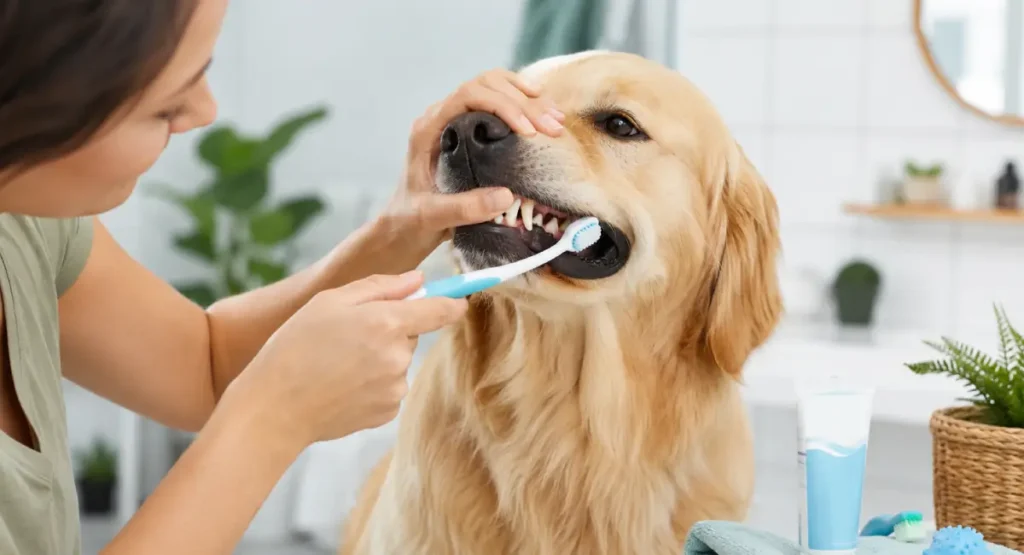
Step 4: Introduce the toothbrush. Apply a small amount of toothpaste to a dog toothbrush or finger brush. Gently brush the outside surfaces of the teeth in small circular motions. Focus on the upper canines and back molars, where plaque tends to accumulate most. You do not need to brush the inside surfaces of the teeth. Your dog’s tongue does a reasonable job of keeping those areas clean.
Step 5: Build up gradually. Start with just a few teeth and a few seconds of brushing. Over the course of a week or two, work up to brushing all the outer surfaces. Aim for about 30 seconds per side. Brushing every day is ideal, but three to four times a week still makes a meaningful difference.
Step 6: Reward and repeat. Always finish with praise, a treat, or a short play session. Consistency matters more than duration. A quick daily brush is far better than a long session once a week.
Best dog toothbrush kits UK
Choosing the right toothbrush makes a real difference. Dog toothbrushes are specifically designed with softer bristles and angles that suit a dog’s mouth. Human toothbrushes are too stiff and the wrong shape, so stick to products made for pets.
Finger brushes
Finger brushes slip over your fingertip and give you good control. They work well for small dogs and puppies because they are gentle and less intimidating than a full-sized brush. The downside is less reach on larger dogs with bigger mouths.
Long-handled brushes
These look more like a human toothbrush but with a smaller head and softer bristles angled for dog teeth. They give you better reach to the back teeth, which is where problems often start. Many kits include both a long-handled brush and a finger brush so you can use whichever works best.
Where to buy
On Amazon UK, search for dog toothbrush kit and you will find solid options from brands like Bodhi Dog, Arm & Hammer, and EQDNA. Prices on Amazon typically range from £5 to £12 depending on the brand and what is included in the kit.
For a budget-friendly alternative, AliExpress stocks dog finger toothbrush kits starting at around £2 to £5. Since a toothbrush is a physical tool rather than something your dog ingests, budget options from AliExpress are generally fine for this particular product. Just check the reviews before buying.
Best dog toothpaste
Dog toothpaste is not optional. It is essential. You must never use human toothpaste on a dog. Human toothpaste contains ingredients like fluoride and xylitol, both of which are toxic to dogs. Xylitol in particular can cause a dangerous drop in blood sugar and liver failure in dogs, and even a small amount can be harmful.
What to look for in a dog toothpaste
The best dog toothpastes are enzymatic. Enzymes help break down plaque and bacteria on a chemical level, which makes the physical brushing more effective. Look for toothpastes containing enzymes like glucose oxidase or lactoperoxidase. Flavour matters too. If your dog likes the taste, the whole brushing process becomes much easier.
Recommended options on Amazon
On Amazon UK, search for dog toothpaste enzymatic to find well-regarded options from Petrodex, Arm & Hammer, and TropiClean. These are established brands with known safety records, which matters when the product goes directly into your dog’s mouth and is swallowed. Expect to pay roughly £5 to £10 per tube.
Safety warning about AliExpress toothpaste
We strongly recommend buying dog toothpaste only from trusted UK retailers like Amazon UK. Toothpaste is a product your dog ingests. The ingredient quality and safety standards matter enormously. Unfamiliar brands sold cheaply on AliExpress may not disclose their full ingredient list, and some may contain substances that are unsafe for dogs. The small saving is not worth the risk. Spend a little more and buy from a reputable source.
Best dental chews for between brushes
Dental chews are not a replacement for brushing, but they are a useful addition to your dog’s oral care routine. Chewing helps mechanically scrape plaque off teeth, and many dental chews contain ingredients that reduce tartar buildup and freshen breath.
Popular dental chew brands
Pedigree Dentastix are widely available in UK supermarkets and online. They are designed to be given once daily and come in sizes suited to different dog breeds. Their texture and shape encourage chewing, which helps reduce plaque.
Whimzees are plant-based dental treats made from natural ingredients. Their unique shape and firm texture promote extended chewing, which is effective at cleaning teeth. They are a good option for dogs with sensitivities to meat proteins or owners who prefer plant-based products.
Where to buy dental chews
On Amazon UK, you can find Whimzees dental dog treats and Pedigree Dentastix in multi-packs, usually priced between £5 and £15 depending on the quantity and size. These are familiar, well-regarded brands with consistent quality.
AliExpress also lists dental chew toys and treats in the £3 to £8 range. As with any edible product, check the ingredients and reviews carefully. Some dogs have allergies or sensitivities, so introducing any new treat gradually is sensible.
Best dental water additives
Dental water additives are liquid solutions you add to your dog’s drinking water. They contain enzymes or ingredients that help reduce plaque and bacteria in the mouth. They are particularly useful for dogs that resist brushing, as they require no active effort from the owner beyond topping up the water bowl.
How water additives work
Most water additives work by creating an environment in the mouth that discourages bacterial growth. Some contain enzymes similar to those found in enzymatic toothpaste. Others use ingredients like chlorhexidine or natural plant extracts to freshen breath and slow tartar formation. They will not remove existing tartar, but they can help slow its buildup when used alongside brushing.
Recommended products
On Amazon UK, look for Plaque Off dog dental water additive or TropiClean fresh breath water additive. Plaque Off is a well-known brand in the UK pet market, and TropiClean offers a natural formula that many owners prefer. Prices typically sit between £10 and £20 for a bottle that lasts several weeks to a couple of months depending on your dog’s size.
Amazon vs AliExpress: dental product safety compared
When buying dog dental products online, the source matters. Amazon UK offers products from recognised brands with established safety records. Items sold directly by Amazon or by the brand’s official storefront are subject to UK consumer protection laws and safety regulations. Returns are straightforward if something is not right.
AliExpress can offer significant savings, particularly on non-ingestible items like toothbrushes and chew toys. The trade-off is less oversight. Product descriptions may lack full ingredient lists, quality control is inconsistent, and shipping times are longer. If something goes wrong, the returns process can be difficult.
The safest approach is to use AliExpress for physical tools like toothbrushes and toys, where the main concern is build quality rather than chemical safety. For anything your dog swallows, such as toothpaste, dental chews, and water additives, stick to Amazon UK or other trusted UK retailers. The price difference on these items is usually small, and the peace of mind is worth it.
Signs of dental disease to watch for
Catching dental disease early makes treatment easier, cheaper, and less stressful for your dog. These are the most common warning signs to look out for.
Bad breath. This is often the very first sign that something is wrong. A slight doggy smell is normal, but persistent foul breath usually indicates bacteria building up in the mouth. If your dog’s breath makes you flinch, it is time to take a closer look.
Red or swollen gums. Healthy gums should be pink and firm. If your dog’s gums look red, inflamed, or bleed when touched, that is a clear sign of gingivitis. Catching this stage early means it can often be reversed with improved home care.
Tartar buildup. Yellow or brown discoloration on the teeth, especially near the gumline, is hardened plaque. Once tartar forms, it cannot be removed by brushing alone. It requires a professional vet cleaning, which is one of the many reasons prevention matters so much.
Difficulty eating. If your dog starts dropping food, chewing on one side, or showing reluctance to eat hard foods, dental pain may be the cause. Dogs are remarkably good at hiding discomfort, so any change in eating behaviour deserves attention.
Pawing at the mouth or excessive drooling. These behaviours can indicate pain or irritation in the mouth. Excessive drooling that is not linked to food or excitement should be investigated.
Loose or missing teeth. In severe cases of periodontal disease, teeth become loose and may fall out. This is an advanced stage that requires immediate veterinary attention. Adult dogs should not lose teeth under normal circumstances.
Frequently asked questions about dog dental care
How often should I brush my dog’s teeth?
Daily brushing is the gold standard. If that is not realistic, aim for at least three to four times a week. Anything is better than nothing, but the more frequently you brush, the more protection your dog gets against plaque and tartar.
Can I use baking soda to clean my dog’s teeth?
No. Baking soda is too abrasive for dog enamel and can upset your dog’s stomach if swallowed. Stick to toothpaste formulated specifically for dogs.
My dog hates having their teeth brushed. What can I do?
Start very slowly. Begin by simply lifting their lip and rewarding them. Introduce toothpaste on your finger before using a brush. Consider a finger brush, which is less intimidating than a long-handled brush. Dental water additives and dental chews can provide some protection while you work on building their tolerance to brushing. If your dog shows signs of real distress, ask your vet for advice.
Are raw bones safe for cleaning teeth?
Opinions on this are divided. Some vets and owners believe raw bones help clean teeth through chewing. However, raw bones carry risks of fractured teeth, intestinal blockages, and bacterial contamination. Cooked bones are dangerous and should never be given, as they splinter easily. If you are considering raw bones, discuss it with your vet first and supervise your dog closely.
How much does a professional dental cleaning cost?
In the UK, a routine professional dental cleaning under anaesthesia generally costs between £200 and £600. Extractions, medication, and follow-up care add to the total. Pet insurance may cover some or all of the cost, depending on your policy.
Do dental chews really work?
Dental chews help reduce plaque between brushings, but they are not as effective as actual brushing. Think of them as a supplement to brushing rather than a substitute. The mechanical action of chewing does help, and some chews contain active ingredients that reduce bacteria. Feeding too many can contribute to weight gain, so stick to the recommended daily amount.
At what age should I start caring for my puppy’s teeth?
You can begin gentle dental care from around eight weeks of age. Start by getting your puppy used to having their mouth handled. Introduce a finger brush and puppy toothpaste gradually. By the time their adult teeth come through, which happens around four to six months of age, brushing should feel like a completely normal part of their routine.
Is dog dental disease covered by pet insurance?
Most UK pet insurance policies cover dental treatment if it is related to an accident or injury. Cover for routine dental disease and preventive care varies between providers. Check your policy details carefully. Some insurers exclude pre-existing dental conditions, which is another reason to start dental care early before problems develop.
Final thoughts on dog dental care
Dental care is one of the most overlooked aspects of dog ownership in the UK, yet it has one of the biggest impacts on your dog’s long-term health. With 80% of dogs over three showing signs of dental disease, the odds are already stacked against your pet if you are not taking action. Regular brushing with the right toothbrush and toothpaste, combined with dental chews and water additives, gives your dog the best chance of keeping their teeth and gums healthy throughout their life.
The products do not need to be expensive. A basic toothbrush kit and a tube of enzymatic toothpaste from Amazon UK will cost you less than £20 and last for weeks. Compared to the £200 to £600 you might pay for a single vet dental treatment, that is a tiny investment with an enormous return.
Start today. Lift your dog’s lip and take a look at their teeth. If you see signs of tartar or red gums, book a vet check. If their teeth look healthy, keep them that way with a regular brushing routine. Your dog cannot tell you when their teeth hurt. It is up to you to stay ahead of the problem.