

Pick up any bag of dog food in the UK and you’ll find the word “complete” written somewhere on the packaging. This is a legal term with a specific meaning, but most dog owners don’t know what it means or why it matters.
Buying the best complete dog food in the UK means understanding what this label actually guarantees, and which foods truly meet this claim. While complete foods meet basic legal standards, the quality gap between the cheapest and most expensive foods is significant.
I’ve compared complete foods in every budget tier so you can see what you get at each price point, how to properly check labels, and which foods genuinely provide complete nutrition for your dog.
All About Dog Food provides independent nutritional ratings, which I use to verify quality claims. FEDIAF nutritional guidelines define what “complete” actually means in European law.
What does “complete” dog food mean?
Under UK and EU law, “complete” dog food must contain every nutrient your dog needs to survive, in the correct proportions, when fed as a sole source of nutrition. This is the legal definition. If a food carries a “complete” claim, it must provide adequate levels of protein, fat, carbohydrates, vitamins, minerals, and essential fatty acids.
The PFMA (Pet Food Manufacturers’ Association) enforces these standards in the UK. Complete foods must meet FEDIAF nutritional guidelines, which specify minimum and maximum levels of more than 30 essential nutrients.
This is different from “complementary” food. Complementary food is designed to be fed alongside other foods. Mixing complementary food with complete food is fine, but making complementary food your dog’s sole diet can leave him malnourished over time. Our complete vs. complementary dog food guide explains this in detail.
What nutrients must a complete food contain?
Complete dog foods should contain these nutrients in adequate levels:
Protein and amino acids. A minimum of 18% protein is recommended for adult maintenance, plus the 10 essential amino acids that dogs cannot synthesize. Taurine is especially important for heart health.
Fats and fatty acids. A minimum of 5.5% fat is recommended for adults, with specific requirements for omega-6 and omega-3 fatty acids. Linoleic acid (omega-6) should be at least 1.1% on a dry matter basis.
Vitamins: Vitamins A, D, E, K, B1, B2, B6, B12, niacin, pantothenic acid, folic acid, biotin, and choline. Each vitamin has specified minimum levels.
Minerals: Calcium, phosphorus, sodium, potassium, magnesium, iron, zinc, copper, manganese, iodine, and selenium. These have minimum and maximum levels, as excess minerals can be as dangerous as deficiencies.
The law is clear: if the bag says “complete,” all of these nutrients must be present in the correct amounts. Manufacturers who fail to meet these standards could face legal action.
The catch: minimum standards aren’t high standards
Meeting the legal minimum for complete nutrition doesn’t make food good. It just makes it legal. A food can be “complete” but still be made with low-quality ingredients and fillers.
Think of it like human food. A cheap microwave meal may meet your basic nutritional needs. A home-cooked meal made with quality ingredients also meets your nutritional needs. Both can be “complete,” but you can guess which meal you’ll feel better eating.
Legal minimums are deliberately set low so that affordable food options are available. This isn’t inherently wrong. But this means that “complete” is just a starting point, not a quality indicator.
How to check if a complete food is actually good
Just because a food is legally complete doesn’t mean it’s also nutritionally optimal. Here’s how to assess quality beyond the “Complete” label:
Check the ingredient list
The first few ingredients tell you a lot. In the UK, ingredients are listed in descending order by weight.
Named meat should be first: If the first ingredient is “chicken,” “lamb meal,” or “fresh salmon,” it means the food contains the most of this ingredient compared to the rest of the ingredients. “Meat and animal derivatives” is a general term that doesn’t clearly indicate the actual protein sources.
Avoid unnamed derivatives: “Cereal derivatives,” “animal derivatives,” and “vegetable protein extracts” are vague terms that don’t explain what the food actually contains. These are legal, but not ideal.
Named ingredients count: A short ingredient list with named and recognizable ingredients is usually better than a long list, especially if the long list is full of chemical-sounding additives.
Check the nutritional profile
In addition to legal minimums, also check these things:
Protein from animal sources: Total protein percentage matters, but where the protein is coming from matters more. Protein from chicken meal and fish is more useful for dogs than protein from soy or corn gluten.
Fat content should be based on your dog’s activity level: 10-16% fat is suitable for most adult dogs. Highly active dogs need more fat. Overweight or less active dogs need less fat.
Omega fatty acids: Look for fish oil, flaxseed, or linseed in the ingredients, and check that omega-3 levels are adequate. A good complete food should contain at least 0.3% of EPA and DHA combined.
Use independent rating sites
All About Dog Food UK rates dog foods on a 5-star scale, based on ingredient quality, meat content, and nutritional value. This is the most useful independent resource for UK dog owners.
A 4 or 5-star food on All About Dog Food will almost always be better than a 1 or 2-star food, regardless of price. The site is free to use and covers almost every brand available in the UK.
Best budget complete dog food UK
These complete foods cost less than £2.50 per kg and meet all legal requirements. They use simpler ingredients than premium options, but provide adequate nutrition.
Harringtons Complete
Harringtons is one of the UK’s most popular budget complete foods. Their standard adult recipe costs approximately £2.00 per kg.
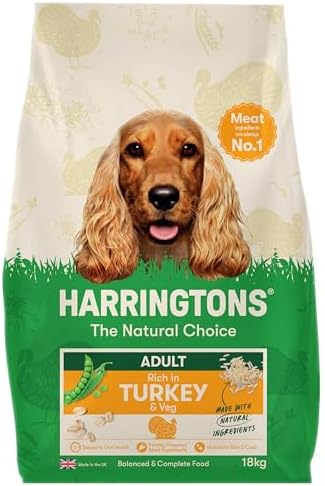



The ingredient list includes chicken, whole wheat, maize, and peas. It is not hypoallergenic, but is nutritionally complete. Protein is 18% and fat is 7%, which is on the leaner side.
Harringtons includes prebiotics for digestion and linseed for omega-3 fatty acids. The food is free of artificial colors and flavors, although it does contain EC-permitted preservatives.
For the price, Harringtons is a reasonable choice. It won’t win quality awards, but it provides complete nutrition without relying on the worst fillers. Our cheapest complete dog food guide covers the very bottom options of the price range.
Skinners Field & Trial
Skinners makes several complete recipes designed primarily for working dogs, but all could be suitable for adult dogs. Their Duck and Rice recipe costs approximately £2.80 per kg.


The ingredient list is noticeably cleaner than Harringtons. Duck meal is the primary protein, and rice is used as the carb base. No wheat, no maize, no soy. Protein is 21% and fat is 12%.
Skinners is a particularly good value, as the ingredient quality is better than expected at this price point. It consistently receives 3-4 stars on All About Dog Food, a strong rating for a sub-£3/kg food.
Wagg Complete
Wagg falls at the very bottom of the price spectrum, at roughly £1.80 per kg. The ingredient list reflects this: cereal derivatives, meat and animal derivatives, and plant protein extracts are prominent.
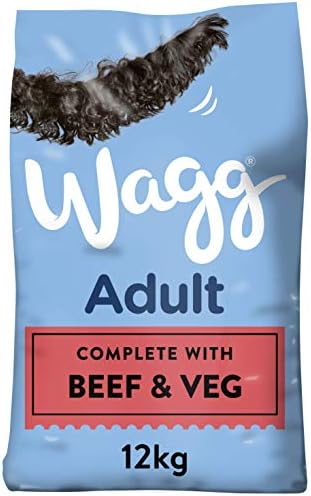
Wagg is legally complete and meets FEDIAF standards. Protein is 20% and fat is 7%. It also contains glucosamine for joint support and added vitamins and minerals.
If budget is your main concern and your dog doesn’t have any sensitivities, Wagg does the job. But there are better options available for a little extra money. Our best cheap dog food UK guide compares Wagg with Harringtons, Skinners, and other brands.
Best mid-range complete dog food UK
Mid-range complete foods, which cost between £2.50 and £4.50 per kg, offer better ingredient quality, have a higher named meat content, and often also include functional ingredients such as joint supplements and probiotics.
James Wellbeloved
James Wellbeloved is one of the UK’s most well-known hypoallergenic complete foods. Their turkey and rice recipe costs approximately £3.50 per kg.
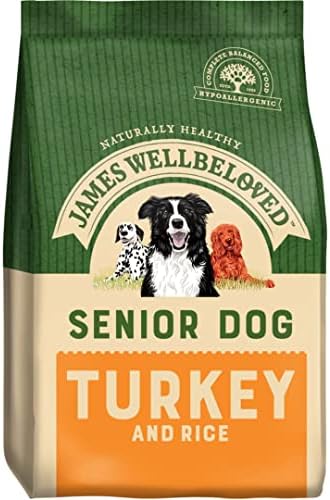
Every recipe is hypoallergenic, excluding wheat, beef, dairy, soy, and artificial additives. The ingredient list is clean and specific: turkey meal, rice, pea starch, and sunflower oil.
Protein is 24% and fat is 10%. James Wellbeloved contains glucosamine, chondroitin, taurine, and L-carnitine. This food is consistently rated 4 stars on All About Dog Food.
Arden Grange
Arden Grange creates several complete recipes using fresh chicken as the primary ingredient. Costs are approximately £3.80 per kg.


Ingredient quality is clearly one step better than budget options. Fresh chicken tops the list, followed by rice, maize, and chicken fat. Protein is 25% and fat is 13%.
Arden Grange includes prebiotics, joint supplements, cranberry extract for urinary health, and a blend of natural antioxidants. It is free of wheat, beef, soy, and artificial additives.
Burns
Burns is a Welsh company known for simple, limited-ingredient recipes. Their Original Chicken and Brown Rice complete food costs roughly £3.00 per kg.
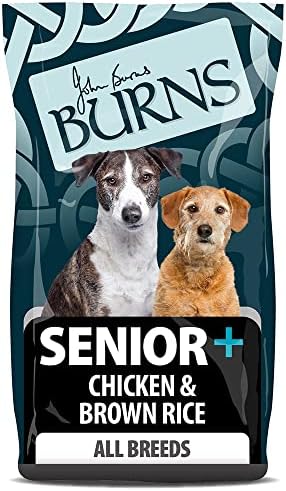


The ingredient list is refreshingly short: chicken meal, brown rice, peas, oats, and a vitamin/mineral premix. That’s it. Protein is 19% and fat is 7.5%.
Burns is designed for dogs with sensitive digestion. Limited ingredients reduce the chance of triggering a reaction. Many vets recommend Burns for dogs recovering from gastrointestinal upset.
Low protein and fat levels make Burns less suitable for very active dogs, but it’s excellent for seniors and couch potatoes.
Best premium complete dog food UK
Premium complete foods cost £4.50+ per kg and provide the highest meat content, best ingredient sourcing, and most complete nutritional profiles available in the UK.
Orijen
Orijen is considered one of the best dry dog foods in the world. Their Original Complete recipe contains 85% meat, which comes from free-run chicken, wild-caught fish, and nest-laid eggs.

Protein is 38% and fat is 18%. Every ingredient is named and sourced. This food also includes organ meats, cartilage, and bone, which provide natural vitamins, minerals, and joint support.
Origen is grain-free and uses peas, lentils, and chickpeas as carb sources. It is manufactured in Canada with regional ingredients and is consistently rated 5 stars on All About Dog Food.
At roughly £6.50 per kg, Orijen is expensive. But due to nutrient density, you have to feed a smaller quantity per meal, and the ingredient quality justifies a premium for owners who can afford it.
Acana
Acana is made by the same company that makes Orijen, Champion Petfoods, but the meat content is slightly lower and the price is correspondingly lower, around £5.00 per kg.

Their Grass-Fed Lamb recipe contains 50% lamb ingredients, including meat, liver, and cartilage. Protein is 29% and fat is 17%. This food is grain-free and free of artificial additives.
Acana includes a range of fruits, vegetables, and botanicals for antioxidant support. The kibble is coated with freeze-dried lamb liver for palatability.
Eden
Eden is a UK brand that has developed a strong following. Their original complete recipe uses 80% free-range chicken, including meat, bone, and offal.
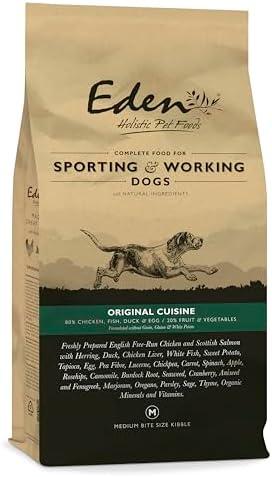
- HIGH IN MEAT & FISH CONTENT (80%) – Our highest percentage of meat and fish in the Eden range, of which 36.5% is fresh m…
- NATURALLY COMPLETE, OPTIMUM NUTRITION – Using high-quality, natural ingredients, each selected for its unique nutritiona…
- GENTLY STEAM COOKED – Our main goal is to ensure that your pet receives as much of the nutritional benefits from the raw…
Protein is 42% and fat is 20%. This makes Eden one of the most nutrient-dense complete food options available. It is best suited for active dogs that burn significant calories.
Eden is cold-pressed rather than extruded, and some owners believe this improves digestibility. This food is grain-free and uses sweet potato as the carb base. It also includes joint supplements and a botanical blend.
Top-Rated Complete Foods Comparison
| Food | Price per kg | Protein | Fat | Rating (AADF) | Type |
|---|---|---|---|---|---|
| Wagg Complete | ~£1.80 | 20% | 7% | 1.5–2 stars | Budget, wheat-based |
| Harringtons Complete | ~£2.00 | 18% | 7% | 2–2.5 stars | Budget, wheat-free |
| Skinners Duck & Rice | ~£2.80 | 21% | 12% | 3–4 stars | Budget, grain-free |
| Burns Original | ~£3.00 | 19% | 7.5% | 3.5–4 stars | Mid-range, limited ingredient |
| James Wellbeloved | ~£3.50 | 24% | 10% | 4 stars | Mid-range, hypoallergenic |
| Arden Grange | ~£3.80 | 25% | 13% | 4 stars | Mid-range, premium-ish |
| Eden Original | ~£4.80 | 42% | 20% | 4.5–5 stars | Premium, high-meat |
| Acana | ~£5.00 | 29% | 17% | 4.5–5 stars | Premium, grain-free |
| Orijen | ~£6.50 | 38% | 18% | 5 stars | Premium, ultra-high-meat |
Ratings based on All About Dog Food independent analysis.
Complete vs complementary: why the distinction matters
Complementary foods are legally designed to be fed alongside other foods. Simply mixing multiple complementary foods does not automatically create a complete diet. Therefore, to properly balance a complete diet, you must know the exact nutritional profile of each food.
The BVA recommends that most dog owners feed a complete food as the main diet, and use complementary foods, such as treats, toppers, or mixers, as occasional additions that do not exceed 10% of the daily calorie intake.
Some complementary foods are excellent products. Naturediet treats, Forthglade toppers, and fish-based supplements all have their place. But they should supplement, not replace, a complete diet.
Our best dry dog food under £10 guide lists many complete foods that cost significantly less than most complementary products.
Wet vs dry complete food
Both wet and dry foods can be considered “complete.” Legal standards are the same, but there are practical differences.
Dry complete food: More calorie-dense, cheaper per calorie, better for dental health, and easier to store. Highly complete dry foods cost £1.50–£6.50 per kg.
Wet complete food: More tasty for fussy dogs, has a higher moisture content, which is good for hydration, and is less processed. Highly complete wet foods cost £3.00–£8.00 per kg.
Mixed feeding, i.e. feeding both types together, is perfectly fine as long as both foods are complete. The main thing is to keep track of total calorie intake.
Common mistakes when buying complete food
Assuming that “complete” means high quality: As previously covered, complete simply means legally adequate. £1.50/kg food and £7/kg food can both be complete. The label tells you that the food meets minimum standards, not that the food is good.
Buying the cheapest option without checking the ingredients: There are some genuinely good budget complete foods, like Skinners and Harringtons, and some genuinely poor options. It takes 30 seconds to read the ingredient list and you can avoid the worst options.
Overfeeding because food seems cheap: “This food is only £2/kg, I can pay extra.” Extra food means extra calories, no matter how cheap those calories are. Follow the feeding guide and adjust according to body condition.
Ignoring expiry dates on bulk purchases: A 15kg bag can last 2-3 months for a medium dog. If you buy two bags on offer and the second bag expires before it’s opened, you haven’t saved anything. Check the dates before bulk buying.
Sticking with food that the dog clearly doesn’t tolerate: If your dog has chronic loose stools, excessive wind, a dull coat, or itchy skin, there could be a food problem. Some dogs don’t tolerate specific ingredients, and a switch may resolve the issue. Don’t assume a food is fine just because it says “complete” on the bag.
Complete foods for specific needs
Most of the foods mentioned above are available in different variations for specific needs.
Sensitive Digestion
James Wellbeloved, Burns, and Arden Grange all offer sensitive digestion recipes, which feature limited ingredients and single protein sources. These are ideal for dogs that react to common ingredients like wheat or beef.
To understand food sensitivities in detail, our best dog food UK 2026 guide covers hypoallergenic options in every price bracket.
Senior Dogs
Senior complete foods usually contain lower calories, added joint supplements, and modified mineral levels. Burns, Harringtons, and Skinners all make senior-specific recipes that cost the same or only slightly more than their standard adult foods.
Puppies
Puppy complete foods contain higher protein, fat, and calcium to support growth. Always feed puppies a puppy-specific complete food until they reach skeletal maturity; age varies by breed size. Our cheap dog food guide includes budget puppy options.
Weight Management
Light complete foods reduce calorie density but maintain adequate protein and nutrients. James Wellbeloved Light, Skinners Lightweight, and Harringtons Light offer reduced-fat options for dogs who need to lose weight.
Frequently asked questions
Can I feed my dog only complete food?
Yes, that’s the main point of the “complete” label. Legally complete food provides your dog with every nutrient it needs as a sole diet. You can add treats, toppers, and supplements if you want, but these are optional extras, not requirements.
How do I know if my dog’s food is complete?
Look for the word “complete” on the packaging. This is a regulated claim under UK law. If a food is marketed as complete, the manufacturer must prove that it meets FEDIAF nutritional standards.
Some foods are labeled “complementary,” “snack,” or “mixer.” These are not complete and should not be fed as a sole diet.
Is cheap complete food bad for my dog?
Not really. Cheap complete food meets the same basic legal standards as expensive complete food. The difference is in ingredient quality, taste, and digestibility.
A dog eating Wagg food is getting adequate nutrition. A dog eating Orijen food is getting better nutrition from higher-quality ingredients. Both dogs can be perfectly healthy. PDSA advises that the most important thing is to choose a food that your dog tolerates well and maintains a healthy weight.
How long does complete dog food stay fresh?
Unopened dry complete food usually lasts 12-18 months from the manufacture date. Once opened, it remains at its best nutritional quality for about 6-8 weeks. After this, fats begin to oxidize and vitamin levels begin to decline. So store in an airtight container in a cool, dry place.
Wet complete food can last 2-3 years unopened, but should only be used within 24-48 hours in the refrigerator after opening.
Do I need to add supplements to complete dog food?
Generally not. Complete foods are designed to provide your dog with everything he needs. Adding supplements can actually cause problems if you’re not careful, as extra vitamins and minerals can be harmful.
The exception is when your vet recommends a specific supplement for a diagnosed condition, such as joint problems or skin issues. In that case, follow your vet’s guidance; do not prescribe supplements yourself.
Final Thoughts
“Complete” is a legal standard, not a quality guarantee. Every food in this guide meets this standard, but not all are equal. Budget options like Harringtons and Skinners provide adequate nutrition at low prices. Mid-range picks like James Wellbeloved, Arden Grange, and Burns add better ingredients and functional benefits. Premium foods like Orijen, Acana, and Eden provide the highest quality nutrition available.
Whatever you spend, check ingredient lists, use independent rating sites, and pay attention to your dog’s condition. Healthy coat, good energy, firm stools, and stable weight are better indicators than any marketing claim written on the bag. If your dog is healthy and happy on £2/kg of food, there’s no need to switch to an expensive food. And if he’s not doing well, look for a better option, no matter how much you’re paying now.