

Owning a large dog is a wonderful experience. They fill your home, car, sofa, and heart, and at the same time, they empty your wallet at a speed that small dog owners can’t even honestly imagine.
A Labrador eats roughly 300-400g of dry food daily. A German Shepherd can go over 400g. A Newfoundland or Mastiff?
You’re looking at 500g or more per day, every single day. This means 15kg of kibble for one dog in a month. And if you have two large dogs, you’re buying 30kg bags like loaves of bread.
Feeding a large breed on a budget is absolutely doable. You don’t need to spend £3 a day on kibble to keep your dog healthy. But you should know what to look for, what to avoid, and where the real savings are. This guide covers it all, with real brands, real prices, and realistic monthly cost breakdowns.
The real cost of feeding a large dog in the UK
Let’s talk numbers, because vague advice about “shopping around” doesn’t help anyone.
A 30kg Labrador eating 350g of Skinners Field & Trial food, which comes out to roughly £1.20 per kg in a 15kg bag, will cost you around £12-£15 per month. Switching this same dog to Orijen, which is £4.50 per kg, takes the monthly cost to £50+ for the same dog. Same dog, same food amount, but very different bills.
According to PDSA estimates, dog food costs the average UK owner £20 to £50 per month. The lower figure for large breed owners is a bit optimistic, unless you are buying budget dry food in bulk. The upper figure is easy to hit, and can even go above it if you’re feeding premium brands or fresh food subscriptions.
Large breed owners face a double hit. Food volume is higher, so monthly costs are higher. And the bigger bags you need aren’t available at every supermarket. This means ordering online, then factoring in delivery or subscription minimums.
But here’s what most people miss: As bag size increases, the price per kilo drops sharply. A 2kg bag of Harringtons might cost £2.80 per kg. That same 15kg bag drops to about £1.40 per kg. Same food, half price. For large dog owners, buying small bags is literally a waste of money.
What large dogs actually need from their food
Large breeds aren’t just bigger versions of small dogs. Their bodies function differently, and their food needs are correspondingly different. These things matter.
Protein for muscle mass
Large dogs carry a lot of weight on their bodies. A 35kg Rottweiler needs strong muscles to support its frame, especially through the shoulders, hips, and back. Dry food should contain a minimum of 22-26% protein, and that should come from named meat sources. Chicken, lamb, turkey, or fish listed as the first ingredient are the ones you want.
Plant proteins, such as soy or corn gluten, count towards the total protein percentage on the label, but they don’t build muscle like animal proteins. Foods that list “chicken” first and “cereals” second are fine. But a food that puts “cereals” first and “chicken meal” somewhere in the middle is compromising on the protein that really matters.
According to FEDIAF, the European pet food industry body, adult dogs need a minimum of 18% protein. For large breeds, I would push this to 22%+, as their muscle demands are higher. Budget brands like Skinners and Harringtons comfortably hit this level without charging premium prices.
Joint support matters more than you think
Hip dysplasia, arthritis, and general joint wear are very common problems for large breeds. Labrador Retrievers, German Shepherds, and Golden Retrievers are genetically more prone to joint problems.
The food you feed them can’t fix bad genetics, but it can support joint health in the long term.
Look for foods that include glucosamine and chondroitin, either as added supplements or naturally occurring ingredients, such as chicken cartilage. Some budget brands include these, but many don’t. If your chosen food doesn’t include these, you can add a separate joint supplement; more on this later.
The British Veterinary Association recommends keeping large breed dogs lean, especially during growth periods. Excess weight on growing joints is one of the biggest contributors to hip dysplasia. This means controlled calorie intake matters as much as specific ingredients.
Controlled calories and fat content
Large dogs that are less active, such as older dogs, house dogs, or dogs recovering from injury, need fewer calories per kilogram of body weight than small, active dogs. However, because they eat more food overall, even moderately calorie-dense kibble adds up quickly.
Aim for around 350-400 kcal per 100g of dry food. Foods significantly above 400 kcal/100g are rich and easy to overfeed. Foods below 320 kcal/100g require feeding very large portions to meet calorie needs, which can be expensive.
10-15% fat content is the sweet spot for most adult large breeds. Working dogs, such as gundogs or farm dogs, can handle 15-20% fat. Couch potato Labradors should stay closer to 10-12%.
Best budget dry food for large dogs UK
Dry food is where the savings are for large dog owners. Wet food works out to roughly 3-4x the cost per calorie for large breeds. Dry food in 15kg bags is the most cost-effective way to feed any dog over 20kg. Here are the best budget options available in the UK right now.
1. Skinner’s Field & Trial: best value for large dogs
Skinners has been the go-to option for gundog and working dog owners for years, and it’s understandable why. When you buy 15kg bags, it works out to roughly £1.20-£1.50 per kg, cheaper than almost every other brand, while still providing genuinely decent nutrition.
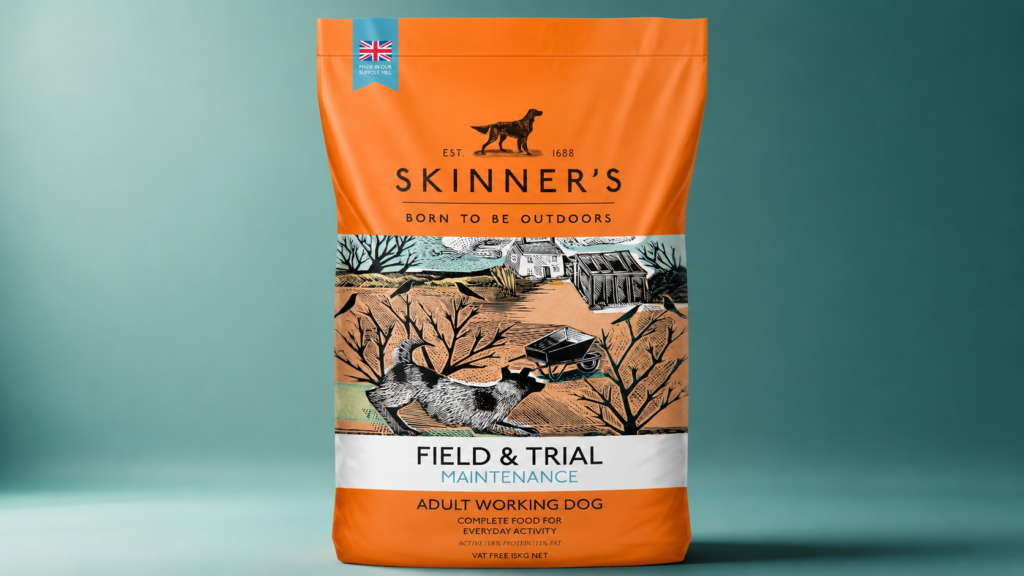
Their Chicken & Rice recipe, which most people start with, contains 25% protein, 12% fat, and chicken meal as the first ingredient. Rice is a carbohydrate, which is easily digestible and gentle on the stomach. It contains no artificial colours or flavours.
Skinners comes in a huge range of recipes: Duck & Rice, Lamb & Rice, Salmon & Rice, Turkey & Rice, and several grain-free options. Grain-free versions cost a little more, but the standard grain-inclusive range offers real value. A 15kg bag of Chicken & Rice usually costs around £18-£22, depending on where you buy it. This works out to around £12-£15 per month for a Labrador.
One thing Skinners is missing: added joint supplements, such as glucosamine and chondroitin. This is understandable at this price point, and you can add your own supplements separately if needed.
If I had a large dog, I would choose Skinner’s dog food without thinking twice.
You can read more about how Skinners compares to other budget brands in our best dry dog food under £10 guide.
2. Harringtons: good quality, affordable
Harringtons is probably the most widely available budget brand in the UK. You can find it at Tesco, Asda, online pet shops, and directly on their website. Their Adult Complete Chicken recipe is a solid all-rounder for large breeds.
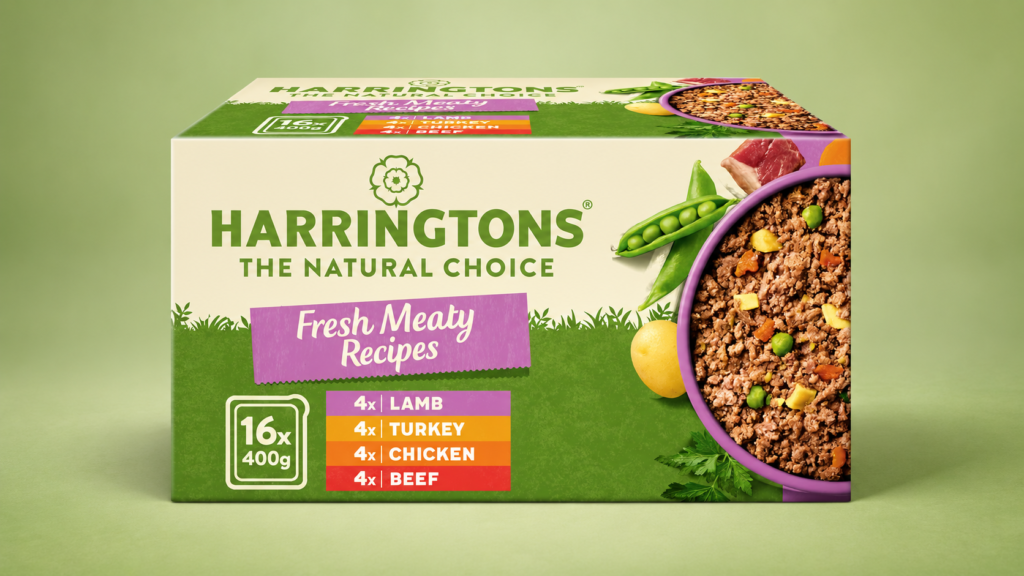
Protein is 22%, fat 10%, and chicken meal is the first ingredient. The ingredient list is clean: no added sugar, no artificial colors, no soy. This is not the highest protein food on the market, but is adequate for adult large dogs that are not in heavy work.
Price-wise, Harringtons comes in 12kg or 15kg bags for around £1.50-£1.80 per kg. This is slightly more expensive than Skinners, but still well below £2 per kg. For a 30kg dog, you can expect roughly £15-£20 per month. Wide availability is also a real bonus, especially if food runs out unexpectedly and you have to grab a bag quickly from the supermarket.
Harringtons also makes a Large Breed specific recipe, which includes glucosamine and chondroitin for joint support. If your dog is on the larger side, around 35kg+, and you’re concerned about joints, this version is worth it with the small price premium. We go deep into how Harringtons compares to its main rival in our Harringtons vs Wagg comparison.
3. Purina BETA Large Breed
BETA’s Large Breed Adult recipe is specifically designed for dogs over 25 kg, and this is reflected in the formulation. It contains prebiotics for digestion, glucosamine for joints, and a larger kibble size, which encourages proper chewing rather than simply gulping down food.
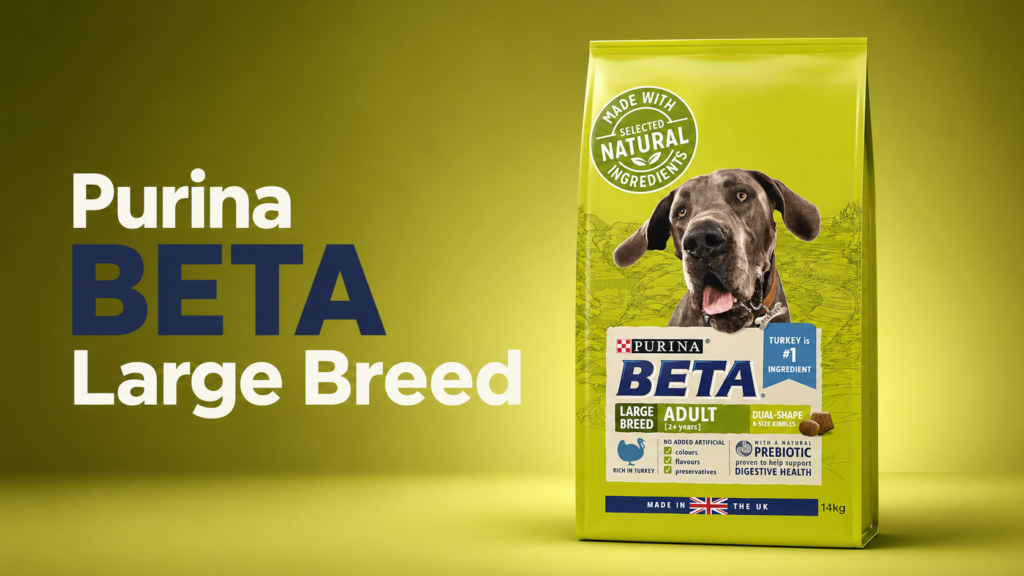
Protein content is 26%, which is good, although a fraction of it comes from plant sources, as maize and wheat are prominent in the ingredient list. Fat is 12%. The kibble has a distinctive triangular shape, which seems to help slow down fast eaters. This is anecdotal, but I’ve heard this from multiple owners.

BETA comes at a slightly awkward price point. It’s more expensive than Skinners and Harringtons, roughly £2.00-£2.40 per kg in 14kg bags, but doesn’t reach their level in ingredient quality. You’re partly paying for the Purina brand name and “large breed specific” marketing. Still, if you can find it on offer or cheaper through a subscription, it’s a reasonable option.
A 14kg bag usually costs £28-£34, which brings the monthly feeding cost for a Labrador to around £20-£25. Not the cheapest option, but the added joint support and prebiotics justify some of this premium.
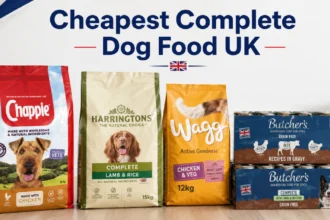
4. Wagg: the cheapest option that’s still complete
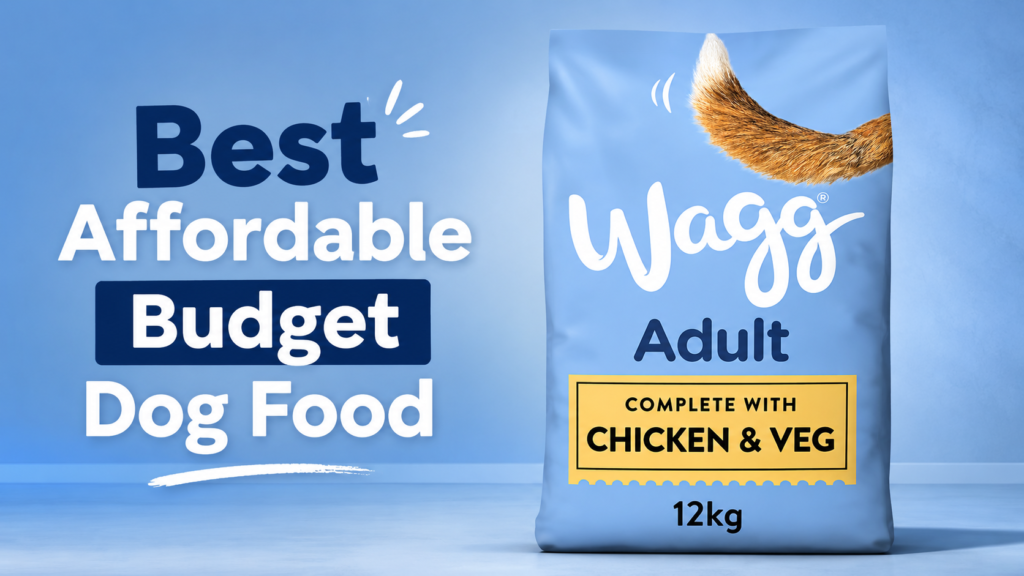
Wagg is the floor option. It’s the absolute cheapest complete dry dog food from a recognizable brand that meets UK regulatory standards. And honestly? Price-wise, it’s not bad.
Wagg Complete Chicken & Veg 15kg bags cost roughly £0.90-£1.10 per kg. This works out to less than £15 for a 15kg bag, which translates to feeding a Labrador for around £9-£12 per month. For some households, this price point is the difference between keeping a dog and rehoming it. I’m not saying this lightly.
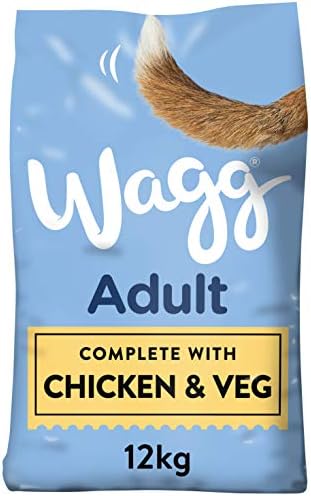
Ingredient list reflects price. Cereals, such as wheat and maize, come first, and chicken meal is a little lower on the list. Protein is 20%, fat 10%. It has added vitamins and minerals, and is legally a complete food, meeting FEDIAF standards. However, it is cereal-heavy, and the meat content is modest.
Wagg works best for large dogs who maintain weight easily and don’t have a sensitive stomach. If your dog is prone to loose stools or itchy skin, the high cereal content may cause issues. For sturdy, easy-going dogs who just need calories, it works.
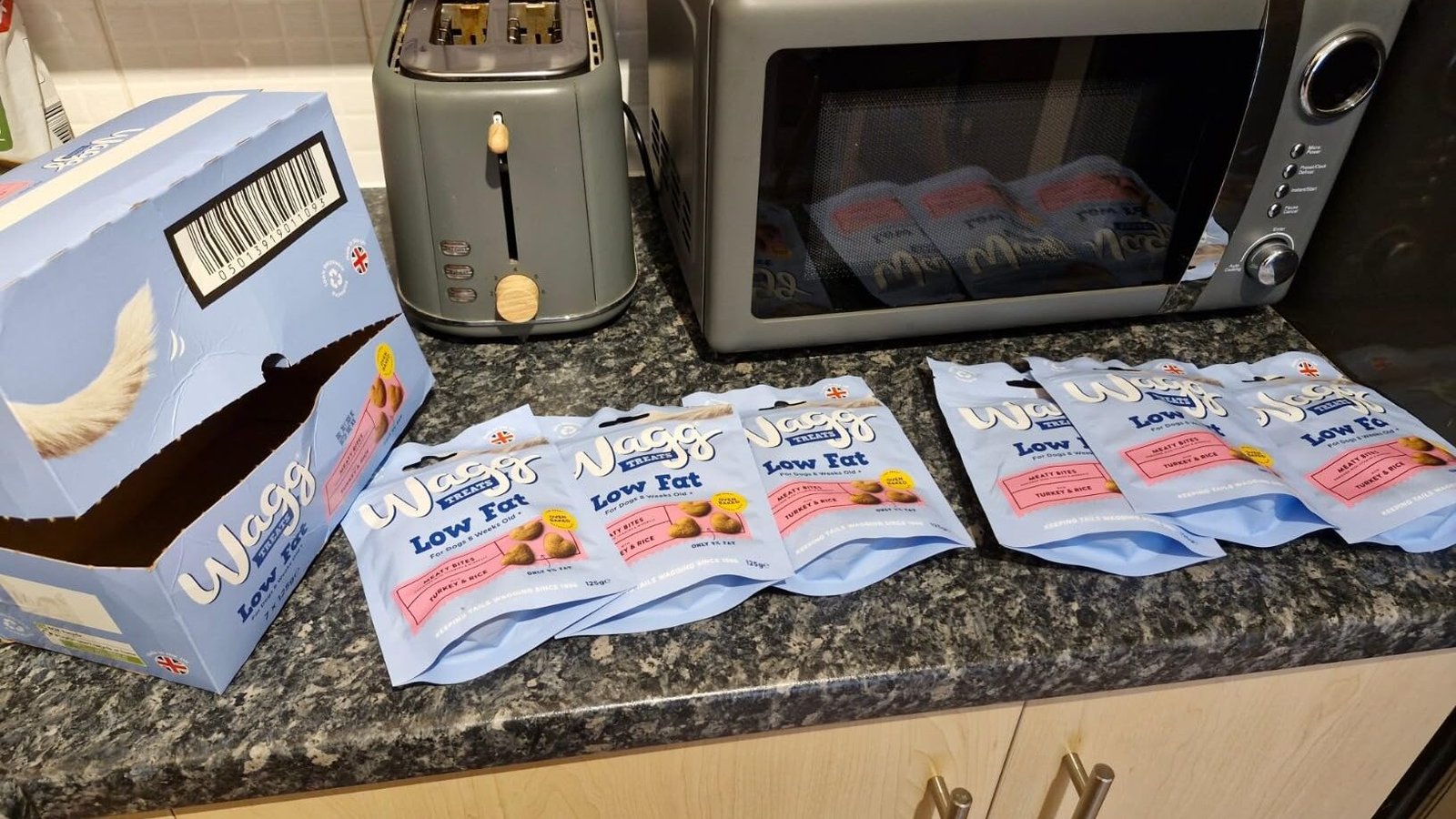
I personally use Wagg dog food for my dog. I have been using it for quite a long time and I’m happy with it because it fits within my budget. In the UK, maintaining a budget is very important, so I use this affordable dog food. It allows me to feed my dog easily while still being able to focus on other expenses as well.
For a deeper look at Wagg and how it stacks up, we cover it extensively in our best cheap dog food UK guide.
5. Chappie: for sensitive stomachs on a budget
Chappie is a bit of an oddity. It’s owned by Mars (the same company behind Pedigree), but it’s formulated quite differently. Originally designed as a low-fat, easily digestible food, it’s become a cult favourite among owners of dogs with sensitive stomachs.

The dry food has 20% protein and 7% fat (very low), with fish meal and maize as the primary ingredients. It’s one of the few budget foods that uses fish rather than chicken as its main protein, which can help dogs with chicken sensitivities. The low fat content makes it useful for dogs prone to pancreatitis or weight gain.
At roughly £1.10-1.40 per kg in 15kg bags, it’s very affordable. The main drawback for large breed owners is the relatively low protein content. 20% is the legal minimum for adult dogs, and many large breeds would benefit from something higher. But if your large dog has ongoing digestive issues and you’re watching every penny, Chappie is genuinely worth trying.
We cover more budget-sensitive options in our guide to the best budget dog food for sensitive stomachs.
6. Bakers: cheap, but I can’t recommend it
I’m including Bakers because it’s one of the UK’s best-selling dog foods, and you’ve probably seen it in every supermarket. A 30kg Labrador can be fed at Bakers for roughly £10-£12 per month. It’s genuinely cheap.
But the ingredient list is poor. The first few ingredients are cereals, meat and animal derivatives (unnamed), and then more cereals. It contains added sugar and EC permitted antioxidants, which can often include BHA/BHT. A large portion of the protein comes from plant sources. Artificial colors are also present, the same as the famous Bakers rainbow kibble.
The All About Dog Food website rates Bakers Adult 1.2 out of 5. For comparison, Skinners scores 3.7 and Harringtons 3.4. There are much better options available at similar or only slightly higher prices. If you’re reading this article, you clearly care what your dog eats. Spend £3-£5 extra per month and get Harringtons or Skinners instead of Bakers.
Best budget wet food for large dogs
The truth is: feeding a large dog only wet food is expensive. Really expensive. A 30kg Labrador will need 4-6 tins or trays daily if it eats only wet food. At 60p-80p per tin, this works out to £72-£144 per month. Then, dry food for £15 per month suddenly looks very attractive.
Wet food also has its benefits. The moisture content is higher, dogs usually like the taste better, and the meat content is often higher in the ingredient listing. And very large dogs absolutely love it.
The 75/25 mixing strategy
For large dog owners on a budget, the most practical approach is mixing. Feed 75% dry food and 25% wet food, accounting for calorie contribution. This gives your dog the taste and moisture benefits of wet food, while keeping the overall cost manageable.
In practice, it might look something like this: 250g kibble plus half a tray, i.e. 150g wet food per meal. If you use a food like Butcher’s Tripe Mix, which is available in multi-packs for around 60p-70p per 400g tray, or Harringtons wet trays, the added cost works out to roughly £10-£15 per month on top of the dry food bill.
So instead of £15/month on dry food alone, you’ll end up with around £25-£30/month on a mixed diet. Your dog feels like Christmas every mealtime, and your wallet doesn’t mind you either. That’s a solid compromise.
For more on this approach, see our guide to wet vs dry dog food, where we break down the cost differences in detail.
Best budget wet food brands for large dogs
If you are going to add wet food, these are the ones that make financial sense for large breeds:
Butcher’s. The original budget wet food. Their 400g foil trays come in at roughly 15-17p per 100g when bought in multi-packs from Amazon UK or subscription services. The Tripe, Chicken, and Lamb recipes are all decent. High meat content, no artificial colours, and most dogs love the taste. Butcher’s is probably the most cost-effective wet food brand in the UK.
Harringtons wet trays. Similar price point to Butcher’s, with a clean ingredient list that matches their dry food philosophy. Available in most supermarkets and online.
Chappie tins. The wet version of Chappie. Very cheap (often under 50p per 400g tin in a 12-pack), low fat, and gentle on the stomach. Dogs seem to enjoy it, and the price is hard to argue with.
Winalot. Another supermarket staple. Cheaper than Butcher’s but lower meat content and less impressive ingredients. If your budget is tight and your dog isn’t fussy, Winalot works. But Butcher’s is only marginally more expensive and noticeably better.
Bulk buying strategies for large dog owners
If you own a large dog, bulk buying isn’t optional. It’s how you make the maths work. Here are the strategies that actually save money.
Buy 15kg bags, always
I’ve said this already but it bears repeating because the saving is enormous. The price per kg difference between a 2kg bag and a 15kg bag of the same food is often 40-50%. On a food like Harringtons, that’s the difference between £2.80/kg and £1.40/kg.
For a dog eating 350g per day (roughly 10.5kg per month), buying 15kg bags means 2-3 purchases per year instead of 5-6. You save money on the food itself and on delivery costs.
The only concern with 15kg bags is freshness. Dry dog food generally stays fresh for 6-8 weeks after opening if stored in a cool, dry place in an airtight container. A large dog will work through a 15kg bag in 4-6 weeks, so you’re fine. If you have a smaller dog eating from the same bag, consider splitting the bag into airtight containers and freezing what you won’t use within 6 weeks.
Subscribe and save
Most online retailers offer 5-15% off when you set up a repeat delivery. Amazon UK‘s “Subscribe & Save” can knock 10-15% off pet food. Pet-Supermarket, Viovet, and direct-from-brand subscriptions (Skinners’ own website, for example) typically offer 5-10% off.
Over a year, 10% off a £20/month food bill saves you £24. The convenience of automatic delivery is a bonus too.
Check our dog food deals UK page for current offers and discount codes.
Compare prices across retailers
Dog food prices vary wildly between retailers. A 15kg bag of Skinners might be £20 on one site and £26 on another for the exact same product. It takes 5 minutes to check, and the saving is often £4-8 per bag.
The retailers worth checking for large bags: Amazon UK, Pet-Supermarket, Viovet, Monster Pet Supplies, ZooPlus, and the brand’s own website. Supermarkets rarely stock 15kg bags, so online is your best bet. Some farm shops and country stores carry 15kg bags at competitive prices too, especially working dog brands like Skinners.
Consider working dog food
Brands like Skinners Field & Trial, Chudley’s, and Gilbertson & Page are marketed as “working dog” food. In the UK, working dog food is VAT-free (0% VAT instead of 20%), which is why it’s cheaper. The food itself is nutritionally complete and perfectly fine for pet dogs. The only legal difference is the labelling.
You don’t need to prove your dog is a “working dog” to buy it. Anyone can purchase working dog food. This is one of the best-kept secrets for UK dog owners on a budget. You’re literally saving 20% VAT on every bag.
Joint supplements worth adding on a budget
If your budget food doesn’t include joint support (and most budget foods don’t), adding a supplement separately is still cheaper than upgrading to a premium food that includes it. Here are the options worth considering.
Glucosamine and chondroitin tablets
These are the two most common joint supplements for dogs, and they’re available over the counter. You can buy tubs of 60-90 tablets for £8-15 from Amazon, VetUK, or most pet shops. For a large dog, the typical dose is 1-2 tablets per day, so a 90-tablet tub lasts 45-90 days.
That’s roughly £2-5 per month for joint support. Compare that to the £20-30 per month premium you’d pay to upgrade from Skinners to a joint-supporting premium food, and the supplement route wins on cost by a massive margin.
Brands to look for: VetUK Joint Care, Lintbells YuMOVE (more expensive but well-regarded), Dorwest Herbs Mobility, and generic glucosamine/chondroitin tablets. The active ingredients are the same across most brands; you’re partly paying for marketing with the pricier options.
Fish oil (omega-3)
Fish oil isn’t just for joints. It supports skin, coat, heart health, and has anti-inflammatory properties that can help with arthritis. A bottle of liquid fish oil for dogs costs roughly £10-15 and lasts 1-2 months for a large dog. capsules are also available and easier to dose precisely.
The cheaper approach: buy human-grade omega-3 fish oil capsules from Boots or Superdrug. A tub of 90 capsules (1000mg each) costs around £8-12. For a large dog, 1-2 capsules per day tucked into their food works well. Check with your vet before starting any supplement, but fish oil is widely considered safe at standard doses.
Green-lipped mussel
Green-lipped mussel extract is a natural source of glucosamine, chondroitin, and omega-3 fatty acids. It’s become popular for joint support in dogs, particularly large breeds prone to arthritis. It’s more expensive than basic glucosamine tablets (roughly £15-25 per month for a large dog) but many owners report good results.
For budget-conscious owners, I’d start with standard glucosamine/chondroitin tablets and fish oil. If your dog still has joint issues, then consider green-lipped mussel as a step up.
Monthly cost breakdown for large breeds
Here’s what feeding actually costs for three common large breeds, using budget dry food bought in bulk. All figures assume 15kg bags and online prices (early 2025).
Labrador Retriever (25-35kg)
A typical adult Labrador eats 300-400g of dry food per day, depending on activity level. Using Skinners Field & Trial at £1.30/kg:
- Daily cost: 40p-52p
- Weekly cost: £2.80-3.64
- Monthly cost: £12-15.60
Using Wagg at £1.00/kg:
- Daily cost: 30p-40p
- Weekly cost: £2.10-2.80
- Monthly cost: £9-12
Adding a wet food topper (half a tray of Butcher’s per day): add roughly £7-10 per month to any of the above.
German Shepherd (30-40kg)
German Shepherds are active dogs and tend to sit at the higher end of feeding guidelines. Expect 350-450g per day. Using Harringtons at £1.60/kg:
- Daily cost: 56p-72p
- Weekly cost: £3.92-5.04
- Monthly cost: £16.80-21.60
Using Skinners at £1.30/kg:
- Daily cost: 46p-59p
- Weekly cost: £3.20-4.10
- Monthly cost: £13.60-17.40
Golden Retriever (25-35kg)
Very similar to Labradors in feeding requirements, though they’re often slightly less food-motivated (some would say less obsessed). 300-380g per day is typical. Using BETA Large Breed at £2.20/kg:
- Daily cost: 66p-84p
- Weekly cost: £4.60-5.85
- Monthly cost: £19.80-25.20
Using Skinners at £1.30/kg:
- Daily cost: 39p-49p
- Weekly cost: £2.74-3.46
- Monthly cost: £11.70-14.80
Across all three breeds, the pattern is clear: Skinners and Wagg come in at £9-17 per month, Harringtons at £15-22, and BETA at £20-25. All of these are perfectly reasonable for a large dog. Our cheap vs premium dog food comparison shows how these prices stack up against premium brands that can cost 3-4x more.
Comparison table: budget dry food for large dogs
| Brand and recipe | Price per kg (15kg bag) | Protein % | Fat % | Joint supplements | Monthly cost (30kg dog) |
|---|---|---|---|---|---|
| Skinners Field & Trial Chicken & Rice | £1.20-1.50 | 25% | 12% | No | £12-16 |
| Harringtons Adult Chicken | £1.50-1.80 | 22% | 10% | No | £15-20 |
| Harringtons Large Breed | £1.60-1.90 | 24% | 12% | Yes | £16-22 |
| Purina BETA Large Breed | £2.00-2.40 | 26% | 12% | Yes | £20-25 |
| Wagg Complete Chicken & Veg | £0.90-1.10 | 20% | 10% | No | £9-12 |
| Chappie Dry | £1.10-1.40 | 20% | 7% | No | £11-15 |
| Bakers Complete | £1.00-1.30 | 22% | 10% | No | £10-14 |
Prices are approximate and based on UK online retailers in early 2025. Monthly costs assume a 30kg dog eating 350g per day. Always check current prices before buying.
For a wider selection of budget options beyond large breeds specifically, see our roundups of the best dry dog food under £10 and the best dog food in the UK for 2026.
Frequently asked questions
Can I feed my large dog the same food as a small dog?
Technically yes, if the food is labelled as “complete” and meets FEDIAF standards for all dog sizes. But large dogs have different nutritional priorities: more protein for muscle maintenance, joint support ingredients, and controlled calorie density. A food designed for small dogs might be too calorie-dense for a large breed, leading to weight gain. Large kibble size also matters: it forces larger dogs to chew properly rather than swallowing whole, which aids digestion. A large breed-specific food or an all-life-stages food from a quality brand is usually the better call.
Is working dog food safe for pet dogs?
Yes. Working dog food and pet dog food are nutritionally the same product. The difference is VAT: working dog food is zero-rated (0% VAT), while pet food carries 20% VAT. This is why brands like Skinners Field & Trial are noticeably cheaper than equivalent pet foods. The formulation meets the same FEDIAF standards. You don’t need a working dog certificate or any proof to buy it. Anyone can purchase it. Some owners worry that working dog food is “too rich” because of higher protein and fat levels in some recipes, but many working dog foods (like Skinners Chicken & Rice at 25% protein, 12% fat) are virtually identical to standard adult foods.
How much should a large dog eat per day?
It depends on the food (different brands have different calorie densities) and the dog’s activity level. As a rough guide: a 30kg moderately active adult dog needs about 1,200-1,500 kcal per day. Most budget dry foods provide 350-370 kcal per 100g, which translates to roughly 330-430g of kibble daily. Always follow the feeding guidelines on the bag as a starting point, then adjust based on your dog’s body condition. You should be able to feel (but not see) your dog’s ribs. If the ribs are buried under a layer of fat, reduce the portion by 10% and reassess after two weeks. The PDSA has a useful body condition scoring guide on their website.
Should I feed my large dog once or twice a day?
Twice a day is generally recommended for large breeds. A single large meal can increase the risk of bloat (gastric dilatation-volvulus), which is a life-threatening emergency more common in deep-chested breeds like German Shepherds, Great Danes, and Weimaraners. Splitting the daily ration into two meals (morning and evening) reduces this risk. Avoid vigorous exercise for at least an hour before and after meals. If your dog is a fast eater, consider a slow-feeder bowl to further reduce bloat risk. Some large breed owners also soak the kibble in warm water for 10-15 minutes before feeding, which slows eating and aids digestion.
Is grain-free food better for large dogs?
There’s no evidence that grain-free food is inherently better for large dogs. In fact, the British Veterinary Association and the FEDIAF have both raised concerns about a possible link between grain-free diets (particularly those high in legumes like peas, lentils, and potatoes) and dilated cardiomyopathy (DCM) in dogs. This research is ongoing and not conclusive, but it’s enough that many vets recommend grain-inclusive foods unless your dog has a diagnosed grain allergy. Grain allergies in dogs are actually quite rare; protein sources (chicken, beef) are far more common allergens. Grain-free foods also cost 20-40% more than grain-inclusive equivalents, which matters when you’re feeding 10+ kg per month. For budget-conscious large breed owners, a quality grain-inclusive food like Skinners or Harringtons is the safer and more affordable choice.